Petroleum Resin Varnish
CN → US| HS Code | Tariff Rate | Origin | Destination | Doc |
|---|---|---|---|---|
| 3208900000 | 38.2% | CN | US | Official Doc |
| 3208100000 | 38.7% | CN | US | Official Doc |
Product Images


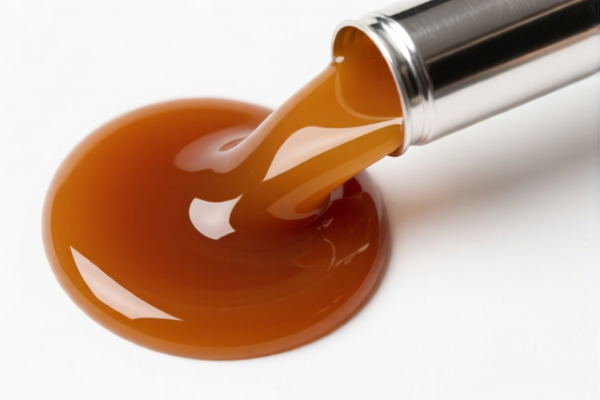

AI Analysis
🧪 Petroleum Resin Varnish (Petroleum-based Paints & Varnishes)
🌐 HS Code Reference & Customs Clearance Guide | 2026 Latest Tariff Analysis | Professional Customs Strategy
📌 I. Product Definition & Classification: Understanding "Petroleum Resin Varnish"
Petroleum Resin Varnish is a type of coating material derived from petroleum by-products. In international trade, it falls under Chapter 32 (Tanning or Dyeing Extracts; Tannins and Their Derivatives; Dyes, Pigments and Other Coloring Matter; Paints and Varnishes; Putty and Other Mastics; Inks).
Specifically, it is classified based on its chemical composition and medium: * Base: Synthetic polymers or chemically modified natural polymers. * Medium: Dispersed or dissolved in a non-aqueous medium (i.e., not water-based). * Specific Sub-category: Often associated with polyester or other synthetic resin bases if specified, but generally falls under "Other" if not specifically polyester-based.
⚠️ Key Distinction Point:
- If the product is water-based, it belongs to HS Code3208.10.00.00(or similar aqueous categories).
- If it is solvent-based (non-aqueous), it falls under3208.90.00.00(Other) or3208.10.00.00(Based on polyesters, if applicable).
- Crucial Note: The description "Petroleum Resin Varnish" implies a solvent-based solution, typically classified as "Other" unless it is explicitly defined as "Based on polyesters."
📦 II. HS Code Classification Details (2026 Latest Tariff Authority Comparison)
| HS Code | Product Description | Application Scenario | Non-Aqueous? |
|---|---|---|---|
3208.90.00.00 |
Paints and varnishes based on synthetic polymers/chemically modified natural polymers, dispersed/dissolved in non-aqueous medium: Other | Standard petroleum resin varnishes, solvent-based finishes, general industrial coatings not classified as polyester | ✅ Yes |
3208.10.00.00 |
Paints and varnishes based on synthetic polymers/chemically modified natural polymers, dispersed/dissolved in non-aqueous medium: Based on polyesters | Polyester-based varnishes, specific high-gloss industrial coatings defined as polyester | ✅ Yes |
🔍 Key Reminder:
- Most "Petroleum Resin Varnishes" are solvent-based and do not fall under "Polyester" unless explicitly formulated as such. Therefore,3208.90.00.00is the most common classification.
- If the technical data sheet (TDS) explicitly states "Polyester Resin" as the primary binder, use3208.10.00.00.
- Both codes indicate non-aqueous solutions.
💰 III. 2026 Latest Tariff Rate Details (Including Additional Taxes & Policy Add-ons)
✅ Applicable Country: USA (US)
✅ Origin: China (CN)
✅ Effective Date: Current as per 2026 tariff schedule
🎯 1. 3208.90.00.00 —— Paints/Varnishes: Other (Non-Aqueous)
| Item | Content |
|---|---|
| Base Tariff | 0.0% (Ad Valorem) |
| Additional Tariff | 0.0% |
| Total Tax Rate | 0.0% |
| Tax Calculation | CIF Value × 0% = $0 |
| De Minimis Eligibility | ❌ Check Specific Rules: Generally, Section 321 (De Minimis) applies if value <$800, but hazardous materials may be restricted. |
| Legal Basis Path | USITC:3208.90.00.00 → Footnote: N/A |
📌 Explanation:
- The base tariff for this category is 0%.
- There are no additional Section 301 tariffs or IEEPA surcharges applied to this specific HS code for Chinese origin in the provided data.
- This is a low-risk, low-cost classification for clearance.
🎯 2. 3208.10.00.00 —— Paints/Varnishes: Based on Polyesters (Non-Aqueous)
| Item | Content |
|---|---|
| Base Tariff | 0.0% (Ad Valorem) |
| Additional Tariff | 0.0% |
| Total Tax Rate | 0.0% |
| Tax Calculation | CIF Value × 0% = $0 |
| De Minimis Eligibility | ❌ Check Specific Rules: Same as above. |
| Legal Basis Path | USITC:3208.10.00.00 → Footnote: N/A |
📌 Explanation:
- Similar to "Other," the polyester-based category also enjoys a 0% total tax rate.
- No additional penalties or surcharges are listed in the data.
🛠️ IV. Customs Clearance Practical Suggestions (Battlefield Pitfall Avoidance Guide)
✅ 1. Document Preparation Checklist (Must-Haves)
| Document | Required | Description |
|---|---|---|
| ✅ Technical Data Sheet (TDS) | ✔️ | Must explicitly state "Non-Aqueous" and resin type (e.g., "Petroleum Resin," "Polyester"). |
| ✅ Safety Data Sheet (SDS) | ✔️ | Critical for chemical products. Must list flash point, ingredients, and hazard classification. |
| ✅ Commercial Invoice | ✔️ | Clearly describe as "Petroleum Resin Varnish, Solvent-Based." |
| ✅ Certificate of Origin | ✔️ | To verify origin and apply for any potential FTAs (though tax is 0% here). |
| ✅ Packaging List | ✔️ | Include net/gross weight, volume, and container type. |
✅ 2. Declaration Tips (Key Mantra)
🔥 “Non-Aqueous is Key, Resin Type Defines Code!”
| Scenario | Correct Declaration | Wrong Practice |
|---|---|---|
| Standard Petroleum Resin Varnish | 3208.90.00.00 |
Misdeclare as 3208.10.00.00 (if not polyester) → Risk of reclassification |
| Polyester-Based Varnish | 3208.10.00.00 |
Misdeclare as 3208.90.00.00 → Minor risk, but accuracy is key |
| Water-Based Varnish | Not 3208 | Use aqueous codes (e.g., 3208.10.00.00 if polyester-based aqueous) → Wrong chapter |
📌 Important:
- If the varnish contains hazardous chemicals (e.g., high flash point solvents), additional regulations (EPA, DOT) may apply.
- Always attach the SDS to avoid delays at customs inspection.
✅ 3. Special Cases Handling
| Scenario | Handling Advice |
|---|---|
| Flammable Solvents | Declare as "Dangerous Goods" if required by carrier. SDS must show flash point. |
| Mixed Containers | If mixed with other non-hazardous goods, ensure varnish is properly labeled and segregated. |
| OEM/Private Label | Provide brand authorization if claiming a specific brand name. |
| Samples | If value <$800, may qualify for De Minimis, but SDS is still required. |
🌍 V. Global Market Customs Comparison (2026 Latest)
| Country/Region | Recommended HS Code | Tariff | Certification | Remarks |
|---|---|---|---|---|
| 🇺🇸 USA | 3208.90.00.00 |
0.0% | SDS, EPA Reg. | No additional tariffs. Easy clearance. |
| 🇨🇳 China | 3208.90.00.00 |
~0-5% | CCC (if applicable) | Depends on specific product type. |
| 🇪🇺 EU | 3208.90 |
0-4% | REACH, CLP | Must comply with EU chemical regulations. |
| 🇦🇺 Australia | 3208.90 |
5% | GEMS | Check if hazardous. |
| 🇯🇵 Japan | 3208.90 |
0-5% | Fire Services Act | High safety standards. |
📌 Conclusion:
- USA offers the most favorable tariff (0%) for this category.
- EU and Japan require strict chemical compliance (REACH, CLP, Fire Services Act).
- SDS is mandatory for all destinations.
📌 VI. Common Mistakes & Pitfall Guide (Lessons Learned)
❌ Mistake 1: Declaring "Varnish" without specifying "Non-Aqueous"
👉 Consequence: Customs may question if it's water-based → Delay in clearance.
✅ Fix: Clearly state "Solvent-Based" or "Non-Aqueous" in declaration.
❌ Mistake 2: Ignoring SDS requirements
👉 Consequence: Shipment held for chemical inspection → Delays and potential fines.
✅ Fix: Always provide SDS with accurate chemical composition.
❌ Mistake 3: Misclassifying Polyester vs. Other
👉 Consequence: Minor risk, but accuracy prevents future audits.
✅ Fix: Use TDS to confirm resin type.
❌ Mistake 4: Not declaring flammability
👉 Consequence: Carrier refusal or additional hazardous goods fees.
✅ Fix: Declare flash point and hazard class if applicable.
🎯 VII. Conclusion: Professional Declaration, Save Time & Money!
🎯 Remember the Mantra:
🔹 “Non-Aqueous is King, 0% Tax is Sweet!”
🔹 “SDS is Must, Code is 3208.90, Easy Clearance is Best!”
📌 Pro Tip:
- If your varnish is polyester-based, use 3208.10.00.00.
- If other, use 3208.90.00.00.
- Both have 0% total tax in the US.
- Attach SDS to avoid all headaches.
📣 Immediate Action:
📞 Contact professional customs broker + Provide SDS + Use correct HS Code (
3208.90.00.00or3208.10.00.00)
🚀 Ensure smooth customs clearance, 0% tax burden, and zero delays!
✨ Professional customs clearance starts with accurate classification!
💼 Every penny saved is a profit earned!
Customer Reviews
About HS Code Classification
The Harmonized System (HS) is an internationally standardized nomenclature developed by the World Customs Organization (WCO) to classify traded products. Over 200 countries use the HS system as the basis for customs tariffs, trade statistics, and import/export regulations.
Each HS code follows a hierarchical structure:
- Chapter (2 digits) — Broad category of goods (e.g., Chapter 84: Machinery and Mechanical Appliances)
- Heading (4 digits) — More specific grouping within the chapter
- Subheading (6 digits) — Internationally standardized breakdown, used by all WCO member countries
- National subdivisions (8-10 digits) — Country-specific extensions for further classification, such as US HTSUS 10-digit codes
Correct HS code classification is essential for smooth customs clearance, accurate duty payment, and compliance with trade regulations. Misclassification can lead to customs delays, overpayment of duties, or penalties.
When importing from CN to US, the applicable tariff rates may include:
- Most-Favored-Nation (MFN) rate — The standard duty rate applied to WTO members
- General rate — Applied to countries without trade agreements
- Trade remedy duties — Additional tariffs such as Section 301 (anti-dumping), Section 232 (national security), or countervailing duties
The information provided on this page is for reference purposes only. For official classification, please consult with your local customs authority or a licensed customs broker.