Petroleum Resin for Printing Ink
CN → US| HS Code | Tariff Rate | Origin | Destination | Doc |
|---|---|---|---|---|
| 3911200000 | 41.5% | CN | US | Official Doc |
| 3824994900 | 41.5% | CN | US | Official Doc |
| 3215113000 | 36.8% | CN | US | Official Doc |
| 3824992100 | 35.0% | CN | US | Official Doc |
| 3215193000 | 36.8% | CN | US | Official Doc |
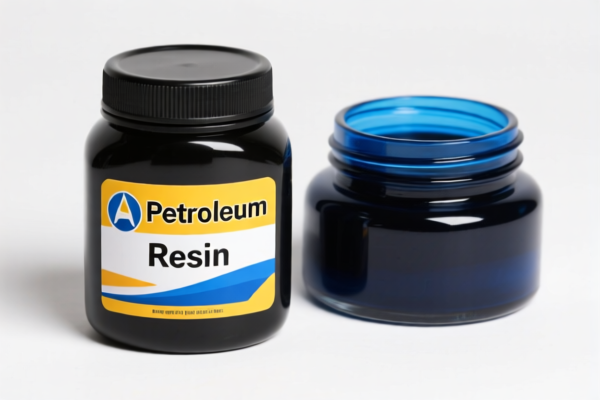
Product Images



AI Analysis
🧪 Petroleum Resin for Printing Ink (石油树脂,用于印刷油墨)
🌐 HS Code Classification & Customs Clearance Guide | 2026 Latest Tariff Analysis | Strategic Clearance Protocol
📌 I. Product Definition & Classification: Decoding "Petroleum Resin for Printing Ink"
Petroleum Resin is a high-molecular-weight hydrocarbon resin derived from petroleum fractions (such as C5 or C9 fractions) via polymerization or hydrogenation. In the context of international trade, its classification is critical because it serves as a versatile raw material.
The key to correct classification lies in distinguishing between the material itself (a chemical product) and its end-use (as an ingredient in a formulated ink).
⚠️ Key Distinction Point:
- If declared strictly as a chemical raw material/resin → Classified under Chapter 39 (Plastics/Resins) or Chapter 38 (Miscellaneous Chemical Products).
- If declared as part of a finished printing ink formulation → Classified under Chapter 32 (Inks/Paints).
- Note: The input "for printing ink" suggests it is a raw material intended for ink manufacturing, not the finished ink itself. However, customs may infer usage. The following data provides the most likely HS codes based on material and inferred use.
📦 II. HS Code Classification Details (2026 Latest Tariff Authority Comparison)
Based on the provided data, here are the five potential HS Codes with their specific matching logic:
| HS Code | Product Description | Matching Logic / Justification | Tax Rate (Total) |
|---|---|---|---|
3911.20.00.00 |
Petroleum Resins, Primary Forms | Material & Form Match: Matches "Petroleum Resin" (material) and "Primary Form" (形态/原形). "For printing ink" does not change its chemical product status. | 41.5% |
3824.99.49.00 |
Other Chemical Products & Preparations | Source & Usage: "Petroleum" matches "derived from petroleum"; "Resin" fits "Chemical Products & Preparations". | 41.5% |
3215.11.30.00 |
Printing Inks (Solid/Other) | Reasonable Material Inference: "Petroleum Resin" is a raw material for ink; "For printing" matches ink usage. Classified as "Solid/Other"化工原料. | 36.8% |
3824.99.21.00 |
Other Chemical Products (Aromatic/Coal Tar like) | Chemical Composition: Petroleum resin contains aromatic structures similar to coal tar/aromatic substances in this subheading. Fits the "catch-all" logic for chemical industrial resins. | 35.0% |
3215.19.30.00 |
Other Printing Inks | Usage & Material: Explicitly states "for printing ink" (use attribute); Petroleum resin is a common ingredient. Fits "Other Printing Inks" category via usage inference. | 36.8% |
🔍 Critical Insight:
- Chapter 39 (3911.20.00.00) and Chapter 38 (3824...) treat the product as a chemical raw material.
- Chapter 32 (3215...) treats the product as an ink-related item.
- Risk: If you declare it as3215(Ink) but it is just a resin powder/liquid, customs may reclassify it as a chemical (3911or3824), leading to higher taxes or delays.
💰 III. 2026 Latest Tariff Rate Breakdown (Including Surtaxes & Policy Add-ons)
✅ Applicable Country: United States (US)
✅ Country of Origin: China (CN)
✅ Effective Time: From November 10, 2025 (including subsequent imports)
🎯 1. 3911.20.00.00 & 3824.99.49.00 —— Petroleum Resin / Chemical Products
| Item | Detail |
|---|---|
| Base Tariff Rate | 6.5% (ad valorem) |
| USITC Surtax (Section 301) | +25.0% |
| IEEPA Surtax (Section 122/Executive Order) | +10.0% |
| Total Tariff Rate | 41.5% |
| Tax Calculation | CIF Value × 41.5% |
| De Minimis Exemption | ❌ Not Eligible (deny_de_minimis) |
| Legal Basis Path | IEEPA:9903.01.25 → USITC:3911.20.00.00 / 3824.99.49.00 → FOOTNOTE:9903.88.01 |
📌 Explanation:
- The 6.5% is the standard Most Favored Nation (MFN) duty for these chemical/resin products.
- The 25% is the additional tariff under US Trade Act Section 301 against China.
- The 10% is the additional tariff under IEEPA (often referred to as the "122 Tariff" in some contexts, linked to Executive Orders on national emergency economic powers).
- Combined Total: 41.5%. This is a high-cost category.
🎯 2. 3215.11.30.00 & 3215.19.30.00 —— Printing Inks (Inferred Classification)
| Item | Detail |
|---|---|
| Base Tariff Rate | 1.8% (ad valorem) |
| USITC Surtax (Section 301) | +25.0% |
| IEEPA Surtax (Section 122/Executive Order) | +10.0% |
| Total Tariff Rate | 36.8% |
| Tax Calculation | CIF Value × 36.8% |
| De Minimis Exemption | ❌ Not Eligible (deny_de_minimis) |
| Legal Basis Path | IEEPA:9903.01.25 → USITC:3215.11.30.00 / 3215.19.30.00 → FOOTNOTE:9903.88.01 |
📌 Explanation:
- Savings Potential: If correctly classified as "Printing Inks" (3215), the base rate is only 1.8% (vs. 6.5% for resins).
- Risk Factor: You must prove the product is either already a finished ink or exclusively used as an ink component in a way that customs accepts. If it is just raw resin, this classification is risky and may be challenged.
🎯 3. 3824.99.21.00 —— Other Chemical Products (Aromatic/Aliphatic)
| Item | Detail |
|---|---|
| Base Tariff Rate | 0.0% (ad valorem) |
| USITC Surtax (Section 301) | +25.0% |
| IEEPA Surtax (Section 122/Executive Order) | +10.0% |
| Total Tariff Rate | 35.0% |
| Tax Calculation | CIF Value × 35.0% |
| De Minimis Exemption | ❌ Not Eligible (deny_de_minimis) |
| Legal Basis Path | IEEPA:9903.01.25 → USITC:3824.99.21.00 → FOOTNOTE:9903.88.01 |
📌 Explanation:
- This is the lowest tax option (35.0%) in the dataset.
- It relies on the argument that petroleum resin's aromatic structure is similar to coal tar/aromatic chemicals listed in3824.99.21.00.
- Argument Strength: This is a technical classification argument. It may require strong technical documentation to justify why it fits this specific "other chemical products" subheading rather than3911(Resins).
🛠️ IV. Customs Clearance Practical Advice (Action Plan)
✅ 1. Preparation Checklist (Mandatory Documents)
| Document | Required | Purpose |
|---|---|---|
| ✅ Product Specification Sheet | ✔️ | Details chemical composition, physical state (solid/liquid), molecular weight, and origin of petroleum fractions. |
| ✅ Technical Data Sheet (TDS) | ✔️ | Proves the product is a resin/raw material, not a finished ink formulation. |
| ✅ Product Photos (Label/Packaging) | ✔️ | Clear view of "Petroleum Resin", CAS number, and "For Printing Ink" statement. |
| ✅ Third-Party Test Report | ✔️ | Chemical analysis confirming it is a hydrocarbon resin. |
| ✅ Commercial Invoice | ✔️ | Must state: "Petroleum Resin, Raw Material for Printing Ink Manufacturing" (Avoid just "Printing Ink"). |
| ✅ Certificate of Origin (CO) | ✔️ | Required for origin verification. |
✅ 2. Declaration Strategy (Key Mantra)
🔥 "Declare Material, Not End-Use! Be Specific!"
| Scenario | Recommended HS Code | Declaration Description |
|---|---|---|
| Raw Resin Powder/Granules | 3911.20.00.00 (41.5%) or 3824.99.21.00 (35.0%) |
"Petroleum Resin, Hydrocarbon, Primary Form, CAS No. XXXXX, For Use in Ink Manufacturing" |
| Inferred Ink Component | 3215.11.30.00 (36.8%) |
"Petroleum Resin for Printing Inks" (Risk: May be challenged if not a formulated ink) |
| Finished Ink (Unlikely for "Resin") | 3215.19.30.00 (36.8%) |
"Printing Ink, Formulated, Contains Petroleum Resin" |
⚠️ Warning:
- Do not simply declare as "Printing Ink" (3215) if it is just resin. Customs will likely reclassify to3911or3824and charge higher taxes (41.5% vs 36.8%) or impose penalties for misdeclaration.
- If you want the 35.0% rate (3824.99.21.00), you must provide strong technical evidence linking it to aromatic chemical preparations.
✅ 3. Special Handling
| Situation | Advice |
|---|---|
| OEM/Custom Resin | Provide formulation details to justify 3824.99.21.00 (Aromatic) vs 3911.20.00.00 (General Resin). |
| Solid vs. Liquid Form | Ensure the description matches the physical state. 3911 covers both, but 3215 implies a more fluid/ink-like consistency. |
| High Value Shipments | Consider applying for an Advance Ruling (Pre-classification) from US Customs (CBP) to secure the HS Code and avoid post-clearance audits. |
🌍 V. Global Market Comparison (2026 Latest)
| Country/Region | Recommended HS Code | Estimated Tax | Notes |
|---|---|---|---|
| 🇺🇸 USA | 3911.20.00.00 / 3824.99.21.00 |
35.0% - 41.5% | High due to Section 301 + IEEPA. 3824 is best if justified. |
| 🇨🇳 China | 3911.20.00.00 |
~6.5% (Import Duty) | No Section 301. Lower entry cost into China. |
| 🇪🇺 EU | 3911.90 or 3824.99 |
~5.3% - 6.5% | No high surtaxes like US. Check for REACH compliance. |
| 🇻🇳 Vietnam | 3911.20 |
0% - 5% (if ASEAN origin) | Consider sourcing or manufacturing in Vietnam for US export to avoid surtaxes. |
📌 Conclusion:
- USA is the highest-cost market due to layered surtaxes.
- Strategy: If possible, justify3824.99.21.00for the 35.0% total rate (lowest in US dataset). If not feasible,3911.20.00.00(41.5%) is the standard, safe classification. Avoid3215unless it is a finished ink, as the risk of reclassification is high.
📌 VI. Common Mistakes & Pitfalls (Lessons Learned)
❌ Mistake 1: Declaring as "Printing Ink" when it is just Resin
👉 Consequence: Customs reclassifies to 3911 (41.5%) instead of 3215 (36.8%). Extra 4.7% tax + potential fines.
❌ Mistake 2: Ignoring the 10% IEEPA Surtax
👉 Consequence: Underpaying duty by 10%. Audit trigger: Back taxes + Interest + Penalties.
❌ Mistake 3: Using vague descriptions like "Chemical for Ink"
👉 Consequence: Customs requests additional information, leading to delivery delays.
✅ Correct Practice:
"Petroleum Hydrocarbon Resin, C9 Type, Primary Form, CAS 68553-55-9, For Use in Printing Ink Manufacturing. HS Code: 3911.20.00.00"
🎯 VII. Conclusion: Precision Classification Saves Money
🎯 Key Takeaway:
🔹 Cheapest US Option:
3824.99.21.00(35.0%) – Requires strong technical justification.
🔹 Safest US Option:3911.20.00.00(41.5%) – Standard for petroleum resins.
🔹 Risky Option:3215...(36.8%) – Only if it is a formulated ink.📌 Pro Tip:
- If you are exporting to the US, calculate the total landed cost with 35% vs 41.5%. The 6.5% difference is significant.
- Pre-clearance ruling is highly recommended for high-value shipments.
📣 Immediate Action:
📞 Consult a Customs Broker: Provide TDS and invoice for pre-approval.
🚀 Document Everything: Keep all technical specs ready for CBP examination.
💡 Optimize Supply Chain: Consider non-China origins if tax savings outweigh logistics costs.
✨ Professional Clearance Starts with Accurate Classification!
💼 Every Percent of Tariff Saved is Profit Kept!
Customer Reviews
About HS Code Classification
The Harmonized System (HS) is an internationally standardized nomenclature developed by the World Customs Organization (WCO) to classify traded products. Over 200 countries use the HS system as the basis for customs tariffs, trade statistics, and import/export regulations.
Each HS code follows a hierarchical structure:
- Chapter (2 digits) — Broad category of goods (e.g., Chapter 84: Machinery and Mechanical Appliances)
- Heading (4 digits) — More specific grouping within the chapter
- Subheading (6 digits) — Internationally standardized breakdown, used by all WCO member countries
- National subdivisions (8-10 digits) — Country-specific extensions for further classification, such as US HTSUS 10-digit codes
Correct HS code classification is essential for smooth customs clearance, accurate duty payment, and compliance with trade regulations. Misclassification can lead to customs delays, overpayment of duties, or penalties.
When importing from CN to US, the applicable tariff rates may include:
- Most-Favored-Nation (MFN) rate — The standard duty rate applied to WTO members
- General rate — Applied to countries without trade agreements
- Trade remedy duties — Additional tariffs such as Section 301 (anti-dumping), Section 232 (national security), or countervailing duties
The information provided on this page is for reference purposes only. For official classification, please consult with your local customs authority or a licensed customs broker.