Pharmaceutical Grade α Cellulose Microcrystalline Powder
CN → US| HS Code | Tariff Rate | Origin | Destination | Doc |
|---|---|---|---|---|
| 3913902090 | 40.8% | CN | US | Official Doc |
| 3913905000 | 41.5% | CN | US | Official Doc |
Product Images
AI Analysis
🧪 Pharmaceutical Grade α Cellulose Microcrystalline Powder
🌐 HS Code Reference & Customs Clearance Guide | 2026 Latest Tariff Analysis | Professional Clearance Strategy
📌 I. Product Definition & Classification: Do You Truly Understand "Microcrystalline Cellulose"?
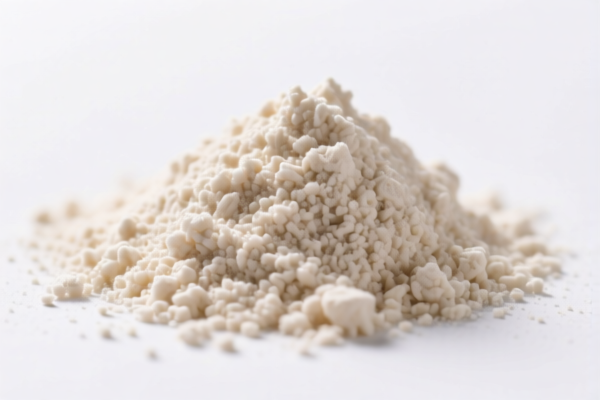
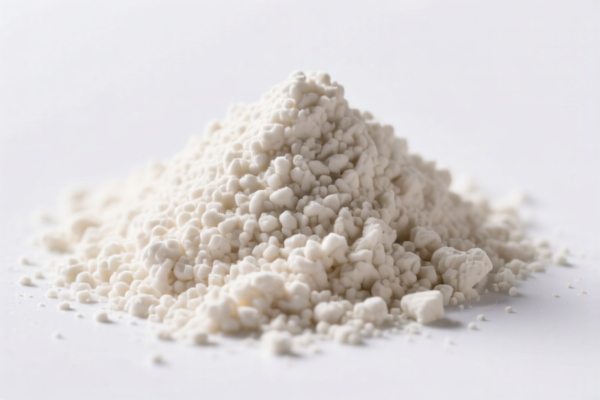
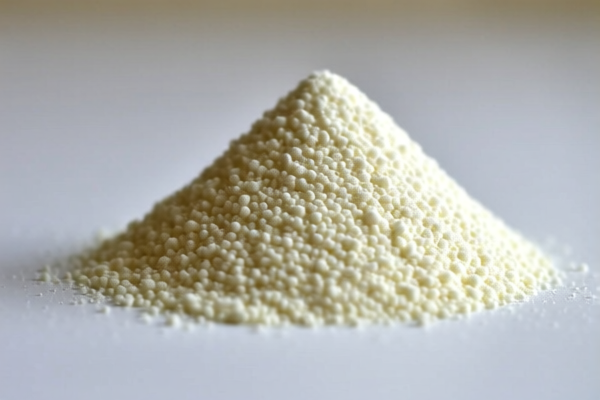
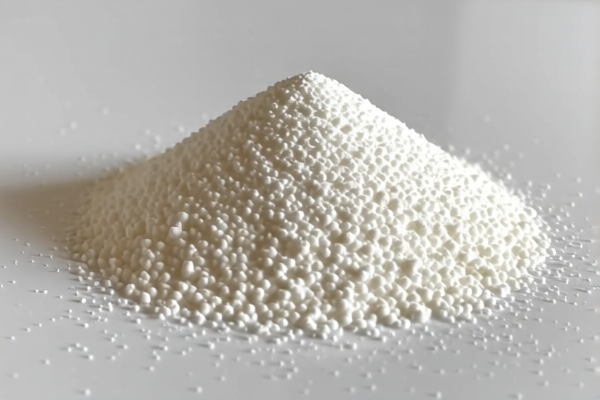
Microcrystalline Cellulose (MCC), specifically the pharmaceutical grade, is a refined, partially depolymerized cellulose derived from pure natural cellulose fibers (typically wood pulp or cotton linters). It is a white, odorless, tasteless powder widely used as a binding agent, disintegrant, and filler in tablet formulations.
In international trade, MCC is classified under Chapter 39: Plastics and Articles Thereof, specifically as Natural Polymers and Modified Natural Polymers. This is because, despite its industrial processing, it retains the fundamental chemical structure of natural cellulose and is considered a "natural polymer" rather than a synthetic plastic.
⚠️ Key Distinction Point:
- If the product is Pharmaceutical Grade MCC (primary form, powder, unmodified or slightly modified for pharmaceutical use) → Classified under 3913.
- Do NOT confuse with "Cellulose Derivatives" like Carboxymethyl Cellulose (CMC) or Hydroxypropyl Methylcellulose (HPMC), which are fully chemically modified and may fall under different subheadings depending on specific chemical structure. MCC is physically processed from natural fibers, fitting the "Modified Natural Polymer" or "Other Natural Polymer" description.
📦 II. HS Code Classification Details (2026 Latest Tariff Authority Comparison)
Based on the provided data, here is the precise classification for Pharmaceutical Grade α Cellulose Microcrystalline Powder.
| HS Code | Product Description | Key Characteristics | Applicable Scenario |
|---|---|---|---|
3913.90.20.90 |
Natural polymers... in primary forms: Other: Polysaccharides and their derivatives Other | - Primary form (powder) - α-Cellulose (Microcrystalline) - Pharmaceutical Grade |
Standard Pharmaceutical Excipient |
3913.90.50.00 |
Natural polymers... in primary forms: Other: Other | - Primary form - Other natural polymers not specified as polysaccharides |
Non-specific natural polymers (Less likely for MCC) |
🔍 Priority Explanation:
-3913.90.20.90is the most accurate classification for Microcrystalline Cellulose. MCC is a polysaccharide (specifically, a crystalline form of cellulose). Therefore, it falls under the "Polysaccharides and their derivatives" sub-category.
-3913.90.50.00is a "catch-all" for other natural polymers. While MCC is a natural polymer, the existence of the more specific "Polysaccharides" category (3913.90.20.90) makes it the preferred code for customs authorities who classify cellulose derivatives here.
- Note: If the product were heavily chemically modified (e.g., converted to CMC-Na), it might still be in Chapter 39, but the specific subheading might differ. However, for Microcrystalline cellulose,3913.90.20.90is the industry standard for US imports.
💰 III. 2026 Latest Tariff Rate Details (Including Surcharge & Policy Add-ons)
✅ Applicable Country: United States (US)
✅ Country of Origin: China (CN) (Assuming Chinese origin for tariff calculation based on typical trade patterns; adjust if origin differs)
✅ Effective Date: Current 2026 Tariff Structure
🎯 1. 3913.90.20.90 —— Microcrystalline Cellulose (Polysaccharides & Derivatives)
| Item | Content |
|---|---|
| Base Tariff Rate | 5.8% (Ad Valorem) |
| Section 301 Surcharge (Added Tariff) | +25.0% (Applied to Chinese-origin goods under USITC Section 301) |
| Total Tax Rate | 30.8% |
| Tax Calculation | CIF Value × 30.8% |
| De Minimis Eligibility | ❌ Not Eligible (Section 301 tariffs generally do not apply to de minimis, but imports >$800 are subject to full duty; imports <$800 are exempt from duty but may face scrutiny). Note: For shipments ≥$800, full 30.8% applies. |
| Legal Authority Path | HTSUS:3913.90.20.90 → USITC Footnote 9903.88.01 (Section 301 Tariff List 4) |
📌 Explanation:
- The 5.8% is the standard Most Favored Nation (MFN) rate for polysaccharides and derivatives.
- The +25% is the additional tariff imposed on Chinese goods under Section 301 of the Trade Act of 1974.
- Total: 30.8%. This is a significant cost factor for pharmaceutical raw materials sourced from China.
- No Generalized System of Preferences (GSP) benefits apply to China-origin goods.
🎯 2. 3913.90.50.00 —— Other Natural Polymers
| Item | Content |
|---|---|
| Base Tariff Rate | 0.0% |
| Section 301 Surcharge | 0.0% (Not applicable in the provided data) |
| Total Tax Rate | 0.0% |
| Tax Calculation | N/A |
| De Minimis Eligibility | N/A |
| Legal Authority Path | HTSUS:3913.90.50.00 |
📌 Warning:
- While the tax rate appears 0%, this code is incorrect for Microcrystalline Cellulose if properly classified as a polysaccharide.
- Misclassifying MCC as3913.90.50.00to avoid the 30.8% duty is a high-risk customs violation. U.S. Customs and Border Protection (CBP) closely monitors pharmaceutical excipients. If audited, you will face back duties, penalties, and potential seizure.
- Recommendation: Use3913.90.20.90with the full 30.8% duty. The cost of compliance is far lower than the risk of fraud penalties.
🛠️ IV. Customs Clearance Operational Advice (Practical Pitfall Avoidance Guide)
✅ 1. Required Documentation Checklist (Mandatory)
| Document | Required | Explanation |
|---|---|---|
| ✅ Certificate of Analysis (COA) | ✔️ | Must confirm "Microcrystalline Cellulose," "Pharmaceutical Grade," and purity levels. |
| ✅ Drug Master File (DMF) Reference | ✔️ | Provide the DMF number held by the manufacturer (shows regulatory compliance). |
| ✅ Commercial Invoice | ✔️ | Clearly state: "Pharmaceutical Grade Microcrystalline Cellulose (α-Cellulose), HS Code 3913.90.20.90." |
| ✅ Packing List | ✔️ | Detail net weight, gross weight, and package type (e.g., 25kg bags). |
| ✅ FDA Prior Notice | ✔️ | Mandatory for all food/drug-related imports into the US. |
| ✅ Proof of Origin | ✔️ | If claiming any non-China origin, provide COO. If China, declare correctly for 301 duties. |
| ✅ MSDS/SDS | ✔️ | Safety Data Sheet for handling. |
✅ 2. Declaration Tips (Key Mnemonics)
🔥 "Declare as Polysaccharide, Not 'Other'; 308% is not a typo, 30.8% is the truth!"
| Scenario | Correct Declaration | Incorrect Action |
|---|---|---|
| MCC Powder for Tablets | 3913.90.20.90 (Polysaccharides) |
Misclassifying as 3913.90.50.00 to save duty → High Audit Risk |
| Carboxymethyl Cellulose (CMC) | May vary (check chemical structure) | Treating CMC exactly like MCC without verification |
| Non-Pharma Grade MCC | Still 3913.90.20.90 |
Misclassifying as industrial fiber → Compliance Violation |
| Bundles of Raw Cotton Linters | 5201.00.00.00 (Cotton) |
Classifying raw fiber as processed MCC |
📌 Critical Reminder:
- Do not split shipments to avoid Section 301 tariffs. CBP uses data analytics to detect "shipment splitting" (e.g., shipping smaller quantities multiple times).
- Ensure the product description explicitly mentions "Microcrystalline" and "Cellulose" to align with HS Code 3913.90.20.90.
✅ 3. Special Circumstances Handling
| Scenario | Handling Advice |
|---|---|
| OEM/Contract Manufacturing | Provide the contract between the US importer and foreign manufacturer. Ensure the importer is the owner of the goods. |
| Samples for R&D | Even samples >$800 are subject to duty. For <$800, Section 301 may not apply, but FDA Prior Notice is still required. |
| Mixed Shipments (MCC + Other Excipients) | Declare MCC separately under 3913.90.20.90. Do not lump into a general "Pharmaceutical Raw Materials" code. |
| FDA Compliance | Ensure the facility is FDA-registered. Lack of FDA registration can lead to detention and refusal of entry, regardless of HS Code. |
🌍 V. Global Market Customs Comparison (2026 Latest)
| Country/Region | Recommended HS Code | Tariff Rate | Certification Requirements | Notes |
|---|---|---|---|---|
| 🇺🇸 United States | 3913.90.20.90 |
30.8% (5.8% + 25% 301) | FDA Prior Notice + DMF | High duty cost; strict FDA oversight |
| 🇨🇳 China | 3913.90.20.90 |
5.8% | N/A (Export) | Standard export duty |
| 🇪🇺 European Union | 3913.90 |
0% - 6.5% | REACH Compliance | Varies by member state; no Section 301 |
| 🇬🇧 United Kingdom | 3913.90.00.00 |
6.5% | UKCA (if applicable) | Post-Brexit tariff schedule |
| 🇯🇵 Japan | 3913.90.00.00 |
6.0% | PSE (if applicable) | Generally low tariffs |
📌 Conclusion:
- The US is the most expensive market for Chinese-origin MCC due to the 25% Section 301 surcharge.
- Consider supply chain diversification (e.g., sourcing from Brazil, India, or Canada) if duty costs are prohibitive, as these countries may benefit from FTA (Free Trade Agreements) or lower MFN rates.
📌 VI. Common Mistakes & Pitfall Guide (Lessons Learned)
❌ Mistake 1: Classifying MCC as 3913.90.50.00 ("Other") to claim 0% duty
👉 Consequence: CBP audit → Back duties + 25% penalty + Legal Fees. MCC is explicitly a polysaccharide derivative.
❌ Mistake 2: Ignoring FDA Prior Notice
👉 Consequence: Cargo detained at port for weeks, potential destruction, and import ban for the facility.
❌ Mistake 3: Not specifying "Microcrystalline" in the description
👉 Consequence: Customs may question the classification, leading to delays or reclassification to a higher-tariff code.
❌ Mistake 4: Assuming "Pharmaceutical Grade" exempts you from duties
👉 Consequence: No duty exemption exists for pharma excipients in the US under current HTSUS. Duty is based on HS Code, not end-use.
✅ Correct Approach:
"Microcrystalline Cellulose, Pharmaceutical Grade, for Use as Tablet Excipient, HS 3913.90.20.90, FDA DMF #XXXX, Origin: China"
🎯 VII. Conclusion: Professional Declaration, Cost Control, Risk Mitigation
🎯 Remember the Mantra:
🔹 "MCC is Polysaccharide, Not 'Other'; 30.8% Duty is Mandatory."
🔹 "FDA First, Customs Second; Compliance Saves Your Cargo."
🔹 "Misclassification is Fraud; Accuracy is Profit."
📌 Pro Tip:
If your MCC is sourced from Vietnam, India, or Canada, you may qualify for 0%~6.5% duty rates depending on the specific trade agreement. Evaluate origin strategies to mitigate the US 301 tariff burden.
📣 Immediate Action:
📞 Contact your customs broker + Provide COA + File FDA Prior Notice
🚀 Ensure smooth customs clearance, regulatory compliance, and cost-effective logistics!
✨ Professional Clearance Starts with Accurate Classification!
💼 Your Bottom Line Depends on Precise Duty Calculations!
Customer Reviews
About HS Code Classification
The Harmonized System (HS) is an internationally standardized nomenclature developed by the World Customs Organization (WCO) to classify traded products. Over 200 countries use the HS system as the basis for customs tariffs, trade statistics, and import/export regulations.
Each HS code follows a hierarchical structure:
- Chapter (2 digits) — Broad category of goods (e.g., Chapter 84: Machinery and Mechanical Appliances)
- Heading (4 digits) — More specific grouping within the chapter
- Subheading (6 digits) — Internationally standardized breakdown, used by all WCO member countries
- National subdivisions (8-10 digits) — Country-specific extensions for further classification, such as US HTSUS 10-digit codes
Correct HS code classification is essential for smooth customs clearance, accurate duty payment, and compliance with trade regulations. Misclassification can lead to customs delays, overpayment of duties, or penalties.
When importing from CN to US, the applicable tariff rates may include:
- Most-Favored-Nation (MFN) rate — The standard duty rate applied to WTO members
- General rate — Applied to countries without trade agreements
- Trade remedy duties — Additional tariffs such as Section 301 (anti-dumping), Section 232 (national security), or countervailing duties
The information provided on this page is for reference purposes only. For official classification, please consult with your local customs authority or a licensed customs broker.