Phenolic Petroleum Resin Binder
CN → US| HS Code | Tariff Rate | Origin | Destination | Doc |
|---|---|---|---|---|
| 3506915000 | 37.1% | CN | US | Official Doc |
| 3506990000 | 37.1% | CN | US | Official Doc |
| 3909390000 | 41.5% | CN | US | Official Doc |
| 3909400000 | 41.5% | CN | US | Official Doc |
| 3824992900 | 41.5% | CN | US | Official Doc |
Product Images

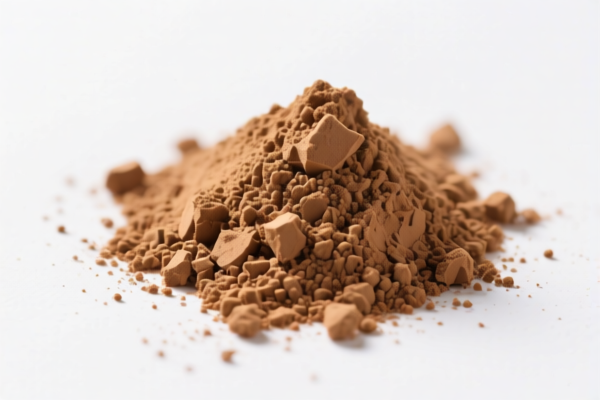
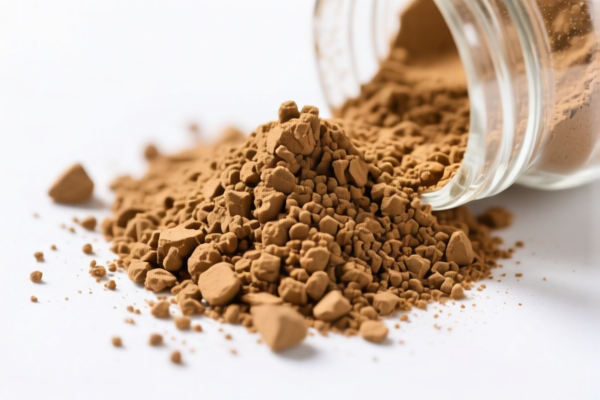
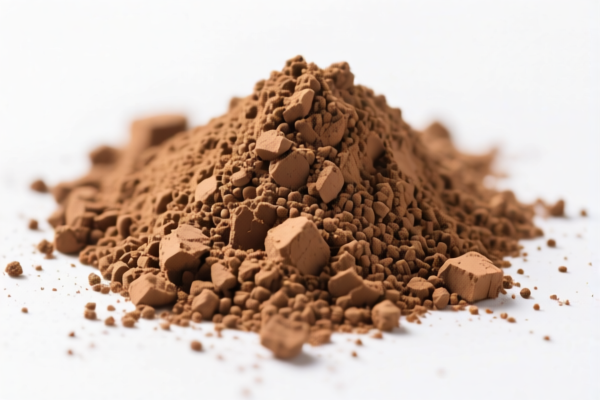
AI Analysis
🧪 Phenolic Petroleum Resin Binder (Phenolic Resin Adhesive)
🌐 HS Code Reference & Clearance Guide | 2026 Latest Tariff Analysis | Professional Clearance Strategy
📌 I. Product Definition & Classification: Do You Really Know "Phenolic Petroleum Resin Binder"?
Phenolic Resin Binders are critical industrial adhesives derived from phenolic resins. In international trade, they are classified based on their form, chemical composition, and specific application. The key distinction lies in whether the product is considered a prepared adhesive (Chapter 35/38) or a raw resin material (Chapter 39).
⚠️ Key Distinction Point:
- If it is a pre-mixed, ready-to-use adhesive or prepared specifically for industrial applications (e.g., casting molds) → Classified under HS 3506 or 3824.
- If it is the raw polymer/resin in primary forms or intermediate states → Classified under HS 3909.
📦 II. HS Code Classification Details (2026 Latest Tariff Authority Comparison)
| HS Code | Product Description | Application Scenario | Raw Material State |
|---|---|---|---|
3506.91.50.00 |
Phenolic resin binders, based on polymers of heading 39.01 to 39.13, used as adhesives | General industrial adhesives, wood bonding, packaging | ✅ Prepared Adhesive |
3506.99.00.00 |
Phenolic resin binders, classified as other prepared adhesives | Other prepared adhesives not elsewhere specified | ✅ Prepared Adhesive |
3909.39.00.00 |
Phenolic resin binders, as primary form/raw material category, material is phenolic resin | Raw resin granules/powders for further processing | ❌ Raw Resin (Primary Form) |
3909.40.00.00 |
Phenolic resin binders, as primary/intermediate form application, material is phenolic resin | Intermediate resin forms for manufacturing | ❌ Raw Resin (Intermediate Form) |
3824.99.29.00 |
Phenolic resin binders, chemical products/preparations, used as binding agents for molding sands or cores | Foundry molds, core binding in casting | ✅ Specialized Chemical Preparation |
🔍 Critical Reminder:
- Prepared Adhesives (3506) are generally for immediate use in bonding.
- Raw Resins (3909) are materials intended for further chemical processing or melting.
- Foundry Binders (3824) are specialized formulations for sand casting.
- Misclassification Risk: Classifying a raw resin as a prepared adhesive (or vice versa) can lead to incorrect duty assessments and customs delays.
💰 III. 2026 Latest Tariff Rate Breakdown (Including Additional Taxes, Policy Add-ons)
✅ Applicable Country: USA (US)
✅ Country of Origin: China (CN)
✅ Effective Date: From November 10, 2025 (including subsequent imports)
🎯 1. 3506.91.50.00 & 3506.99.00.00 —— Prepared Phenolic Adhesives
| Item | Content |
|---|---|
| Base Tariff Rate | 2.1% (ad valorem) |
| USITC Additional Tariff | +25.0% (Section 301 Tariffs) |
| 122 Clause Tariff | +10.0% (Specific regulatory add-on) |
| Total Tax Rate | 37.1% |
| Tax Calculation | CIF Value × 37.1% |
| De Minimis Exemption | ❌ Not Applicable (High-risk category) |
| Legal Basis Path | Section 301: 9903.88.01 → IEEPA: 9903.01.24 → HTSUS: 3506.91/99 |
📌 Explanation:
- "Base Tariff 2.1%": Standard Most Favored Nation (MFN) rate for prepared adhesives.
- "Section 301 25%": Significant additional duty on Chinese-manufactured goods under US Trade Act Section 301.
- "122 Clause 10%": Additional tariff provision affecting specific chemical/adhesive imports.
- Total 37.1%: This is a high-cost entry. Importers must calculate margin carefully.
🎯 2. 3909.39.00.00 & 3909.40.00.00 —— Raw/Intermediate Phenolic Resins
| Item | Content |
|---|---|
| Base Tariff Rate | 6.5% (ad valorem) |
| USITC Additional Tariff | +25.0% (Section 301 Tariffs) |
| 122 Clause Tariff | +10.0% (Specific regulatory add-on) |
| Total Tax Rate | 41.5% |
| Tax Calculation | CIF Value × 41.5% |
| De Minimis Exemption | ❌ Not Applicable |
| Legal Basis Path | Section 301: 9903.88.01 → IEEPA: 9903.01.24 → HTSUS: 3909.39/40 |
📌 Note:
- These resins are taxed higher due to the higher base rate (6.5% vs 2.1%).
- Even though they are "raw materials," they are still subject to the same 25% Section 301 and 10% 122 Clause add-ons.
- Total 41.5% is even higher than prepared adhesives. Do not assume "raw materials" are cheaper to import from China to the US.
🎯 3. 3824.99.29.00 —— Foundry Mold Binders
| Item | Content |
|---|---|
| Base Tariff Rate | 6.5% (ad valorem) |
| USITC Additional Tariff | +25.0% (Section 301 Tariffs) |
| 122 Clause Tariff | +10.0% (Specific regulatory add-on) |
| Total Tax Rate | 41.5% |
| Tax Calculation | CIF Value × 41.5% |
| De Minimis Exemption | ❌ Not Applicable |
| Legal Basis Path | Section 301: 9903.88.01 → IEEPA: 9903.01.24 → HTSUS: 3824.99.29 |
📌 Special Context:
- Used specifically in foundry and casting industries for molding sands.
- Same tariff structure as raw resins (3909).
- Ensure product description clearly states "for foundry mold binding" to justify this HS code and avoid misclassification.
🛠️ IV. Customs Clearance Practical Advice (Real-World Pitfall Avoidance)
✅ 1. Documentation Checklist (All Required)
| Document | Must Provide | Description |
|---|---|---|
| ✅ Product Technical Data Sheet | ✔️ | Specifies chemical composition, curing agents, and intended use (adhesive vs. raw resin) |
| ✅ Material Safety Data Sheet (MSDS/SDS) | ✔️ | Required for chemical classification and safety compliance |
| ✅ Certificate of Origin (CO) | ✔️ | Proves China origin; critical for applying/confirming Section 301 and 122 tariffs |
| ✅ Commercial Invoice | ✔️ | Clearly state "Phenolic Resin Binder" and specify HS Code |
| ✅ Packing List | ✔️ | Details net/gross weight, packaging type |
| ✅ Formula/Composition Details | ✔️ | To distinguish between "Prepared Adhesive" (3506/3824) and "Raw Resin" (3909) |
✅ 2. Declaration Tips (Key Mnemonics)
🔥 "Know Your Form: Raw is 6.5, Prep is 2.1, But Add 35% on Top!"
| Scenario | Correct Declaration | Wrong Practice |
|---|---|---|
| Ready-to-use glue/paste | 3506.91.50.00 or 3506.99.00.00 |
Misdeclare as raw resin → Higher base duty |
| Resin granules/powder (not mixed) | 3909.39.00.00 or 3909.40.00.00 |
Misdeclare as adhesive → Lower base duty but audit risk |
| Sand casting binder | 3824.99.29.00 |
General adhesive declaration → Potential penalty for incorrect use |
| Any of the above | Declare all components | Hiding additives → Customs seizure |
✅ 3. Special Circumstances Handling
| Situation | Handling Advice |
|---|---|
| OEM Custom Resins | Provide customer specifications and formula sheets to prove intended use and classification |
| Mixed Shipments | Declare each HS code separately. Do not combine raw resins and prepared adhesives in one line item |
| Re-exported Goods | If re-exported from a third country, ensure the original China origin is correctly declared to avoid evasion charges |
| Regulatory Compliance | Ensure EPA TSCA compliance for chemical imports. Non-compliance leads to rejection at port |
🌍 V. Global Market Clearance Comparison (2026 Latest)
| Country/Region | Recommended HS Code | Tariff (China Origin) | Certification Requirements | Notes |
|---|---|---|---|---|
| 🇺🇸 USA | 3506.91.50.00 / 3909.39.00.00 |
37.1% - 41.5% | TSCA Certification | High additional tariffs (301 + 122) |
| 🇨🇳 China | 3506.91.50.00 |
5% - 6% | None | No additional duties for domestic trade |
| 🇪🇺 EU | 3506.91.50.00 |
0% - 6.5% | REACH Registration | No Section 301 tariffs |
| 🇬🇧 UK | 3506.91.50.00 |
0% - 6.5% | UK REACH | Post-Brexit alignment with EU standards |
| 🇯🇵 Japan | 3506.91.50.00 |
0% - 5.5% | JIS Standards | Generally low tariffs |
📌 Conclusion:
- The USA is the most expensive market for Chinese phenolic resins due to Section 301 and 122 Clause tariffs.
- Total duty of 37.1% - 41.5% significantly impacts cost structures.
- Consider supply chain diversification (e.g., sourcing from non-China countries) if targeting the US market to avoid high tariffs.
📌 VI. Common Errors & Pitfall Guide (Lessons Learned)
❌ Mistake 1: Declaring "Raw Resin" when it is actually a "Prepared Adhesive"
👉 Consequence: Base duty is lower (2.1% vs 6.5%), but customs may assess back taxes + penalties for misclassification.
❌ Mistake 2: Ignoring the "122 Clause" 10% tariff
👉 Consequence: Underpayment of duties, leading to audit findings and interest charges.
❌ Mistake 3: Failing to provide MSDS/SDS
👉 Consequence: Shipment held at port for chemical safety review, causing delays and demurrage fees.
❌ Mistake 4: Using generic terms like "Glue" without specifying "Phenolic Resin Based"
👉 Consequence: Customs cannot determine correct HS code, leading to manual examination and delays.
✅ Correct Approach:
"Phenolic Resin Binder, Prepared Adhesive, Based on Polymer of Heading 39.01-39.13, for Industrial Wood Bonding, Model XYZ, TSCA Compliant"
🎯 VII. Conclusion: Professional Declaration Saves Time, Effort, and Money!
🎯 Remember the Mnemonic:
🔹 "Raw is 6.5, Prep is 2.1, Add 35% for China to US!"
🔹 "HS Code determines duty, 4% difference means thousands saved!"
🔹 "Declare correctly, avoid audits, keep profit margins healthy!"
📌 Pro Tip:
If your phenolic resin binder is sourced from Vietnam, Thailand, or India, you may avoid Section 301 and 122 Clause tariffs, reducing duties to just the base rate (2.1% - 6.5%).
Recommendation: Conduct a Cost-Benefit Analysis on supply chain shifts. Consider applying for Advance Rulings from US Customs to confirm HS codes before shipment.
📣 Immediate Action:
📞 Consult professional customs brokers + Provide product formulas + Apply for Advance Rulings
🚀 Ensure your Phenolic Resin Binders clear customs smoothly, minimize costs, and maximize profitability!
✨ Professional clearance starts with accurate classification!
💼 Every cent of your cost deserves precise calculation!
Customer Reviews
About HS Code Classification
The Harmonized System (HS) is an internationally standardized nomenclature developed by the World Customs Organization (WCO) to classify traded products. Over 200 countries use the HS system as the basis for customs tariffs, trade statistics, and import/export regulations.
Each HS code follows a hierarchical structure:
- Chapter (2 digits) — Broad category of goods (e.g., Chapter 84: Machinery and Mechanical Appliances)
- Heading (4 digits) — More specific grouping within the chapter
- Subheading (6 digits) — Internationally standardized breakdown, used by all WCO member countries
- National subdivisions (8-10 digits) — Country-specific extensions for further classification, such as US HTSUS 10-digit codes
Correct HS code classification is essential for smooth customs clearance, accurate duty payment, and compliance with trade regulations. Misclassification can lead to customs delays, overpayment of duties, or penalties.
When importing from CN to US, the applicable tariff rates may include:
- Most-Favored-Nation (MFN) rate — The standard duty rate applied to WTO members
- General rate — Applied to countries without trade agreements
- Trade remedy duties — Additional tariffs such as Section 301 (anti-dumping), Section 232 (national security), or countervailing duties
The information provided on this page is for reference purposes only. For official classification, please consult with your local customs authority or a licensed customs broker.