Phenolic Resin Binder for Casting
CN → US| HS Code | Tariff Rate | Origin | Destination | Doc |
|---|---|---|---|---|
| 3909400000 | 41.5% | CN | US | Official Doc |
| 3909390000 | 41.5% | CN | US | Official Doc |
| 3506915000 | 37.1% | CN | US | Official Doc |
| 3506990000 | 37.1% | CN | US | Official Doc |
| 3824401000 | 41.5% | CN | US | Official Doc |
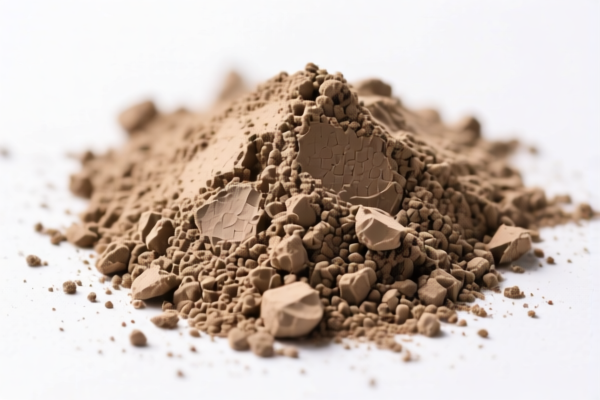
Product Images



AI Analysis
🏭 Phenolic Resin Binder for Casting (Phenolic Resin Adhesive)
🌐 HS Code Classification & Customs Clearance Guide | 2026 Latest Tariff Analysis | Professional Entry Strategy
📌 I. Product Definition & Classification: Understanding the Core of "Phenolic Resin Binder"
Phenolic resin binders are critical chemical adhesives used primarily in the foundry industry for metal casting processes. They serve as the binding agent for sand molds and cores, curing under heat to provide structural integrity. In international trade, these products are classified based on their state (primary vs. formulated) and specific application.
Key Classification Criteria: * Primary State (Raw Material): Resins that are unformulated or simply mixed with standard solvents, falling under Chapter 39 (Plastics and Articles Thereof). * Formulated Adhesive: Resins that are chemically modified, compounded, or specifically prepared for adhesive use, falling under Chapter 35 (Albuminoidal Substances; Modified Starches; Glues). * Specialized Industrial Use: Binders specifically for preformed casting molds, potentially falling under Chapter 38 (Miscellaneous Chemical Products).
⚠️ Critical Distinction:
- If the product is a raw phenolic resin intended for further processing into adhesives → Chapter 39 (3909.xx).
- If the product is a pre-formulated glue/adhesive ready for application → Chapter 35 (3506.xx).
- If the product is a specialized pre-formed binder for casting molds → Chapter 38 (3824.xx).
📦 II. HS Code Classification Details (2026 Latest Tariff Authority对照)
| HS Code | Product Description | Applicability Scenario | Material/State Conflict? |
|---|---|---|---|
3909.40.00.00 |
Phenolic Resin Adhesive, in primary form | Raw phenolic resin, suitable for resin classification | ✅ Consistent with "Primary Form" definition |
3909.39.00.00 |
Phenolic Resin Adhesive, other phenolic resins | Raw phenolic resin, classified as primary material | ✅ Consistent with "Primary Material" requirement |
3506.91.50.00 |
Phenolic Resin Adhesive, based on polymers of headings 39.01-39.13 | Formulated adhesive using phenolic polymers | ✅ No conflict; meets "Adhesive" usage criteria |
3506.99.00.00 |
Phenolic Resin Adhesive, other prepared adhesives | General prepared adhesives, no material conflict | ✅ No conflict; fits "Other Prepared Adhesives" |
3824.40.10.00 |
Phenolic Resin Adhesive, for preformed casting molds | Specialized binder for mold/core preformation | ✅ Fits "Preformed Adhesives for Casting" |
🔍 Key Reminder:
- Chapter 39 (3909.xx) is appropriate when the product is sold as a resin material (even if labeled as "adhesive") and is in its primary form. - Chapter 35 (3506.xx) is appropriate when the product is a fully formulated adhesive prepared for immediate use. - Chapter 38 (3824.xx) is a niche classification for specialized pre-formed binders specifically described for casting applications. - Misclassification Risk: Declaring a formulated adhesive as a "raw resin" (3909) may trigger audits. Conversely, declaring a raw resin as a "specialized binder" (3824) may be rejected if not strictly pre-formed.
💰 III. 2026 Latest Tariff Rate Breakdown (Including Surcharges, Policy Add-ons)
✅ Applicable Country: United States (US)
✅ Country of Origin: China (CN)
✅ Effective Date: 2025 November 10 onwards (including subsequent imports)
🎯 1. 3909.40.00.00 & 3909.39.00.00 —— Phenolic Resins (Primary Form)
| Item | Content |
|---|---|
| Base Tariff Rate | 6.5% (ad valorem) |
| Section 301 Additional Tariff | +25.0% |
| Section 122 Additional Tariff | +10.0% |
| Total Effective Rate | 41.5% |
| Tax Calculation | CIF Value × 41.5% |
| De Minimis Eligibility | ❌ Not Eligible (deny_de_minimis) |
| Legal Basis Path | Section 301: 9903.01.24 → Section 122: IEEPA → USITC: 3909.40.00.00 / 3909.39.00.00 |
📌 Explanation:
- "Base Tariff 6.5%": Standard MFN rate for phenolic resins in primary form. - "Section 301 Surcharge 25%": Imposed under the US Trade Act of 1974, Section 301, targeting Chinese-manufactured goods. - "Section 122 Tariff 10%": Additional surcharge under International Emergency Economic Powers Act (IEEPA). - Total 41.5%: A high-cost category. Must be factored into pricing strategies.
🎯 2. 3506.91.50.00 & 3506.99.00.00 —— Prepared Adhesives (Formulated)
| Item | Content |
|---|---|
| Base Tariff Rate | 2.1% (ad valorem) |
| Section 301 Additional Tariff | +25.0% |
| Section 122 Additional Tariff | +10.0% |
| Total Effective Rate | 37.1% |
| Tax Calculation | CIF Value × 37.1% |
| De Minimis Eligibility | ❌ Not Eligible (deny_de_minimis) |
| Legal Basis Path | Section 301: 9903.01.24 → Section 122: IEEPA → USITC: 3506.91.50.00 / 3506.99.00.00 |
📌 Note:
- Lower Base Rate (2.1%): Prepared adhesives generally have a lower base tariff than raw resins. - Same Surcharges: The 25% (301) and 10% (122) surcharges still apply. - Total 37.1%: Still significant, but 4.4% cheaper than primary form classification (3909).
🎯 3. 3824.40.10.00 —— Preformed Adhesives for Casting
| Item | Content |
|---|---|
| Base Tariff Rate | 6.5% (ad valorem) |
| Section 301 Additional Tariff | +25.0% |
| Section 122 Additional Tariff | +10.0% |
| Total Effective Rate | 41.5% |
| Tax Calculation | CIF Value × 41.5% |
| De Minimis Eligibility | ❌ Not Eligible (deny_de_minimis) |
| Legal Basis Path | Section 301: 9903.01.24 → Section 122: IEEPA → USITC: 3824.40.10.00 |
📌 Explanation:
- High Base Rate (6.5%): This specialized category does not benefit from the lower adhesive base rate. - Total 41.5%: Same as raw phenolic resins. Use only if the product strictly meets the "preformed for casting molds" definition.
🛠️ IV. Customs Clearance Practical Advice (Real-World Pitfall Avoidance)
✅ 1. Documentation Checklist (Missing Any = Risk)
| Document | Required | Explanation |
|---|---|---|
| ✅ Product Specification Sheet | ✔️ | Must detail chemical composition, curing time, viscosity, and application method. |
| ✅ Material Safety Data Sheet (MSDS) | ✔️ | Critical for chemical classification and safety compliance. |
| ✅ Commercial Invoice | ✔️ | Must clearly state "Phenolic Resin Binder" and specify HS Code basis. |
| ✅ Certificate of Origin (CO) | ✔️ | To prove Chinese origin and confirm surcharge applicability. |
| ✅ Packing List | ✔️ | Details net/gross weight and packaging type. |
| ✅ Formulation Data (if applicable) | ✔️ | If claiming 3506 (adhesive), provide proof of formulation vs. raw resin to justify lower base rate. |
✅ 2. Declaration Tips (Key Mantra)
🔥 "Raw Resin 39, Glue 35, Special Mold 38, Be Precise or Pay More!"
| Scenario | Correct Declaration | Incorrect Practice |
|---|---|---|
| Raw Phenolic Resin (for further mixing) | 3909.40.00.00 or 3909.39.00.00 |
Misdeclare as "Adhesive" → May trigger audit for "formulated product". |
| Pre-mixed Foundry Glue | 3506.91.50.00 or 3506.99.00.00 |
Misdeclare as "Raw Resin" → Unjustified 6.5% base rate vs 2.1%. |
| Pre-formed Sand Core Binder | 3824.40.10.00 |
Misdeclare as "General Adhesive" → Risk of reclassification if not strictly pre-formed. |
✅ 3. Special Case Handling
| Scenario | Handling Advice |
|---|---|
| OEM Custom Resin | Provide client order + formulation data. Avoid "generic" names. |
| Mix of Raw & Formulated | Ship separately or clearly split invoice lines to avoid complex classification. |
| Small Samples (<$800) | ❌ De Minimis Exemption Denied: All phenolic resin categories under Section 301/122 are excluded from de minimis treatment. Taxes apply even on small shipments. |
| Third-Party Warehousing | Ensure proper labeling in bonded warehouses to avoid premature classification errors. |
🌍 V. Global Market Comparison (2026 Latest)
| Country/Region | Recommended HS Code | Tariff (China Origin) | Certification Requirements | Notes |
|---|---|---|---|---|
| 🇺🇸 United States | 3506.99.00.00 (Preferred) |
37.1% | REACH-like safety data, MSDS | High total tax burden due to surcharges. |
| 🇨🇳 China | 3506.99.00.00 |
~5-10% | CCC (if applicable) | Lower tax burden; focus on environmental compliance. |
| 🇪🇺 European Union | 3506.91.00.00 |
~6.5% | REACH Registration, SDS | No 301/122 surcharges, but REACH compliance is strict. |
| 🇮🇳 India | 3506.91.00.00 |
~7.5% | BIS Certification | Varies by state; check anti-dumping duties. |
📌 Conclusion:
- USA remains the most challenging market due to the cumulative 35-41.5% tariff. - Chapter 35 (3506.xx) offers a 4.4% savings on base tariffs compared to Chapter 39, provided the product is truly "formulated." - REACH (EU) and MSDS (Global) are non-negotiable for chemical shipments.
📌 VI. Common Mistakes & Pitfall Guide (Lessons Learned)
❌ Mistake 1: Claiming "Raw Resin" status for a pre-mixed glue to avoid higher base rates.
👉 Consequence: Customs audit, penalty, and forced reclassification to 3506 with back taxes.
❌ Mistake 2: Assuming small shipments (<$800) are duty-free.
👉 Consequence: De Minimis is denied for Section 301/122 goods. You will still pay ~37-41.5% tax on samples.
❌ Mistake 3: Using vague descriptions like "Chemical Glue."
👉 Consequence: Delays in clearance, requests for additional documentation, potential detention.
❌ Mistake 4: Ignoring the "Preformed" requirement for 3824.40.10.00.
👉 Consequence: Rejection by CBP if the product is not strictly a pre-formed mold component.
✅ Correct Approach:
"Phenolic Resin Based Foundry Adhesive, Pre-mixed, for Sand Core Applications, MSDS Attached, Model XYZ"
🎯 VII. Conclusion: Professional Classification Saves Money!
🎯 Remember the Mantra:
🔹 "Raw 39 (41.5%), Glue 35 (37.1%), Special 38 (41.5%). No De Minimis!"
🔹 "Chapter 35 saves 4.4% base, but only if truly formulated. Be honest!"
📌 Pro Tip:
If your phenolic resin binder is sourced from Vietnam, Thailand, or Malaysia, you may qualify for preferential tariffs or exclusions from Section 301 duties.
We strongly recommend applying for an Advance Ruling with US CBP to lock in the correct HS Code and avoid post-entry audits.
📣 Immediate Action Required:
📞 Contact a licensed customs broker + Provide detailed formulation data + Apply for HS Code Advance Ruling
🚀 Ensure your phenolic resin binder clears customs smoothly, efficiently, and cost-effectively!
✨ Professional Customs Clearance Starts with Accurate Classification!
💼 Every percentage point of tax matters in the casting industry!
Customer Reviews
About HS Code Classification
The Harmonized System (HS) is an internationally standardized nomenclature developed by the World Customs Organization (WCO) to classify traded products. Over 200 countries use the HS system as the basis for customs tariffs, trade statistics, and import/export regulations.
Each HS code follows a hierarchical structure:
- Chapter (2 digits) — Broad category of goods (e.g., Chapter 84: Machinery and Mechanical Appliances)
- Heading (4 digits) — More specific grouping within the chapter
- Subheading (6 digits) — Internationally standardized breakdown, used by all WCO member countries
- National subdivisions (8-10 digits) — Country-specific extensions for further classification, such as US HTSUS 10-digit codes
Correct HS code classification is essential for smooth customs clearance, accurate duty payment, and compliance with trade regulations. Misclassification can lead to customs delays, overpayment of duties, or penalties.
When importing from CN to US, the applicable tariff rates may include:
- Most-Favored-Nation (MFN) rate — The standard duty rate applied to WTO members
- General rate — Applied to countries without trade agreements
- Trade remedy duties — Additional tariffs such as Section 301 (anti-dumping), Section 232 (national security), or countervailing duties
The information provided on this page is for reference purposes only. For official classification, please consult with your local customs authority or a licensed customs broker.