Phenolic Resin Casting Curing Agent
CN → US| HS Code | Tariff Rate | Origin | Destination | Doc |
|---|---|---|---|---|
| 3909400000 | 41.5% | CN | US | Official Doc |
| 3909390000 | 41.5% | CN | US | Official Doc |
| 3506915000 | 37.1% | CN | US | Official Doc |
| 3506990000 | 37.1% | CN | US | Official Doc |
| 3824401000 | 41.5% | CN | US | Official Doc |
Product Images

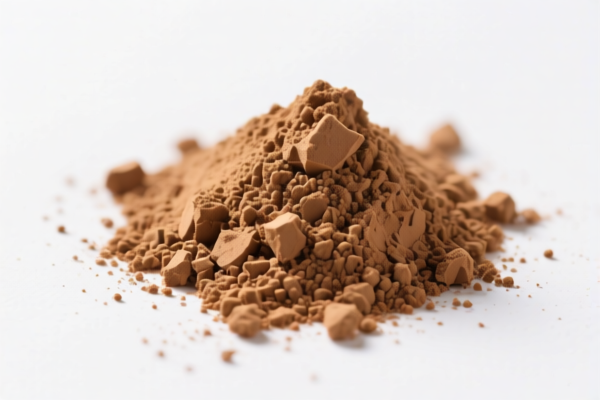


AI Analysis
🧪 Phenolic Resin Casting Curing Agent (Phenolic Adhesives & Binding Agents)
🌐 HS Code Reference & Customs Clearance Guide | 2026 Latest Tariff Analysis | Professional Classification Strategy
📌 I. Product Definition & Classification: What exactly is "Phenolic Resin Curing Agent"?
In the international trade of chemical raw materials and industrial adhesives, Phenolic Resin products are classified based on their physical form (raw material vs. prepared) and their primary function (resin vs. adhesive).
The term "Curing Agent" often overlaps with "Adhesive" (Glue) or "Binding Agent" in customs declarations. The critical distinction lies in whether the product is a primary raw polymer (Chapter 39) or a prepared adhesive mixture (Chapter 35/38).
⚠️ Key Classification Divergence:
- If it is a raw phenolic resin in primary shape (liquid/powder/granules) intended for further processing → Chapter 39.
- If it is a prepared adhesive (mixed, formulated, or ready-to-use glue) based on phenolic polymers → Chapter 35 or 38.
📦 II. HS Code Classification Matrix (2026 Latest Tariff Authority)
| HS Code | Product Description | Application Scenario | Tax Rate (US Import from CN) |
|---|---|---|---|
3909.40.00.00 |
Phenolic Resins in Primary Forms | Raw resin material, intermediate state, not yet formulated as glue | 41.5% |
3909.39.00.00 |
Other Phenolic Resins in Primary Forms | Raw phenolic resin, generic category, primary shape | 41.5% |
3506.91.50.00 |
Phenolic Resin Adhesives (Based on Chapters 39.01-39.13) | Prepared adhesives where the binding agent is a polymer from Ch. 39 | 37.1% |
3506.99.00.00 |
Other Prepared Adhesives | Generic prepared glues, phenolic-based but not covered elsewhere | 37.1% |
3824.40.10.00 |
Ready-Mixed or Ready-Made Foundry Bonding Agents | Specifically for casting molds/cores, prepared chemical binding agents | 41.5% |
🔍 Critical Insight:
- Ch. 39 (3909.xx) applies to the resin itself. If your "curing agent" is technically the raw phenolic resin or a pre-polymer before final formulation, it falls here.
- Ch. 35 (3506.xx) applies to prepared adhesives. If it is sold as a "glue" or "bonding agent" ready for application, this is the preferred category for lower tax liability.
- Ch. 38 (3824.40) is a niche category for foundry/sand casting bonding agents. If your product is specifically marketed for metal casting molds, this is the exact fit, but the tax rate is high.
💰 III. 2026 Latest Tariff Rate Breakdown (Detailed)
✅ Applicable Country: United States (US)
✅ Origin: China (CN)
✅ Effective Date: Post-2025 Trade Policies (Section 301 + IEEPA)
🎯 1. 3909.40.00.00 & 3909.39.00.00 —— Phenolic Resins (Primary Forms)
| Item | Content |
|---|---|
| Base Tariff | 6.5% |
| Section 301 Add-on | +25.0% |
| IEEPA Section 122 Tariff | +10.0% |
| Total Effective Rate | 41.5% |
| De Minimis Exemption? | ❌ NO (Denied for Chinese origin) |
| Legal Basis Path | USITC:3909.40.00.00 → FOOTNOTE:301-3909 → IEEPA:9903.01.25 |
📌 Explanation:
- Phenolic resins are heavily scrutinized as industrial raw materials.
- The 25% Section 301 tariff is standard for Chapter 39 goods from China.
- The 10% IEEPA 122 Tariff applies to all Chinese imports regardless of HS code (unless specifically exempted).
- Total Burden: 41.5% is significant. Ensure the product is indeed "primary resin" and not a "prepared adhesive" to avoid misclassification penalties.
🎯 2. 3506.91.50.00 & 3506.99.00.00 —— Prepared Adhesives
| Item | Content |
|---|---|
| Base Tariff | 2.1% |
| Section 301 Add-on | +25.0% |
| IEEPA Section 122 Tariff | +10.0% |
| Total Effective Rate | 37.1% |
| De Minimis Exemption? | ❌ NO |
| Legal Basis Path | USITC:3506.91.50.00 → FOOTNOTE:301-3506 → IEEPA:9903.01.25 |
📌 Strategic Advantage:
- The base tariff (2.1%) is significantly lower than Chapter 39 (6.5%).
- If your "Curing Agent" is functionally an adhesive (used to bond materials), classifying it under 3506 saves 4.4% per shipment compared to 3909.
- Key Requirement: Must be described as "Prepared Adhesive" or "Glue" with evidence of formulation (mixing of resin + curing agent + additives).
🎯 3. 3824.40.10.00 —— Foundry Bonding Agents
| Item | Content |
|---|---|
| Base Tariff | 6.5% |
| Section 301 Add-on | +25.0% |
| IEEPA Section 122 Tariff | +10.0% |
| Total Effective Rate | 41.5% |
| De Minimis Exemption? | ❌ NO |
| Legal Basis Path | USITC:3824.40.10.00 → FOOTNOTE:301-3824 → IEEPA:9903.01.25 |
📌 Niche Warning:
- This code is for prefabricated bonding agents for foundry molds or cores.
- If your product is used for metal casting sand molds, use this code.
- Despite being a "specialty" chemical, it does not enjoy lower base rates. The 41.5% rate applies.
🛠️ IV. Customs Clearance Practical Advice (Risk Mitigation)
✅ 1. Documentation Checklist (Mandatory)
| Document | Required? | Purpose |
|---|---|---|
| ✅ Technical Data Sheet (TDS) | ✔️ | Proves whether it is a "raw resin" (Ch. 39) or "prepared adhesive" (Ch. 35). |
| ✅ Formula/Composition Breakdown | ✔️ | Must show percentage of Phenolic Resin + Curing Agents + Solvents. |
| ✅ Product Photos | ✔️ | Label must clearly state "Phenolic Adhesive" or "Foundry Bonding Agent". |
| ✅ Statement of Function | ✔️ | Explicitly state: "Used as a binding agent for casting molds" OR "Used as a structural adhesive". |
| ✅ Commercial Invoice | ✔️ | Do NOT use vague terms like "Chemical Mix". Use specific HS-aligned descriptions. |
✅ 2. Classification Strategy (The "Lower Tax" Path)
🔥 Golden Rule:
"If it glues, classify as Adhesive (Ch. 35). If it’s raw resin, it’s Ch. 39. If it’s for sand casting, it’s Ch. 38."
| Scenario | Recommended HS Code | Why? |
|---|---|---|
| You sell a bottle of glue made from phenolic resin | 3506.91.50.00 |
Lower base tax (2.1%). Proven adhesive function. |
| You sell drums of raw phenolic resin to a factory | 3909.40.00.00 |
It is a primary polymer, not yet an adhesive. |
| You sell sand-bonding mix for metal casting | 3824.40.10.00 |
Specific use case for foundries. |
| You sell a generic glue without specific phenolic classification | 3506.99.00.00 |
Catch-all for prepared adhesives. |
✅ 3. Common Pitfalls & Penalties
❌ Mistake 1: Declaring "Phenolic Curing Agent" as 3909.40.00.00 when it is already mixed with a hardener.
👉 Result: Customs may reclassify to 3506.91.50.00 (lower tax) but issue a penalty for misdeclaration if the paperwork isn't perfect. Better to declare correctly upfront as Adhesive to save 4.4%.
❌ Mistake 2: Using generic term "Chemical Additive" on the invoice.
👉 Result: High scrutiny, potential hold, and forced reclassification with interest.
❌ Mistake 3: Ignoring the IEEPA 10% Tariff.
👉 Result: Underestimating landed cost by 10%. Total cost is Base + 301 + IEEPA.
🌍 V. Global Market Comparison (2026)
| Region | Recommended HS Code | Approx. Total Tax (CN Origin) | Notes |
|---|---|---|---|
| 🇺🇸 USA | 3506.91.50.00 |
37.1% | Best balance if classified as Adhesive. |
| 🇺🇸 USA | 3909.40.00.00 |
41.5% | Higher base rate. |
| 🇪🇺 EU | 3506.91.90 |
~2.7% | No Section 301/IEEPA. Lower overall burden. |
| 🇨🇳 China | 3506.91.50.00 |
~2-5% | Import duty varies, but no punitive tariffs. |
📌 Conclusion:
For US imports, minimizing the base tariff is key. If your product qualifies as a prepared adhesive,3506.91.50.00is the optimal code (37.1% vs 41.5%).
📌 VI. Actionable Checklist for Importers
- Confirm Formulation: Is it a mixture (Adhesive) or a single polymer (Resin)?
- Label Correctly: Use "Phenolic Adhesive" or "Foundry Bonding Agent" on packaging.
- Calculate Landed Cost: Include Base + 25% (301) + 10% (IEEPA).
- Apply for Ruling (Optional): If volume is high, request an Enforceable Advice or Pre-Ruling from CBP to lock in
3506.91.50.00. - Avoid "Curing Agent" Alone: Use "Phenolic Adhesive System" or "Bonding Agent" to align with Chapter 35/38.
🎯 VII. Final Verdict
🎯 Remember:
🔹 "Adhesive vs. Resin: The 4.4% Difference!"
🔹 "Casting Sand? Go Ch. 38. Glue Bottle? Go Ch. 35. Raw Drum? Go Ch. 39."
🔹 "Always Pay the 10% IEEPA. Always Pay the 25% 301."
📌 Pro Tip:
If you are importing large volumes, consider supply chain diversification to non-CHina origins (e.g., Vietnam, Malaysia) if eligible, to potentially avoid the 25% Section 301 tariff (though IEEPA may still apply depending on final rules).
📣 Immediate Action:
📞 Consult your customs broker with the TDS (Technical Data Sheet).
📝 Ensure invoices state "Prepared Adhesive" if pursuing3506.91.50.00.
🚀 Optimize your HS Code to save 4.4% on every shipment!
✨ Precision Classification = Profit Protection!
💼 Don't let 4.4% slip away due to lazy declaration!
Customer Reviews
About HS Code Classification
The Harmonized System (HS) is an internationally standardized nomenclature developed by the World Customs Organization (WCO) to classify traded products. Over 200 countries use the HS system as the basis for customs tariffs, trade statistics, and import/export regulations.
Each HS code follows a hierarchical structure:
- Chapter (2 digits) — Broad category of goods (e.g., Chapter 84: Machinery and Mechanical Appliances)
- Heading (4 digits) — More specific grouping within the chapter
- Subheading (6 digits) — Internationally standardized breakdown, used by all WCO member countries
- National subdivisions (8-10 digits) — Country-specific extensions for further classification, such as US HTSUS 10-digit codes
Correct HS code classification is essential for smooth customs clearance, accurate duty payment, and compliance with trade regulations. Misclassification can lead to customs delays, overpayment of duties, or penalties.
When importing from CN to US, the applicable tariff rates may include:
- Most-Favored-Nation (MFN) rate — The standard duty rate applied to WTO members
- General rate — Applied to countries without trade agreements
- Trade remedy duties — Additional tariffs such as Section 301 (anti-dumping), Section 232 (national security), or countervailing duties
The information provided on this page is for reference purposes only. For official classification, please consult with your local customs authority or a licensed customs broker.