Phenolic Resin Composite Films
CN → US| HS Code | Tariff Rate | Origin | Destination | Doc |
|---|---|---|---|---|
| 3909390000 | 41.5% | CN | US | Official Doc |
| 3909400000 | 41.5% | CN | US | Official Doc |
| 3506990000 | 37.1% | CN | US | Official Doc |
| 3506915000 | 37.1% | CN | US | Official Doc |
| 3824401000 | 41.5% | CN | US | Official Doc |
Product Images

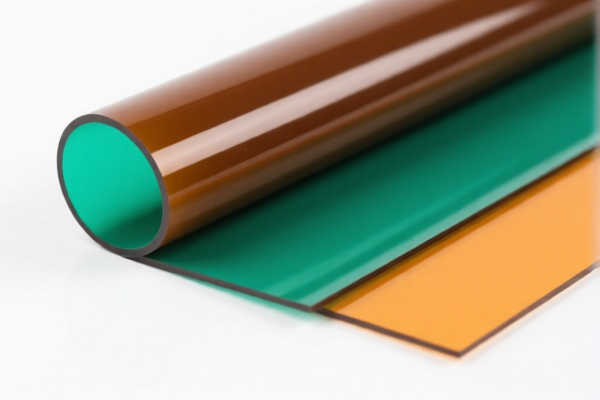
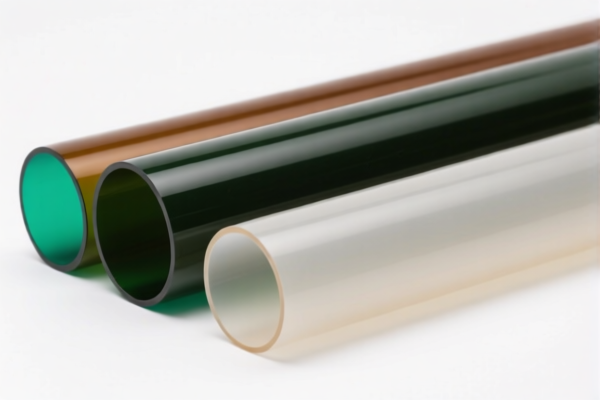

AI Analysis
🧪 Phenolic Resin Composite Films (Adhesive Mixtures)
🌐 HS Code Reference & Customs Clearance Guide | 2026 Latest Tariff Analysis | Professional Clearance Strategy
📌 I. Product Definition & Classification: What Exactly Are "Phenolic Resin Composite Films"?
Phenolic resin composite films, specifically in the context of trade as adhesive mixtures or pre-formed adhesive materials, are industrial chemical products used for bonding, laminating, or coating. In international trade, the classification depends heavily on whether the product is viewed as a raw chemical resin (Chapter 39) or a prepared adhesive/jointing compound (Chapter 35/38).
Key Distinctions for Classification: * Primary Resin Forms: If the film is essentially raw phenolic resin in its primary shape (preparing for further processing), it falls under Chapter 39 (Plastics). * Prepared Adhesives: If the resin has been mixed with solvents, fillers, or other agents specifically for use as an adhesive, it falls under Chapter 35 (Albuminoidal substances; glues) or Chapter 38 (Miscellaneous chemical products).
⚠️ Critical Distinction:
- If the product is a raw phenolic resin mixture intended for polymerization →归类 to 3909.39.00.00 or 3909.40.00.00.
- If the product is a finished adhesive mixture (pre-formulated for bonding) →归类 to 3506.99.00.00 or 3506.91.50.00.
- If it is a miscellaneous chemical adhesive not fitting other specific categories →归类 to 3824.40.10.00.
📦 II. HS Code Classification Details (2026 Latest Tariff Authority Reference)
| HS Code | Product Description | Application Scenario | Chemical Basis |
|---|---|---|---|
3909.39.00.00 |
Phenolic resins in primary forms; other phenolic resins | Raw phenolic resin mixtures, prepregs, un-cured films | ✅ Primary Resin Form |
3909.40.00.00 |
Phenolic resins; mixtures with other substances | Phenolic resin mixtures matching primary form characteristics | ✅ Mixture/Primary Form |
3506.99.00.00 |
Prepared glues and other prepared adhesives, n.e.c. | Phenolic resin adhesive mixtures, prepared for bonding use | ✅ Prepared Adhesive (Chapter 35) |
3506.91.50.00 |
Other adhesories put up for retail sale or as preparations | Polymer-based adhesive preparations, phenolic blends | ✅ Polymer Preparation |
3824.40.10.00 |
Binders for foundry molds or cores; other prepared binders | Chemical resin-based binders, pre-formed adhesive agents | ✅ Miscellaneous Chemical Binder |
🔍 Key Reminder:
- Chapter 39 (3909.xx) is for raw/pre-primary phenolic resins.
- Chapter 35 (3506.xx) is for prepared adhesives (glues).
- Chapter 38 (3824.xx) is a catch-all for chemical binders/adhesives not elsewhere specified.
- Misclassification Risk: Declaring a prepared adhesive as a "primary resin" to lower base tariffs is a common audit trigger.
💰 III. 2026 Latest Tariff Rate Breakdown (Including Additional Taxes & Policy Surcharges)
✅ Applicable Country: United States (US)
✅ Origin: China (CN)
✅ Effective Date: Includes imports from 2025 onwards (Subject to ongoing trade policies)
🎯 1. 3909.39.00.00 & 3909.40.00.00 —— Phenolic Resins (Primary Forms)
| Item | Content |
|---|---|
| Base Tariff Rate | 6.5% (Ad Valorem) |
| Section 301 Additional Tariff | +25.0% (USITC Footnote 9903.88.01) |
| Section 122 Tariff | +10.0% (Specific policy surcharge) |
| Total Tax Rate | 41.5% |
| Tax Calculation | CIF Value × 41.5% |
| De Minimis Exemption Eligibility | ❌ Not Applicable (High duty rates exclude low-value shipments) |
| Legal Basis Path | HTSUS:3909.39.00.00 → USITC:301_FOOTNOTE → IEEPA:122_CLAUSE |
📌 Explanation:
- Base 6.5%: Standard MFN (Most Favored Nation) rate for phenolic resins.
- 25% Section 301: Retaliatory tariff on Chinese goods.
- 10% Section 122: Additional surcharge based on specific trade enforcement clauses.
- Total 41.5%: This is a high-cost category. Importers must factor this into landed cost calculations immediately.
🎯 2. 3506.99.00.00 & 3506.91.50.00 —— Prepared Adhesives (Chapter 35)
| Item | Content |
|---|---|
| Base Tariff Rate | 2.1% (Ad Valorem) |
| Section 301 Additional Tariff | +25.0% |
| Section 122 Tariff | +10.0% |
| Total Tax Rate | 37.1% |
| Tax Calculation | CIF Value × 37.1% |
| De Minimis Exemption Eligibility | ❌ Not Applicable |
| Legal Basis Path | HTSUS:3506.99.00.00 → USITC:301_FOOTNOTE → IEEPA:122_CLAUSE |
📌 Note:
- While the base rate (2.1%) is significantly lower than Chapter 39 (6.5%), the additional surcharges (25% + 10%) remain the same.
- Total 37.1% is still high, but 4.4% cheaper than Class 3909.
- Warning: Ensure the product genuinely qualifies as "prepared adhesive" (Chapter 35) and not "primary resin" (Chapter 39). Customs may reclassify if technical data sheets show unmodified resin properties.
🎯 3. 3824.40.10.00 —— Miscellaneous Chemical Binders (Chapter 38)
| Item | Content |
|---|---|
| Base Tariff Rate | 6.5% (Ad Valorem) |
| Section 301 Additional Tariff | +25.0% |
| Section 122 Tariff | +10.0% |
| Total Tax Rate | 41.5% |
| Tax Calculation | CIF Value × 41.5% |
| De Minimis Exemption Eligibility | ❌ Not Applicable |
| Legal Basis Path | HTSUS:3824.40.10.00 → USITC:301_FOOTNOTE → IEEPA:122_CLAUSE |
📌 Caution:
- This code is often used as a fallback.
- It carries the same high tax burden (41.5%) as the primary resins.
- Use this only if the product does not fit the specific descriptions of Chapters 35 or 39.
🛠️ IV. Customs Clearance Practical Advice (Real-World Pitfall Guide)
✅ 1. Required Documentation List (Non-Negotiable)
| Document | Mandatory | Description |
|---|---|---|
| ✅ Technical Data Sheet (TDS) | ✔️ | Must specify: Chemical composition, "Prepared Adhesive" vs. "Primary Resin" status, curing properties. |
| ✅ Formula/Composition List | ✔️ | Detailed breakdown of ingredients (e.g., % Phenolic Resin, solvents, fillers). |
| ✅ Product Photos | ✔️ | Clear images of the film, packaging, and labels. |
| ✅ Letter of Function | ✔️ | Statement from manufacturer describing end-use (e.g., "Used as a bonding agent for wood lamination"). |
| ✅ Commercial Invoice | ✔️ | Must accurately describe goods as "Phenolic Resin Adhesive Film" or "Prepared Adhesive," not just "Resin." |
| ✅ Certificate of Origin (CO) | ✔️ | If applicable, to verify origin for tariff calculation. |
✅ 2. Declaration Strategy (Key Mnemonic)
🔥 "Check the State: Resin or Glue? Chapter 35 is cheaper, but prove it!"
| Scenario | Correct Declaration | Incorrect Action |
|---|---|---|
| Raw/Unmodified Phenolic Resin Film | 3909.39.00.00 or 3909.40.00.00 (41.5%) |
Misdeclare as Adhesive to save tax → Audit Risk! |
| Pre-mixed Adhesive Film (Ready to Bond) | 3506.99.00.00 or 3506.91.50.00 (37.1%) |
Declaring as Raw Resin → Overpaying 4.4% |
| Unknown/Catch-all Chemical Binder | 3824.40.10.00 (41.5%) |
Using vague terms like "Chemical Film" → Delays |
✅ 3. Special Situation Handling
| Situation | Handling Advice |
|---|---|
| OEM Custom Resin | Provide customer specs + formula. If modified for specific bonding, argue for Chapter 35. |
| Prepregs (Resin-soaked fabric/film) | Often classified under Chapter 39 if the resin is in primary form. Verify with TDS. |
| Small Sample Shipments | Do not rely on De Minimis. Rates are >37%, so value thresholds don't exempt duties. Declare properly. |
| Mixed Container | Separate HS codes clearly. Do not bundle "Adhesive" with "Raw Resin" to avoid blanket audits. |
🌍 V. Global Market Comparison (2026 Latest)
| Country/Region | Recommended HS Code | Tariff Rate | Certification | Notes |
|---|---|---|---|---|
| 🇺🇸 USA | 3506.99.00.00 |
37.1% | SDS, TDS Required | Highest complexity due to Section 301/122. |
| 🇨🇳 China | 3506.99.00.00 |
~2-5% | No special surcharges | Lower base rates; no Section 301. |
| 🇪🇺 EU | 3506.91.90 |
~6.5% | REACH Compliance | No additional retaliatory tariffs. |
| 🇨🇦 Canada | 3506.91.90 |
~6.5% | SDVAT | No Section 301 equivalent. |
📌 Conclusion:
- USA is the most expensive market due to multiple layered tariffs (Base + 301 + 122).
- Chapter 35 (3506.xx) offers a 4.4% saving over Chapter 39 if the product qualifies.
- Documentation is Key: The difference between 37.1% and 41.5% depends entirely on proving the "Prepared Adhesive" nature.
📌 VI. Common Mistakes & Pitfalls (Lessons Learned)
❌ Mistake 1: Declaring "Prepared Adhesive" as "Raw Phenolic Resin"
👉 Consequence: You pay 41.5% instead of 37.1%. Overpayment!
(Note: Usually, people try to do the reverse to lower base rates, but if you misclassify adhesive as resin, you risk penalties for wrong description, but financially you overpay. If you misclassify resin as adhesive, you face underpayment penalties.)
❌ Mistake 2: Failing to provide a Technical Data Sheet (TDS)
👉 Consequence: Customs cannot determine if it's Chapter 35 or 39. Hold for inspection, leading to delays and storage fees.
❌ Mistake 3: Assuming "Film" means it must be plastic (Chapter 39)
👉 Consequence: Many adhesives come in film form. If it's a prepared glue, Chapter 35 is correct. Rigid adherence to "film=plastic" is a classification error.
❌ Mistake 4: Ignoring Section 122 Tariff
👉 Consequence: Many importers only account for Base + 301 (31.5% or 27.1%). The additional 10% brings the total to 41.5% or 37.1%. This can wipe out profit margins if not budgeted.
✅ Correct Practice:
"Phenolic Resin Adhesive Film, Pre-mixed, 100% Solids, Model XYZ, SDS Available, Origin: China"
🎯 VII. Conclusion: Precision Classification for Cost Efficiency
🎯 Remember the Mnemonic:
🔹 "Base Rate Varies, Surcharges Are Fixed: 3506 is Cheaper, But Prove It Works!"
🔹 "Chapter 35 (37.1%) vs. Chapter 39 (41.5%): The 4.4% Gap is Worth the Documentation Effort."
📌 Pro Tip:
If your phenolic resin film is sourced from Vietnam, Thailand, or Mexico, it may qualify for IEEPA Exemptions or lower Section 301 rates.
Action:
1. Verify supply chain origin.
2. If US-origin or non-Chinese, check for tariff exclusions.
3. If Chinese, submit TDS and Formula to justify Chapter 35 for the 37.1% rate.
📣 Immediate Action:
📞 Contact your customs broker with the Technical Data Sheet.
📝 Request an Advance Ruling if importing large volumes to lock in the 37.1% rate (Chapter 35) if applicable.
🚀 Optimize your landed cost by choosing the correct HS Code!
✨ Professional Clearance Starts with Accurate Classification!
💼 Every percentage point matters in the age of high tariffs!
Customer Reviews
About HS Code Classification
The Harmonized System (HS) is an internationally standardized nomenclature developed by the World Customs Organization (WCO) to classify traded products. Over 200 countries use the HS system as the basis for customs tariffs, trade statistics, and import/export regulations.
Each HS code follows a hierarchical structure:
- Chapter (2 digits) — Broad category of goods (e.g., Chapter 84: Machinery and Mechanical Appliances)
- Heading (4 digits) — More specific grouping within the chapter
- Subheading (6 digits) — Internationally standardized breakdown, used by all WCO member countries
- National subdivisions (8-10 digits) — Country-specific extensions for further classification, such as US HTSUS 10-digit codes
Correct HS code classification is essential for smooth customs clearance, accurate duty payment, and compliance with trade regulations. Misclassification can lead to customs delays, overpayment of duties, or penalties.
When importing from CN to US, the applicable tariff rates may include:
- Most-Favored-Nation (MFN) rate — The standard duty rate applied to WTO members
- General rate — Applied to countries without trade agreements
- Trade remedy duties — Additional tariffs such as Section 301 (anti-dumping), Section 232 (national security), or countervailing duties
The information provided on this page is for reference purposes only. For official classification, please consult with your local customs authority or a licensed customs broker.