Phenolic Resin Powder
CN → US| HS Code | Tariff Rate | Origin | Destination | Doc |
|---|---|---|---|---|
| 3909390000 | 41.5% | CN | US | Official Doc |
| 3909400000 | 41.5% | CN | US | Official Doc |
| 3506915000 | 37.1% | CN | US | Official Doc |
| 3506990000 | 37.1% | CN | US | Official Doc |
| 3824401000 | 41.5% | CN | US | Official Doc |
Product Images
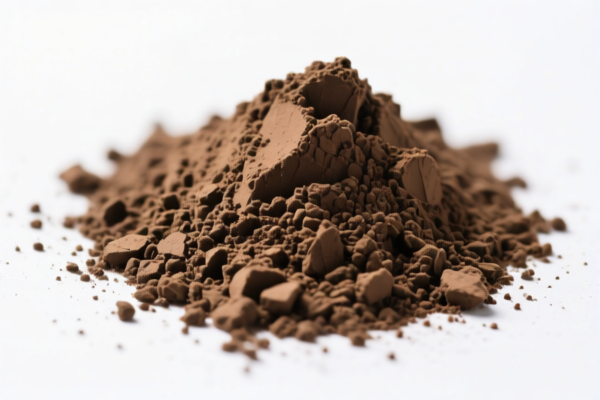
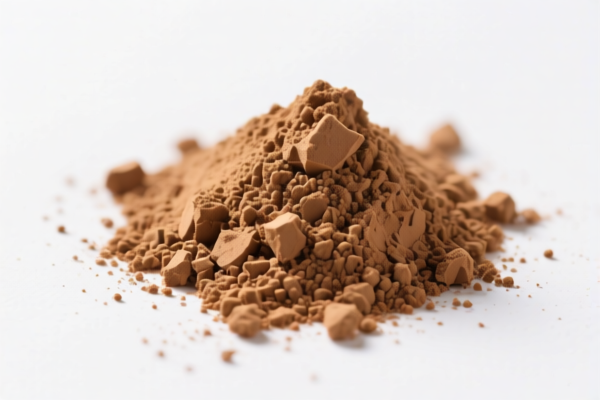
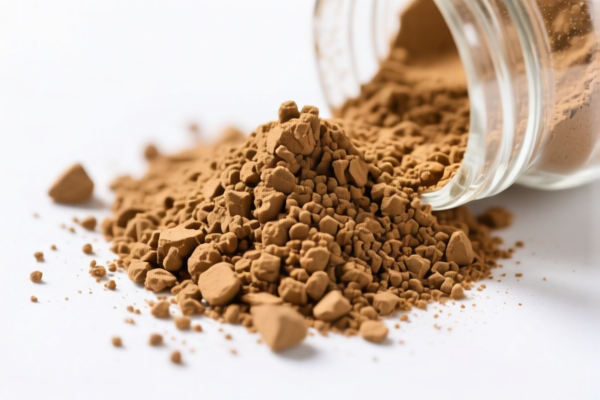
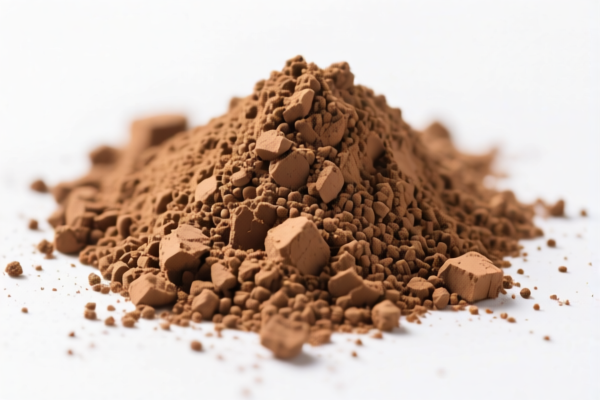
AI Analysis
💥 Phenolic Resin Powder: The Ultimate Guide to US Customs Classification & Tariffs
🌐 HS Code Reference & Clearance Guide | 2026 Latest Tariff Analysis | Professional Compliance Strategy
📌 一、Product Definition & Classification: What is "Phenolic Resin Powder"?
Phenolic Resin Powder is a versatile synthetic polymer derived from phenol and formaldehyde. It is primarily used as a raw material for manufacturing adhesives, molding compounds, laminates, and insulating materials.
In international trade, the classification depends on its state (raw material vs. prepared adhesive) and its chemical composition:
- Primary Form (Raw Material): Unmodified phenolic resin in powder form, ready for further processing. → Chapter 39
- Prepared Adhesive: Resin that has been formulated, mixed with other agents, or specifically prepared for gluing/bonding applications. → Chapter 35 or 38
⚠️ Critical Distinction:
- If it is pure phenolic resin or simply a polymer ready for molding → HS Code 3909.
- If it is a mixed adhesive or prepared glue containing phenolic resin → HS Code 3506 or 3824.
📦 II. HS Code Classification Matrix (2026 Latest Tariff Reference)
Based on the provided data, here are the precise classifications for Phenolic Resin Powder under US Customs regulations:
| HS Code | Product Description | Classification Logic | State of Product |
|---|---|---|---|
3909.39.00.00 |
Phenolic Resins in Primary Forms | Raw polymer, unmodified, suitable for further chemical processing | Raw Material |
3909.40.00.00 |
Phenolic Resins in Primary Forms | Intermediate form, polymer base for adhesive manufacturing | Raw/Intermediate Material |
3506.91.50.00 |
Prepared Adhesives Based on Polymers (39.01–39.13) | Formulated adhesive using phenolic resin polymers | Prepared Adhesive |
3506.99.00.00 |
Other Prepared Adhesives | General category for other mixed adhesives including phenolic-based | Prepared Adhesive |
3824.40.10.00 |
Prepared Binders / Prefabricated Adhesives | Specifically categorized as a "prepared binder" or industrial adhesive | Prepared Adhesive |
🔍 Key Insight:
- Chapter 39 (3909.xx): Applies to the resin itself before it is turned into a functional glue. Think of it as "flour" before it becomes "bread." - Chapter 35/38 (3506.xx, 3824.40): Applies when the resin is formulated into an adhesive product. Think of it as "ready-to-use glue."
💰 III. 2026 US Tariff Rate Breakdown (Detailed Tax Clauses)
✅ Applicable Country: United States (US)
✅ Origin: China (CN)
✅ Effective Date: Post-2025 Policy Updates (Including Section 301 & IEEPA Add-ons)
🎯 1. Raw Phenolic Resin Powder (HS 3909 Series)
These codes apply if the product is unmodified phenolic resin in powder form.
| HS Code | Description | Base Rate | Section 301 (25%) | 122 Clause (10%) | Total Effective Rate | Legal Basis |
|---|---|---|---|---|---|---|
3909.39.00.00 |
Phenolic Resin, Primary Form | 6.5% | +25.0% | +10.0% | 41.5% | HTSUS:3909.39.00 + USITC Footnote + IEEPA:122 |
3909.40.00.00 |
Phenolic Resin, Primary/Intermediate | 6.5% | +25.0% | +10.0% | 41.5% | HTSUS:3909.40.00 + USITC Footnote + IEEPA:122 |
📌 Explanation:
- Base Tariff (6.5%): Standard Most Favored Nation (MFN) rate for phenolic resins. - Section 301 Tariff (25%): Additional duty imposed on Chinese goods under Trade Act of 1974 Section 301. - 122 Clause Tariff (10%): Specific additional duty under IEEPA Section 122 (often related to national security or emergency powers). - Total: 41.5% – This is a high-cost category. Misclassification here can lead to significant overpayment if the product is actually a prepared adhesive.
🎯 2. Prepared Phenolic Adhesives (HS 3506 / 3824 Series)
These codes apply if the powder is formulated, mixed, or sold specifically as an adhesive/binder.
| HS Code | Description | Base Rate | Section 301 (25%) | 122 Clause (10%) | Total Effective Rate | Legal Basis |
|---|---|---|---|---|---|---|
3506.91.50.00 |
Prepared Adhesives (Based on Polymers 39.01–39.13) | 2.1% | +25.0% | +10.0% | 37.1% | HTSUS:3506.91.50 + USITC Footnote + IEEPA:122 |
3506.99.00.00 |
Other Prepared Adhesives | 2.1% | +25.0% | +10.0% | 37.1% | HTSUS:3506.99.00 + USITC Footnote + IEEPA:122 |
3824.40.10.00 |
Prepared Binders / Prefabricated Adhesives | 6.5% | +25.0% | +10.0% | 41.5% | HTSUS:3824.40.10 + USITC Footnote + IEEPA:122 |
📌 Explanation:
- HS 3506 Codes: Offer a lower base rate (2.1%) because they are classified as "prepared adhesives" based on Chapter 39 polymers. Total: 37.1%. - HS 3824.40.10: Classified under "Chemical Products," often used for industrial binders. Base rate reverts to 6.5%, making the Total 41.5%. - Strategic Note: If your product is a formulated adhesive powder, classify it under 3506.91.50.00 or 3506.99.00.00 to save 4.4% compared to raw resin codes.
🛠️ IV. Clearance Practical Advice (Avoiding Customs Traps)
✅ 1. Documentation Checklist (Mandatory)
| Document | Required? | Purpose |
|---|---|---|
| Product Specification Sheet | ✅ Yes | Must detail: Chemical composition, moisture content, curing agent presence, and intended use. |
| Formula/Ingredients List | ✅ Yes | Critical to distinguish between "Raw Resin" (Chapter 39) and "Prepared Adhesive" (Chapter 35/38). |
| Commercial Invoice | ✅ Yes | Must clearly state: "Phenolic Resin Powder" or "Phenolic Adhesive Powder" with HS Code. |
| Certificate of Analysis (COA) | ✅ Yes | Proves purity and formulation. Essential for chemical classification. |
| MSDS / SDS | ✅ Yes | Safety Data Sheet for customs safety screening. |
| Country of Origin Certificate | ✅ Yes | To determine applicability of Section 301 and IEEPA duties. |
✅ 2. Classification Strategy (Key Mantra)
🔥 “Pure Powder = Chapter 39; Mixed Glue = Chapter 35/38; Check Formulation!”
| Scenario | Correct HS Code | Reason |
|---|---|---|
| 100% Phenolic Resin Powder (Unmodified, for further polymerization) | 3909.39.00.00 or 3909.40.00.00 |
It is a "primary form" polymer. |
| Phenolic Powder + Curing Agent + Fillers (Ready to glue) | 3506.91.50.00 |
It is a "prepared adhesive" based on Chapter 39 polymers. |
| Industrial Phenolic Binder (For molding or laminates) | 3824.40.10.00 |
Classified as a "prepared binder" under chemical products. |
| Unclear Formulation | ❌ Avoid 3909 |
If it contains additives for adhesion, it is not a primary form. Risk of misclassification penalty. |
✅ 3. Special Cases & Warnings
| Situation | Handling Advice |
|---|---|
| OEM Custom Adhesive | Provide the client’s formula. If it’s a standard phenolic glue, use 3506.91.50.00. |
| Powder vs. Liquid | Powdered phenolic adhesives are still classified as adhesives if prepared. Do not classify as "raw resin" just because it’s dry. |
| Mixed Shipments | If a container contains both raw resin and prepared adhesive, declare separately. Mixing leads to audit risks. |
| 122 Clause Applicability | Always verify if the specific product line is subject to the 10% IEEPA 122 duty. It applies to most Chinese phenolic products. |
🌍 V. Global Market Comparison (2026 Snapshot)
| Country/Region | Recommended HS Code | Total Tariff (China Origin) | Key Certification | Note |
|---|---|---|---|---|
| 🇺🇸 USA | 3506.91.50.00 (Adhesive) or 3909.39.00.00 (Raw) |
37.1% or 41.5% | FDA (if food-contact), REACH (if EU bound) | High additional duties. Minimize by choosing 3506 if applicable. |
| 🇨🇳 China | 3909.39.00.00 |
6.5% | CCC (if applicable) | No Section 301/IEEPA. |
| 🇪🇺 EU | 3909.40.00.00 |
6.5% | REACH Registration | No US-style add-ons. |
| 🇯🇵 Japan | 3909.40.00.00 |
3.8% | JIS Standard | Lower base rates. |
📌 Conclusion:
- The US market is the most expensive due to 25% (Section 301) + 10% (IEEPA) add-ons. - Optimization Tip: If your product is a prepared adhesive, insist on HS 3506.91.50.00 (37.1% total) instead of HS 3909.39.00.00 (41.5% total). Save 4.4% on CIF value!
📌 VI. Common Errors & Pitfalls (Lessons Learned)
❌ Error 1: Classifying prepared adhesive powder as raw resin (3909).
👉 Consequence: Under-declaration. Customs may assess penalties and back-taxes if they determine it’s a "prepared adhesive" with different duty rates or if it violates usage restrictions.
❌ Error 2: Using HS 3824.40.10.00 for raw resin.
👉 Consequence: Overpayment. Raw resin should be in Chapter 39. Using Chapter 38 may trigger unnecessary inspections or misinterpretation of product nature.
❌ Error 3: Ignoring the 122 Clause (10%).
👉 Consequence: Unexpected tax bill at clearance. Always include 10% IEEPA 122 in your cost calculations for Chinese-origin phenolic products.
❌ Error 4: Vague Description "Phenolic Resin."
👉 Consequence: Customs holds shipment for classification review. Always specify: "Phenolic Resin Powder, Primary Form" or "Phenolic Adhesive Powder, Prepared."
✅ Correct Practice:
"Phenolic Resin Adhesive Powder, Prepared, Based on Polymers of Heading 3901-3913, Model XYZ, Made in China"
→ Use HS 3506.91.50.00 → Total Duty: 37.1%
🎯 VII. Conclusion: Professional Classification Saves Money
🎯 Remember the Mantra:
🔹 "Raw Resin = 41.5%; Prepared Adhesive = 37.1%; 122 Clause Applies!"
🔹 "Check Formula, Not Just Name. Save 4.4% by Choosing Chapter 35!"
📌 Pro Tip:
If your phenolic resin powder is used in automotive or aerospace applications, ensure it meets FDA/REACH standards. For US imports, always apply for a Binding Ruling (Pre-Classification) with CBP to lock in the 37.1% rate for prepared adhesives.
📣 Act Now:
📞 Provide your formula and SDS to your customs broker.
🚀 Optimize your HS Code, reduce duty burden, and clear customs smoothly!
✨ Professional Clearance Starts with Accurate Classification!
💼 Your Margin Depends on the Right HS Code!
Customer Reviews
About HS Code Classification
The Harmonized System (HS) is an internationally standardized nomenclature developed by the World Customs Organization (WCO) to classify traded products. Over 200 countries use the HS system as the basis for customs tariffs, trade statistics, and import/export regulations.
Each HS code follows a hierarchical structure:
- Chapter (2 digits) — Broad category of goods (e.g., Chapter 84: Machinery and Mechanical Appliances)
- Heading (4 digits) — More specific grouping within the chapter
- Subheading (6 digits) — Internationally standardized breakdown, used by all WCO member countries
- National subdivisions (8-10 digits) — Country-specific extensions for further classification, such as US HTSUS 10-digit codes
Correct HS code classification is essential for smooth customs clearance, accurate duty payment, and compliance with trade regulations. Misclassification can lead to customs delays, overpayment of duties, or penalties.
When importing from CN to US, the applicable tariff rates may include:
- Most-Favored-Nation (MFN) rate — The standard duty rate applied to WTO members
- General rate — Applied to countries without trade agreements
- Trade remedy duties — Additional tariffs such as Section 301 (anti-dumping), Section 232 (national security), or countervailing duties
The information provided on this page is for reference purposes only. For official classification, please consult with your local customs authority or a licensed customs broker.