Phosphate Refractory Repair Material
CN → US| HS Code | Tariff Rate | Origin | Destination | Doc |
|---|---|---|---|---|
| 6815994110 | 35.0% | CN | US | Official Doc |
| 6815994170 | 35.0% | CN | US | Official Doc |
| 2835100000 | 38.1% | CN | US | Official Doc |
| 2835295100 | 39.1% | CN | US | Official Doc |
| 3824500050 | 35.0% | CN | US | Official Doc |
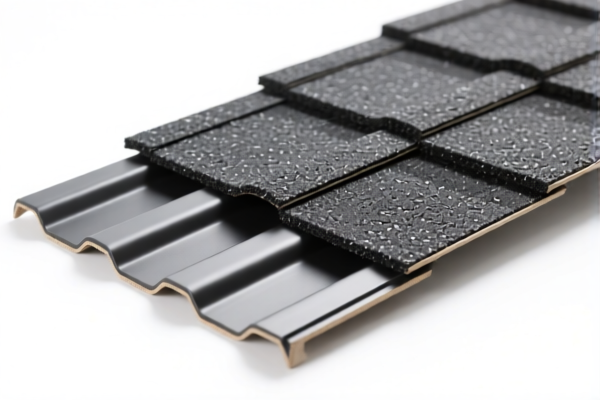
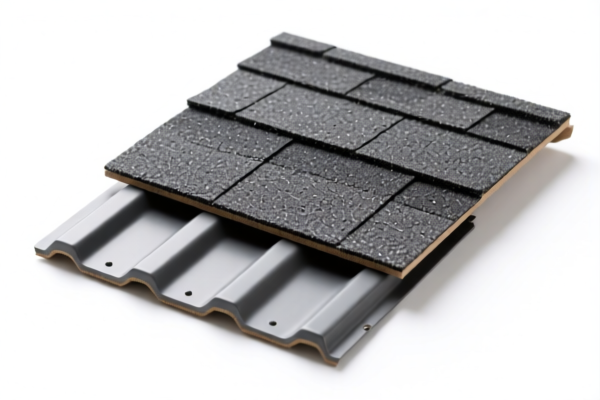
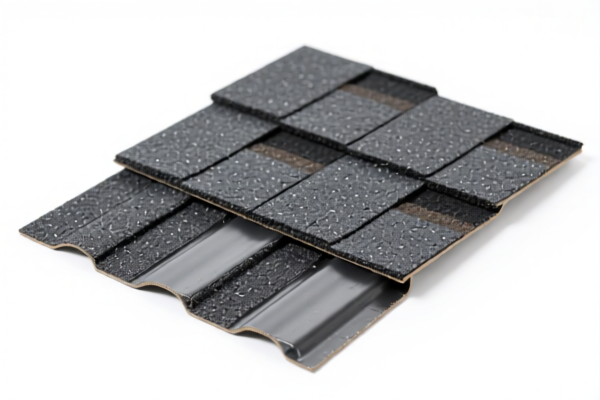
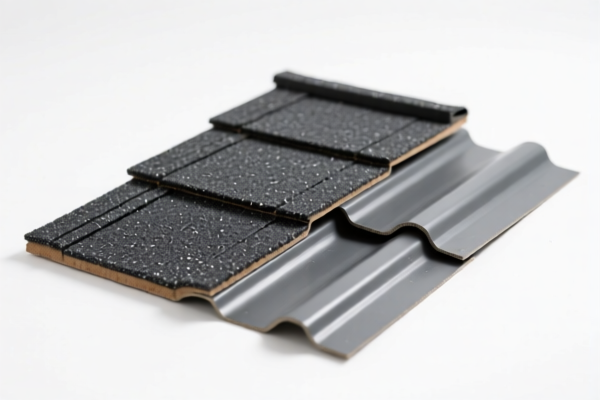
Product Images
AI Analysis
🧱 Phosphate Refractory Repair Material
🌐 HS Code Reference & Customs Clearance Guide | 2026 Latest Tariff Analysis | Professional Import Strategy
📌 I. Product Definition & Classification: What Exactly is "Phosphate Refractory Repair Material"?
Phosphate Refractory Repair Material is a specialized chemical-mineral composite used for repairing and maintaining high-temperature industrial equipment (such as kilns, furnaces, and blast furnaces). It is characterized by: 1. Chemical Basis: Contains phosphate compounds (phosphates) as the binding agent. 2. Physical Form: Typically supplied as a dry powder or semi-dry mix, which becomes cohesive and refractory after application and curing. 3. Application: Used for patching, lining repair, and cold splashing in refractory structures.
⚠️ Critical Classification Divergence:
- If viewed primarily as a mineral product (like stone or ceramic), it may fall under Chapter 68.
- If viewed primarily as a chemical compound (inorganic phosphate salt), it may fall under Chapter 28.
- If viewed as a mixed chemical preparation for industrial use, it may fall under Chapter 38.
The classification significantly impacts the tariff rate due to US trade policies.
📦 II. HS Code Classification Details (2026 Latest Tariff Authority Comparison)
| HS Code | Product Description | Applicable Scenario | Key Classification Logic |
|---|---|---|---|
6815.99.41.10 |
Refractory repair material (Phosphate) - Mineral Product Category | Generic refractory patches; viewed as "Articles of stone or other mineral substances" | Mineral-Based: Treated like stone/ceramic products rather than pure chemicals. |
6815.99.41.70 |
Refractory repair material (Phosphate) - Non-specific shape mineral product | Unshaped phosphate-based repair mixes | Mineral-Based: Non-specific shape fits "other articles of stone/mineral." |
2835.10.00.00 |
Refractory repair material (Phosphate) - Metaphosphites/ Hypophosphites Category | Products explicitly defined as metaphosphites or hypophosphites | Chemical Salt: Classified under specific inorganic phosphate subheadings (2835.10). |
2835.29.51.00 |
Refractory repair material (Phosphate) - Other Phosphates | Phosphate-containing repair materials as "Other phosphates" | Chemical Salt: Falls under "Other phosphates" (2835.29), specifically for repair forms. |
3824.50.00.50 |
Refractory repair material (Phosphate) - Chemical Preparation | Mixed chemical preparations for industrial use | Chemical Prep: Treated as a "preparation" of chemicals, not pure substances. |
🔍 Key Reminder:
- Chapter 68 (6815): Focuses on the physical nature as a refractory mineral article. Lower base tariff.
- Chapter 28 (2835): Focuses on the chemical composition as inorganic phosphates. Higher base tariff due to specific salt definitions.
- Chapter 38 (3824): Focuses on the mixed nature of the repair material. Moderate base tariff.
- US Trade Impact: All categories are subject to Section 301 and IEEPA附加 taxes, but the base rate differs, changing the total cost burden.
💰 III. 2026 Latest Tariff Rate Breakdown (Including Additional Taxes & Policy Surcharges)
✅ Applicable Country: United States (US)
✅ Origin: China (CN)
✅ Effective Date: From November 10, 2025 (including subsequent imports)
🎯 1. Mineral Product Categories (6815.99.41.10 & 6815.99.41.70)
These codes classify the material as an article of mineral substance, benefiting from a 0% base tariff.
| Item | Content |
|---|---|
| Base Tariff | 0% (ad valorem) |
| USITC Additional Duty | +25% (Section 301, Footnote 9903.88.01) |
| IEEPA Additional Duty | +10% (Against China/HK products, effective Nov 10, 2025) |
| Total Tariff | 35.0% |
| Tax Calculation | CIF Value × 35% |
| De Minimis Exemption | ❌ Not Eligible (deny_de_minimis) |
| Legal Basis Path | IEEPA:9903.01.25 → IEEPA:9903.01.24 → USITC:6815.99.41.10 → FOOTNOTE:9903.88.01 |
📌 Explanation:
- The 25% is the standard Section 301 tariff on Chinese mineral products.
- The 10% is the new IEEPA surcharge on Chinese goods.
- Total: 35%. This is the lowest possible tariff among all options, making Chapter 68 the most cost-effective classification if the product qualifies as a "mineral article" rather than a pure chemical.
🎯 2. Chemical Salt Categories (2835.10.00.00 & 2835.29.51.00)
These codes classify the material as inorganic phosphate salts, subject to higher base tariffs.
| Item | Content |
|---|---|
| Base Tariff | 3.1% (2835.10) / 4.1% (2835.29) |
| USITC Additional Duty | +25% (Section 301) |
| IEEPA Additional Duty | +10% (Against China) |
| Total Tariff | 38.1% (2835.10) / 39.1% (2835.29) |
| Tax Calculation | CIF Value × Total Rate |
| De Minimis Exemption | ❌ Not Eligible |
| Legal Basis Path | IEEPA:9903.01.25 → IEEPA:9903.01.24 → USITC:2835.xxxx → FOOTNOTE:9903.88.01 |
📌 Explanation:
- 2835.10 (38.1%): Applies if the material is specifically "Metaphosphites or Hypophosphites."
- 2835.29 (39.1%): Applies to "Other phosphates" not specified elsewhere.
- Higher Cost: The base tariff (3.1%-4.1%) adds significant cost on top of the 35% surcharges. Avoid these codes unless the chemical composition strictly demands Chapter 28.
🎯 3. Chemical Preparation Category (3824.50.00.50)
Classifies the material as a mixed chemical preparation for industrial use.
| Item | Content |
|---|---|
| Base Tariff | 0% (ad valorem) |
| USITC Additional Duty | +25% (Section 301) |
| IEEPA Additional Duty | +10% (Against China) |
| Total Tariff | 35.0% |
| Tax Calculation | CIF Value × 35% |
| De Minimis Exemption | ❌ Not Eligible |
| Legal Basis Path | IEEPA:9903.01.25 → IEEPA:9903.01.24 → USITC:3824.50.00.50 → FOOTNOTE:9903.88.01 |
📌 Explanation:
- Total: 35%. Same as Chapter 68.
- Use Case: Use this if the material is a complex mixture that doesn't fit neatly into "mineral articles" but is clearly a "chemical preparation." It offers the same low base tariff as Chapter 68.
🛠️ IV. Customs Clearance Practical Advice (Combat Pitfall Guide)
✅ 1. Required Documentation Checklist (Non-negotiable)
| Document | Must Provide | Explanation |
|---|---|---|
| ✅ Product Specification Sheet | ✔️ | Must detail chemical composition (P2O5 content), temperature resistance, and binding agent type. |
| ✅ MSDS (Material Safety Data Sheet) | ✔️ | Crucial for hazard classification. Confirm if it's hazardous (e.g., acidic phosphates). |
| ✅ Product Photos | ✔️ | Show packaging, label, and physical form (powder/granules). |
| ✅ Commercial Invoice | ✔️ | Must explicitly state: "Phosphate Refractory Repair Material, Dry Mix" |
| ✅ Origin Certificate | ✔️ | Required for US origin verification. |
| ✅ HS Code Pre-Ruling Request | ✔️ | Highly Recommended due to classification ambiguity between Ch. 68, 28, and 38. |
✅ 2. Declaration Strategy (Key Mantra)
🔥 “Classify as Mineral/Prep, Avoid Pure Salt, Declare Chemical Basis Clearly!”
| Scenario | Correct Declaration | Wrong Action | Consequence |
|---|---|---|---|
| Standard Repair Mortar | 6815.99.41.10 or 3824.50.00.50 |
2835.29.51.00 |
Save 3.1%-4.1% on base tariff. |
| High-Purity Phosphate Salt | 2835.10.00.00 |
6815.99.41.10 |
If it's pure salt, Ch. 68 may be rejected by CBP. |
| Mixed Chemical Mix | 3824.50.00.50 |
6815.99.41.70 |
Ensure it's a "preparation," not a "mineral article." |
| Small Sample (De Minimis) | N/A | 6815.99.41.10 |
No Exemption: All codes are denied de minimis. |
✅ 3. Special Cases Handling
| Scenario | Handling Advice |
|---|---|
| OEM Custom Repair Mix | Provide formulation sheet. If phosphate is the main binder, emphasize "Mineral Article" (Ch. 68) for lower tax. |
| Liquid Phosphate Binder | If sold as a liquid, consider 3824 (preparation) or 2835 (salt). Avoid 6815 (solids/mineral articles). |
| Mixed with Clay/Cement | If mixed, it’s a "preparation" (3824) or "mineral article" (6815). Avoid 2835 unless it's pure phosphate. |
| Hazardous Material | If pH < 4 or > 9, it may be hazardous. Ensure proper labeling (UN Number) to avoid detention. |
🌍 V. Global Market Clearance Comparison (2026 Latest)
| Country/Region | Recommended HS Code | Tariff Rate | Certification | Notes |
|---|---|---|---|---|
| 🇺🇸 USA | 6815.99.41.10 / 3824.50.00.50 |
35% | No special cert | High tariff due to Section 301 + IEEPA. |
| 🇨🇳 China | 6815.99.90.90 |
~5% | No special cert | Low tariff. Export duty may apply. |
| 🇪🇺 EU | 6815.99 |
4.5% | REACH Registration | No additional US-style tariffs. |
| 🇯🇵 Japan | 6815.99 |
3-5% | JIS Standard | Moderate tariff. |
| 🇮🇳 India | 6815.99 |
7.5% - 10% | BIS Certification | Higher base tariff. |
📌 Conclusion:
- USA is the most expensive market due to the 35% effective tariff.
- EU and Japan offer significantly lower costs (4-5%).
- Strategy: For US imports, insist on Ch. 68 or Ch. 38 to avoid the higher base rates of Ch. 28.
📌 VI. Common Errors & Pitfall Guide (Blood-Lesson Review)
❌ Error 1: Classifying as 2835.29.51.00 when it’s a mixed repair mortar
👉 Consequence: Pay 39.1% instead of 35%. Unnecessary 4.1% cost increase.
❌ Error 2: Assuming "De Minimis" applies for small shipments
👉 Consequence: All these HS codes are denied de minimis. Even 1 kg samples are taxed 35%.
❌ Error 3: Misdeclaring as "Chemical Fertilizer"
👉 Consequence: Severe Penalty. Refractory materials are not fertilizers. Misclassification leads to fines and detention.
❌ Error 4: Ignoring IEEPA 10% Surcharge
👉 Consequence: Underestimating landed cost. The 10% IEEPA is new and strict for Chinese goods.
✅ Correct Approach:
"Phosphate-Based Refractory Repair Mortar, Dry Mix, for High-Temperature Kiln Lining, Chemical Composition: P2O5 > 20%, Binder: Phosphoric Acid/Aluminum Phosphate, Model XYZ, MSDS Attached"
🎯 VII. Conclusion: Professional Classification Saves Money!
🎯 Remember the Mantra:
🔹 "Mineral or Prep: 35% is the goal. Pure Salt: 38-39% is the trap. No De Minimis: Always Taxed!"
🔹 "HS Code dictates profit. 4% difference is huge. Clear declaration saves time."
📌 Pro Tip:
If your product is not produced in China (e.g., Vietnam, Thailand), you may qualify for IEEPA exemption (0% surcharge), reducing total tariff to 25% (Ch. 68/38) or 28-29% (Ch. 28).
Recommendation: Apply for Pre-Ruling with CBP to confirm Ch. 68 vs. Ch. 38 status.
📣 Immediate Action:
📞 Contact a licensed US Customs Broker + Provide MSDS + Request HS Code Pre-Ruling
🚀 Ensure your Phosphate Refractory Material, Clears Fast, Costs Less, and Avoids Detention!
✨ Professional Clearance Starts with Accurate Classification!
💼 Every Cent of Cost Deserves Precision Calculation!
Customer Reviews
About HS Code Classification
The Harmonized System (HS) is an internationally standardized nomenclature developed by the World Customs Organization (WCO) to classify traded products. Over 200 countries use the HS system as the basis for customs tariffs, trade statistics, and import/export regulations.
Each HS code follows a hierarchical structure:
- Chapter (2 digits) — Broad category of goods (e.g., Chapter 84: Machinery and Mechanical Appliances)
- Heading (4 digits) — More specific grouping within the chapter
- Subheading (6 digits) — Internationally standardized breakdown, used by all WCO member countries
- National subdivisions (8-10 digits) — Country-specific extensions for further classification, such as US HTSUS 10-digit codes
Correct HS code classification is essential for smooth customs clearance, accurate duty payment, and compliance with trade regulations. Misclassification can lead to customs delays, overpayment of duties, or penalties.
When importing from CN to US, the applicable tariff rates may include:
- Most-Favored-Nation (MFN) rate — The standard duty rate applied to WTO members
- General rate — Applied to countries without trade agreements
- Trade remedy duties — Additional tariffs such as Section 301 (anti-dumping), Section 232 (national security), or countervailing duties
The information provided on this page is for reference purposes only. For official classification, please consult with your local customs authority or a licensed customs broker.