Phosphate Refractory Repair Mortar
CN → US| HS Code | Tariff Rate | Origin | Destination | Doc |
|---|---|---|---|---|
| 2835295100 | 39.1% | CN | US | Official Doc |
| 3824500050 | 35.0% | CN | US | Official Doc |
| 3824405000 | 40.0% | CN | US | Official Doc |
| 6815994110 | 35.0% | CN | US | Official Doc |
Product Images
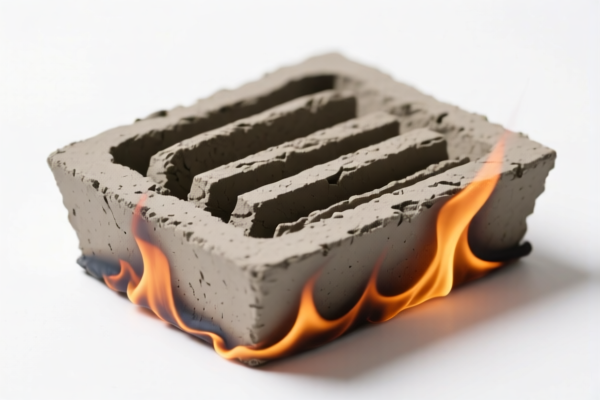
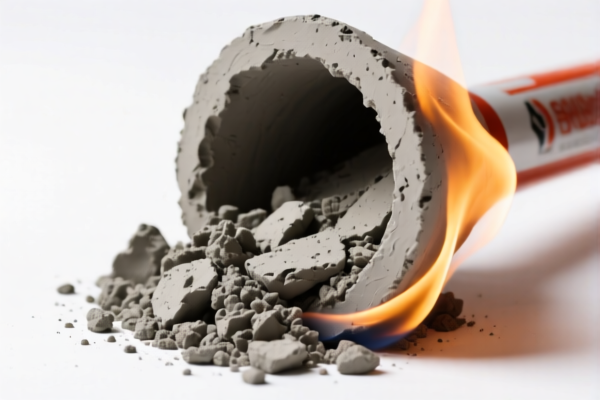
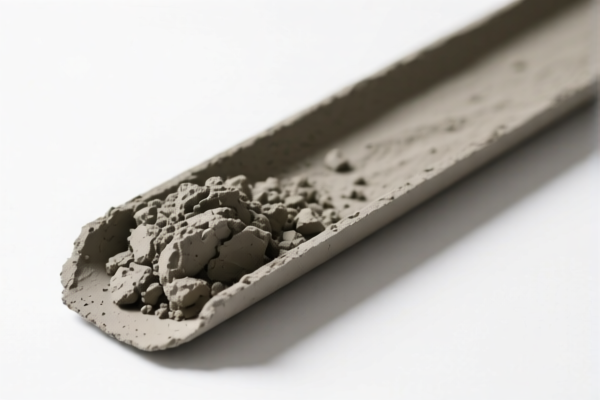

AI Analysis
🧱 Phosphate Refractory Repair Mortar
🌐 HS Code Reference & Customs Clearance Guide | 2026 Latest Tariff Analysis | Professional Entry Strategy
📌 I. Product Definition & Classification: What Exactly is "Phosphate Refractory Repair Mortar"?
Phosphate Refractory Repair Mortar is a specialized chemical mixture used for maintaining and repairing high-temperature industrial equipment (such as kilns, furnaces, and boilers). Its core component is phosphate, which provides excellent thermal stability, corrosion resistance, and bonding strength at high temperatures. In international trade, this product sits at the intersection of chemicals, construction additives, and refractory materials, leading to multiple potential HS Code classifications depending on the specific formulation and intended use.
⚠️ Key Classification Challenge:
The product can be classified under different chapters based on whether it is viewed primarily as a chemical salt, a prepared chemical preparation, a construction additive, or a mineral refractory product. The choice significantly impacts the total tax burden.
📦 II. HS Code Classification Details (Based on Provided Data)
| HS Code | Summary of Classification Logic | Total Tax Rate (China to US) | Tax Breakdown |
|---|---|---|---|
2835.29.51.00 |
Phosphate Salts (Other): The product explicitly contains "phosphate" material. As a "repair material" in solid/paste form, it falls under "other" phosphate products within Chapter 28 (Inorganic Chemicals). | 39.1% | Base: 4.1% Section 301: 25.0% Section 122: 10.0% |
3824.50.00.50 |
Prepared Binders for Foundry Molds or Cores (Chemical Preparations): Classified as a chemical preparation. Since it is a repair mortar (not a specific mold binder but a general chemical repair agent), it fits the "other" category of chemical preparations defined in Chapter 38. | 35.0% | Base: 0.0% Section 301: 25.0% Section 122: 10.0% |
3824.40.50.00 |
Prepared Additives for Cements, Mortars or Concretes: The "phosphate" is a chemical substance, and "repair mortar" is a prepared formulation. It is inferred to be used as an additive for building/refractory materials, fitting the logic of chemical preparations for construction/adhesives. | 40.0% | Base: 5.0% Section 301: 25.0% Section 122: 10.0% |
6815.99.41.10 |
Articles of Stone or Other Mineral Substances (Refractory): Classified as a mineral product article (refractory material). Although magnesium oxide content isn't specified, it fits the "other" residual category. The chemical nature of phosphate aligns with mineral refractory characteristics. | 35.0% | Base: 0.0% Section 301: 25.0% Section 122: 10.0% |
🔍 Critical Insight:
- Lowest Tax Option:3824.50.00.50and6815.99.41.10both offer a 35.0% total rate.
- Highest Tax Option:3824.40.50.00offers a 40.0% total rate due to the higher base tariff (5.0%).
- Neutral Option:2835.29.51.00is a middle ground at 39.1%.
- Selection Strategy: The classification depends heavily on the primary function and composition details in the product description. If the product is marketed as a "chemical preparation" for general repair, Chapter 38 is strong. If it is marketed strictly as a "refractory material," Chapter 68 may apply.
💰 III. Detailed Tariff Rate Explanation (2026 Latest)
✅ Applicable Country: United States (US)
✅ Origin: China (CN)
✅ Effective Date: Post-November 10, 2025 (including subsequent imports)
🎯 1. HS Code 2835.29.51.00 – Phosphates, Polyposphosphates, Whether or Not Chemically Defined, Other
| Item | Content |
|---|---|
| Base Tariff | 4.1% (ad valorem) |
| Section 301 Tariff | +25.0% (Under US Trade Law Section 301) |
| Section 122 Tariff | +10.0% (Under IEEPA for certain Chinese products) |
| Total Rate | 39.1% |
| Calculation Method | CIF Value × 39.1% |
| De Minimis Exemption | ❌ Not Eligible (Highly sensitive category) |
| Legal Basis Path | USITC:2835.29.51.00 → USITC:FOOTNOTE:301 → IEEPA:122 |
📌 Explanation:
- This code treats the mortar as a chemical salt.
- The base rate is 4.1%, which is relatively high compared to Chapter 38/68 options.
- The 25% Section 301 and 10% Section 122 tariffs are fixed penalties.
🎯 2. HS Code 3824.50.00.50 – Prepared Binders for Foundry Molds or Cores, Other
| Item | Content |
|---|---|
| Base Tariff | 0.0% |
| Section 301 Tariff | +25.0% |
| Section 122 Tariff | +10.0% |
| Total Rate | 35.0% |
| Calculation Method | CIF Value × 35.0% |
| De Minimis Exemption | ❌ Not Eligible |
| Legal Basis Path | USITC:3824.50.00.50 → USITC:FOOTNOTE:301 → IEEPA:122 |
📌 Note:
- This is one of the most cost-effective options due to the 0% base tariff.
- Suitable if the product can be described as a "prepared chemical preparation" without specific construction additive claims.
🎯 3. HS Code 3824.40.50.00 – Prepared Additives for Cements, Mortars or Concretes, Other
| Item | Content |
|---|---|
| Base Tariff | 5.0% |
| Section 301 Tariff | +25.0% |
| Section 122 Tariff | +10.0% |
| Total Rate | 40.0% |
| Calculation Method | CIF Value × 40.0% |
| De Minimis Exemption | ❌ Not Eligible |
| Legal Basis Path | USITC:3824.40.50.00 → USITC:FOOTNOTE:301 → IEEPA:122 |
📌 Caution:
- This code has the highest total tax (40%) due to the 5% base rate.
- Only use if the product is explicitly marketed as a "cement/concrete additive."
🎯 4. HS Code 6815.99.41.10 – Articles of Stone or Other Mineral Substances, Other, Refractory
| Item | Content |
|---|---|
| Base Tariff | 0.0% |
| Section 301 Tariff | +25.0% |
| Section 122 Tariff | +10.0% |
| Total Rate | 35.0% |
| Calculation Method | CIF Value × 35.0% |
| De Minimis Exemption | ❌ Not Eligible |
| Legal Basis Path | USITC:6815.99.41.10 → USITC:FOOTNOTE:301 → IEEPA:122 |
📌 Advantage:
- Also offers a 35.0% total rate with a 0% base tariff.
- Best suited if the product is described as a "refractory material" or "mineral article."
🛠️ IV. Customs Clearance Practical Advice (Avoid Pitfalls)
✅ 1. Preparation Checklist (Essential Documents)
| Document | Mandatory | Description |
|---|---|---|
| ✅ Product Specification Sheet | ✔️ | Must detail chemical composition (e.g., phosphate content), temperature resistance, and application method. |
| ✅ Formula/Composition List | ✔️ | Critical for distinguishing between Chapter 28 (chemicals) and Chapter 68 (minerals). |
| ✅ Product Photos | ✔️ | Clear images showing packaging, labeling, and physical state (paste, powder, etc.). |
| ✅ Third-Party Test Report | ✔️ | Including high-temperature performance data, corrosion resistance, and chemical safety (SDS). |
| ✅ Commercial Invoice | ✔️ | Clearly state "Phosphate Refractory Repair Mortar" and avoid vague terms like "Glue" or "Cement." |
| ✅ Certificate of Origin (CO) | ✔️ | Required to verify China origin and apply applicable tariffs. |
| ✅ Packing List | ✔️ | Specify net/gross weight and packaging type to avoid disputes on valuation. |
✅ 2. Declaration Tips (Key Mnemonics)
🔥 "Specify Function, Detail Composition, Avoid Ambiguity!"
| Scenario | Correct Declaration | Wrong Practice |
|---|---|---|
| General Chemical Repair | Use 3824.50.00.50 (35%) |
Mislabeling as "Construction Material" → Higher tax |
| Explicit Refractory Use | Use 6815.99.41.10 (35%) |
Describing as "Chemical Salt" → 39.1% |
| Cement Additive Specific | Use 3824.40.50.00 (40%) |
Avoid unless specifically sold as such; higher tax |
| Vague "Phosphate Paste" | Use 2835.29.51.00 (39.1%) |
Risk of re-classification by customs |
📌 Key Tip:
- If the product is primarily used for industrial kiln/furnace repair, emphasize "Refractory" in the description to support6815.99.41.10.
- If it is a general-purpose chemical binder, use3824.50.00.50.
- Never use vague terms like "Glue" or "Cement" without context.
✅ 3. Special Circumstances Handling
| Situation | Handling Advice |
|---|---|
| OEM Custom Mortar | Provide customer order + technical data sheet to prove specific formulation. |
| High-Temp Specificity | Include test reports showing temperature resistance (>1000°C) to support "Refractory" classification. |
| Mixed Ingredients | Clearly list all ingredients; phosphate must be the key defining component for Chapter 28/38 arguments. |
| Liquid vs. Powder | If liquid, it may lean towards Chapter 38; if dry powder, Chapter 68 or 28 is more likely. |
🌍 V. Global Market Comparison (2026 Latest)
| Country/Region | Recommended HS Code | Tariff Rate | Certification Requirements | Notes |
|---|---|---|---|---|
| 🇺🇸 USA | 3824.50.00.50 or 6815.99.41.10 |
35% (China) | SDS, Compatibility Test | Avoid 3824.40.50.00 (40%) |
| 🇨🇳 China | 3824.50.00.50 |
5-10% | CCC (if applicable) | Lower base tariffs, no Section 301 |
| 🇪🇺 EU | 3824.50.00 or 6815.99 |
0-6.5% | REACH, CLP | No additional punitive tariffs |
| 🇦🇺 Australia | 3824.50.00.50 |
5-10% | RCM, GHS | Moderate tariffs |
| 🇯🇵 Japan | 3824.50.00.50 |
0-3% | JIS Standards | Low tariffs, high regulatory scrutiny |
📌 Conclusion:
- USA has the highest tariffs due to Section 301 and Section 122.
- EU and Asia offer significantly lower costs.
- For US imports, optimizing the HS Code to 35% is critical for cost control.
📌 VI. Common Errors & Pitfalls (Lessons Learned)
❌ Mistake 1: Misclassifying as "Cement" (3824.40.50.00)
👉 Consequence: 40% tax rate → Extra 5% cost compared to optimal codes.
👉 Fix: Only use if explicitly sold as a cement additive.
❌ Mistake 2: Over-chemicalizing as "Phosphate Salt" (2835.29.51.00)
👉 Consequence: 39.1% tax rate → Higher than 35% options.
👉 Fix: If it's a prepared mortar, prefer Chapter 38 or 68.
❌ Mistake 3: Vague Description "Repair Material"
👉 Consequence: Customs delays, re-classification, potential penalties.
👉 Fix: Provide detailed technical specs and intended use.
❌ Mistake 4: Ignoring Section 122 Tariff
👉 Consequence: Unexpected 10% charge.
👉 Fix: Always account for Section 122 in cost calculations for Chinese goods.
✅ Correct Practice:
"Phosphate-Based Refractory Repair Mortar, High-Temperature Resistance, For Industrial Furnace Maintenance, Chemical Composition: Phosphate X%, Binder Y%, Filler Z%."
🎯 VII. Conclusion: Professional Declaration, Cost Optimization!
🎯 Remember the Mnemonic:
🔹 "0% Base is Key, 35% is Sweet, 40% is Pain, 39% is Neutral."
🔹 "HS Code Determines Fate, 5% Difference Means Thousands Saved!"
📌 Pro Tip:
If your Phosphate Refractory Repair Mortar is originating from Vietnam, Mexico, or Malaysia, you may apply for IEEPA Exemptions, reducing the rate to 0%-5%.
Recommend Applying for Advance Rulings (Pre-classification) to avoid clearance risks.
📣 Immediate Action:
📞 Contact Professional Customs Broker + Provide Product Specs + Apply for HS Code Pre-Ruling
🚀 Ensure Your Mortar Clears Smoothly, Exports Efficiently, and Maximizes Profit!
✨ Professional Customs Clearance Starts with Accurate Classification!
💼 Every Cent of Cost Deserves Precise Calculation!
Customer Reviews
About HS Code Classification
The Harmonized System (HS) is an internationally standardized nomenclature developed by the World Customs Organization (WCO) to classify traded products. Over 200 countries use the HS system as the basis for customs tariffs, trade statistics, and import/export regulations.
Each HS code follows a hierarchical structure:
- Chapter (2 digits) — Broad category of goods (e.g., Chapter 84: Machinery and Mechanical Appliances)
- Heading (4 digits) — More specific grouping within the chapter
- Subheading (6 digits) — Internationally standardized breakdown, used by all WCO member countries
- National subdivisions (8-10 digits) — Country-specific extensions for further classification, such as US HTSUS 10-digit codes
Correct HS code classification is essential for smooth customs clearance, accurate duty payment, and compliance with trade regulations. Misclassification can lead to customs delays, overpayment of duties, or penalties.
When importing from CN to US, the applicable tariff rates may include:
- Most-Favored-Nation (MFN) rate — The standard duty rate applied to WTO members
- General rate — Applied to countries without trade agreements
- Trade remedy duties — Additional tariffs such as Section 301 (anti-dumping), Section 232 (national security), or countervailing duties
The information provided on this page is for reference purposes only. For official classification, please consult with your local customs authority or a licensed customs broker.