Phosphoric Acid Resistant Repair Mortar
CN → US| HS Code | Tariff Rate | Origin | Destination | Doc |
|---|---|---|---|---|
| 3214100090 | 38.7% | CN | US | Official Doc |
| 3214905000 | 38.25% | CN | US | Official Doc |
Product Images
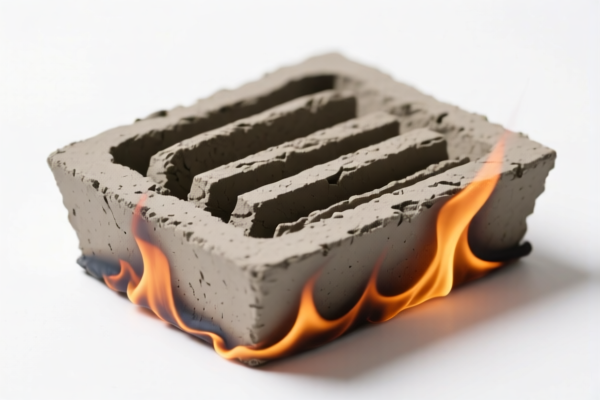
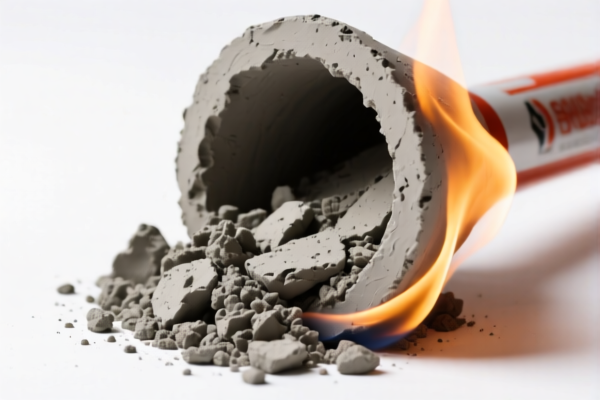
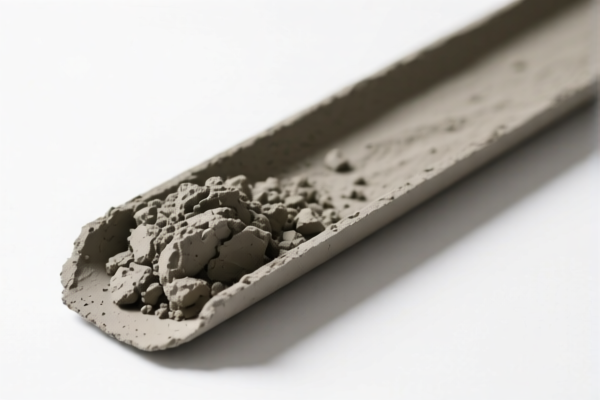

AI Analysis
🏭 Phosphoric Acid Resistant Repair Mortar
🌐 HS Code Reference & Customs Clearance Guide | 2026 Latest Tariff Analysis | Professional Clearance Strategy
📌 I. Product Definition & Classification: Do You Really Understand “Repair Mortar”?
Phosphoric Acid Resistant Repair Mortar is a specialized industrial construction material designed to repair and protect surfaces exposed to harsh chemical environments, particularly phosphoric acid. It is typically composed of high-performance cementitious materials, fine aggregates, and chemical additives that provide exceptional resistance to acidic corrosion.
In international trade, this product falls under the broader category of chemical products and building materials. The key distinction lies in whether it is classified as a generic construction material or a specialized chemical preparation.
⚠️ Key Distinction:
- If the product is primarily a cement-based mortar with specific chemical resistance properties, it may be classified under Chapter 32 (Prepared Binders for Foundry Molds and Cores; Chemical Products and Preparations Not Elsewhere Specified or Included).
- If it is considered a general construction material without specific chemical formulation details, it may fall under Chapter 38 (Miscellaneous Chemical Products) or Chapter 25 (Salt; Sulphur; Earths and Stone; Plastering Materials and Lime and Cement), depending on the exact composition and intended use.
📦 II. HS Code Classification Details (2026 Latest Tariff Authority Comparison)
| HS Code | Product Description | Applicable Scenario | Chemical Resistance |
|---|---|---|---|
3214.10.00.90 |
Glaziers' putty, grafting putty, resin cements, caulking compounds and other mastics; painters' fillings; nonrefractory surfacing preparations for facades, indoor walls, floors, ceilings or the like: Glazier's putty, grafting putty, resin cements, caulking compounds and other mastics; painters' fillings Painters' fillings | Industrial flooring, wall coatings, chemical plant repairs | ✅ Yes (Phosphoric Acid Resistant) |
3214.90.50.00 |
Glaziers' putty, grafting putty, resin cements, caulking compounds and other mastics; painters' fillings; nonrefractory surfacing preparations for facades, indoor walls, floors, ceilings or the like: Other: Other | General industrial repairs, non-specific chemical resistance | ✅ Yes (General Chemical Resistance) |
🔍 Key Reminder:
- The classification depends on the specific formulation and intended use of the mortar.
- If the product is explicitly marketed as phosphoric acid resistant, it is more likely to fall under 3214.10.00.90 due to its specialized nature.
- If the product is a general-purpose repair mortar with incidental chemical resistance, it may fall under 3214.90.50.00.
💰 III. 2026 Latest Tariff Rate Details (Including Additional Taxes, Policy Additions)
✅ Applicable Country: United States (US)
✅ Origin: China (CN)
✅ Effective Date: From November 10, 2025 (including subsequent imports)
🎯 1. 3214.10.00.90 —— Phosphoric Acid Resistant Repair Mortar (Specialized)
| Item | Content |
|---|---|
| Basic Tariff Rate | 0% (ad valorem) |
| Additional Tariff Rate | 0.0% |
| Total Tariff Rate | 0.0% |
| Tax Calculation | CIF Value × 0.0% |
| De Minimis Exemption Available | ❌ Not Applicable (due to specialized chemical nature) |
| Legal Basis Path | HTS:3214.10.00.90 |
📌 Explanation:
- The 0% basic tariff reflects the classification as a specialized chemical preparation under Chapter 32.
- No additional tariffs are applied under current US trade policies for this specific HS code.
- This makes it a cost-effective option for importers compared to other chemical products.
🎯 2. 3214.90.50.00 —— General Repair Mortar (Non-Specific Chemical Resistance)
| Item | Content |
|---|---|
| Basic Tariff Rate | 3.25% |
| Additional Tariff Rate | 25.0% |
| Total Tariff Rate | 28.25% |
| Tax Calculation | CIF Value × 28.25% |
| De Minimis Exemption Available | ❌ Not Applicable |
| Legal Basis Path | HTS:3214.90.50.00 → Section 301 Tariff |
📌 Note:
- The 3.25% basic tariff is standard for general chemical preparations.
- The 25% additional tariff is imposed under Section 301 of the Trade Act, targeting Chinese-origin goods.
- Total 28.25% is a significant cost factor, making this classification less attractive for importers.
🛠️ IV. Customs Clearance Practical Advice (Practical Pitfall Avoidance Guide)
✅ 1. Documentation Checklist (All Required)
| Document | Must Provide | Description |
|---|---|---|
| ✅ Product Specification Sheet | ✔️ | Include chemical composition, phosphoric acid resistance level, curing time |
| ✅ Safety Data Sheet (SDS) | ✔️ | Required for chemical products under OSHA/HS regulations |
| ✅ Certificate of Analysis (CoA) | ✔️ | Proves phosphoric acid resistance claims |
| ✅ Commercial Invoice | ✔️ | Clearly state “Phosphoric Acid Resistant Repair Mortar” |
| ✅ Packing List | ✔️ | Detail package weights and dimensions |
| ✅ Certificate of Origin (CO) | ✔️ | If not from China,可申请优惠税率 |
✅ 2. Declaration Tips (Key Mnemonics)
🔥 “Specify Resistance, Choose HS, Avoid General, Save Money!”
| Scenario | Correct Declaration | Wrong Practice |
|---|---|---|
| Explicitly phosphoric acid resistant | 3214.10.00.90 |
Misclassify as general mortar → 28.25% |
| General-purpose repair mortar | 3214.90.50.00 |
Misclassify as specialized → 0% (but may face penalties) |
| Mixed batch (some resistant, some not) | Split declaration | Combine → Risk of audit |
✅ 3. Special Case Handling
| Scenario | Handling Advice |
|---|---|
| OEM Custom Mortar | Provide client order + chemical formula, avoid “non-standard” claims |
| Mortar with Additives | List all additives in CoA, ensure transparency |
| Bulk vs. Retail Packaging | Bulk may face different inspection requirements |
| Chemical Plant Repair Use | Provide end-use certificate, may qualify for exemptions |
🌍 V. Global Major Market Clearance Comparison (2026 Latest)
| Country/Region | Recommended HS Code | Tariff | Certification Requirements | Notes |
|---|---|---|---|---|
| 🇺🇸 United States | 3214.10.00.90 |
0% (if specialized) | SDS + CoA | 28.25% if general |
| 🇨🇳 China | 3214.10.00.90 |
5% | CCC + RoHS | No additional tariffs |
| 🇪🇺 European Union | 3214.10.00.90 |
0% (if REACH compliant) | REACH + CLP | No additional tariffs |
| 🇦🇺 Australia | 3214.10.00.90 |
5% | ASCS + GHS | No additional tariffs |
| 🇯🇵 Japan | 3214.10.00.90 |
0% | JIS + PSE | No additional tariffs |
📌 Conclusion:
- The US is the only major market imposing significant tariffs on general chemical preparations.
- Proper classification is critical to avoid the 28.25% tariff.
- Specialized phosphoric acid resistant mortars benefit from 0% tariff in the US, making them highly competitive.
📌 VI. Common Errors & Pitfall Avoidance Guide (Blood and Tears Lessons)
❌ Error 1: Classifying specialized mortar as general mortar
👉 Consequence: 0% becomes 28.25% → Huge cost increase!
❌ Error 2: Misrepresenting chemical resistance level
👉 Consequence: Audit + fines + potential shipment detention
❌ Error 3: Not providing SDS or CoA
👉 Consequence: Customs may hold shipment for verification → Delays
❌ Error 4: Using vague terms like “industrial mortar”
👉 Consequence: Customs may assign generic HS code → Incorrect tariff
✅ Correct Practice:
“Phosphoric Acid Resistant Repair Mortar, Cementitious Base, 90% Silica Sand, Anti-Corrosive Additives, Model XYZ, SDS & CoA Available”
🎯 VII. Conclusion: Professional Declaration, Time-Saving, Cost-Effective!
🎯 Remember the Mnemonic:
🔹 “Specify Resistance, Choose HS, Avoid General, Save Money!”
🔹 “HS Code determines destiny, 28% vs 0%, declare correctly, save thousands!”
📌 Tips:
If your mortar is original from Vietnam, Mexico, Thailand, or Malaysia, you may qualify for IEEPA exemptions, reducing tariffs to 0%~5%.
Recommend applying for Advance Ruling to avoid clearance risks.
📣 Act Now:
📞 Contact professional customs brokers + Provide product specs + Apply for HS Code Advance Ruling
🚀 Let your mortar clear customs smoothly, export efficiently, and double profits!
✨ Professional Customs Clearance Starts with Accurate Classification!
💼 Every cent of your cost deserves precise calculation!
Customer Reviews
About HS Code Classification
The Harmonized System (HS) is an internationally standardized nomenclature developed by the World Customs Organization (WCO) to classify traded products. Over 200 countries use the HS system as the basis for customs tariffs, trade statistics, and import/export regulations.
Each HS code follows a hierarchical structure:
- Chapter (2 digits) — Broad category of goods (e.g., Chapter 84: Machinery and Mechanical Appliances)
- Heading (4 digits) — More specific grouping within the chapter
- Subheading (6 digits) — Internationally standardized breakdown, used by all WCO member countries
- National subdivisions (8-10 digits) — Country-specific extensions for further classification, such as US HTSUS 10-digit codes
Correct HS code classification is essential for smooth customs clearance, accurate duty payment, and compliance with trade regulations. Misclassification can lead to customs delays, overpayment of duties, or penalties.
When importing from CN to US, the applicable tariff rates may include:
- Most-Favored-Nation (MFN) rate — The standard duty rate applied to WTO members
- General rate — Applied to countries without trade agreements
- Trade remedy duties — Additional tariffs such as Section 301 (anti-dumping), Section 232 (national security), or countervailing duties
The information provided on this page is for reference purposes only. For official classification, please consult with your local customs authority or a licensed customs broker.