Photo Album Folder
CN → US| HS Code | Tariff Rate | Origin | Destination | Doc |
|---|---|---|---|---|
| 4602192940 | 40.3% | CN | US | Official Doc |
| 4820500000 | 35.0% | CN | US | Official Doc |
| 4820900000 | 35.0% | CN | US | Official Doc |
Product Images



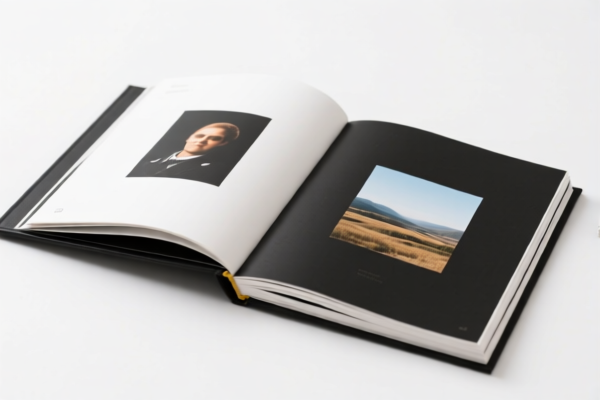
AI Analysis
📸 Photo Album Folders: HS Code Classification & US Customs Clearance Guide
🌐 HS Code Reference & Customs Clearance Guide | 2026 Latest Tariff Analysis | Professional Strategy for Paper Products
📌 One: Product Definition & Classification: Do You Really Know "Photo Album"?
Photo Album Folders are storage solutions designed for preserving, displaying, and organizing photographs. In international trade, their classification depends heavily on material composition and specific usage characteristics. While they share the common name "Album," customs authorities distinguish them based on whether they are made of paper/cardboard or other materials like plastic or leather.
Paper/Cardboard Albums: The most common category. These include photo sleeves, scrapbooks, and binders made primarily of paper or paperboard. They fall under Chapter 48.
Non-Paper Albums: Albums made from plastic, leather, textile, or other materials. These often fall under general "basketry" or "other made articles" categories, specifically Chapter 46.
⚠️ Key Distinction Point:
- If the album is primarily paper or paperboard and designed for collection/display → Classified under 4820 (Notebook/Album type).
- If the album is made of plastic, leather, or woven material → Classified under 4602 (Miscellaneous made articles) or similar fallback categories.
- Misclassification Risk: Declaring a plastic album as paper (or vice versa) leads to significant tariff differences and potential customs penalties.
📦 Two: HS Code Classification Details (2026 Latest Tariff Authority Comparison)
| HS Code | Product Description | Application Scenario | Material Type | Total Tax Rate (US) |
|---|---|---|---|---|
4820.50.00.00 |
Albums, letter pads, memo pads, and other similar articles of paper or paperboard; specifically for samples or collections | Paper-based photo albums, scrapbooks, collection folders | Paper/Paperboard | 35.0% |
4820.90.00.00 |
Other articles of paper or paperboard not elsewhere specified or included | Generic paper albums not fitting specific "sample/collection" subheadings | Paper/Paperboard | 35.0% |
4602.19.29.40 |
Woven materials made of paper strip, vegetable materials, or other plaiting materials; other made articles (fallback category) | Plastic-based, leather-based, or woven-material albums; generic "other" flat articles | Plastic/Woven/Other | 40.3% |
🔍 Key Reminder:
- Paper Albums (4820.xx.xx) generally enjoy a 0% Base Tariff, but face heavy additions.
- Non-Paper Albums (4602.xx.xx) are classified as "other made articles" with a 5.3% Base Tariff, but face even higher additions due to being a "fallback" category for non-specific goods.
- The 10% Section 122 Tariff and 25% Section 301 Tariff apply to both categories for Chinese-origin goods.
💰 Three: 2026 Latest Tariff Rate Breakdown (Including Surtaxes, Policy Additions)
✅ Applicable Country: United States (US)
✅ Origin: China (CN)
✅ Effective Time: 2025 Nov 10 onwards (including subsequent imports)
🎯 1. 4820.50.00.00 / 4820.90.00.00 —— Paper Albums (Collection/Display Type)
| Item | Detail |
|---|---|
| Base Tariff | 0.0% (Ad Valorem) |
| Section 301 Surcharge | +25% (From USITC Footnote 9903.88.01) |
| Section 122 Tariff | +10% (For China/ HK products, effective since Nov 10, 2025) |
| Total Tax Rate | 35.0% |
| Tax Calculation | CIF Value × 35% |
| De Minimis Exemption | ❌ Not Applicable (Deny de minimis for this category under current enforcement) |
| Legal Basis Path | USITC:4820.50.00.00 → Section301:9903.88.01 → Section122:9903.12.01 |
📌 Explanation:
- Although the Base Tariff is 0%, the 25% Section 301 and 10% Section 122 surcharges create a substantial 35% total duty burden.
- Section 122 is a specific addition targeting certain Chinese imports to protect domestic industries; it applies here because the goods are classified as "articles of paper or paperboard" under HTSUS 4820.
- Crucial: Do not assume "0% base" means "low cost." The total landed cost impact is significant.
🎯 2. 4602.19.29.40 —— Non-Paper Albums (Plastic/Leather/Woven Fallback)
| Item | Detail |
|---|---|
| Base Tariff | 5.3% (Ad Valorem) |
| Section 301 Surcharge | +25% (From USITC Footnote 9903.88.01) |
| Section 122 Tariff | +10% (For China/ HK products, effective since Nov 10, 2025) |
| Total Tax Rate | 40.3% |
| Tax Calculation | CIF Value × 40.3% |
| De Minimis Exemption | ❌ Not Applicable (Deny de minimis) |
| Legal Basis Path | USITC:4602.19.29.40 → Section301:9903.88.01 → Section122:9903.12.01 |
📌 Note:
- This code is a "Fallback Category" for albums not clearly defined elsewhere (e.g., plastic sleeves, leather binders).
- The Base Tariff of 5.3% is higher than paper albums.
- Combined with 25% + 10%, the total rate reaches 40.3%, making non-paper albums more expensive to import than paper ones.
- Common misclassification occurs when merchants label all albums as "4820" without verifying material. If material is mixed (e.g., paper cover with plastic inserts), customs may still assess based on predominant material or functional use, potentially triggering the higher rate.
🛠️ Four: Customs Clearance Practical Advice (Pitfall Avoidance Guide)
✅ 1. Required Documentation Checklist (None Can Be Missing)
| Document | Mandatory? | Explanation |
|---|---|---|
| ✅ Product Specification Sheet | ✔️ | Must clearly state material composition (e.g., "100% Recycled Paper," "PVC Plastic Sleeves"). |
| ✅ Product Photos (Clear & Detailed) | ✔️ | Show the album open, displaying pages/sleeves. Highlight material texture. |
| ✅ Commercial Invoice | ✔️ | Must explicitly describe goods as "Photo Album Folder, Paper-based" or "Plastic-based." Avoid vague terms like "Stationery." |
| ✅ Packing List | ✔️ | Detail quantity, weight, and packaging dimensions. |
| ✅ Certificate of Origin (CO) | ✔️ | Prove origin as China. If non-Chinese origin, different tariffs may apply. |
| ✅ Material Declaration Letter | ✔️ | If mixed materials, provide a breakdown by percentage. |
✅ 2. Declaration Techniques (Key Mnemonics)
🔥 “Material First, Function Second, Name Precise, Tariff Clear!”
| Situation | Correct Declaration | Incorrect Practice |
|---|---|---|
| Paper Album (Paper Covers, Paper Pages) | 4820.50.00.00 or 4820.90.00.00 |
Misdeclare as 4602 → Higher base tax (5.3%) |
| Plastic Album (PVC Sleeves, Plastic Cover) | 4602.19.29.40 |
Misdeclare as 4820 → Customs audit & penalty |
| Leather/Vinyl Album | 4602.19.29.40 (or specific leather chapter) |
Misdeclare as 4820 → Classification error |
| Mixed Material (Paper Cover + Plastic Inserts) | Declare as Paper if paper is predominant in value/structure; otherwise, fallback to 4602 |
Vague description "Album" → Customs discretion (usually higher tax) |
✅ 3. Special Case Handling
| Scenario | Handling Advice |
|---|---|
| Scrapbook vs. Photo Album | If designed primarily for collecting/displaying photos, use 4820.50.00.00. If designed for writing/diary purposes, it might fall under 4820.20.00.00 (Notebooks), but photo-specific albums are safer under 4820.50. |
| Blank Photo Album | Even if empty, if designed for photos, classify as 4820.50.00.00. |
| Children’s Craft Album | If primarily for crafts (stickers, drawing) rather than photo preservation, still 4820.50.00.00 if paper-based. |
| Luxury Leather Album | Do not use 4602. Check Chapter 46 or 49 for specific leather bookbinding. However, 4602.19.29.40 is a common fallback for "other" made articles if no specific heading fits. Consult a broker for Chapter 46 vs. 49 distinction. |
🌍 Five: Global Major Market Clearance Comparison (2026 Latest)
| Country/Region | Recommended HS Code | Tariff Rate (China Origin) | Certification Requirements | Remarks |
|---|---|---|---|---|
| 🇺🇸 USA | 4820.50.00.00 |
35.0% (Paper) 40.3% (Non-Paper) |
None specific | High Section 301 & 122 tariffs. |
| 🇨🇳 China | 4820.50.00.00 |
0% | CCC (if applicable) | No surcharges. |
| 🇪🇺 EU | 4820.50.00.00 |
0% (if paper) | CE (if electronic components present, rare for albums) | No surcharges. |
| 🇬🇧 UK | 4820.50.00.00 |
0% | UKCA (if applicable) | Post-Brexit tariffs may vary slightly but generally low for paper goods. |
| 🇯🇵 Japan | 4820.50.00.00 |
0% | PSE (if applicable) | No surcharges. |
📌 Conclusion:
- USA is the only major market with significant surcharges (35%-40.3%).
- Paper Albums (4820) are cheaper than Non-Paper Albums (4602) in the US market.
- Strategy: If possible, source or manufacture paper-based albums to benefit from the 0% base tariff, despite the surcharges. Avoid plastic/leather if tariff minimization is critical.
📌 Six: Common Errors & Pitfall Guide (Blood & Tears Lessons)
❌ Error 1: Misclassifying Plastic Albums as Paper Albums
👉 Consequence: Customs detects material mismatch → Fine + Back Payment + Delay.
👉 Fix: Always declare material accurately. Use "Plastic Photo Album" in description.
❌ Error 2: Using "Stationery" as General Description
👉 Consequence: Customs may apply arbitrary classification → Higher Tax or Audit.
👉 Fix: Use specific term: "Photo Album, Paper, 100 pages."
❌ Error 3: Ignoring Section 122 & 301 Surtaxes
👉 Consequence: Profit margin erased by unexpected 35%-40% duty.
👉 Fix: Calculate landed cost including 35% (Paper) or 40.3% (Non-Paper).
❌ Error 4: Assuming De Minimis Exemption Applies
👉 Consequence: Small shipments still taxed at full rate due to Deny De Minimis for these HS codes under current enforcement.
👉 Fix: Plan for full duty payment even for small B2C shipments if using standard postal services (USPS may handle, but risk remains).
✅ Correct Practice:
"Photo Album Folder, 100-Page, Paper Cover, Paper Sleeves, Designed for 4x6 Photos, Made in China"
🎯 Seven: Conclusion: Precise Classification, Cost Optimization!
🎯 Remember the Mnemonic:
🔹 “Paper First, Plastic Second; 35% for Paper, 40% for Plastic.”
🔹 “Base 0% is a Trap; Surtaxes Make it High.”
🔹 “Declare Material Clearly; Avoid Customs Audit.”
📌 Pro Tip:
- If your photo albums contain electronic components (e.g., digital photo frames), they are NOT covered here. They fall under Chapter 85 (Electronic Appliances).
- For purely paper/plastic albums, ensure your Commercial Invoice explicitly states: "HS Code 4820.50.00.00" or "HS Code 4602.19.29.40" as appropriate.
- Pre-Ruling: Consider applying for a Customs Ruling if you have a high-volume, mixed-material product line. This provides legal certainty and avoids disputes.
📣 Immediate Action:
📞 Contact a Professional Customs Broker + Provide Product Photos + Verify Material Composition
🚀 Ensure Smooth Clearance, Maximize Profit, and Stay Compliant!
✨ Professional Clearance Starts with Accurate Classification!
💼 Every Cent of Tax Saved is Pure Profit!
Customer Reviews
About HS Code Classification
The Harmonized System (HS) is an internationally standardized nomenclature developed by the World Customs Organization (WCO) to classify traded products. Over 200 countries use the HS system as the basis for customs tariffs, trade statistics, and import/export regulations.
Each HS code follows a hierarchical structure:
- Chapter (2 digits) — Broad category of goods (e.g., Chapter 84: Machinery and Mechanical Appliances)
- Heading (4 digits) — More specific grouping within the chapter
- Subheading (6 digits) — Internationally standardized breakdown, used by all WCO member countries
- National subdivisions (8-10 digits) — Country-specific extensions for further classification, such as US HTSUS 10-digit codes
Correct HS code classification is essential for smooth customs clearance, accurate duty payment, and compliance with trade regulations. Misclassification can lead to customs delays, overpayment of duties, or penalties.
When importing from CN to US, the applicable tariff rates may include:
- Most-Favored-Nation (MFN) rate — The standard duty rate applied to WTO members
- General rate — Applied to countries without trade agreements
- Trade remedy duties — Additional tariffs such as Section 301 (anti-dumping), Section 232 (national security), or countervailing duties
The information provided on this page is for reference purposes only. For official classification, please consult with your local customs authority or a licensed customs broker.