Photo Paper Bottom Paper
CN → US| HS Code | Tariff Rate | Origin | Destination | Doc |
|---|---|---|---|---|
| 4810131120 | 35.0% | CN | US | Official Doc |
| 4911914040 | 17.5% | CN | US | Official Doc |
| 4911996000 | 17.5% | CN | US | Official Doc |
Product Images

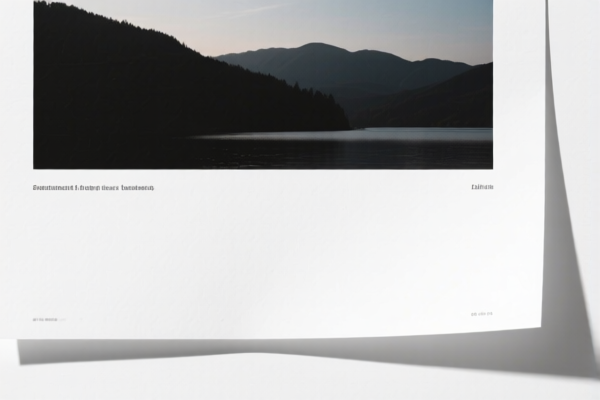

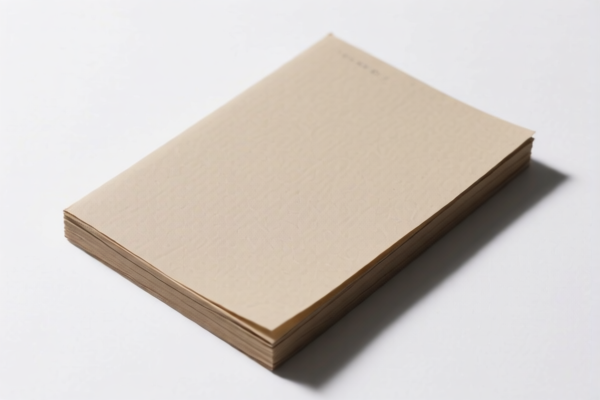
AI Analysis
📸 Photo Paper & Backing Paper (Sensitivity vs. Printing)
🌐 HS Code Reference & Customs Clearance Guide | 2026 Latest Tariff Analysis | Professional Clearance Strategy
📌 I. Product Definition: What Exactly is "Photo Paper Bottom Paper"?
In the complex world of photographic media, "Photo Paper" often refers to the complete roll or sheet consisting of the photosensitive coating and the bottom backing paper (release liner). However, for customs classification, the destination and physical state determine the HS Code.
Key Distinction: 1. Raw/Empty Backing Paper: If sold as a separate roll of plain paper used only as a backing for other products → Printed Matter (4911). 2. Photosensitive Paper: If the backing is part of a roll/sheet that has been coated with light-sensitive emulsion (even if unexposed) → Sensitive Paper (4810).
⚠️ Critical Classification Point:
- If the paper is coated for photography (photosensitive) → It falls under Chapter 48.
- If the paper is plain (no chemical coating for photos) but used as a carrier for printed images or as a backing → It falls under Chapter 49.
📦 II. HS Code Classification Details (2026 Latest Tariff Alignment)
Based on the provided data, there are three primary classification paths depending on the specific nature and use of the "Photo Paper Bottom Paper."
| HS Code | Product Description | Application Scenario | Key Characteristics |
|---|---|---|---|
4810.13.11.20 |
Sensitive Paper (Coated Paper) | Unexposed photographic paper, including the backing paper component of a complete photo roll | ✅ Coated with light-sensitive emulsion; base paper for photography |
4911.91.40.40 |
Other Printed Matter | Photo paper used as a carrier for printed images, designs, or photographs (post-printing context) | ✅ Printed on; functions as a graphic medium |
4911.99.60.00 |
Other Printed Products | General paper-based printing media, matching "printed on paper" characteristics | ✅ Paper-based; general printing medium |
🔍 Important Note:
-4810is for the raw material state (photosensitive base).
-4911is for the finished/goods state (printed carrier or generic paper product).
- Do not mix these: Using4911for sensitive photographic stock can lead to penalties, and vice versa.
💰 III. 2026 Latest Tariff Rate Breakdown (Including Surcharges)
✅ Applicable Country: United States (US)
✅ Origin: China (CN) (Assumed based on "122 Clause" and typical trade context in prompt)
✅ Effective Time: Current Trade Policies
🎯 1. 4810.13.11.20 —— Sensitive Paper (Photosensitive)
| Item | Detail |
|---|---|
| Basic Tariff | 0.0% (Ad Valorem) |
| Additional Tariff | +25.0% |
| Section 122 Tariff | +10.0% |
| Total Effective Rate | 35.0% |
| Tax Calculation | CIF Value × 35% |
| De Minimis Exemption | ❌ Not Eligible (High tariff threshold) |
| Legal Basis | Basic 0% + Section 301/Additional 25% + 122 Clause 10% |
📌 Explanation:
- This is the highest tax rate among the options.
- "Sensitive paper" is treated as a raw industrial/photographic material subject to multiple trade barriers.
- The 35% total rate (0% base + 25% add-on + 10% 122 clause) significantly impacts cost.
🎯 2. 4911.91.40.40 —— Other Printed Matter (Image Carrier)
| Item | Detail |
|---|---|
| Basic Tariff | 0.0% (Ad Valorem) |
| Additional Tariff | +7.5% |
| Section 122 Tariff | +10.0% |
| Total Effective Rate | 17.5% |
| Tax Calculation | CIF Value × 17.5% |
| De Minimis Exemption | ⚠️ Check Eligibility (Lower rate may allow de minimis under specific conditions) |
| Legal Basis | Basic 0% + Additional 7.5% + 122 Clause 10% |
📌 Explanation:
- Classified as "printed matter" or image carrier.
- The 17.5% rate is half of the sensitive paper rate.
- Applicable if the paper is marketed as a "printing substrate" or "photo carrier" rather than raw photographic stock.
🎯 3. 4911.99.60.00 —— Other Printed Paper Products
| Item | Detail |
|---|---|
| Basic Tariff | 0.0% (Ad Valorem) |
| Additional Tariff | +7.5% |
| Section 122 Tariff | +10.0% |
| Total Effective Rate | 17.5% |
| Tax Calculation | CIF Value × 17.5% |
| De Minimis Exemption | ⚠️ Check Eligibility |
| Legal Basis | Basic 0% + Additional 7.5% + 122 Clause 10% |
📌 Explanation:
- A general category for paper-based printing media.
- If the product does not fit neatly into "sensitive paper" and is not primarily for high-end photographic printing, this might be used.
- Same 17.5% rate as4911.91.40.40.
🛠️ IV. Customs Clearance Practical Advice
✅ 1. Preparation Checklist (Must-Have Documents)
| Document | Required? | Notes |
|---|---|---|
| ✅ Product Specification Sheet | ✔️ | Clearly state: "Coated" vs. "Uncoated", "Photosensitive" vs. "Plain". |
| ✅ Photo of Product Label | ✔️ | Must show HS Code, Composition, and Intended Use. |
| ✅ Commercial Invoice | ✔️ | Description must match HS Code (e.g., "Photosensitive Paper" vs. "Printed Paper"). |
| ✅ Material Safety Data Sheet (MSDS) | ✔️ | If classified as 4810 (Sensitive Paper), chemicals in coating may require MSDS. |
| ✅ Bill of Lading | ✔️ | Standard shipping document. |
⚠️ Warning:
- If you declare4911(17.5%) but the goods are actually4810(35%), Customs may reject the entry and impose penalties.
- If you declare4810but it is plain paper, you will overpay taxes.
✅ 2. Declaration Strategy (Key Tips)
🔥 "Define the Coating, Define the Rate!"
| Scenario | Recommended HS Code | Reason |
|---|---|---|
| Raw photo paper roll (with chemical coating, unexposed) | 4810.13.11.20 |
It is "Sensitive Paper" by definition. |
| Paper printed with photos (consumer product) | 4911.91.40.40 |
It is "Printed Matter" / "Image Carrier". |
| Plain backing paper (sold separately for other uses) | 4911.99.60.00 |
It is "Other Printed Paper Product". |
📌 Critical Tip:
- "Bottom Paper" (Backing Paper): If sold alone as a roll of plain paper, it is NOT sensitive paper. It should be classified under 4911 (17.5%) to save 17.5% in taxes.
- However, if it is part of a roll of photosensitive paper, the entire roll is classified as 4810 (35%).
✅ 3. Special Handling
| Situation | Advice |
|---|---|
| Mixed Shipment (Photo Paper + Plain Backing) | Declare separately! Do not combine. |
| "Printed" Photo Paper | If already printed with images, use 4911. Do not use 4810. |
| Customs Audit Risk | Provide a coating analysis report if challenged on 4810 vs. 4911. |
🌍 V. Global Market Comparison (2026)
| Country/Region | Recommended HS Code | Total Tax Rate (China Origin) | Notes |
|---|---|---|---|
| 🇺🇸 USA | 4810.13.11.20 |
35.0% | High tax due to 122 Clause + Additional Tariff |
| 🇺🇸 USA | 4911.91.40.40 |
17.5% | Lower tax for printed/non-sensitive paper |
| 🇨🇳 China | 4810.13.11.20 |
~6-13% | Varies by domestic tariff schedule |
| 🇪🇺 EU | 4810.13.11.20 |
0% | No additional US-style surcharges |
📌 Conclusion:
- The US market has a 17.5% tax differential between Sensitive Paper (4810) and Printed Matter (4911).
- Ensure your product description accurately reflects the physical state (coated vs. uncoated, raw vs. printed).
📌 VI. Common Mistakes & Pitfalls
❌ Mistake 1: Declaring "Photo Paper" as 4911 when it is unexposed sensitive stock.
👉 Consequence: Customs audit, back-taxes (17.5% difference), and potential fines.
❌ Mistake 2: Declaring "Plain Backing Paper" as 4810.
👉 Consequence: Overpayment of 17.5% tax. You can reclaim this if proven, but it delays clearance.
❌ Mistake 3: Ignoring the "122 Clause".
👉 Consequence: Even with 0% base tariff, the 10% 122 Clause applies to both categories. Do not assume "0% Base = 0% Total".
✅ Correct Approach:
- Raw, Coated, Unexposed →
4810.13.11.20(35%)- Printed, Uncoated, or Plain Backing →
4911(17.5%)
🎯 VII. Conclusion: Optimize Your Tariff Class!
🎯 Remember the Golden Rule:
🔹 "Coated & Sensitive? 35%. Printed or Plain? 17.5%."
🔹 "Check the Chemical Coating!"
📌 Pro Tip:
If your "Photo Paper Bottom Paper" is sold separately as a plain roll, always use 4911.99.60.00 to save 17.5% in taxes. Do not over-classify plain paper as sensitive paper.
📣 Immediate Action:
📞 Verify the coating status of your product.
📄 Update your Commercial Invoice description to match the HS Code.
🚀 Save 17.5% if classified correctly!
✨ Professional Clearance, Start with Accurate Classification!
💼 Your profit margin depends on the decimal point!
Customer Reviews
About HS Code Classification
The Harmonized System (HS) is an internationally standardized nomenclature developed by the World Customs Organization (WCO) to classify traded products. Over 200 countries use the HS system as the basis for customs tariffs, trade statistics, and import/export regulations.
Each HS code follows a hierarchical structure:
- Chapter (2 digits) — Broad category of goods (e.g., Chapter 84: Machinery and Mechanical Appliances)
- Heading (4 digits) — More specific grouping within the chapter
- Subheading (6 digits) — Internationally standardized breakdown, used by all WCO member countries
- National subdivisions (8-10 digits) — Country-specific extensions for further classification, such as US HTSUS 10-digit codes
Correct HS code classification is essential for smooth customs clearance, accurate duty payment, and compliance with trade regulations. Misclassification can lead to customs delays, overpayment of duties, or penalties.
When importing from CN to US, the applicable tariff rates may include:
- Most-Favored-Nation (MFN) rate — The standard duty rate applied to WTO members
- General rate — Applied to countries without trade agreements
- Trade remedy duties — Additional tariffs such as Section 301 (anti-dumping), Section 232 (national security), or countervailing duties
The information provided on this page is for reference purposes only. For official classification, please consult with your local customs authority or a licensed customs broker.