Photographic Paper Base
CN → US| HS Code | Tariff Rate | Origin | Destination | Doc |
|---|---|---|---|---|
| 3703906000 | 37.8% | CN | US | Official Doc |
| 4811908050 | 35.0% | CN | US | Official Doc |
| 4802615000 | 35.0% | CN | US | Official Doc |
| 4802625000 | 35.0% | CN | US | Official Doc |
| 3703106000 | 38.1% | CN | US | Official Doc |
| 4811909080 | 35.0% | CN | US | Official Doc |
Product Images
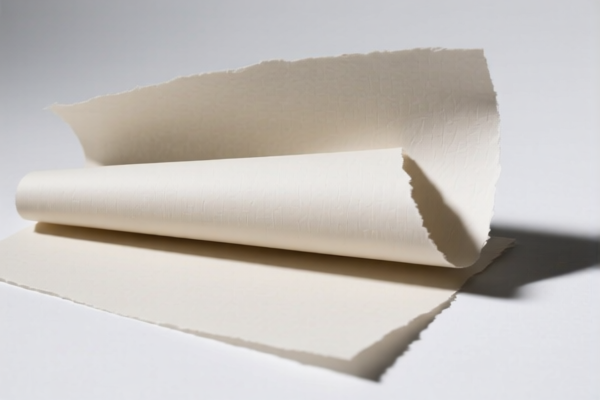

AI Analysis
📸 Photographic Paper Base (Raw Sensitized Paper/Substrate)
🌐 HS Code Reference & Customs Clearance Guide | 2026 Latest Tariff Analysis | Professional Clearance Strategy
📌 I. Product Definition & Classification: Do You Understand "Photographic Paper Base"?
Photographic Paper Base refers to the foundational substrate for photographic materials. It is typically a paper or paper-based material that may be unexposed, sensitized, coated, or plain. In international trade, the classification depends heavily on:
1. Material Composition: Paper, cellulose-based, or coated.
2. State: Exposed vs. Unexposed (Sensitized).
3. Processing Level: Plain paper, coated, impregnated, or surface-treated.
⚠️ Key Distinction Points:
- If it is unexposed, sensitized photographic paper (light-sensitive layer present but not yet used) → Typically classified under Chapter 37 (Photographic Goods).
- If it is plain paper base, coated paper, or uncolored/unfinished paper used as a substrate → Typically classified under Chapter 48 (Paper and Paperboard).
- Note: The final tax rate and HS code depend on whether the product is considered a "finished photographic good" or a "raw material/paper product."
📦 II. HS Code Classification Details (2026 Latest Tariff Authority Comparison)
Based on the provided data, here are the 6 most likely HS Codes for Photographic Paper Base, along with their matching logic and tax details.
| HS Code | Product Description & Matching Logic | Key Characteristics | Total Tax Rate (China-US) |
|---|---|---|---|
| 3703.90.60.00 | Photographic Paper (Other) Match: Material is "photographic paper" form; classified as "other" sensitized unexposed paper. Inferred as sensitized base. |
✅ Sensitized (Light-sensitive) ✅ Unexposed ✅ Final photographic product form |
37.8% |
| 4811.90.80.50 | Other Paper/Board, Coated/Impregnated Match: Material is paper-based; form is coated/processed paper; falls under "other" category with no material conflict. |
✅ Paper-based ✅ Coated/Treated ✅ General paper category |
35.0% |
| 4802.61.50.00 | Paper Base for Photography Match: Material is paper; use is photographic base; form is roll/sheet basic paper. |
✅ Basic Paper ✅ Photographic Use ✅ Uncoated/Unprocessed |
35.0% |
| 4802.62.50.00 | Base Paper (Uncoated) Match: Material is paper base (uncoated); use is industrial photographic base; form is basic paper. |
✅ Uncoated Paper ✅ Industrial Base ✅ Raw Material Form |
35.0% |
| 3703.10.60.00 | Photographic Paper for Black & White Match: Material is paper; use is photographic base; no material/form conflict with sensitized paper category. |
✅ Black & White Paper Base ✅ Sensitized (Implied) ✅ Specific Photo Category |
38.1% |
| 4811.90.90.80 | Other Paper, Coated/Impregnated Match: Material is cellulose-based; use is coated/surface-treated; form is paper product under "other." |
✅ Coated/Treated ✅ Cellulose-based ✅ General "Other" Paper |
35.0% |
🔍 Critical Note:
- Chapter 37 (3703.10.60.00, 3703.90.60.00) applies if the paper is already sensitized (light-sensitive chemicals applied). This is considered a "finished photographic good."
- Chapter 48 (4802.61.50.00, 4802.62.50.00, 4811.90.80.50, 4811.90.90.80) applies if the paper is plain, uncoated, or only mechanically/chemically processed but not yet sensitized for photography. This is considered a "paper product."
- Misclassification Risk: Declaring a sensitized paper as plain paper (Chapter 48) may lead to customs audits and back-taxes.
💰 III. 2026 Latest Tariff Rate Breakdown (Including Additional Taxes)
✅ Applicable Country: United States (US)
✅ Origin: China (CN)
✅ Effective Date: November 10, 2025 onwards
🎯 1. 3703.10.60.00 & 3703.90.60.00 — Photographic Paper (Sensitized)
| Item | Detail |
|---|---|
| Base Duty | 2.8% (for 3703.90.60.00) / 3.1% (for 3703.10.60.00) |
| USITC Additional Duty (Section 301) | +25% |
| IEEPA Additional Duty (China-specific) | +10% |
| Total Duty Rate | 37.8% (for 3703.90.60.00) 38.1% (for 3703.10.60.00) |
| Tax Calculation | CIF Value × Total Rate |
| De Minimis Exemption | ❌ Not Applicable (Cannot use Section 321) |
| Legal Basis | USITC:3703.10.60.00 / USITC:3703.90.60.00 → Footnote 9903.88.01 → IEEPA:9903.01.25 |
📌 Explanation:
- These codes fall under Chapter 37 (Photographic Goods).
- The 25% Section 301 tariff applies to most Chinese-origin goods.
- The 10% IEEPA tariff is a specific additional duty on Chinese imports.
- Total: ~38%. High duty rate due to "sensitized" status.
🎯 2. 4802.61.50.00, 4802.62.50.00, 4811.90.80.50, 4811.90.90.80 — Paper Base / Coated Paper
| Item | Detail |
|---|---|
| Base Duty | 0.0% |
| USITC Additional Duty (Section 301) | +25% |
| IEEPA Additional Duty (China-specific) | +10% |
| Total Duty Rate | 35.0% |
| Tax Calculation | CIF Value × 35% |
| De Minimis Exemption | ❌ Not Applicable |
| Legal Basis | USITC:4802.61.50.00 etc. → Footnote 9903.88.01 → IEEPA:9903.01.24 |
📌 Explanation:
- These codes fall under Chapter 48 (Paper).
- Base duty is 0%, but the 25% + 10% = 35% additional tariffs still apply.
- Total: 35%. Slightly lower than sensitized paper, but still high.
🛠️ IV. Customs Clearance Practical Advice (Pitfall Avoidance Guide)
✅ 1. Required Documentation Checklist
| Document | Mandatory? | Purpose |
|---|---|---|
| Product Specification Sheet | ✅ Yes | Clearly state: "Unsensitized" vs. "Sensitized"; material composition (paper type, coating). |
| Technical Data Sheet (TDS) | ✅ Yes | Explain chemical composition. If sensitized, list light-sensitive agents. |
| Photographs (Packaged & Unpackaged) | ✅ Yes | Show product form (roll, sheet, box) and labels. |
| Commercial Invoice | ✅ Yes | Must describe goods accurately: e.g., "Unsensitized Paper Base for Photography" or "Sensitized Black & White Photographic Paper." |
| Packing List | ✅ Yes | Detail quantity, weight, and dimensions. |
| Origin Certificate (if applicable) | ✅ Optional | If shipped from non-China country, may reduce tariffs. |
✅ 2. Declaration Tips (Key Rules)
🔥 "True State, Clear Description, Avoid Ambiguity!"
| Scenario | Correct Declaration | Incorrect Declaration | Risk |
|---|---|---|---|
| Unsensitized Paper Base | "Unsensitized Paper Base for Photography, Paper Material, Coated/Uncoated" | "Photographic Paper" | ❌ High Risk: Customs may assume sensitized → Apply Chapter 37 rates (38%) |
| Sensitized Paper | "Sensitized Photographic Paper, Unexposed, Black & White/Color" | "Paper Base" | ❌ High Risk: Misdeclaration of goods → Penalties + Back Taxes |
| Coated Paper (General Use) | "Coated Paper, Not for Photography, General Office Use" | "Photographic Paper" | ❌ Risk: If not for photography, should be different HS Code (e.g., 4811.90.90.80) |
| Mixed Shipment | Separate invoices for sensitized vs. unsensitized | Mixed under one HS Code | ❌ Risk: Confusion, delays, partial rejection |
✅ 3. Special Cases
| Situation | Handling Advice |
|---|---|
| OEM Custom Paper | Provide customer agreement and technical specs. Avoid generic names like "Paper." |
| Sample vs. Bulk | Samples must still be declared accurately. No de minimis exemption for China-origin goods under $800. |
| Re-export | If re-exporting from a third country, ensure origin is clearly declared. |
| Chemical Composition | If sensitized, declare chemical content (e.g., silver halide) for safety/data purposes. |
🌍 V. Global Market Comparison (2026 Latest)
| Country/Region | Recommended HS Code | Duty Rate (China Origin) | Certification/Notes |
|---|---|---|---|
| 🇺🇸 USA | 3703.10.60.00 / 4802.61.50.00 |
35% - 38% | Section 301 + IEEPA tariffs apply. No de minimis. |
| 🇨🇳 China | 3703.10.60.00 / 4802.61.50.00 |
5% - 8% | Import duty only. No additional tariffs. |
| 🇪🇺 EU | 3703.10.60.00 / 4802.61.50.00 |
0% - 6% | Varies by type. No Section 301 equivalent. |
| 🇬🇧 UK | 3703.10.60.00 / 4802.61.50.00 |
0% - 6% | Post-Brexit tariffs apply. |
| 🇯🇵 Japan | 3703.10.60.00 / 4802.61.50.00 |
0% - 3% | Generally low tariffs for paper/photo goods. |
📌 Conclusion:
- USA is the most challenging market due to 35-38% total tariffs.
- China, EU, UK, Japan have significantly lower or no additional tariffs.
- Consider supply chain diversification if targeting the US market heavily.
📌 VI. Common Mistakes & Pitfall Guide
❌ Mistake 1: Declaring "Sensitized Paper" as "Plain Paper" (Chapter 48)
👉 Consequence: Customs may audit and apply Chapter 37 rates (38%) + penalties.
❌ Mistake 2: Using "Photographic Paper" for Unsensitized Base
👉 Consequence: Misclassification. If not sensitized, it should be Chapter 48 (35%).
❌ Mistake 3: Ignoring IEEPA 10% Surcharge
👉 Consequence: Underpayment. Total duty is not just 25% (Section 301) but 35-38% with IEEPA.
❌ Mistake 4: No Technical Sheet for Chemicals
👉 Consequence: Delayed clearance if customs suspects hazardous materials (silver halides, etc.).
✅ Best Practice:
"Unsensitized Paper Base for Photographic Use, Cellulose Fiber, Uncoated, Roll Form, Model XYZ"
OR
"Sensitized Black & White Photographic Paper, Silver Halide, Unexposed, Sheet Form, Model ABC"
🎯 VII. Conclusion: Precision Classification, Cost Control, Smooth Clearance
🎯 Remember:
🔹 "Sensitized = Chapter 37 (38%), Unsensitized = Chapter 48 (35%)."
🔹 "USA Tariffs are High: Plan for 35-38%."
🔹 "Describe Accurately: Avoid Ambiguity."
📌 Pro Tip:
If your product is unsensitized paper base used for photography, declare it under Chapter 48 (e.g., 4802.61.50.00) to potentially save 0.3-3% compared to sensitized goods, but ensure it is not yet coated with light-sensitive chemicals.
📣 Action Item:
📞 Consult a Customs Broker + Provide Technical Data + Apply for Advance Ruling (if needed)
🚀 Ensure accurate HS Code classification to avoid costly delays and penalties!
✨ Professional Customs Clearance Starts with Accurate Classification!
💼 Every Percent of Duty Counts!
Customer Reviews
About HS Code Classification
The Harmonized System (HS) is an internationally standardized nomenclature developed by the World Customs Organization (WCO) to classify traded products. Over 200 countries use the HS system as the basis for customs tariffs, trade statistics, and import/export regulations.
Each HS code follows a hierarchical structure:
- Chapter (2 digits) — Broad category of goods (e.g., Chapter 84: Machinery and Mechanical Appliances)
- Heading (4 digits) — More specific grouping within the chapter
- Subheading (6 digits) — Internationally standardized breakdown, used by all WCO member countries
- National subdivisions (8-10 digits) — Country-specific extensions for further classification, such as US HTSUS 10-digit codes
Correct HS code classification is essential for smooth customs clearance, accurate duty payment, and compliance with trade regulations. Misclassification can lead to customs delays, overpayment of duties, or penalties.
When importing from CN to US, the applicable tariff rates may include:
- Most-Favored-Nation (MFN) rate — The standard duty rate applied to WTO members
- General rate — Applied to countries without trade agreements
- Trade remedy duties — Additional tariffs such as Section 301 (anti-dumping), Section 232 (national security), or countervailing duties
The information provided on this page is for reference purposes only. For official classification, please consult with your local customs authority or a licensed customs broker.