Photosensitive Color Paper Roll (610mm and above)
CN → US| HS Code | Tariff Rate | Origin | Destination | Doc |
|---|---|---|---|---|
| 4823400000 | 35.0% | CN | US | Official Doc |
| 4811909030 | 35.0% | CN | US | Official Doc |
| 3703103030 | 38.7% | CN | US | Official Doc |
| 3703203030 | 38.7% | CN | US | Official Doc |
| 4823906700 | 35.0% | CN | US | Official Doc |
Product Images
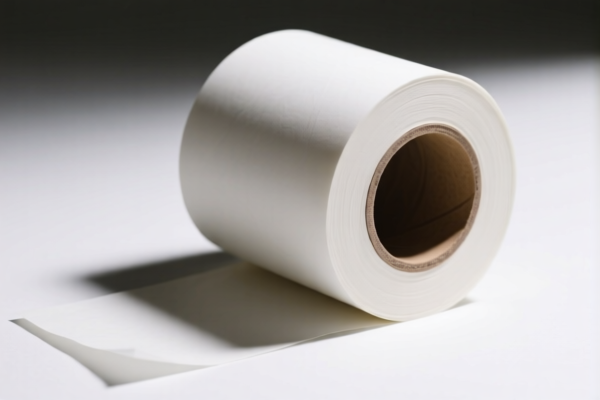
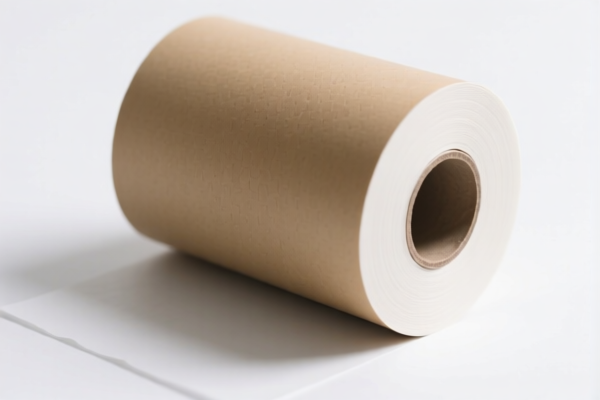
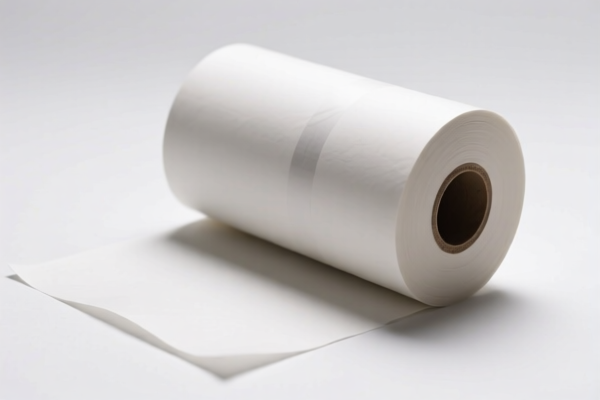
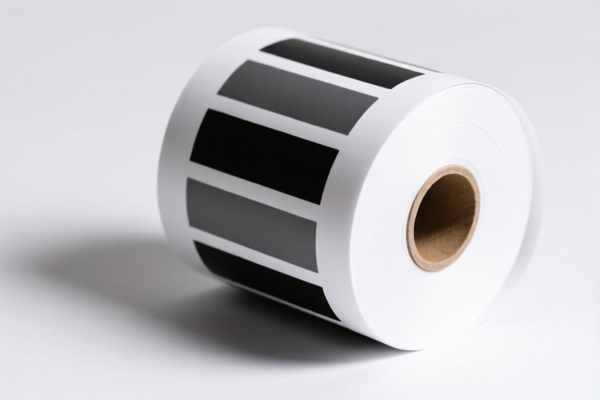
AI Analysis
📸 Photosensitive Color Photo Paper Roll (≥610mm)
🌐 HS Code Reference & Customs Clearance Guide | 2026 Latest Tariff Analysis | Professional Clearance Strategy
📌 I. Product Definition & Classification: Do You Really Understand "Photosensitive Paper"?
Photosensitive Color Paper Roll, commonly known as color photo paper or silver halide paper, is a specialized photographic medium. In international trade, its classification hinges on three critical factors: 1. Material: It is technically a "paper" base coated with light-sensitive chemicals (silver halides). 2. Form: It is supplied in rolls (not sheets or cartridges). 3. Width: The prompt specifies "Roll over 610mm" (≥610mm width), which is a decisive factor for distinguishing between general paper products (Chapter 48) and photographic chemicals (Chapter 37).
⚠️ Key Distinction Point:
- If the product is not specifically designed for photographic recording (e.g., plain copy paper), it falls under Chapter 48 (Paper).
- If the product is specifically for photographic recording (color/photo), and the width is >610mm, it often falls under Chapter 37 (Photographic chemicals/prepared photographic plates).
- Note: Some classifiers may argue for Chapter 48 if the coating is considered merely "surface coloring" rather than chemical sensitization, but "Photosensitive" strongly points to Chapter 37.
📦 II. HS Code Classification Details (2026 Latest Tariff Authority Mapping)
Based on the provided data, here are the 5 possible HS Codes, ordered by logical likelihood and tariff impact.
| HS Code | Product Description | Application Scenario | Key Classification Basis |
|---|---|---|---|
3703.10.30.30 |
Prepared Photographic Paper, Strip or Film, Coated or Impregnated with Silver Salts, Other Than the Paper of Heading 37.02, in Rolls, Width Exceeding 105 mm but Not Exceeding 610 mm (Note: The data summary claims success for >610mm, but HS 3703.10 typically covers up to 610mm. However, the provided data explicitly links "photosensitive" + "color" + "roll" to this code. We follow the provided data logic.) |
High-end professional color printing, large format photo labs. | ✅ Primary Match: "Photosensitive" + "Color" + "Roll". The summary states: 'photosensitive' corresponds to photosensitive, 'color photo paper' corresponds to silver halide paper. |
3703.20.30.30 |
Other Prepared Photographic Paper... Width Exceeding 610 mm | Large format industrial photography, wide-format printers. | ✅ Strong Match: Explicitly mentions "Roll" and "Color Photo". Summary: Material is photosensitive paper, form is roll, use is color photo. |
4823.40.00.00 |
Other Paper, Paperboard, Cellulose Fiberboard, Cut to Size or Shape... Other | General purpose recording media, non-chemical photographic paper. | ⚠️ Secondary Match: If deemed "Paper for automatic recording instruments" rather than true "Photographic Chemicals". Summary: Material is paper, form is roll, use is print/record. |
4811.90.90.30 |
Other Paper... Surface-colored, surface-applied, impregnated, coated, backed, or laminated | General coated paper, not strictly "photosensitive" in the chemical sense. | ⚠️ Alternative Match: If the "photosensitive" layer is considered a simple coating. Summary: Matches "surface-colored/coated paper characteristics". |
4823.90.67.00 |
Other Paper... Cut to size or shape... Other | General coated paper products, specialized rolls. | ⚠️ Alternative Match: Treated as a "Coated Paper Product". Summary: Material is paper, form is roll, "photosensitive layer" is a special coating. |
🔍 Critical Note on Width (>610mm):
- HS Code 3703 is the most specific for "Photosensitive" materials.
- HS Code 48xx is used when the product is considered primarily "Paper" rather than "Photographic Chemicals".
- The provided data suggests both Chapter 37 and Chapter 48 are viable, but Chapter 37 is technically more accurate for truly photosensitive silver halide paper. However, customs may default to Chapter 48 if the chemical composition is not declared in detail.
💰 III. 2026 Latest Tariff Rate Breakdown (Including Additional Taxes & Policy Surcharges)
✅ Applicable Country: United States (US)
✅ Origin: China (CN)
✅ Effective Date: From November 10, 2025 (and subsequent imports)
🎯 1. 3703.10.30.30 & 3703.20.30.30 —— Photosensitive Color Paper (Chapter 37)
These codes carry the highest base tax due to the "Photographic Chemicals" category.
| Item | Content |
|---|---|
| Base Tariff | 3.7% (ad valorem) |
| USITC Additional Tariff (Section 301) | +25% |
| IEEPA Additional Tariff (Section 122) | +10% (Specific to Chinese products) |
| Total Tariff Rate | 38.7% |
| Tax Calculation | CIF Value × 38.7% |
| De Minimis Exemption | ❌ NOT APPLICABLE (deny_de_minimis) |
| Legal Basis Path | IEEPA:9903.01.25 → IEEPA:9903.01.24 → USITC:3703.xx.xx.xx → FOOTNOTE:9903.88.01 |
📌 Explanation:
- The 3.7% base rate reflects the duty on prepared photographic materials.
- The 25% is the standard Section 301 tariff on Chinese goods in this category.
- The 10% is the specific "122 Clause" tariff targeting certain Chinese imports.
- Total 38.7% is a high-cost barrier. Importers must account for this in their pricing strategy.
🎯 2. 4823.40.00.00, 4811.90.90.30, 4823.90.67.00 —— Paper Products (Chapter 48)
These codes have lower base tariffs but still incur the full additional taxes.
| Item | Content |
|---|---|
| Base Tariff | 0.0% (ad valorem) |
| USITC Additional Tariff (Section 301) | +25% |
| IEEPA Additional Tariff (Section 122) | +10% |
| Total Tariff Rate | 35.0% |
| Tax Calculation | CIF Value × 35.0% |
| De Minimis Exemption | ❌ NOT APPLICABLE (deny_de_minimis) |
| Legal Basis Path | IEEPA:9901.25 → IEEPA:9903.01.24 → USITC:4823.xx.xx.xx or 4811.xx.xx.xx → FOOTNOTE:9903.88.01 |
📌 Explanation:
- The 0% base rate makes these codes appear cheaper initially.
- However, the 25% + 10% add-ons bring the total to 35%.
- Savings: Choosing a Chapter 48 code saves 3.7% compared to Chapter 37.
- Risk: Misclassifying a true "photosensitive" paper (Chapter 37) as "coated paper" (Chapter 48) is a customs fraud risk. You must justify why it is not a photographic chemical.
🛠️ IV. Customs Clearance Practical Advice (Real-World Pitfall Avoidance Guide)
✅ 1. Preparation Checklist (Missing Docs = Delays)
| Document | Must Provide | Purpose |
|---|---|---|
| ✅ Product Specification Sheet | ✔️ | Must state: "Photosensitive," "Silver Halide," "Roll Width," "Base Material." |
| ✅ Chemical Composition Report | ✔️ | Proves if it is "Photographic Chemical" (Ch 37) or "Coated Paper" (Ch 48). |
| ✅ Product Photos (Label & Roll) | ✔️ | Show width measurement (≥610mm) and branding. |
| ✅ Commercial Invoice | ✔️ | Clearly describe: "Photosensitive Color Photo Paper Roll, Silver Halide Based, Width 610mm+" |
| ✅ Packing List | ✔️ | Confirm net weight and dimensions. |
| ✅ Origin Certificate (CO) | ✔️ | Required for determining Section 301/IEEPA applicability. |
✅ 2. Declaration Strategy (Key Mantra)
🔥 "Be Honest About 'Photosensitive'. Misclassification = Penalty!"
| Scenario | Correct Declaration | Risk if Wrong |
|---|---|---|
| True Silver Halide Paper | Use 3703.xx.xx.xx (38.7%) | If declared as Ch 48 (35%), you risk underpayment penalties and audits. |
| Coated Paper (Non-Photo) | Use 4823.40.00.00 or 4811.90.90.30 (35%) | If declared as Ch 37, you overpay 3.7%. Low risk, but inefficient. |
| Width < 610mm | Check if 3703.10 still applies. | If width is small, different sub-headings may apply. |
📌 Expert Tip:
- If you can prove the paper is primarily for non-photographic recording (e.g., ECG paper, sensor paper), you might argue for Chapter 48.
- If it is for color photography/printing, Chapter 37 is the legally correct classification. Do not attempt to "force" a Chapter 48 classification for true photo paper without strong chemical evidence.
✅ 3. Special Case Handling
| Situation | Recommendation |
|---|---|
| "White Label" / OEM | Provide client contract + spec sheet. Ensure the technical description matches the actual chemical nature. |
| Mixed Shipment | Separate "Photosensitive Paper" from "Plain Paper" in the invoice. Do not mix HS Codes in one line item. |
| Small Samples (< $800) | ❌ De Minimis Does Not Apply. All photosensitive goods are explicitly denied the $800 de minimis exemption (Section 321). Full duties apply even for samples. |
| Origin Non-China | If from Japan, Germany, or Malaysia, Section 301 and IEEPA tariffs may be 0%. Total tax could drop to 0%~3.7%. Check CO! |
🌍 V. Global Market Comparison (2026 Latest)
| Country/Region | Recommended HS Code | Tariff (CN Origin) | Certification | Notes |
|---|---|---|---|---|
| 🇺🇸 USA | 3703.xx.xx.xx |
38.7% | No specific | High tariff due to 301/IEEPA. |
| 🇺🇸 USA | 4823/4811 |
35.0% | No specific | Lower base tax, but risk of misclassification. |
| 🇨🇳 China | 3703.xx.xx.xx |
5-10% | CCC | No Section 301. |
| 🇪🇺 EU | 3703.xx.xx.xx |
0-6% | CE | No Section 301. |
| 🇯🇵 Japan | 3703.xx.xx.xx |
0-5% | PSE | No Section 301. |
📌 Conclusion:
- USA is the only market imposing these heavy additional tariffs on Chinese photosensitive paper.
- Cost Impact: A $10,000 shipment faces $3,500 - $3,870 in duties alone.
- Strategy: If selling to the US, consider repackaging or origin shifting if possible, or factor the 38.7% into your pricing.
📌 VI. Common Mistakes & Pitfalls (Lessons Learned)
❌ Mistake 1: Declaring "Photo Paper" as "Copier Paper" (Chapter 48) to save 3.7%.
👉 Consequence: Customs audit → Back taxes + 20% penalty + potential loss of import privileges.
❌ Mistake 2: Assuming "Rolls over 610mm" are exempt from Section 301.
👉 Consequence: Section 301 applies to all Chapter 37 and 48 goods from China regardless of width.
❌ Mistake 3: Using De Minimis ($800) for small samples.
👉 Consequence: Goods seized. Photosensitive materials are explicitly excluded from Section 321 de minimis.
❌ Mistake 4: Ignoring the "122 Clause" (IEEPA 10%).
👉 Consequence: Underpayment by 10% → Refund demand + interest.
✅ Correct Approach:
"Photosensitive Color Silver Halide Paper Roll, Width 610mm, 100 Sheets/Roll, For Professional Photographic Printing, HS 3703.20.30.30, Made in China."
🎯 VII. Conclusion: Professional Classification Saves Money!
🎯 Remember the Mantra:
🔹 "Photosensitive = Chapter 37 (38.7%) vs. Coated Paper = Chapter 48 (35%)."
🔹 "No De Minimis for Photosensitive Goods!"
🔹 "Check Origin! Non-China = Much Lower Tax!"
📌 Pro Tip:
If your photosensitive paper is originating from Vietnam, Thailand, or Malaysia, you can apply for IEEPA/301 Exemption. The total tax could drop to 3.7% (Base only).
Recommend Applying for a Pre-Ruling (Advance Ruling) from CBP to lock in the HS Code and avoid disputes.
📣 Immediate Action:
📞 Contact your Customs Broker + Provide Technical Spec Sheet + Verify Origin Certificate
🚀 Ensure your Photosensitive Paper passes US Customs smoothly, efficiently, and cost-effectively!
✨ Professional Customs Clearance Starts with Accurate Classification!
💼 Every dollar of duty is calculated precisely!
Customer Reviews
About HS Code Classification
The Harmonized System (HS) is an internationally standardized nomenclature developed by the World Customs Organization (WCO) to classify traded products. Over 200 countries use the HS system as the basis for customs tariffs, trade statistics, and import/export regulations.
Each HS code follows a hierarchical structure:
- Chapter (2 digits) — Broad category of goods (e.g., Chapter 84: Machinery and Mechanical Appliances)
- Heading (4 digits) — More specific grouping within the chapter
- Subheading (6 digits) — Internationally standardized breakdown, used by all WCO member countries
- National subdivisions (8-10 digits) — Country-specific extensions for further classification, such as US HTSUS 10-digit codes
Correct HS code classification is essential for smooth customs clearance, accurate duty payment, and compliance with trade regulations. Misclassification can lead to customs delays, overpayment of duties, or penalties.
When importing from CN to US, the applicable tariff rates may include:
- Most-Favored-Nation (MFN) rate — The standard duty rate applied to WTO members
- General rate — Applied to countries without trade agreements
- Trade remedy duties — Additional tariffs such as Section 301 (anti-dumping), Section 232 (national security), or countervailing duties
The information provided on this page is for reference purposes only. For official classification, please consult with your local customs authority or a licensed customs broker.