Photosensitive Emulsion Bleaching Solution
CN → USProduct Images
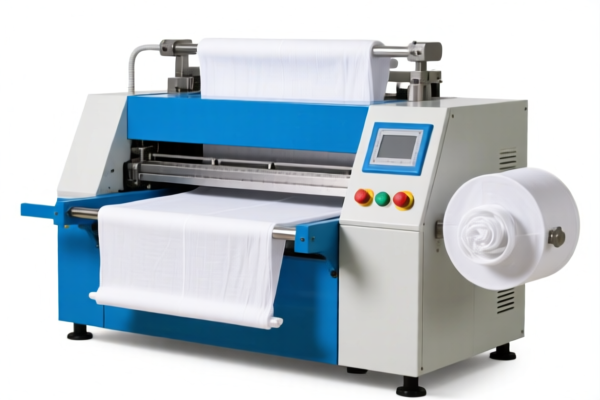
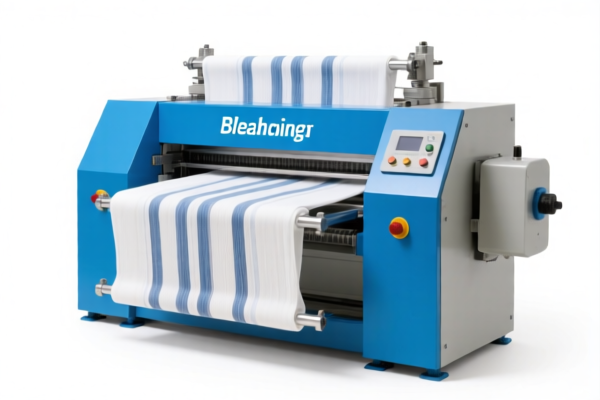
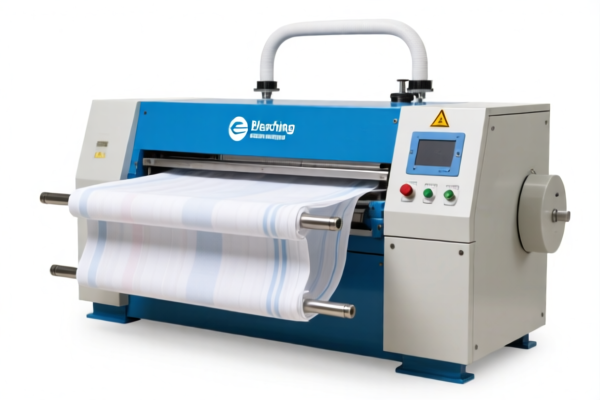
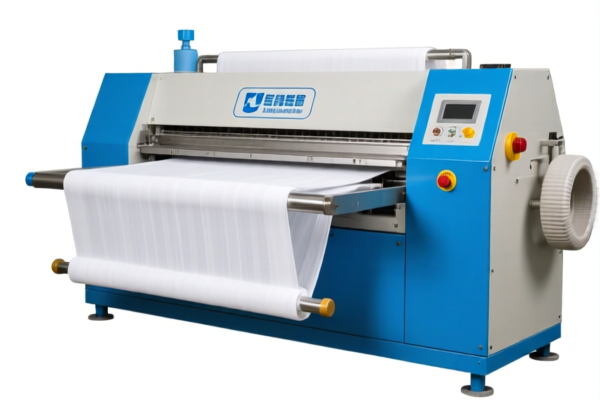
AI Analysis
📸 Photosensitive Emulsion Bleaching Solution (感光乳液漂白剂)
🌐 HS Code Reference & Customs Clearance Guide | 2026 Latest Tariff Analysis | Professional Clearance Strategy
📌 Part 1: Product Definition & Classification: What is "Photosensitive Emulsion Bleaching Solution"?
"Photosensitive Emulsion Bleaching Solution" refers to chemical preparations used in photographic processing, specifically designed to bleach silver images out of photographic materials (such as film or paper) before fixing or subsequent coloring steps.
In international trade, this product is ambiguous because it can be classified based on its chemical nature (gelatin/coatings) or its functional use (photographic chemicals). The following HS Codes reflect these different classification logics based on the provided data.
⚠️ Key Distinction:
- If classified as a Photographic Chemical: It falls under Chapter 37 (Photographic Goods).
- If classified as a Coating/Adhesive/Polymer: It falls under Chapter 35 (Albuminoid Substances; Glues; Enzymes).
📦 Part 2: HS Code Classification Details (Based on Provided Data)
| HS Code | Product Description & Logic | Applicability | Tax Rate (Total) |
|---|---|---|---|
3707.10.00.90 |
Other Photographic Chemical Preparations Logic: Treated as photographic sensitizing emulsions/agents. Fits the "other" category under photographic chemicals. |
Standard photographic processing chemicals | 38.0% |
3707.10.00.05 |
Sensitizing Emulsions / Other Photographic Chemicals Logic: Chemically identical to sensitizing agents; based on the "catch-all" principle for photographic goods. |
Photographic manufacturing or processing | 38.0% |
3506.91.10.00 |
Modulated Adhesives / Coatings (Organic Polymers) Logic: Inferred as an organic polymer-based coating/adhesive with optical/functional properties. |
Industrial coatings, adhesive applications | 35.0% |
3506.91.50.00 |
Adhesives based on Polymers (Chapters 39.01-39.13) Logic: Classified as an adhesive made from polymers or rubber-like chemicals. |
Polymer-based adhesive applications | 37.1% |
🔍 Important Note:
- The choice between 3707 (Chapter 37) and 3506 (Chapter 35) depends heavily on the primary use and technical specification declared to customs.
- Chapter 37 is typically preferred if the product is marketed specifically for photographic purposes.
- Chapter 35 may be applied if the product is sold as a general-purpose chemical coating or adhesive with incidental photosensitive properties.
💰 Part 3: 2026 Latest Tariff Rate Breakdown (Including Surtaxes & Policy Additions)
✅ Applicable Country: United States (US)
✅ Origin: China (CN)
✅ Effective Time: November 10, 2025 (and subsequent imports)
🎯 1. 3707.10.00.90 & 3707.10.00.05 —— Photographic Chemical Preparations
| Item | Content |
|---|---|
| Base Duty Rate | 3.0% (Ad Valorem) |
| Section 301 Surcharge | +25.0% (From USITC Footnote regarding Chinese imports) |
| Section 122 Surcharge | +10.0% (Specific provision for certain chemical/photographic goods) |
| Total Tax Rate | 38.0% |
| Tax Calculation | CIF Value × 38.0% |
| De Minimis Exemption | ❌ Not Applicable (High duty rates usually exclude de minimis benefits) |
| Legal Basis Path | Base Tariff: 3.0% → Section 301: +25.0% → Section 122: +10.0% |
📌 Explanation:
- The 3% base rate reflects the standard MFN (Most Favored Nation) duty for photographic chemicals.
- The 25% Section 301 duty is the major trade war surcharge on Chinese-origin goods.
- The 10% Section 122 duty is an additional levy often applied to specific chemical or agricultural-related items under US trade policies.
- Total: 38%. This is a high-cost item for importers.
🎯 2. 3506.91.10.00 —— Modulated Adhesives/Coatings
| Item | Content |
|---|---|
| Base Duty Rate | 0.0% (Many polymer-based adhesives/coatings have 0% base duty) |
| Section 301 Surcharge | +25.0% |
| Section 122 Surcharge | +10.0% |
| Total Tax Rate | 35.0% |
| Tax Calculation | CIF Value × 35.0% |
| De Minimis Exemption | ❌ Not Applicable |
| Legal Basis Path | Base Tariff: 0.0% → Section 301: +25.0% → Section 122: +10.0% |
📌 Note:
- Although the base rate is 0%, the total rate remains 35% due to the heavy surcharges.
- This classification is 3% cheaper than the Chapter 37 classification.
- Suitable if the product can be legally justified as a "general chemical coating" rather than a strict "photographic chemical."
🎯 3. 3506.91.50.00 —— Adhesives based on Polymers (Ch 39-40)
| Item | Content |
|---|---|
| Base Duty Rate | 2.1% |
| Section 301 Surcharge | +25.0% |
| Section 122 Surcharge | +10.0% |
| Total Tax Rate | 37.1% |
| Tax Calculation | CIF Value × 37.1% |
| De Minimis Exemption | ❌ Not Applicable |
| Legal Basis Path | Base Tariff: 2.1% → Section 301: +25.0% → Section 122: +10.0% |
📌 Note:
- This is the second cheapest option (37.1%).
- Applicable if the emulsion is primarily used as a bonding agent or coating derived from polymers listed in Chapters 39-40.
🛠️ Part 4: Practical Customs Clearance Advice (Real-World Pitfall Guide)
✅ 1. Document Preparation Checklist (All Required)
| Document | Mandatory? | Explanation |
|---|---|---|
| ✅ Product Specification Sheet | ✔️ | Must detail chemical composition, PH level, viscosity, and primary use (photographic vs. industrial). |
| ✅ Formula/Composition List | ✔️ | To prove whether it is a "photographic sensitizing agent" (Ch 37) or a "polymer adhesive" (Ch 35). |
| ✅ Product Photos (Label & Container) | ✔️ | Clear view of usage instructions and safety data. |
| ✅ Safety Data Sheet (SDS) | ✔️ | Critical for chemical shipments; helps customs determine hazard class and classification. |
| ✅ Commercial Invoice | ✔️ | Must clearly describe the item as "Photosensitive Emulsion" or "Bleaching Solution" with precise HS code. |
| ✅ Certificate of Origin (CO) | ✔️ | To confirm Chinese origin and apply surcharges accurately. |
| ✅ Packing List | ✔️ | Weight and volume details for customs valuation. |
✅ 2. Declaration Strategy (Key Mantra)
🔥 "Chemical Nature Determines Chapter: Photo Use = Ch 37, Polymer Base = Ch 35. Declare Precisely, Avoid 25% Shock!"
| Scenario | Correct Declaration | Incorrect Practice |
|---|---|---|
| Product is strictly for Photo Labs | 3707.10.00.90 or .05Tax: 38% |
Misdeclare as "General Adhesive" → Risk of audit/fine. |
| Product is a General Coating with Photo Properties | 3506.91.10.00Tax: 35% |
Misdeclare as "Photographic Chemical" → Overpay 3%. |
| Product is Polymer-based Adhesive | 3506.91.50.00Tax: 37.1% |
Misdeclare as "Simple Glue" → Base rate might be wrong. |
| Mixed Packaging (Photo + Accessories) | Declare as One Unit | Split declaration → Higher risk of classification error. |
✅ 3. Special Case Handling
| Situation | Recommendation |
|---|---|
| OEM for Photo Brands | Provide end-user agreement or brand authorization to support Chapter 37 classification. |
| Industrial Coating Application | Provide technical data showing use in non-photographic industrial coating to support Chapter 35 classification (35% tax). |
| Chemical Hazard | Ensure SDS indicates correct UN number and hazard class; dangerous goods rules may apply. |
| Origin Change | If shipped from a third country (e.g., Vietnam, Thailand), verify if Section 301/122 surcharges still apply based on origin rules. |
🌍 Part 5: Global Market Clearance Comparison (2026 Latest)
| Country/Region | Recommended HS Code | Tariff (China Origin) | Certification Req. | Notes |
|---|---|---|---|---|
| 🇺🇸 USA | 3707.10.00.90 |
38.0% | EPA/OSHA Compliance | High tax burden; precise classification is key. |
| 🇨🇳 China | 3707.10.00.90 |
~5-7% (Import Duty) | None specific | No Section 301/122 surcharges. |
| 🇪🇺 EU | 3707.10.00 |
0% - 6.5% | REACH Registration | No surtaxes; REACH compliance is critical. |
| 🇦🇺 Australia | 3707.10.00 |
5% | TGA/ASIC (if hazardous) | Moderate duty, no surtaxes. |
| 🇯🇵 Japan | 3707.10.00 |
3.5% - 6% | PCWP (if applicable) | Stable tariff structure. |
📌 Conclusion:
- The US is the most expensive market due to the 35%-38% total tax rate.
- EU and Japan offer much lower tariffs (0-6.5%) but require strict chemical compliance (REACH in EU).
- China remains the production hub with minimal import barriers for domestic sale.
📌 Part 6: Common Errors & Pitfalls (Lessons Learned)
❌ Error 1: Declaring "Photosensitive Emulsion" as "General Glue" to avoid high tax
👉 Consequence: Customs audit → Fine + Back taxes + Delays.
👉 Reality: If used for photography, Chapter 37 is mandatory.
❌ Error 2: Ignoring Section 122 and 301 Surcharges
👉 Consequence: Underpayment by 35% → Seizure of goods or heavy penalties.
👉 Reality: Always calculate Base + 301 + 122.
❌ Error 3: Providing vague description "Chemical Solution"
👉 Consequence: Customs will assign worst-case HS code or delay for clarification.
👉 Reality: Use specific terms: "Bleaching Solution for Photographic Emulsion."
✅ Correct Practice:
"Photosensitive Emulsion Bleaching Solution, for use in photographic film processing, containing [List Key Chemicals], SDS Available, HS Code: 3707.10.00.90"
🎯 Part 7: Conclusion: Precision in Classification Saves Money!
🎯 Remember the Mantra:
🔹 "Photo Use = 38%, Polymer Use = 35%, Base Rate is Key."
🔹 "HS Code is Life, 3% Difference is Profit, Misclassification is Bankruptcy."
📌 Pro Tip:
If your photosensitive emulsion is produced in Vietnam, Mexico, or Thailand, you may avoid Section 301/122 surcharges, reducing the total tax to just the Base Rate (0%-3%).
Recommend Advance Ruling from US Customs to confirm the HS Code before shipment.
📣 Immediate Action:
📞 Contact a professional customs broker + Provide Product Specs + Apply for HS Code Advance Ruling
🚀 Ensure your Photosensitive Emulsion clears customs smoothly, minimizes costs, and maximizes profit!
✨ Professional Clearance Starts with Accurate Classification!
💼 Every cent of duty is worth calculating precisely!
Customer Reviews
About HS Code Classification
The Harmonized System (HS) is an internationally standardized nomenclature developed by the World Customs Organization (WCO) to classify traded products. Over 200 countries use the HS system as the basis for customs tariffs, trade statistics, and import/export regulations.
Each HS code follows a hierarchical structure:
- Chapter (2 digits) — Broad category of goods (e.g., Chapter 84: Machinery and Mechanical Appliances)
- Heading (4 digits) — More specific grouping within the chapter
- Subheading (6 digits) — Internationally standardized breakdown, used by all WCO member countries
- National subdivisions (8-10 digits) — Country-specific extensions for further classification, such as US HTSUS 10-digit codes
Correct HS code classification is essential for smooth customs clearance, accurate duty payment, and compliance with trade regulations. Misclassification can lead to customs delays, overpayment of duties, or penalties.
When importing from CN to US, the applicable tariff rates may include:
- Most-Favored-Nation (MFN) rate — The standard duty rate applied to WTO members
- General rate — Applied to countries without trade agreements
- Trade remedy duties — Additional tariffs such as Section 301 (anti-dumping), Section 232 (national security), or countervailing duties
The information provided on this page is for reference purposes only. For official classification, please consult with your local customs authority or a licensed customs broker.