Photosensitive Emulsion Stabilizer
CN → US| HS Code | Tariff Rate | Origin | Destination | Doc |
|---|---|---|---|---|
| 2942000500 | 41.5% | CN | US | Official Doc |
| 2836200000 | 36.2% | CN | US | Official Doc |
| 2942003500 | 41.5% | CN | US | Official Doc |
| 2836300000 | 35.0% | CN | US | Official Doc |
| 3707100090 | 38.0% | CN | US | Official Doc |
Product Images
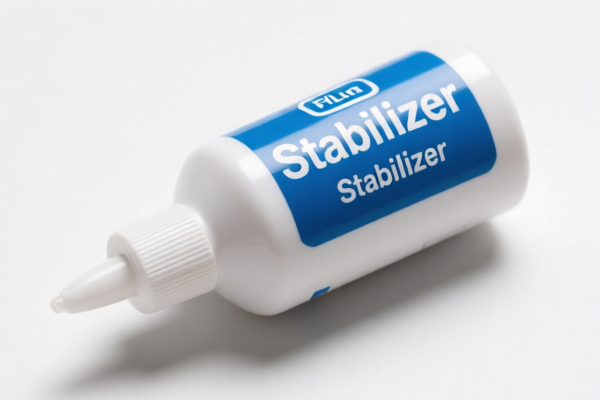
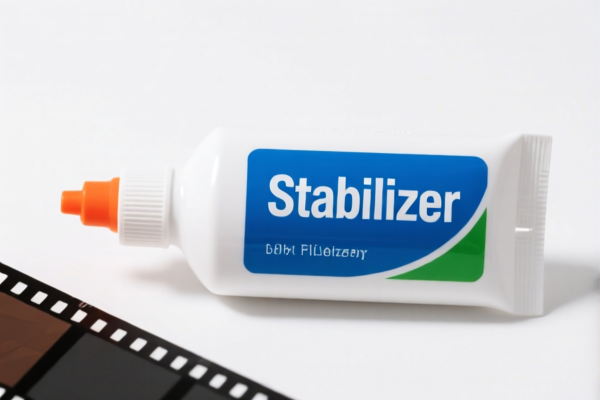
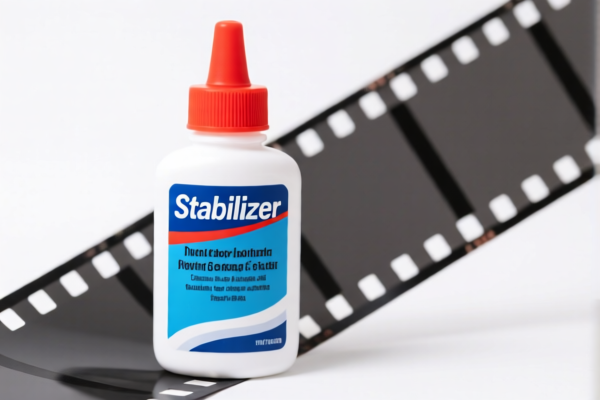
AI Analysis
🎞️ Photosensitive Emulsion Stabilizer (Sensitized Emulsion pH Regulator)
🌐 HS Code Reference & Customs Clearance Guide | 2026 Latest Tariff Analysis | Professional Entry Strategy
📌 I. Product Definition & Classification: What is a "Photosensitive Emulsion Stabilizer"?
In the chemical and photographic industry, a Photosensitive Emulsion Stabilizer (often referred to as a pH regulator for sensitized emulsions) is a critical chemical additive used in the production of photographic films, papers, and imaging plates. Its primary function is to maintain the stability of the silver halide emulsion by controlling pH levels, preventing premature fogging or degradation.
Internationally, this product is classified based on its chemical composition: 1. Inorganic Carbonates/Bicarbonates: If the stabilizer is based on Sodium Bicarbonate or Ammonium Carbonate, it falls under Chapter 28 (Inorganic Chemicals). 2. Organic Compounds: If it is an organic buffer or modifier, it falls under Chapter 29 (Organic Chemicals). 3. Preparation for Photography: If it is a specialized mixture specifically designed for photographic emulsions, it may fall under Chapter 37 (Photographic Goods).
⚠️ Key Distinction Point:
- If the product is a pure chemical (e.g., NaHCO₃) used as an additive → HS Code 28xx or 29xx.
- If the product is a complex preparation specifically for photographic emulsions → HS Code 3707.
- Misclassification Risk: Declaring a simple inorganic salt as a "photographic preparation" to avoid tariffs, or vice versa, triggers strict customs audits.
📦 II. HS Code Classification Details (2026 Latest Tariff Authority Comparison)
| HS Code | Product Description | Applicable Scenario | Tax Rate Total | Tax Details (US/China Origin) |
|---|---|---|---|---|
2942.00.05.00 |
Other Organic Compounds (General Chemical Auxiliaries) | Organic stabilizers/buffers not specified elsewhere | 41.5% | Base: 6.5%, Section 301: 25%, Section 301 (122): 10% |
2836.20.00.00 |
Carbonates of Potassium (Inorganic Chemicals) | Inorganic carbonate-based stabilizers | 36.2% | Base: 1.2%, Section 301: 25%, Section 301 (122): 10% |
2942.00.35.00 |
Other Organic Compounds (Aromatic/Modified Structures) | Organic stabilizers with aromatic or modified structures | 41.5% | Base: 6.5%, Section 301: 25%, Section 301 (122): 10% |
2836.30.00.00 |
Carbonates/Bicarbonates (e.g., Sodium Bicarbonate) | Inorganic bicarbonates (e.g., NaHCO₃) used as pH regulators | 35.0% | Base: 0.0%, Section 301: 25%, Section 301 (122): 10% |
3707.10.00.90 |
Preparations for Photography (Sensitizing Emulsions) | Specialized photographic chemical preparations | 38.0% | Base: 3.0%, Section 301: 25%, Section 301 (122): 10% |
🔍 Key Reminder:
-2836.30.00.00has the lowest base tariff (0%) but is still subject to 35% total due to additional duties.
-3707.10.00.90is the most specific to "photography" but has a moderate base rate (3%).
- Organic compounds (2942) generally carry the highest base rates (6.5%).
💰 III. 2026 Latest Tariff Rate Breakdown (Including Additional Duties & Policy Surcharges)
✅ Applicable Country: United States (US)
✅ Origin: China (CN)
✅ Effective Date: Post-November 10, 2025 (Includes subsequent imports)
🎯 1. 2836.30.00.00 —— Inorganic Carbonates/Bicarbonates (e.g., Sodium Bicarbonate)
| Item | Content |
|---|---|
| Base Tariff | 0% (ad valorem) |
| USITC Additional Duty | +25% (Under USITC Footnote 9903.88.01) |
| IEEPA Additional Duty | +10% (Against China/HK products, effective Nov 10, 2025) |
| Total Tariff | 35.0% |
| Tax Calculation | CIF Value × 35% |
| De Minimis Exemption | ❌ Not Eligible (deny_de_minimis) |
| Legal Basis Path | IEEPA:9903.01.25 → IEEPA:9903.01.24 → USITC:2836.30.00.00 → FOOTNOTE:9903.88.01 |
📌 Explanation:
- Although the base tariff is 0%, the 35% total is driven by the 25% Section 301 duty and 10% IEEPA surcharge.
- This is the lowest total tax rate among the options but only applies if the product is pure inorganic bicarbonate/carbonate.
🎯 2. 2836.20.00.00 —— Carbonates of Potassium (Inorganic)
| Item | Content |
|---|---|
| Base Tariff | 1.2% |
| USITC Additional Duty | +25% |
| IEEPA Additional Duty | +10% |
| Total Tariff | 36.2% |
| Tax Calculation | CIF Value × 36.2% |
| De Minimis Exemption | ❌ Not Eligible (deny_de_minimis) |
| Legal Basis Path | IEEPA:9901.25 → IEEPA:9903.01.24 → USITC:2836.20.00.00 → FOOTNOTE:9903.88.01 |
📌 Note:
- Slightly higher than sodium bicarbonate due to the 1.2% base rate.
- Applicable if the stabilizer is potassium-based.
🎯 3. 3707.10.00.90 —— Preparations for Photography (Sensitizing Emulsions)
| Item | Content |
|---|---|
| Base Tariff | 3.0% |
| USITC Additional Duty | +25% |
| IEEPA Additional Duty | +10% |
| Total Tariff | 38.0% |
| Tax Calculation | CIF Value × 38.0% |
| De Minimis Exemption | ❌ Not Eligible (deny_de_minimis) |
| Legal Basis Path | IEEPA:9903.01.25 → IEEPA:9903.01.24 → USITC:3707.10.00.90 |
📌 Note:
- This is the most specific classification for photographic chemicals.
- If the product is a mixed preparation specifically for sensitized emulsions, this is the safest classification to avoid penalties for misdeclaration.
🎯 4. 2942.00.05.00 & 2942.00.35.00 —— Other Organic Compounds
| Item | Content |
|---|---|
| Base Tariff | 6.5% |
| USITC Additional Duty | +25% |
| IEEPA Additional Duty | +10% |
| Total Tariff | 41.5% |
| Tax Calculation | CIF Value × 41.5% |
| De Minimis Exemption | ❌ Not Eligible (deny_de_minimis) |
| Legal Basis Path | IEEPA:9903.01.25 → IEEPA:9903.01.24 → USITC:2942.xxxx.xxxx |
📌 Note:
- Highest tax rate among the options.
- Only apply if the stabilizer is organic and does not fit specific organic chemical subheadings.
🛠️ IV. Customs Clearance Practical Advice (Real-World Pitfall Guide)
✅ 1. Required Documentation List (Non-Negotiable)
| Document | Must Provide | Description |
|---|---|---|
| ✅ Product Specification Sheet | ✔️ | Must detail chemical composition (Inorganic vs. Organic, pH range, CAS numbers). |
| ✅ Certificate of Analysis (COA) | ✔️ | Proof of purity and composition to support HS code claim (e.g., pure NaHCO₃ vs. mixture). |
| ✅ Formula/Composition List | ✔️ | If classified as 3707.10.00.90, must prove it is a "preparation for photography." |
| ✅ Product Photos (with Label) | ✔️ | Show ingredient list, hazard symbols, and intended use. |
| ✅ Commercial Invoice | ✔️ | Clearly state "Photosensitive Emulsion Stabilizer" or "pH Regulator for Sensitized Emulsions." |
| ✅ Origin Certificate (CO) | ✔️ | Required for verifying country of origin (China triggers higher tariffs). |
| ✅ Packing List | ✔️ | Detail net/gross weight and quantity. |
✅ 2. Declaration Skills (Key Mnemonics)
🔥 "Inorganic Low, Organic High, Photo Specific is Safe!"
| Scenario | Correct Declaration Method | Incorrect Action |
|---|---|---|
| Pure Sodium Bicarbonate (NaHCO₃) | 2836.30.00.00 (35%) |
Declaring as "Organic Chemical" → 41.5% |
| Pure Potassium Carbonate | 2836.20.00.00 (36.2%) |
Declaring as "General Inorganic" → Possible penalty |
| Specific Photographic Preparation | 3707.10.00.90 (38%) |
Declaring as "General Organic" → 41.5% + Risk of Penalty |
| Mixed Organic Buffer | 2942.00.05.00 (41.5%) |
None (Use specific organic code if available) |
✅ 3. Special Cases Handling
| Situation | Handling Advice |
|---|---|
| Is the product a "Preparation"? | If it contains multiple ingredients mixed specifically for photographic emulsions, use 3707.10.00.90. Do not declare as pure chemicals. |
| Is it Pure Inorganic? | If it is 100% Sodium Bicarbonate, use 2836.30.00.00. Provide COA to prove purity. |
| Is it Organic? | If it is an organic pH regulator, use 2942 codes. Be prepared for the 41.5% tax. |
| OEM Custom Stabilizer | Provide client order + formula. If it fits 3707, it may be safer for customs compliance despite higher tax than 2836. |
🌍 V. Global Market Comparison (2026 Latest)
| Country/Region | Recommended HS Code | Tariff | Certification Requirements | Notes |
|---|---|---|---|---|
| 🇺🇸 USA | 2836.30.00.00 (Inorganic) |
35% | TSCA Compliance | Highest cost if organic (41.5%) |
| 🇨🇳 China | 2836.30.00.00 |
Low | None | No additional duties |
| 🇪🇺 EU | 2836.30.00.00 |
~5-7% | REACH Registration | No Section 301/IEEPA |
| 🇦🇺 Australia | 2836.30.00.00 |
~5% | None | No additional duties |
| 🇯🇵 Japan | 2836.30.00.00 |
~0-5% | None | No additional duties |
📌 Conclusion:
- USA is the most expensive market due to Section 301 and IEEPA duties.
- Inorganic stabilizers (2836) are the most cost-effective for US import.
- Photographic preparations (3707) offer a middle ground in tax but require strict proof of use.
📌 VI. Common Errors & Pitfall Guide (Lessons Learned)
❌ Error 1: Declaring a complex photographic preparation as "Sodium Bicarbonate"
👉 Consequence: Customs will reject the declaration, demand COA, and potentially assess 41.5% tax + penalties for misclassification.
❌ Error 2: Using "Organic Chemical" for a simple inorganic salt
👉 Consequence: Overpayment of tax (41.5% vs 35%). Waste of money.
❌ Error 3: Failing to provide a Formula for 3707.10.00.90
👉 Consequence: Customs may downgrade to 2942 (41.5%) if they doubt it's a "preparation."
❌ Error 4: Ignoring IEEPA 10% surcharge
👉 Consequence: Underestimating landed cost by 10%. Profit margin erosion.
✅ Correct Approach:
"Photosensitive Emulsion Stabilizer, pH Regulator, Inorganic Carbonate, CAS No. 144-55-2, for Photographic Film Production"
🎯 VII. Conclusion: Professional Declaration, Cost Saving, Risk Reduction
🎯 Remember the Mnemonic:
🔹 "Inorganic First, Organic Last, Photo Specific is Safe!"
🔹 "HS Code Decides Tax, 35% vs 41.5%, Declaration Step Determines Cost!"
📌 Tips:
- If your stabilizer is imported from Vietnam, Mexico, Thailand, or Malaysia, you may apply for IEEPA Exemption, reducing the tax to Base Rate Only (e.g., 0% for 2836.30.00.00).
- Apply for Advance Ruling before shipment to confirm the correct HS Code and avoid clearance delays.
📣 Immediate Action:
📞 Contact Professional Customs Broker + Provide Product Formula + Apply for HS Code Advance Ruling
🚀 Let your Photosensitive Emulsion Stabilizer Clear Customs Smoothly, Efficiently, and Profitably!
✨ Professional Clearance Starts with Precise Classification!
💼 Every Penny of Cost Deserves Precise Calculation!
Customer Reviews
About HS Code Classification
The Harmonized System (HS) is an internationally standardized nomenclature developed by the World Customs Organization (WCO) to classify traded products. Over 200 countries use the HS system as the basis for customs tariffs, trade statistics, and import/export regulations.
Each HS code follows a hierarchical structure:
- Chapter (2 digits) — Broad category of goods (e.g., Chapter 84: Machinery and Mechanical Appliances)
- Heading (4 digits) — More specific grouping within the chapter
- Subheading (6 digits) — Internationally standardized breakdown, used by all WCO member countries
- National subdivisions (8-10 digits) — Country-specific extensions for further classification, such as US HTSUS 10-digit codes
Correct HS code classification is essential for smooth customs clearance, accurate duty payment, and compliance with trade regulations. Misclassification can lead to customs delays, overpayment of duties, or penalties.
When importing from CN to US, the applicable tariff rates may include:
- Most-Favored-Nation (MFN) rate — The standard duty rate applied to WTO members
- General rate — Applied to countries without trade agreements
- Trade remedy duties — Additional tariffs such as Section 301 (anti-dumping), Section 232 (national security), or countervailing duties
The information provided on this page is for reference purposes only. For official classification, please consult with your local customs authority or a licensed customs broker.