Photosensitive Paper Base Coated Paper
CN → US| HS Code | Tariff Rate | Origin | Destination | Doc |
|---|---|---|---|---|
| 4823908680 | 35.0% | CN | US | Official Doc |
| 4803002000 | 35.0% | CN | US | Official Doc |
| 4823906700 | 35.0% | CN | US | Official Doc |
| 3703106000 | 38.1% | CN | US | Official Doc |
| 3703906000 | 37.8% | CN | US | Official Doc |
| 4803004000 | 35.0% | CN | US | Official Doc |
Product Images
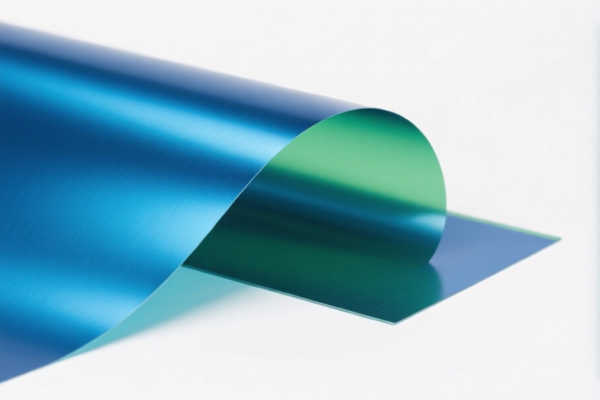
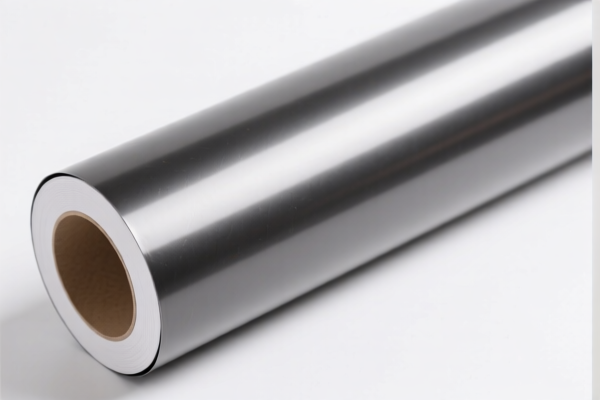
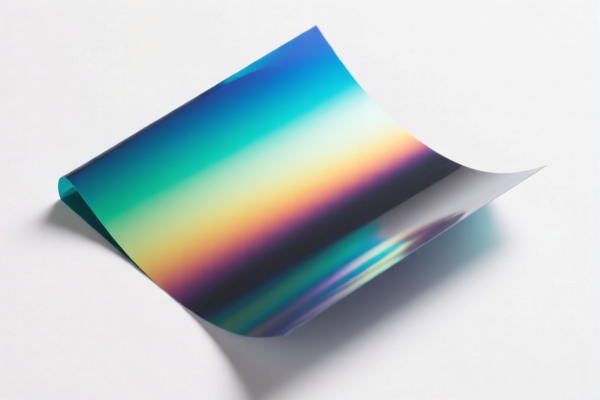
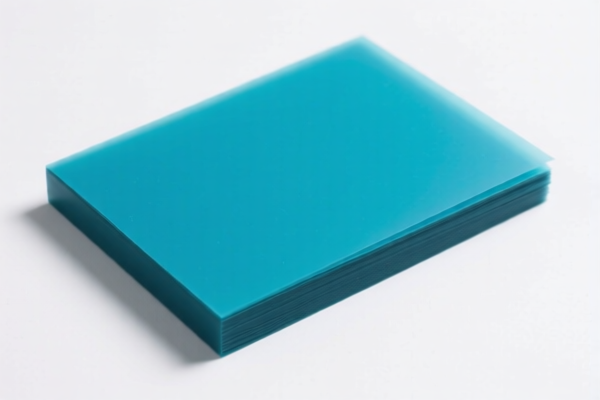
AI Analysis
📸 Photosensitive Paper Base Coated Paper (感光纸基涂布纸)
🌐 HS Code Reference & Customs Clearance Guide | 2026 Latest Tariff Analysis | Professional Clearance Strategy
📌 I. Product Definition & Classification: What is "Photosensitive Paper Base"?
Photosensitive Paper Base Coated Paper is a specialized substrate used primarily in photography, printing, and industrial imaging. It consists of a paper base (cellulose fiber network) that has been coated to receive light-sensitive chemicals (emulsions) or other functional layers.
In international trade, the classification depends heavily on whether the paper is already exposed/imaged (unlikely for "base") or unexposed and ready for processing. The key distinction lies in its material composition (paper vs. plastic) and its specific function (general paper vs. photographic goods).
⚠️ Key Distinction Points:
- If the product is purely a coated paper substrate without the final photographic emulsion, it may fall under Chapter 48 (Paper).
- If it is prepared specifically for photographic use (even if unexposed), it often falls under Chapter 37 (Photographic Goods).
- Misclassification Risk: Declaring photographic materials as general paper (Chapter 48) to avoid higher duties is a common customs violation.
📦 II. HS Code Classification Details (2026 Latest Tariff Authority Comparison)
| HS Code | Product Description | Application Scenario | Key Attribute |
|---|---|---|---|
4823.90.86.80 |
Other paper articles, cut to size/shape | General paper products, base papers for industrial use | ❌ Not specific to photography |
4803.00.20.00 |
Paper based on cellulose fibers (base paper) | Uncoated or lightly coated base paper for further processing | ✅ Cellulose-based base |
4823.90.67.00 |
Coated paper / Other specific paper products | Coated papers, including those potentially used for photosensitive bases | ✅ Coated/Processed paper |
3703.10.60.00 |
Photographic paper, coated on one side, unexposed | Direct Match: Photosensitive paper base ready for emulsion coating | ✅ Best Fit for Photographic Use |
3703.90.60.00 |
Other photographic paper/board | Alternative photographic paper classification | ✅ Photographic specific |
4803.00.40.00 |
Other paper for household/hygiene use | Incorrect Match: This code is for tissues/toilet paper, not industrial/photo base | ❌ Wrong Application |
🔍 Critical Reminder:
-3703.10.60.00is the most accurate classification for "Photosensitive Paper" because the term "Photosensitive" explicitly links it to Chapter 37 (Photographic Products).
- Codes under Chapter 48 (4823,4803) are substitutes only if the paper is NOT intended for photographic use or lacks the specific photographic characteristics defined in Chapter 37.
- Do NOT use4803.00.40.00(Household/Hygiene Paper) for industrial or photographic bases; this is a clear classification error that will trigger customs audits.
💰 III. 2026 Latest Tariff Rate Breakdown (Including Add-on Taxes & Policy Surcharges)
✅ Applicable Country: United States (US)
✅ Country of Origin: China (CN)
✅ Effective Date: From November 10, 2025 (for subsequent imports)
🎯 1. 3703.10.60.00 —— Photographic Paper, Coated on One Side, Unexposed
| Item | Content |
|---|---|
| Base Tariff | 3.1% (ad valorem) |
| USITC Add-on Tariff | +25.0% (Under USITC Footnote 9903.88.01) |
| IEEPA Add-on Tariff | +10.0% (针对中国/香港产品, effective Nov 2025) |
| Total Tariff Rate | 38.1% |
| Tax Calculation | CIF Value × 38.1% |
| De Minimis Eligibility | ❌ Not Eligible (deny_de_minimis) |
| Legal Basis Path | IEEPA:9903.01.25 → IEEPA:9903.01.24 → USITC:3703.10.60.00 → FOOTNOTE:9903.88.01 |
📌 Explanation:
- This is the most precise match for "Photosensitive Paper."
- The 38.1% total rate is high due to the combination of base duty and punitive tariffs.
- Even though the base duty (3.1%) is low, the 35% in additional taxes make this a high-cost classification.
🎯 2. 4823.90.86.80 / 4803.00.20.00 / 4803.00.40.00 —— General Paper Categories
| Item | Content |
|---|---|
| Base Tariff | 0.0% |
| USITC Add-on Tariff | +25.0% |
| IEEPA Add-on Tariff | +10.0% |
| Total Tariff Rate | 35.0% |
| Tax Calculation | CIF Value × 35.0% |
| De Minimis Eligibility | ❌ Not Eligible |
| Legal Basis Path | IEEPA:9901.25 → IEEPA:9903.01.24 → USITC:4823/4803 Codes |
📌 Note:
- These codes offer a slightly lower total rate (35.0%) compared to the photographic classification (38.1%).
- HOWEVER, using these codes for photosensitive paper is risky. If customs determines the paper is intended for photographic use, they will reclassify it to Chapter 37, leading to back taxes, penalties, and seizure.
- The 3.1% difference is not worth the compliance risk unless the paper is explicitly not for photographic use.
🎯 3. 3703.90.60.00 —— Other Photographic Paper
| Item | Content |
|---|---|
| Base Tariff | 2.8% |
| USITC Add-on Tariff | +25.0% |
| IEEPA Add-on Tariff | +10.0% |
| Total Tariff Rate | 37.8% |
| Tax Calculation | CIF Value × 37.8% |
| De Minimis Eligibility | ❌ Not Eligible |
📌 Note:
- Slightly lower than3703.10.60.00but still in the Chapter 37 risk zone.
🛠️ IV. Customs Clearance Practical Advice (实战避坑指南)
✅ 1. Required Documentation Checklist (Non-negotiable)
| Document | Mandatory? | Description |
|---|---|---|
| ✅ Product Specification Sheet | ✔️ | Must state: "Base Paper for Photosensitive Emulsion," dimensions, coating type, fiber content. |
| ✅ Certificate of Non-Photographic Use (If using Ch. 48) | ✔️ | If declaring under Chapter 48, you must prove it is not for photographic use. |
| ✅ Commercial Invoice | ✔️ | Clearly describe as "Coated Paper Base" or "Photographic Paper Base." Avoid vague terms like "General Paper." |
| ✅ Packing List | ✔️ | Detail net/gross weight, number of rolls/sheets. |
| ✅ Third-Party Test Report | ✔️ | Proof of composition (cellulose content, coating ingredients). |
| ✅ Country of Origin Certificate (CO) | ✔️ | Mandatory for proving Chinese origin (subject to tariffs). |
✅ 2. Declaration Strategy (Key Rules)
🔥 “Material Defines Code, Purpose Defines Risk, Be Specific!”
| Scenario | Correct Declaration | Wrong Practice |
|---|---|---|
| Intended for Photographic Emulsion | HS 3703.10.60.00 Desc: "Unexposed Photographic Paper Base" |
Declaring as "Coated Paper" (Ch. 48) → Seizure Risk |
| General Industrial Coated Paper (No Photo Use) | HS 4823.90.86.80 Desc: "Coated Paper for Industrial Printing" |
Vague description "Paper" → Customs Query |
| Raw Cellulose Base Paper (Uncoated) | HS 4803.00.20.00 Desc: "Cellulose Paper Base" |
Confusing with finished photographic paper |
| Tissue/Hygiene Paper | HS 4803.00.40.00 | ❌ DO NOT USE for photosensitive base |
✅ 3. Special Case Handling
| Situation | Handling Advice |
|---|---|
| OEM Custom Base Paper | Provide customer contract + design specs. Clarify if the customer will apply the emulsion. |
| Mixed Shipments (Photo + General Paper) | Declare separately. Do not combine different HS codes in one line item to avoid confusion. |
| Pre-Coated vs. Uncoated Base | If the base is already coated with sizing/chemistry but no light-sensitive emulsion, it may still be Ch. 48. If it includes emulsion, it must be Ch. 37. |
| Dispute with Customs | If classified as Ch. 37 but you believe it is Ch. 48, provide a technical justification that the coating is not for photosensitivity (e.g., purely mechanical coating for inkjet). |
🌍 V. Global Market Comparison (2026 Latest)
| Country/Region | Recommended HS Code | Tariff (China Origin) | Certification | Notes |
|---|---|---|---|---|
| 🇺🇸 USA | 3703.10.60.00 |
38.1% | N/A (Commercial) | High tariff due to Section 301 & IEEPA. |
| 🇨🇳 China | 3703.10.60.00 |
8% (Import Duty) | None | No additional punitive tariffs domestically. |
| 🇪🇺 EU | 3703.10.60.00 |
4.5% + VAT | CE (if applicable) | Standard EU duty. |
| 🇦🇺 Australia | 3703.10.60.00 |
5% | N/A | No significant add-on tariffs. |
| 🇯🇵 Japan | 3703.10.60.00 |
4.0% | None | Stable duty rate. |
📌 Conclusion:
- The USA imposes the highest effective tariff burden on this product due to trade policies.
- EU/Asia markets have standard duties, making them more cost-effective for exporters from China.
- Transshipment to Vietnam/Mexico does NOT automatically exempt you from IEEPA tariffs if the substantial transformation is not proven.
📌 VI. Common Mistakes & Pitfalls (Lessons Learned)
❌ Mistake 1: Declaring "Photosensitive Paper Base" as "Coated Paper" (4823.90.86.80) to save 3.1%.
👉 Consequence: Customs detects "photosensitive" intent → Penalty + Back Taxes + Potential Ban.
❌ Mistake 2: Using 4803.00.40.00 (Tissue Paper) for any paper product.
👉 Consequence: Immediate rejection or return of shipment. This code is strictly for hygiene products.
❌ Mistake 3: Vague description "Paper."
👉 Consequence: Customs holds the shipment for classification review, causing storage fees and delay.
✅ Correct Practice:
"Photographic Paper Base, Unexposed, Coated, Cellulose Fiber, For Emulsion Application, Model XYZ, Origin: China"
🎯 VII. Conclusion: Precision Saves Money and Time
🎯 Remember the Mantra:
🔹 "Photosensitive = Chapter 37, Risk of Rejection = High."
🔹 "Chapter 48 is for Non-Photo Use, Only If Proven."
🔹 "38.1% is the Price of Accurate Classification in the US."
📌 Pro Tip:
If your product is not intended for photographic use, ensure your specification sheet explicitly states "Non-Photographic" and provides technical details proving the lack of light-sensitive properties. This supports a Chapter 48 classification.
📣 Immediate Action:
📞 Consult a Customs Broker: Provide product samples and technical sheets.
🚀 Apply for Advance Ruling: If the volume is high, request a binding classification from US Customs to mitigate risk.
✨ Professional Clearance Starts with Accurate Classification!
💼 Your Cost Efficiency Depends on Your HS Code Precision!
Customer Reviews
About HS Code Classification
The Harmonized System (HS) is an internationally standardized nomenclature developed by the World Customs Organization (WCO) to classify traded products. Over 200 countries use the HS system as the basis for customs tariffs, trade statistics, and import/export regulations.
Each HS code follows a hierarchical structure:
- Chapter (2 digits) — Broad category of goods (e.g., Chapter 84: Machinery and Mechanical Appliances)
- Heading (4 digits) — More specific grouping within the chapter
- Subheading (6 digits) — Internationally standardized breakdown, used by all WCO member countries
- National subdivisions (8-10 digits) — Country-specific extensions for further classification, such as US HTSUS 10-digit codes
Correct HS code classification is essential for smooth customs clearance, accurate duty payment, and compliance with trade regulations. Misclassification can lead to customs delays, overpayment of duties, or penalties.
When importing from CN to US, the applicable tariff rates may include:
- Most-Favored-Nation (MFN) rate — The standard duty rate applied to WTO members
- General rate — Applied to countries without trade agreements
- Trade remedy duties — Additional tariffs such as Section 301 (anti-dumping), Section 232 (national security), or countervailing duties
The information provided on this page is for reference purposes only. For official classification, please consult with your local customs authority or a licensed customs broker.