Photosensitive Paper Base Paper Coated
CN → US| HS Code | Tariff Rate | Origin | Destination | Doc |
|---|---|---|---|---|
| 4816200000 | 35.0% | CN | US | Official Doc |
| 3703103090 | 38.7% | CN | US | Official Doc |
| 4816900100 | 35.0% | CN | US | Official Doc |
| 3703103060 | 38.7% | CN | US | Official Doc |
| 4803002000 | 35.0% | CN | US | Official Doc |
Product Images
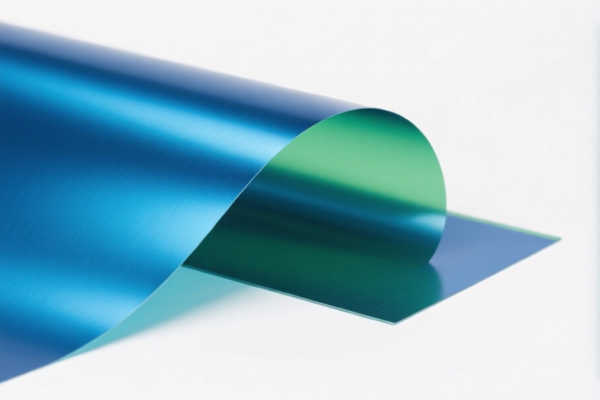
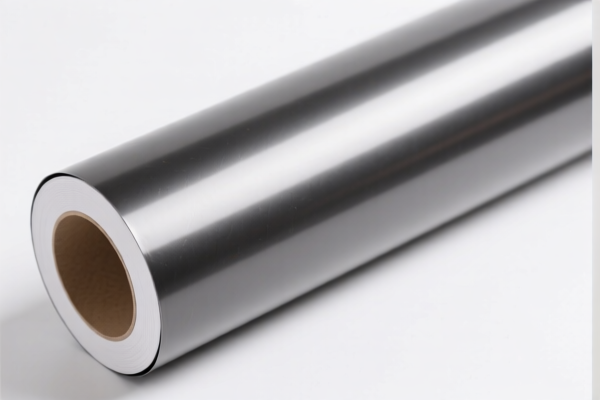
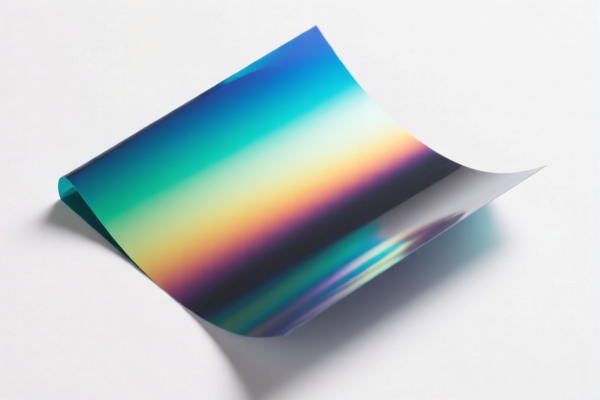
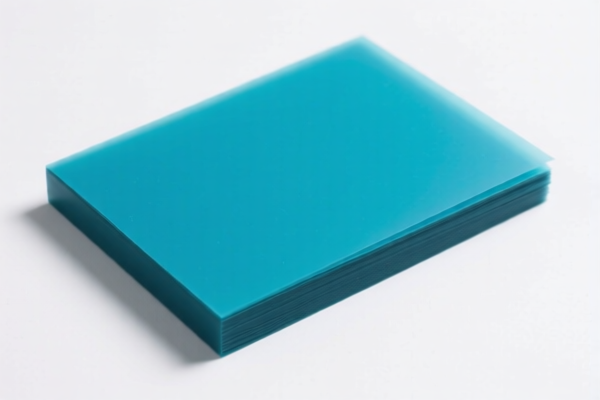
AI Analysis
📄 Photosensitive Paper Base Paper Coated (感光纸基纸涂层)
🌐 HS Code Reference & Customs Clearance Guide | 2026 Latest Tariff Breakdown | Professional Clearance Strategy 📌 I. Product Definition & Classification: What is "Photosensitive Paper Base Paper"?
This product sits at the intersection of paper manufacturing and chemical coating technologies. It is crucial to distinguish between the raw paper substrate (the base) and the finished photosensitive material (the coated product ready for imaging).
1. Base Paper Substrate (Uncoated or Plain Base): The raw cellulose paper before the application of light-sensitive emulsions (such as silver halide or diazo compounds). → Classified under Paper categories (Chapter 48).
2. Coated/Finished Photosensitive Paper: The paper after being treated with light-sensitive chemicals, ready for printing, copying, or imaging processes. → Classified under Photochemical Materials (Chapter 37) or Special Paper Types (Chapter 48).
⚠️ Key Distinction Point: - If the paper is plain/base and not yet coated with sensitive agents → Chapter 48 (e.g.,
4803.00.20.00). - If the paper is coated with silver halide or similar light-sensitive emulsions → Chapter 37 (e.g.,3703.10.30.90). - If the paper is coated for copying/transfer purposes (but not strictly "photochemical" in the imaging sense) → Chapter 48 (e.g.,4816.20.00.00,4816.90.01.00).
📦 II. HS Code Classification Details (2026 Latest Tariff Authoritative Mapping)
Based on the provided data, here are the 5 possible HS Codes for "Photosensitive Paper Base Paper Coated," depending on the specific material properties and coating type.
| HS Code | Product Description | Summary / Logic | Total Tax Rate (China-US) |
|---|---|---|---|
3703.10.30.90 |
Photosensitive Paper (Silver Halide Type) | Recognized as Silver Halide paper material due to its light-sensitive characteristics. | 38.7% |
3703.10.30.60 |
Photosensitive Paper (General Light-Sensitive) | Core material matches light-sensitive/silver halide features; inferred as photosensitive paper category. | 38.7% |
4816.20.00.00 |
Copying/Transfer Paper (Paper Substrate) | Classified as paper material suitable for copying, transfer, and image processing. | 35.0% |
4816.90.01.00 |
Other Paper for Copying/Transfer (Carbon/Transfer) | Matches paper form of carbon paper, transfer paper, wax paper, etc. | 35.0% |
4803.00.20.00 |
Base Paper (Cellulose/Pulp) | Classified as base paper product; fits cellulose paper material characteristics. | 35.0% |
🔍 Critical Note: -
3703codes apply when the paper is chemically treated for photographic/imaging purposes (high-value, high-tax). -4816codes apply when the paper is used for copying/transfer (e.g., carbonless copy paper, thermal transfer backing). -4803code applies only to the raw base paper before sensitive coating.
💰 III. 2026 Latest Tariff Rate Breakdown (Including Additional Taxes & Policies)
✅ Applicable Country: United States (US)
✅ Country of Origin: China (CN)
✅ Effective Date: From November 10, 2025 (including subsequent imports)
🎯 1. 3703.10.30.90 & 3703.10.30.60 —— Photosensitive Paper (Silver Halide/Light-Sensitive)
| Item | Detail |
|---|---|
| Base Tariff | 3.7% (ad valorem) |
| USITC Additional Duty (Section 301) | +25.0% |
| IEEPA Additional Duty (122-Clause) | +10.0% |
| Total Tax Rate | 38.7% |
| Tax Calculation | CIF Value × 38.7% |
| De Minimis Exemption | ❌ Not Eligible (deny_de_minimis) |
| Legal Basis Path | IEEPA:9903.01.24 → USITC:3703.10.30.90 → FOOTNOTE:9903.88.01 |
📌 Explanation: - The 25% is the standard Section 301 tariff on Chinese goods. - The 10% is the additional IEEPA tariff targeting specific Chinese imports. - The 3.7% is the standard Most Favored Nation (MFN) base rate for photographic paper. - Total: 38.7%. This is a high tariff bracket, significantly impacting cost.
🎯 2. 4816.20.00.00 —— Paper for Copying/Transfer (Image Processing)
| Item | Detail |
|---|---|
| Base Tariff | 0.0% |
| USITC Additional Duty (Section 301) | +25.0% |
| IEEPA Additional Duty (122-Clause) | +10.0% |
| Total Tax Rate | 35.0% |
| Tax Calculation | CIF Value × 35.0% |
| De Minimis Exemption | ❌ Not Eligible (deny_de_minimis) |
| Legal Basis Path | IEEPA:9903.01.24 → USITC:4816.20.00.00 → FOOTNOTE:9903.88.01 |
📌 Explanation: - The base tariff for this paper category is 0%. - However, due to Section 301 and IEEPA, the total effective tariff is 35.0%. - This is slightly lower than the photosensitive paper (38.7%) but still substantial.
🎯 3. 4816.90.01.00 —— Other Paper for Copying/Transfer (Carbon/Transfer)
| Item | Detail |
|---|---|
| Base Tariff | 0.0% |
| USITC Additional Duty (Section 301) | +25.0% |
| IEEPA Additional Duty (122-Clause) | +10.0% |
| Total Tax Rate | 35.0% |
| Tax Calculation | CIF Value × 35.0% |
| De Minimis Exemption | ❌ Not Eligible (deny_de_minimis) |
| Legal Basis Path | IEEPA:9903.01.24 → USITC:4816.90.01.00 → FOOTNOTE:9903.88.01 |
📌 Explanation: - Same tariff structure as
4816.20.00.00. - Applies to carbon paper, transfer paper, and wax paper.
🎯 4. 4803.00.20.00 —— Base Paper (Uncoated/Cellulose)
| Item | Detail |
|---|---|
| Base Tariff | 0.0% |
| USITC Additional Duty (Section 301) | +25.0% |
| IEEPA Additional Duty (122-Clause) | +10.0% |
| Total Tax Rate | 35.0% |
| Tax Calculation | CIF Value × 35.0% |
| De Minimis Exemption | ❌ Not Eligible (deny_de_minimis) |
| Legal Basis Path | IEEPA:9903.01.24 → USITC:4803.00.20.00 → FOOTNOTE:9903.88.01 |
📌 Explanation: - Applies only if the product is strictly base paper with no light-sensitive coating. - If the paper is coated (as the name suggests "Coated"), this code may be incorrectly applied if the coating is functional. - Risk: Misclassification could lead to audits or penalties if customs determine the paper is photosensitive.
🛠️ IV. Customs Clearance Practical Advice (Avoid Pitfalls Guide)
✅ 1. Required Documentation Checklist (Non-Negotiable)
| Document | Must Provide | Notes |
|---|---|---|
| ✅ Product Specification Sheet | ✔️ | Must detail coating type, thickness, weight, and intended use (e.g., "for silver halide printing" vs. "for carbon copy"). |
| ✅ Technical Data Sheet (TDS) | ✔️ | Proof of chemical composition of the coating. |
| ✅ Product Photos (Clear Labels) | ✔️ | Show packaging, labels, and product texture. |
| ✅ Commercial Invoice | ✔️ | Must clearly state "Photosensitive Paper" or "Base Paper" based on actual product. |
| ✅ Packing List | ✔️ | Detail roll length, weight, and packaging type. |
| ✅ Certificate of Origin (CO) | ✔️ | If applicable for other markets, but for US, origin is China, so no preferential tariff. |
| ✅ Third-Party Test Report | ✔️ | If available, to prove coating nature (e.g., "No Silver Halide" vs. "Silver Halide Coated"). |
✅ 2. Declaration Strategy (Key Mantra)
🔥 “Coating Defines Class, Base is Cheap, Photosensitive is Exp!”
| Scenario | Correct HS Code | Mistake | Consequence |
|---|---|---|---|
| Silver Halide Coated Paper | 3703.10.30.90 or 3703.10.30.60 |
Declare as 4816 or 4803 |
Under-declaration risk; customs may reclassify and charge 38.7% + penalties. |
| Carbon/Transfer Paper | 4816.20.00.00 or 4816.90.01.00 |
Declare as 3703 |
Over-declaration; pay 38.7% instead of 35.0% → Unnecessary cost. |
| Plain Base Paper (No Coating) | 4803.00.20.00 |
Declare as 4816 |
If truly plain, 4803 is correct; but if coated, 4816 or 3703 applies. |
| Mixed Shipment | Separate HS Codes | Mixed Declaration | Customs hold; each item must be declared correctly. |
✅ 3. Special Cases & Handling
| Situation | Recommendation |
|---|---|
| OEM Custom Coated Paper | Provide customer order + coating formula to prove it is not standard silver halide (if applicable). |
| Paper with Anti-Reflective Coating | May fall under 4816 (copying/transfer) if not photosensitive. Provide proof. |
| Sample vs. Commercial Quantity | Samples still incur duties; de minimis does not apply. |
| Re-export from Third Country | If shipped from Vietnam, you may avoid US tariffs, but must prove substantial transformation. |
🌍 V. Global Market Comparison (2026 Latest)
| Country/Region | Recommended HS Code | Tariff (China Origin) | Certification Requirements | Notes |
|---|---|---|---|---|
| 🇺🇸 USA | 3703.10.30.90 / 4816.20.00.00 |
38.7% / 35.0% | No specific certification required for customs, but product must be accurately described. | High tariffs due to Section 301 + IEEPA. |
| 🇨🇳 China | 3703.10.30 / 4816.20 |
3.7% / 0% | CCC (if applicable), RoHS | No additional duties. |
| 🇪🇺 EU | 3703.10 / 4816.20 |
0% - 3% (varies) | CE, REACH Compliance | No Section 301 equivalent. |
| 🇯🇵 Japan | 3703.10 / 4816.20 |
0% - 2% | PSE (if electrical components included) | Low tariffs, high quality standards. |
| 🇬🇧 UK | 3703.10 / 4816.20 |
0% - 3% | UKCA Marking | Post-Brexit tariffs vary; generally favorable. |
📌 Conclusion: - The USA imposes the highest tariffs on Chinese-origin photosensitive and coated paper. - No de minimis exemption applies, meaning even small shipments are subject to full duty. - Cost Optimization: Consider if the product can be classified under
4816(35%) instead of3703(38.7%) if it is not strictly silver halide-based.
📌 VI. Common Errors & Pitfalls (Lessons Learned)
❌ Error 1: Declaring coated photosensitive paper as plain base paper (4803.00.20.00)
👉 Consequence: Customs may detect the coating and reclassify to 3703 or 4816, leading to back taxes + penalties.
❌ Error 2: Using "Paper" as the generic description
👉 Consequence: Ambiguity leads to customs inspection delays. Must specify "Photosensitive Coated Paper" or "Copy Paper Base".
❌ Error 3: Assuming de minimis ($800) exemption applies
👉 Consequence: All shipments are subject to tariffs, regardless of value. Do not rely on de minimis.
✅ Correct Practice:
"Photosensitive Paper, Silver Halide Coated, 100gsm, Roll, Model XYZ, for Photographic Printing"
🎯 VII. Conclusion: Precise Classification Saves Money!
🎯 Key Takeaways:
🔹 "Coated Photosensitive" = Chapter 37 (38.7%)
🔹 "Copy/Transfer Paper" = Chapter 4816 (35.0%)
🔹 "Base Paper Only" = Chapter 4803 (35.0%)
🔹 No de minimis exemption for China-origin goods.📌 Final Tip:
If your product is not silver halide-based, argue for4816classification to save 3.7% on the base rate (total 35% vs. 38.7%). Provide chemical analysis reports to support this.
📣 Immediate Action:
📞 Consult with a customs broker to pre-classify your product.
📄 Prepare technical data sheets to prove coating type.
💰 Calculate total landed cost with 35%-38.7% tariffs included.
✨ Professional customs clearance starts with accurate HS Code selection!
💼 Every percentage point saved is pure profit!
Customer Reviews
About HS Code Classification
The Harmonized System (HS) is an internationally standardized nomenclature developed by the World Customs Organization (WCO) to classify traded products. Over 200 countries use the HS system as the basis for customs tariffs, trade statistics, and import/export regulations.
Each HS code follows a hierarchical structure:
- Chapter (2 digits) — Broad category of goods (e.g., Chapter 84: Machinery and Mechanical Appliances)
- Heading (4 digits) — More specific grouping within the chapter
- Subheading (6 digits) — Internationally standardized breakdown, used by all WCO member countries
- National subdivisions (8-10 digits) — Country-specific extensions for further classification, such as US HTSUS 10-digit codes
Correct HS code classification is essential for smooth customs clearance, accurate duty payment, and compliance with trade regulations. Misclassification can lead to customs delays, overpayment of duties, or penalties.
When importing from CN to US, the applicable tariff rates may include:
- Most-Favored-Nation (MFN) rate — The standard duty rate applied to WTO members
- General rate — Applied to countries without trade agreements
- Trade remedy duties — Additional tariffs such as Section 301 (anti-dumping), Section 232 (national security), or countervailing duties
The information provided on this page is for reference purposes only. For official classification, please consult with your local customs authority or a licensed customs broker.