Photosensitive Paper Base Paper Sheet
CN → US| HS Code | Tariff Rate | Origin | Destination | Doc |
|---|---|---|---|---|
| 4823908680 | 35.0% | CN | US | Official Doc |
| 4803004000 | 35.0% | CN | US | Official Doc |
| 3703106000 | 38.1% | CN | US | Official Doc |
| 4803002000 | 35.0% | CN | US | Official Doc |
| 3703906000 | 37.8% | CN | US | Official Doc |
Product Images
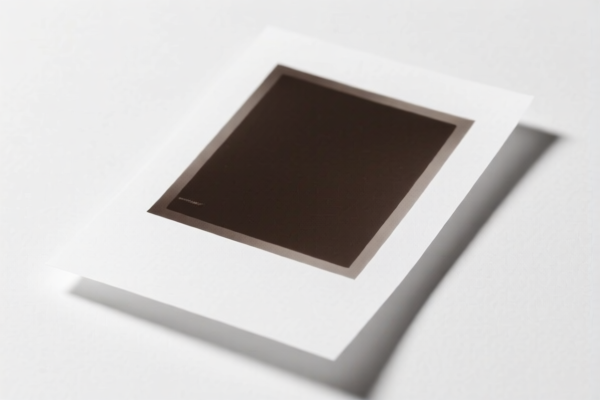
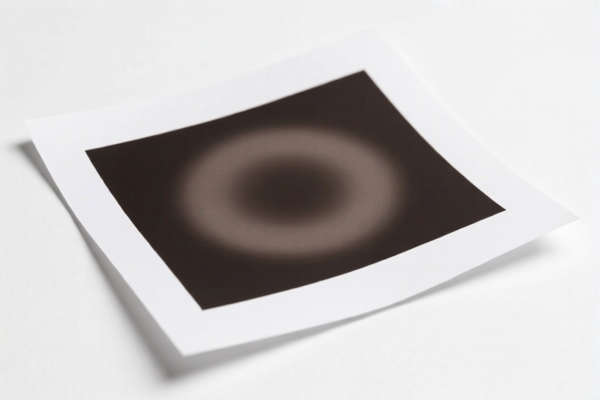
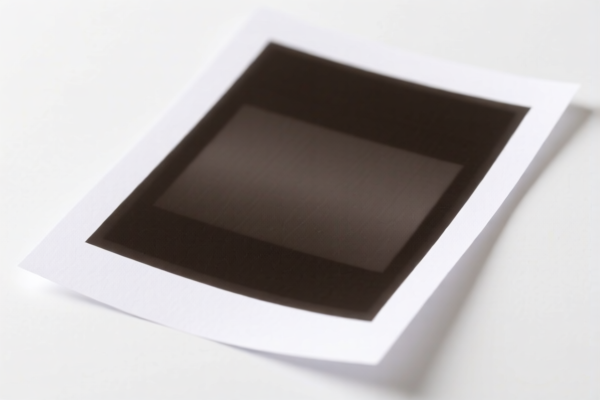
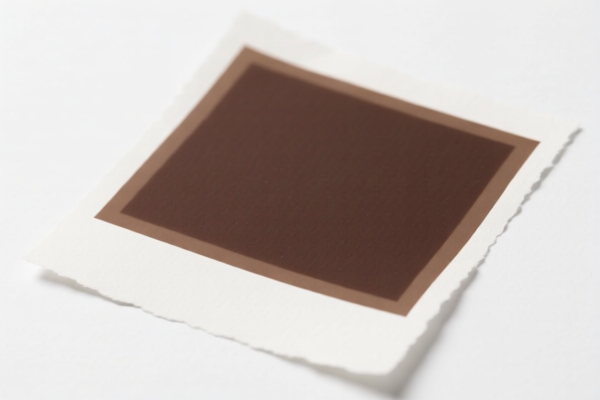
AI Analysis
📷 Photosensitive Paper Base Paper Sheet (感光纸基纸)
🌐 HS Code Reference & Customs Clearance Guide | 2026 Latest Tariff Analysis | Professional Clearance Strategy
📌 Part 1: Product Definition & Classification: What Exactly is "Photosensitive Paper Base Paper Sheet"?
Photosensitive paper base paper sheet is a critical intermediate material in the photography and imaging industry. It serves as the substrate for photographic papers, x-ray films, and other light-sensitive media. In international trade, its classification is not straightforward because it sits at the intersection of paper products and photographic goods.
The classification depends heavily on whether the paper is merely a plain substrate or if it has been treated/coated with photosensitive chemicals.
⚠️ Key Distinction Point:
- If the product is uncoated/plain paper base intended for further processing (e.g., coating) → Falls under Paper/Cellulose Fibers (Chapter 48).
- If the product is coated/treated and ready for use as photographic paper (unexposed) → Falls under Photographic Goods (Chapter 37).
📦 Part 2: HS Code Classification Details (2026 Latest Tariff Authority Comparison)
Based on the provided data, here are the specific HS Codes and their rationales:
| HS Code | Product Description | Applicable Scenario | Rationale from Data |
|---|---|---|---|
4823.90.86.80 |
Cut-to-size paper products / Other paper articles | Paper cut into specific dimensions or shapes | "Belongs to paper products, conforms to paper/board/cellulose fiber materials, formed as cut-to-size or shaped articles." |
4803.00.40.00 |
Paper base paper / Household or sanitary paper base | Original paper stock (parent roll/base) | "Belongs to paper base paper, conforms to the description of 'original paper stock' under paper base and household/sanitary paper categories." |
3703.10.60.00 |
Sensitized paper / Photographic paper (unexposed) | Sensitized paper with photo-sensitive properties | "Sensitized paper base paper aligns with photographic paper and sensitized unexposed attributes; paper base meets cardboard/paper material requirements." |
4803.00.20.00 |
Cellulose fiber paper base | Original paper stock made of cellulose | "Belongs to paper-based products, conforms to cellulose paper material, falls within the category of original paper stock." |
3703.90.60.00 |
Other photographic paper / Sensitized paper (unexposed) | General sensitized paper, cardboard, or textile base | "Paper base material forms sensitized paper, conforming to characteristics of photographic paper, cardboard, and textiles (sensitized unexposed)." |
🔍 Key Reminder:
- Plain Base Paper (uncalendered, uncoated, or merely sized) is classified under Chapter 48 (e.g.,4803,4823).
- Sensitized/Coated Paper (treated with light-sensitive emulsions, ready for imaging) is classified under Chapter 37 (e.g.,3703).
- Do not misclassify coated sensitized paper as plain paper, or vice versa. The physical state and chemical treatment determine the chapter.
💰 Part 3: 2026 Latest Tariff Rate Breakdown (Including Additional Taxes & Policy Surcharges)
✅ Applicable Country: USA (US)
✅ Origin: China (CN)
✅ Effective Date: 2025/2026 (Current rates apply)
🎯 1. 4823.90.86.80 & 4803.00.40.00 & 4803.00.20.00 —— Plain Paper Base (Chapter 48)
These codes represent the raw or semi-processed paper substrate.
| Item | Content |
|---|---|
| Basic Tariff | 0.0% (ad valorem) |
| USITC Additional Tariff | +25.0% (from USITC Footnote 9903.88.01, Section 301) |
| IEEPA Additional Tariff | +10.0% (Targeting China/HK products, effective since Nov 2025) |
| Total Tariff Rate | 35.0% |
| Tax Calculation | CIF Value × 35% |
| De Minimis Eligibility | ❌ Not Eligible (deny_de_minimis) |
| Legal Basis Path | IEEPA:9903.01.25 → IEEPA:9903.01.24 → USITC:4803/4823 → FOOTNOTE:9903.88.01 |
📌 Explanation:
- Although the basic tariff is 0%, the Section 301 additional tariff (25%) and IEEPA surcharge (10%) push the total to 35%.
- This is a high-cost classification. Importers must account for this 35% burden in their pricing strategy.
- Note: All three Chapter 48 codes listed (4823.90.86.80,4803.00.40.00,4803.00.20.00) share the same 35% total rate.
🎯 2. 3703.10.60.00 & 3703.90.60.00 —— Sensitized/Photographic Paper (Chapter 37)
These codes represent chemically treated, photosensitive paper.
| Item | Content |
|---|---|
| Basic Tariff | 3.1% (for 3703.10.60.00) / 2.8% (for 3703.90.60.00) |
| USITC Additional Tariff | +25.0% (Section 301) |
| IEEPA Additional Tariff | +10.0% (China/HK) |
| Total Tariff Rate | 38.1% (3703.10.60.00) / 37.8% (3703.90.60.00) |
| Tax Calculation | CIF Value × Total Rate |
| De Minimis Eligibility | ❌ Not Eligible (deny_de_minimis) |
| Legal Basis Path | IEEPA:9903.01.25 → IEEPA:9903.01.24 → USITC:3703 → FOOTNOTE:9903.88.01 |
📌 Explanation:
- These codes have a slightly higher total tariff (~37.8–38.1%) compared to plain paper base (35%).
- The difference lies in the basic tariff (3.1% vs. 0%).
- Crucial: Misclassifying sensitized paper as plain paper (to get 35% instead of 38%) is risky and can lead to customs penalties if evidence of chemical coating is found.
🛠️ Part 4: Customs Clearance Practical Advice (Real-World Pitfall Guide)
✅ 1. Document Preparation Checklist (Non-Negotiable)
| Document | Required | Explanation |
|---|---|---|
| ✅ Product Specification Sheet | ✔️ | Must clearly state: Coated vs. Uncoated, Chemical Treatment, Sensitization Status. |
| ✅ Material Composition Analysis | ✔️ | Proves if the paper is pure cellulose (Ch 48) or contains photosensitive emulsions (Ch 37). |
| ✅ Product Photos (Clear Labeling) | ✔️ | Show rolls/sheets, packaging, and any "Sensitized" or "Photographic" markings. |
| ✅ Commercial Invoice | ✔️ | Description must match HS Code rationale (e.g., "Uncalendered Paper Base" vs. "Sensitized Photographic Paper"). |
| ✅ Origin Certificate (CO) | ✔️ | Essential for proving China origin to apply correct additional tariffs. |
| ✅ Packing List | ✔️ | Details net/gross weight, dimensions, and number of units. |
✅ 2. Declaration Tips (Critical Keywords)
🔥 “Plain Base = Ch48 (35%), Sensitized = Ch37 (38%)! Be Precise!”
| Scenario | Correct Declaration | Wrong Approach |
|---|---|---|
| Uncoated Paper Roll | "Uncalendered Paper Base, Cellulose Fiber, Uncoated" | Vague "Paper Sheet" → Risk of audit |
| Coated Sensitized Paper | "Sensitized Photographic Paper, Unexposed, for Imaging" | "Paper Product" → Under-declaration risk |
| Cut-to-Size Base Paper | "Cut Paper Base, 4823.90.86.80" | "Photographic Paper" → Incorrect chapter |
| Mixed Bundle | Split Declaration | Mixed → Customs seizure or delayed clearance |
📌 Note:
- If the paper is cut to shape but not sensitized, it goes to4823.90.86.80.
- If it is sensitized (even if cut to shape), it may still go to3703.
- Key Test: Does it react to light? If yes → Chapter 37. If no → Chapter 48.
✅ 3. Special Case Handling
| Situation | Handling Advice |
|---|---|
| OEM Custom Paper | Provide client specs showing coating process. If coated, use Ch 37 codes. |
| Paper Used for X-Ray | If sensitized for medical imaging, use 3703 codes. If plain base, use 4803. |
| Sample Imports | Even samples are subject to 35-38% tariffs if from China. Declare accurately. |
| Re-export Processing | If imported for re-coating/export, consider bonded warehouse options to defer taxes. |
🌍 Part 5: Global Market Clearance Comparison (2026 Latest)
| Country/Region | Recommended HS Code | Tariff Rate | Certification Requirements | Notes |
|---|---|---|---|---|
| 🇺🇸 USA | 4803.00.20.00 / 3703.10.60.00 |
35% - 38.1% | None specific, but proof of origin needed | High tariff burden due to Section 301 & IEEPA |
| 🇨🇳 China | 4803.00.20.00 / 3703.10.60.00 |
5% - 8% | CCC (if applicable) | No additional surcharges |
| 🇪🇺 EU | 4803.00.20.00 / 3703.10.60.00 |
0% - 4% | CE (if medical/industrial) | No Section 301 equivalent |
| 🇦🇺 Australia | 4803.00.20.00 |
5% | RCM (if electronic component) | Moderate rates |
| 🇯🇵 Japan | 4803.00.20.00 |
0% - 3% | PSE (if sensor-related) | Low rates, no surcharges |
📌 Conclusion:
- USA is the only major market imposing these high additional tariffs (35-38%) on Chinese-origin photosensitive paper base.
- Competition from Vietnam, India, or EU sources may be more attractive due to lower or zero tariffs.
- Consider Supply Chain Diversification if targeting the US market heavily.
📌 Part 6: Common Mistakes & Pitfall Guide (Lessons Learned)
❌ Mistake 1: Classifying Sensitized Paper as Plain Paper
👉 Consequence: Tariff drops from 38% to 35%, but if caught, penalties + back taxes + potential seizure.
👉 Prevention: Provide chemical composition reports to prove status.
❌ Mistake 2: Declaring "Paper Sheet" without specifying Sensitization
👉 Consequence: Customs may classify as the higher-risk code or delay for inspection.
👉 Prevention: Explicitly state "Uncoated" or "Sensitized" in description.
❌ Mistake 3: Assuming De Minimis applies for small shipments
👉 Consequence: Always denied for China-origin goods under Section 301/IEEPA.
👉 Prevention: Always declare fully, even for samples.
✅ Correct Practice:
"Sensitized Photographic Paper, Unexposed, Emulsion-Coated, 500 Sheets, Model XYZ, Origin: China"
OR
"Uncalendered Paper Base, Cellulose Fiber, Uncoated, Roll Form, Model ABC, Origin: China"
🎯 Part 7: Conclusion: Precision Classification, Cost Control, Compliance!
🎯 Remember the Golden Rules:
🔹 "Plain Paper = 35%, Sensitized = 38%! Don't Mix!"
🔹 "Section 301 + IEEPA = 35-38% Burden on China Origin!"
🔹 "Describe Chemical State Clearly to Avoid Audits!"
📌 Pro Tip:
If your photosensitive paper base is sourced from Vietnam, Malaysia, or India, you may avoid US Additional Tariffs entirely, reducing rates to 0-5%.
Consider pre-classification rulings with US CBP if the product status (coated vs. uncoated) is ambiguous.
📣 Immediate Action Required:
📞 Engage a Licensed Customs Broker
📤 Provide Detailed Product Specs
🚀 Optimize HS Code Selection to Minimize Duties
✨ Professional Clearance Starts with Accurate Classification!
💼 Every Percentage Point Matters in Global Trade!
Customer Reviews
About HS Code Classification
The Harmonized System (HS) is an internationally standardized nomenclature developed by the World Customs Organization (WCO) to classify traded products. Over 200 countries use the HS system as the basis for customs tariffs, trade statistics, and import/export regulations.
Each HS code follows a hierarchical structure:
- Chapter (2 digits) — Broad category of goods (e.g., Chapter 84: Machinery and Mechanical Appliances)
- Heading (4 digits) — More specific grouping within the chapter
- Subheading (6 digits) — Internationally standardized breakdown, used by all WCO member countries
- National subdivisions (8-10 digits) — Country-specific extensions for further classification, such as US HTSUS 10-digit codes
Correct HS code classification is essential for smooth customs clearance, accurate duty payment, and compliance with trade regulations. Misclassification can lead to customs delays, overpayment of duties, or penalties.
When importing from CN to US, the applicable tariff rates may include:
- Most-Favored-Nation (MFN) rate — The standard duty rate applied to WTO members
- General rate — Applied to countries without trade agreements
- Trade remedy duties — Additional tariffs such as Section 301 (anti-dumping), Section 232 (national security), or countervailing duties
The information provided on this page is for reference purposes only. For official classification, please consult with your local customs authority or a licensed customs broker.