Photosensitive Paper Base Paper Thick Type
CN → US| HS Code | Tariff Rate | Origin | Destination | Doc |
|---|---|---|---|---|
| 4803002000 | 35.0% | CN | US | Official Doc |
| 4823906700 | 35.0% | CN | US | Official Doc |
| 3703106000 | 38.1% | CN | US | Official Doc |
| 3703906000 | 37.8% | CN | US | Official Doc |
| 4803004000 | 35.0% | CN | US | Official Doc |
Product Images
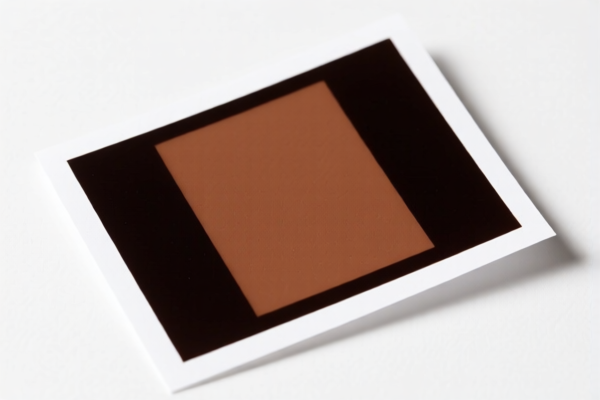
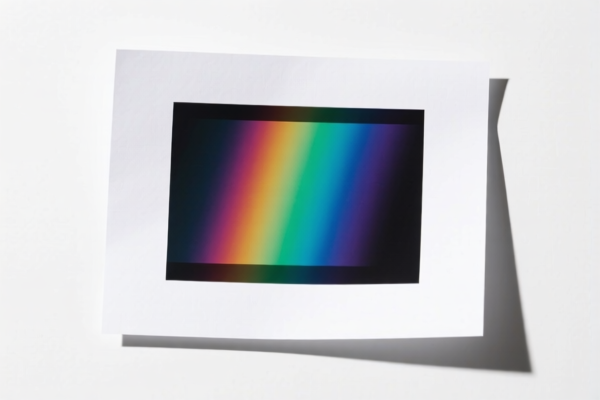
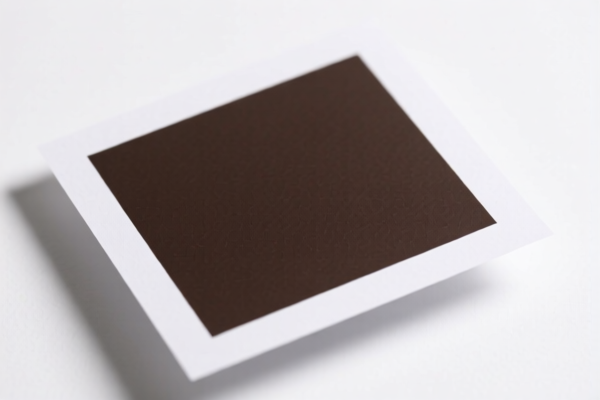
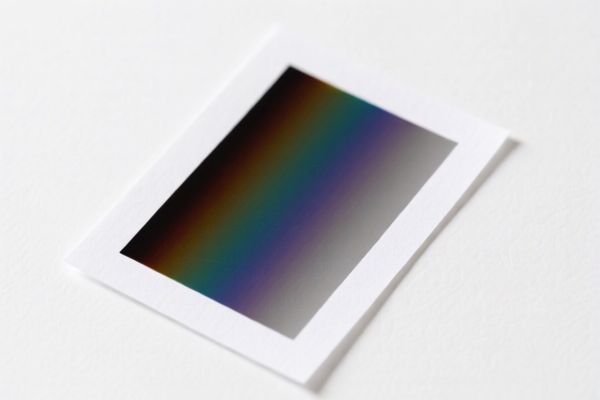
AI Analysis
📸 Photosensitive Paper Base Paper Thick Type
🌐 HS Code Reference & Customs Clearance Guide | 2026 Latest Tariff Analysis | Professional Entry Strategy
📌 Part 1: Product Definition & Classification: Do You Really Understand "Photosensitive Paper Base Paper"?
"Photosensitive Paper Base Paper (Thick Type)" refers to the substrate used in the manufacturing of photographic papers, x-ray films, or other light-sensitive materials. It is not the final exposed photographic product, but rather the raw paper material coated or treated to be receptive to light-sensitive emulsions later.
In international trade, classification depends heavily on whether the paper is: 1. Raw Base Paper: Uncoated or merely sized, intended for further processing → Classified under Chapter 48 (Paper and Paperboard). 2. Finished Photosensitive Product: Already coated with emulsion and ready for use in photography/diagnostic imaging → Classified under Chapter 37 (Photographic or Cinematographic Goods).
⚠️ Key Distinction Point:
- If the paper is uncoated or only "sized" (surface treated for ink/coating absorption) but lacks the active photosensitive emulsion → It is a Paper Substrate → HS Code 4803/4823.
- If the paper is already coated with silver halide or other light-sensitive chemicals and sold as "exposed/unexposed photographic paper" → It is a Photosensitive Good → HS Code 3703.
📦 Part 2: HS Code Classification Details (2026 Latest Tariff Authority Comparison)
Based on the provided data, here are the four possible HS codes depending on the exact state of the "Thick Type" base paper:
| HS Code | Product Description | Application Scenario | Tax Rate (Total) | Tax Breakdown |
|---|---|---|---|---|
4803.00.20.00 |
Paper Base Paper (Uncoated/Sized) | Raw substrate for manufacturing photosensitive paper; cellulose-based paper stock | 35.0% | Base: 0% Add-on: 25% Section 301: 10% |
4823.90.67.00 |
Other Paper Articles (Processed Base) | Paper base with specific processing (e.g., calendered, thick) but not yet photosensitive; fits "other paper products" logic | 35.0% | Base: 0% Add-on: 25% Section 301: 10% |
3703.10.60.00 |
Finished Photosensitive Paper | Already coated with light-sensitive emulsion; matches "photographic paper" and "light-sensitive, unexposed" attributes | 38.1% | Base: 3.1% Add-on: 25% Section 301: 10% |
3703.90.60.00 |
Other Photosensitive Paper | Specialized coated paper not covered in 3703.10; fits "light-sensitive paper/board" criteria | 37.8% | Base: 2.8% Add-on: 25% Section 301: 10% |
🔍 Critical Reminder:
- "Thick Type" refers to the grammage or physical thickness of the base. This does not change the chapter from 48 to 37 unless the photosensitive coating is present.
- If the product is sold as a "blank substrate" for manufacturers to coat, it MUST be classified under 4803/4823. Misclassifying a raw base as finished photographic paper (Chapter 37) can lead to audits, but misclassifying finished paper as raw paper (Chapter 48) might underdeclare the tax burden (though in this case, Chapter 37 is actually slightly more expensive due to the base duty).
- Base Duty: Chapters 48 often have 0% base duty, while Chapter 37 has 2.8-3.1% base duty, making the total tariff for raw paper (35%) lower than for finished photosensitive paper (~38%).
💰 Part 3: 2026 Latest Tariff Rate Details (Including Surtaxes)
✅ Applicable Country: United States (US)
✅ Origin: China (CN)
✅ Effective Time: Post-November 2025 (Includes subsequent imports)
🎯 1. 4803.00.20.00 & 4823.90.67.00 — Paper Base (Uncoated/Processed)
| Item | Content |
|---|---|
| Base Duty Rate | 0% (ad valorem) |
| USITC Surtax (Section 301) | +25% |
| IEEPA Surtax | +10% (Targeting China/HK products) |
| Total Rate | 35.0% |
| Tax Calculation | CIF Value × 35% |
| De Minimis Eligibility | ❌ No (deny_de_minimis) |
| Legal Basis Path | USITC:4803.00.20.00 / USITC:4823.90.67.00 → FOOTNOTE:9903.88.01 → IEEPA:9903.01.25 |
📌 Explanation:
- These codes treat the product as standard paper products.
- The 0% base duty is compensated by the 25% Section 301 tariff and 10% IEEPA tariff.
- Total cost impact: 35%. This is the lower tariff option if the product is indeed just the base paper.
🎯 2. 3703.10.60.00 — Finished Photosensitive Paper
| Item | Content |
|---|---|
| Base Duty Rate | 3.1% |
| USITC Surtax (Section 301) | +25% |
| IEEPA Surtax | +10% |
| Total Rate | 38.1% |
| Tax Calculation | CIF Value × 38.1% |
| De Minimis Eligibility | ❌ No |
| Legal Basis Path | USITC:3703.10.60.00 → FOOTNOTE:9903.88.01 → IEEPA:9903.01.25 |
📌 Explanation:
- The 3.1% base duty reflects the higher value-added nature of photographic goods.
- Total cost impact: 38.1%. This is 3.1% higher than the raw base paper tariff.
- Caution: If you are shipping raw base paper but declare it as3703.10.60.00, you are overpaying. If you ship finished paper but declare it as4803.00.20.00, you are underdeclaring and risk penalties.
🎯 3. 3703.90.60.00 — Other Photosensitive Paper
| Item | Content |
|---|---|
| Base Duty Rate | 2.8% |
| USITC Surtax (Section 301) | +25% |
| IEEPA Surtax | +10% |
| Total Rate | 37.8% |
| Tax Calculation | CIF Value × 37.8% |
| De Minimis Eligibility | ❌ No |
| Legal Basis Path | USITC:3703.90.60.00 → FOOTNOTE:9903.88.01 → IEEPA:9903.01.25 |
📌 Explanation:
- Slightly cheaper than3703.10.60.00due to a lower base duty (2.8%), but still more expensive than the raw paper options (35%).
🛠️ Part 4: Customs Clearance Practical Advice (Avoiding Pitfalls)
✅ 1. Documentation Checklist (Essential)
| Document | Required | Explanation |
|---|---|---|
| ✅ Product Specification Sheet | ✔️ | Must clearly state: "Uncoated Base Paper" vs. "Coated Photosensitive Paper". Include basis weight (GSM), thickness, and whether emulsion is applied. |
| ✅ Composition Analysis | ✔️ | Confirms the material is cellulose-based paper (for Ch. 48) vs. chemical emulsion (for Ch. 37). |
| ✅ Product Photos | ✔️ | Show the roll/sheet surface. If it looks matte/plain, it supports Ch. 48. If it has a specific coating appearance, it may suggest Ch. 37. |
| ✅ Commercial Invoice | ✔️ | Description must be precise: "Paper Base for Photographic Use, Uncoated" or "Exposure Photographic Paper, Unexposed". |
| ✅ Packing List | ✔️ | Detail the weight and dimensions. |
| ✅ Certificate of Origin (CO) | ✔️ | Essential for determining origin-based surtaxes. |
✅ 2. Declaration Strategy (Key Mantra)
🔥 "State the State: Raw is 48, Coated is 37. Accuracy Saves 3.1%!"
| Scenario | Correct HS Code | Wrong Declaration | Consequence |
|---|---|---|---|
| Raw Base Paper (No emulsion) | 4803.00.20.00 or 4823.90.67.00 |
Declare as 3703.10.60.00 |
Overpayment: Pay 35% instead of optimal 35% (same in this case, but wrong procedure). If base duty was higher, you'd overpay. |
| Raw Base Paper (No emulsion) | 4803.00.20.00 |
Declare as 4823.90.67.00 |
Same rate (35%), but 4803 is more specific for "paper base". |
| Finished Photosensitive Paper | 3703.10.60.00 |
Declare as 4803.00.20.00 |
Underdeclaration: Pay 35% instead of 38.1%. Risk of Penalty + Back Duties if CBP detects emulsion. |
| Specialty Coated Paper | 3703.90.60.00 |
Declare as 3703.10.60.00 |
Minor rate difference (37.8% vs 38.1%), but misclassification can lead to audits. |
✅ 3. Special Situations
| Situation | Handling Advice |
|---|---|
| OEM Base Paper for Photo Labs | Clearly label as "Substrate Only, No Photosensitive Emulsion". Provide a letter from the manufacturer confirming no silver halide or chemical coating is present. |
| "Thick Type" Clarification | "Thick" does not change the classification. It remains under Ch. 48 if uncoated. Specify GSM (e.g., 200-300gsm) in the declaration. |
| Mixed Shipment | If a shipment contains both raw base paper and finished photosensitive paper, must be split into two separate lines with different HS codes. Do not average the value. |
| Chemical Coating | If the paper has a "sizing" coating (starch, resin) for better coating absorption, it is still Ch. 48. Only if the photosensitive emulsion is applied does it move to Ch. 37. |
🌍 Part 5: Global Market Comparison (2026 Update)
| Country/Region | Recommended HS Code (Base Paper) | Tariff Rate | Remarks |
|---|---|---|---|
| 🇺🇸 USA | 4803.00.20.00 |
35% | High surtax due to Section 301 + IEEPA. |
| 🇨🇳 China | 4803.00.20.00 |
~5-6% | Import duty for paper. No surtax on US goods, but this is export from China. |
| 🇪🇺 EU | 4803.00.20.00 |
~4-5% | No Section 301 equivalent. Lower total cost. |
| 🇬🇧 UK | 4803.00.20.00 |
~4-5% | Post-Brexit tariff regime. |
| 🇯🇵 Japan | 4803.00.20.00 |
~5% | Generally low duty on raw paper. |
📌 Conclusion:
- The US market is the most expensive due to the 35% total tariff (0% base + 25% Section 301 + 10% IEEPA).
- No De Minimis exemption applies, so even small shipments are subject to full duty.
- Accurate classification is critical: Raw Base Paper (35%) is cheaper than Finished Photosensitive Paper (37.8-38.1%) in terms of total duty, but only if the product truly is raw.
📌 Part 6: Common Errors & Pitfall Guide
❌ Error 1: Calling "Photosensitive Paper Base" as "Photographic Paper"
👉 Result: CBP may classify it as 3703.10.60.00 (38.1%) if they assume coating, or penalize you for ambiguity.
👉 Fix: Use the term "Base Paper" or "Substrate" explicitly.
❌ Error 2: Assuming "Thick" means a different chapter
👉 Result: "Thick" is a physical attribute, not a chemical one. It stays in Ch. 48 if uncoated.
👉 Fix: Include GSM in description, not in HS code change.
❌ Error 3: Ignoring the IEEPA 10% Surtax
👉 Result: Underestimating landed cost by 10%.
👉 Fix: Always include IEEPA + Section 301 in cost calculations for China-origin goods entering the US.
❌ Error 4: Mixing Raw and Finished Goods in One HS Line
👉 Result: Customs rejection or audit.
👉 Fix: Separate lines on the invoice and declaration.
✅ Correct Declaration Example:
"Photosensitive Paper Base, Thick Type, Uncoated Cellulose Paper, 250 GSM, for Manufacturing Photographic Papers, Model XYZ, China Origin"
HS Code:4803.00.20.00
🎯 Part 7: Conclusion: Precise Classification for Cost Efficiency
🎯 Remember the Mantra:
🔹 "Raw Base is 48 (35%), Coated Photo is 37 (38%). Know the Emulsion!"
🔹 "Base Duty 0% vs 3%, Surtax 35% Total. Don't Guess, Declare!"
📌 Tips:
- If your product is 100% uncoated paper, stick to 4803.00.20.00.
- If it has a silver halide emulsion, use 3703.10.60.00.
- Pre-ruling: Consider applying for a Binding Tariff Ruling from CBP if the product is borderline (e.g., lightly coated with sizing agents). This provides legal certainty.
📣 Immediate Action:
📞 Consult with your customs broker
📸 Provide clear photos of the paper surface
📄 Get a Certificate of Composition from your manufacturer
🚀 Ensure your invoice reflects "Base Paper" or "Finished Photographic Paper" accurately to avoid 3.1% discrepancies or penalties.
✨ Professional clearance starts with precise classification!
💼 Every percentage point counts in global trade!
Customer Reviews
About HS Code Classification
The Harmonized System (HS) is an internationally standardized nomenclature developed by the World Customs Organization (WCO) to classify traded products. Over 200 countries use the HS system as the basis for customs tariffs, trade statistics, and import/export regulations.
Each HS code follows a hierarchical structure:
- Chapter (2 digits) — Broad category of goods (e.g., Chapter 84: Machinery and Mechanical Appliances)
- Heading (4 digits) — More specific grouping within the chapter
- Subheading (6 digits) — Internationally standardized breakdown, used by all WCO member countries
- National subdivisions (8-10 digits) — Country-specific extensions for further classification, such as US HTSUS 10-digit codes
Correct HS code classification is essential for smooth customs clearance, accurate duty payment, and compliance with trade regulations. Misclassification can lead to customs delays, overpayment of duties, or penalties.
When importing from CN to US, the applicable tariff rates may include:
- Most-Favored-Nation (MFN) rate — The standard duty rate applied to WTO members
- General rate — Applied to countries without trade agreements
- Trade remedy duties — Additional tariffs such as Section 301 (anti-dumping), Section 232 (national security), or countervailing duties
The information provided on this page is for reference purposes only. For official classification, please consult with your local customs authority or a licensed customs broker.