Photosensitive Paper Base Roll
CN → US| HS Code | Tariff Rate | Origin | Destination | Doc |
|---|---|---|---|---|
| 3703103060 | 38.7% | CN | US | Official Doc |
| 4816900100 | 35.0% | CN | US | Official Doc |
| 3703103090 | 38.7% | CN | US | Official Doc |
| 4816200000 | 35.0% | CN | US | Official Doc |
| 4803004000 | 35.0% | CN | US | Official Doc |
Product Images
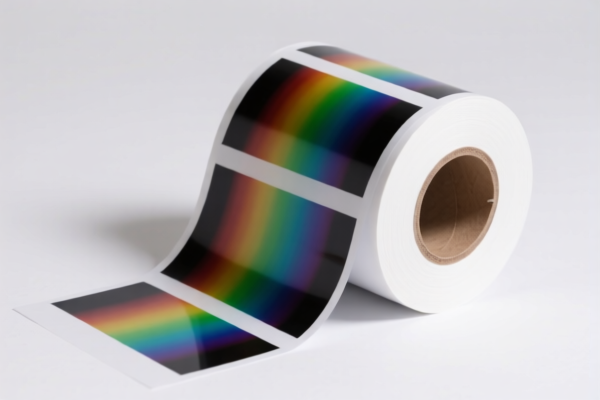
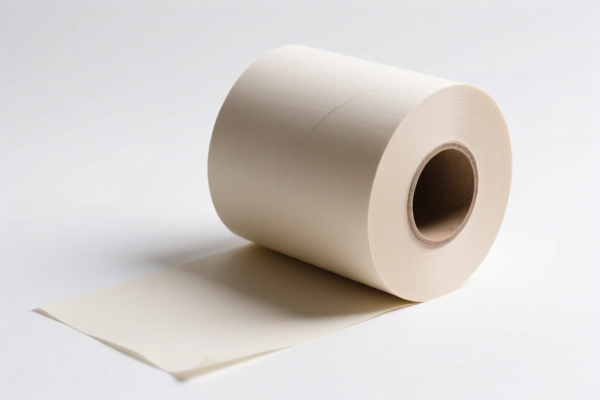
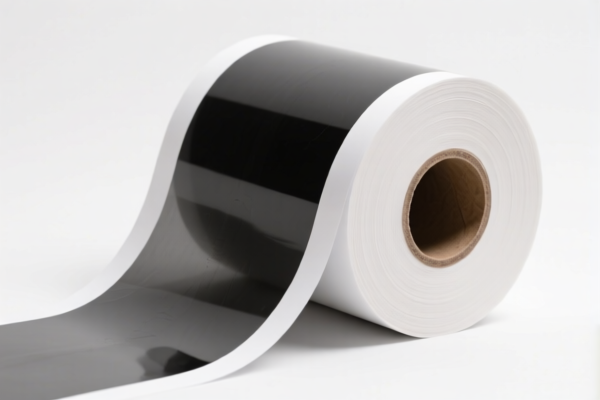
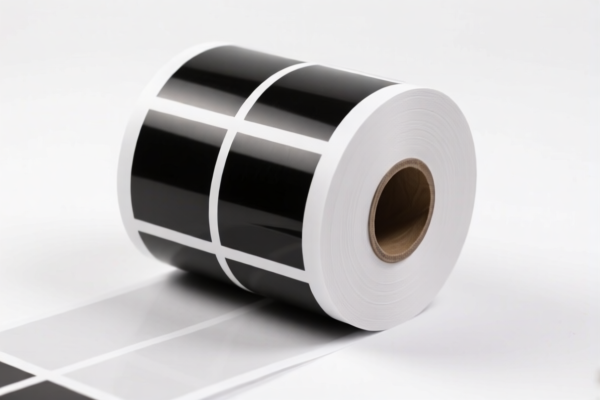
AI Analysis
📸 Photosensitive Paper Base Roll: The Ultimate HS Code & Tax Clearance Guide (2026 Edition)
🌐 HS Code Reference & Customs Clearance Strategy | 2026 Latest Tariff Analysis | Professional Grade Compliance
📌 I. Product Definition & Classification: What Exactly is "Photosensitive Paper Base Roll"?
Photosensitive paper base rolls are the foundational material for photographic printing, X-ray imaging, and industrial graphic arts. In international trade, these products are often misunderstood because they sit at the intersection of paper products (Chapter 48) and photographic goods (Chapter 37).
The critical distinction lies in the chemical treatment state:
- Processed Photosensitive Material (Chapter 37): The paper has been coated with light-sensitive emulsions (such as silver halide). It is ready for exposure and development.
- Base Paper / Unprocessed Substrate (Chapter 48): The paper is merely the physical support (the "base") without the active light-sensitive layer, or it is a generic paper product used in transfer processes where the "photosensitive" aspect is defined by the manufacturing method rather than the final coated state.
⚠️ Key Distinction Point:
- If the paper contains silver halide emulsion or is explicitly classified as "prepared for photographic use" → It belongs to Chapter 37 (3703...).
- If the paper is a generic substrate, carbonless copy paper base, or wax paper used for transfer/replication without active photo-emulsion → It belongs to Chapter 48 (4816...).
📦 II. HS Code Classification Details (2026 Latest Tariff Authority Match)
Based on the provided data, here are the specific HS Codes applicable to "Photosensitive Paper Base Roll," along with their logical justifications and tax implications.
| HS Code | Product Description | Logical Justification (From Data) | Tax Rate (Total) |
|---|---|---|---|
3703.10.30.60 |
Photographic Paper Containing Only Silver Halide | Matches core material features (photosensitive/silver halide); categorized under photosensitive paper scope. | 38.7% |
4816.90.01.00 |
Other Paper for Copying or Transfer (Including Repeated Copy Paper & Wax Paper) | Fits the material attribute of paper-based forms like carbonless, transfer, or wax paper. | 35.0% |
3703.10.30.90 |
Other Photographic Paper Containing Only Silver Halide | Consistent with photosensitive material characteristics; defaults to silver halide paper materials. | 38.7% |
4816.20.00.00 |
Copy Paper and Other Copy or Transfer Paper | Fits the attribute of paper for reproduction, transfer, and image processing. | 35.0% |
4803.00.40.00 |
Paper, Paperboard, Fibreboard and Articles Thereof, Creped, Crinkled, Pleated, or Microperforated | Matches the raw material characteristic of paper base (raw paper category), focusing on the physical substrate nature. | 35.0% |
🔍 Critical Insight:
- Chapter 37 Codes (3703.10.30.60/90) apply when the product is actively photosensitive (contains silver halide). These carry a higher total tax of 38.7%.
- Chapter 48 Codes (4816...,4803...) apply if the product is considered a paper substrate or a transfer/copy paper base without the final photo-active classification, or if it falls under general paper accessories. These carry a lower total tax of 35.0%.
💰 III. 2026 Latest Tariff Rate Breakdown (Including Surtaxes & Policy Add-ons)
✅ Applicable Country: United States (US)
✅ Origin: China (CN)
✅ Effective Time: From November 10, 2025 (including subsequent imports)
🎯 1. 3703.10.30.60 & 3703.10.30.90 —— Photosensitive Silver Halide Paper
| Item | Content |
|---|---|
| Base Tariff | 3.7% (Ad Valorem) |
| USITC Surtax | +25.0% (From USITC Footnote / Section 301) |
| IEEPA Surtax | +10.0% (122-Clause Tariff / China-specific) |
| Total Tax Rate | 38.7% |
| Calculation | CIF Value × 38.7% |
| De Minimis Eligibility | ❌ No (Deny de minimis) |
| Legal Basis Path | Base Tariff → Section 301 (25%) → IEEPA 122-Clause (10%) |
📌 Explanation:
- These codes fall under Chapter 37 (Photographic or Cinematographic Goods).
- The 3.7% is the standard Most Favored Nation (MFN) duty.
- The 25% is the Section 301 surtax on Chinese goods.
- The 10% is an additional policy surtax (referred to as "122-Clause Tariff" in the data).
- Total: 38.7%. This is a high-cost category. Misclassification as Chapter 48 could lead to severe penalties.
🎯 2. 4816.90.01.00, 4816.20.00.00, 4803.00.40.00 —— Paper Substrates / Copy / Transfer Paper
| Item | Content |
|---|---|
| Base Tariff | 0.0% (Ad Valorem) |
| USITC Surtax | +25.0% (From USITC Footnote / Section 301) |
| IEEPA Surtax | +10.0% (122-Clause Tariff / China-specific) |
| Total Tax Rate | 35.0% |
| Calculation | CIF Value × 35.0% |
| De Minimis Eligibility | ❌ No (Deny de minimis) |
| Legal Basis Path | Base Tariff → Section 301 (25%) → IEEPA 122-Clause (10%) |
📌 Explanation:
- These codes fall under Chapter 48 (Paper and Paperboard).
- The Base Tariff is 0%, which is significantly lower than Chapter 37.
- However, the Section 301 (25%) and IEEPA (10%) surtaxes still apply, resulting in a Total Rate of 35.0%.
- Savings: Choosing the correct Chapter 48 classification (if applicable to your product's actual state) saves 3.7% compared to Chapter 37.
🛠️ IV. Customs Clearance Operational Advice (Practical Pitfall Guide)
✅ 1. Required Documentation Checklist (None Can Be Missing)
| Document | Required? | Explanation |
|---|---|---|
| ✅ Product Specification Sheet | ✔️ | Must clearly state: Coating type (Silver Halide vs. None), Base Paper Weight, Width, Length. |
| ✅ Chemical Composition Report | ✔️ | Critical for distinguishing between Chapter 37 (Emulsion) and Chapter 48 (Base Paper). |
| ✅ Product Photos (Unpackaged & Packed) | ✔️ | Show the roll surface, core, and any labels indicating "Photosensitive" or "Base Only." |
| ✅ Commercial Invoice | ✔️ | Description must be precise: e.g., "Silver Halide Coated Photographic Paper" vs. "Uncoated Paper Base Roll." |
| ✅ Certificate of Origin (CO) | ✔️ | To prove Chinese origin for surtax calculation. |
| ✅ Packing List | ✔️ | Detail net/gross weight, number of rolls, and packaging type. |
| ✅ Third-Party Lab Test (Optional but Recommended) | ✔️ | If disputed, a test confirming the presence/absence of light-sensitive salts can resolve customs queries. |
✅ 2. Declaration Strategy (Key Rules of Thumb)
🔥 “Check the Coating! Base vs. Active!”
| Scenario | Correct HS Code | Risk of Wrong Declaration |
|---|---|---|
| Product contains Silver Halide Emulsion | 3703.10.30.60 or 3703.10.30.90 (38.7%) |
If declared as Chapter 48 → Severe Penalty + Back Taxes |
| Product is Uncoated Paper Base (Substrate only) | 4803.00.40.00 (35.0%) |
If declared as Chapter 37 → Overpayment of 3.7% |
| Product is Carbonless/Transfer Paper (Chemical coating but not photo-active) | 4816.20.00.00 or 4816.90.01.00 (35.0%) |
If declared as Chapter 37 → Overpayment of 3.7% |
| Mixed Shipment (Some coated, some uncoated) | Split Declaration | Mixing them into one line item → Customs Rejection/Inspection Delay |
✅ 3. Special Circumstances Handling
| Situation | Handling Advice |
|---|---|
| OEM Custom Rolls | Provide the client’s technical agreement. If the client specifies "Base Paper Only," use Chapter 48. If "Pre-coated for Photography," use Chapter 37. |
| Sample Rolls for Testing | Even small samples must be declared accurately. Customs may test samples upon arrival. |
| Damaged/Expired Photosensitive Paper | If expired, it may no longer be "photosensitive." However, unless chemically deactivated, it is often still classified under Chapter 37. Consult a broker. |
| High-Volume B2B Supply | Apply for an Advance Ruling (Pre-classification) from US Customs to lock in the HS Code and avoid disputes at the port. |
🌍 V. Global Market Comparison (2026 Update)
| Market | Recommended HS Code | Total Tax Rate (China Origin) | Key Certification | Remarks |
|---|---|---|---|---|
| 🇺🇸 USA | 3703.10.30.xx (Photo) 4816.20/90 (Paper) |
38.7% (Photo) 35.0% (Paper) |
No specific pharma, but FCC/CE if used in devices | High Surtaxes Apply. Accurate classification is vital to save 3.7%. |
| 🇨🇳 China | 3703.10.30.60 4816.90.01.00 |
Low (Import Duty) VAT 13% |
CCC (if electronic integration) | Domestic production often uses these codes for re-export. |
| 🇪🇺 EU | 3703.10 4816.90 |
Varies (Usually 0-6.5%) | REACH (Chemicals), RoHS | No Section 301/IEEPA surtaxes. Focus on chemical compliance. |
| 🇬🇧 UK | 3703.10 4816.90 |
Varies (Usually 0-6.5%) | UKCA | Post-Brexit rules apply. |
| 🇯🇵 Japan | 3703.10 4816.90 |
Varies (Usually 0-3%) | PSE (if electronic) | Low duty base, but strict chemical labeling (Kanketsu). |
📌 Conclusion:
- The USA is the most challenging market due to the叠加 (stacking) of Section 301 (25%) and IEEPA (10%) surtaxes.
- Classification Accuracy is Key: If your product is merely a paper base (uncoated or chemically coated for transfer, not photo-emulsion), Chapter 48 saves you 3.7% globally, but the surtax structure remains similar.
- Chapter 37 products are treated as "Finished Photographic Goods" and attract the highest scrutiny.
📌 VI. Common Errors & Pitfall Guide (Lessons Learned)
❌ Mistake 1: Declaring "Photosensitive Paper" as generic "Copy Paper" (4816.20) when it is actually Silver Halide coated (3703).
👉 Consequence: Tax Evasion Charge. Customs will assess the 38.7% rate and impose penalties.
❌ Mistake 2: Declaring "Uncoated Paper Base" as "Photosensitive Material" (3703) to use a different supplier label.
👉 Consequence: Overpayment. You pay 3.7% more in base duty unnecessarily.
❌ Mistake 3: Failing to declare the 122-Clause (IEEPA) 10% surtax separately.
👉 Consequence: Underpayment. The total is not just "Section 301 25%". It is 25% + 10%. Total = 35% or 38.7%.
❌ Mistake 4: Using vague descriptions like "Paper Roll" on the Invoice.
👉 Consequence: Customs Hold. The CBP (Customs and Border Protection) will flag it for manual review, causing delays and storage fees.
✅ Correct Declaration Example:
"Silver Halide Coated Photographic Paper Base Roll, Width 30cm, for Industrial X-Ray Imaging, HS 3703.10.30.90, Made in China"
OR
"Uncoated Paper Substrate Roll for Transfer Printing, Width 50cm, HS 4803.00.40.00, Made in China"
🎯 VII. Conclusion: Professional Declaration, Cost Optimization, Smooth Clearance!
🎯 Remember the Mantra:
🔹 "Coating Determines Chapter!"
🔹 "Silver Halide = Ch 37 (38.7%)"
🔹 "Base/Transfer Paper = Ch 48 (35.0%)"
🔹 "Always Account for 25% + 10% Surtaxes!"
📌 Pro Tip:
If your product is a Hybrid (e.g., a roll that is half coated, half base), declare separately on two lines of the bill of lading. Do not combine them, as it will trigger a full customs inspection of the entire shipment.
📣 Immediate Action Required:
📞 Contact your freight forwarder with the Technical Data Sheet.
📄 Apply for an Advance Ruling if this is a high-volume, new product line.
🚀 Ensure your Invoice Description is precise to avoid 7-day delays at US ports.
✨ Professional Customs Clearance Starts with Precise Classification!
💼 Your Profit Margin Depends on the 3.7% Difference!
Customer Reviews
About HS Code Classification
The Harmonized System (HS) is an internationally standardized nomenclature developed by the World Customs Organization (WCO) to classify traded products. Over 200 countries use the HS system as the basis for customs tariffs, trade statistics, and import/export regulations.
Each HS code follows a hierarchical structure:
- Chapter (2 digits) — Broad category of goods (e.g., Chapter 84: Machinery and Mechanical Appliances)
- Heading (4 digits) — More specific grouping within the chapter
- Subheading (6 digits) — Internationally standardized breakdown, used by all WCO member countries
- National subdivisions (8-10 digits) — Country-specific extensions for further classification, such as US HTSUS 10-digit codes
Correct HS code classification is essential for smooth customs clearance, accurate duty payment, and compliance with trade regulations. Misclassification can lead to customs delays, overpayment of duties, or penalties.
When importing from CN to US, the applicable tariff rates may include:
- Most-Favored-Nation (MFN) rate — The standard duty rate applied to WTO members
- General rate — Applied to countries without trade agreements
- Trade remedy duties — Additional tariffs such as Section 301 (anti-dumping), Section 232 (national security), or countervailing duties
The information provided on this page is for reference purposes only. For official classification, please consult with your local customs authority or a licensed customs broker.