Photosensitive Paper Base Sheets
CN → US| HS Code | Tariff Rate | Origin | Destination | Doc |
|---|---|---|---|---|
| 3703103060 | 38.7% | CN | US | Official Doc |
| 4816900100 | 35.0% | CN | US | Official Doc |
| 3703103090 | 38.7% | CN | US | Official Doc |
| 4816200000 | 35.0% | CN | US | Official Doc |
| 4803004000 | 35.0% | CN | US | Official Doc |
Product Images
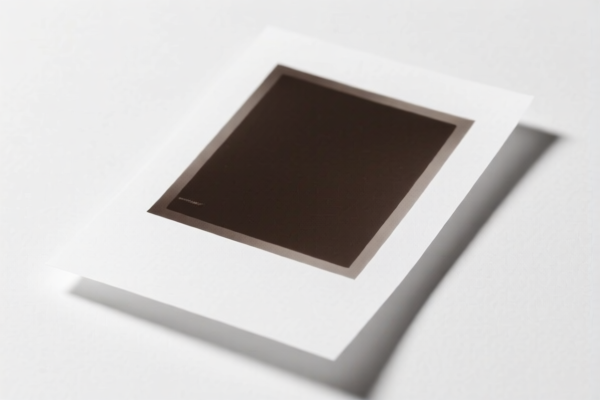
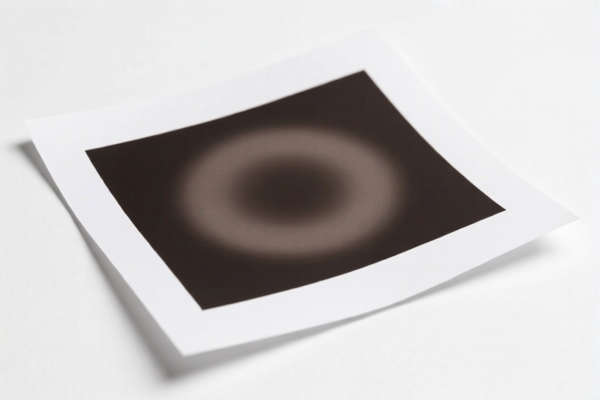
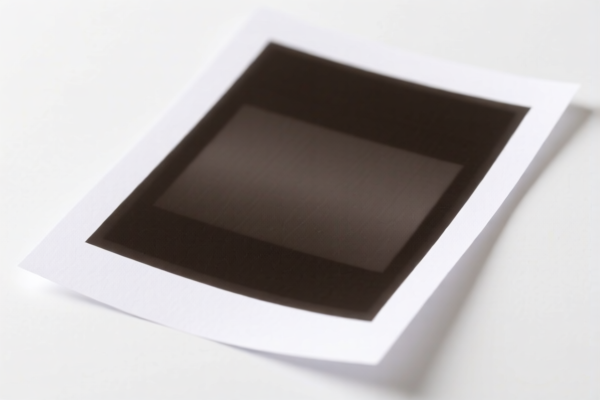
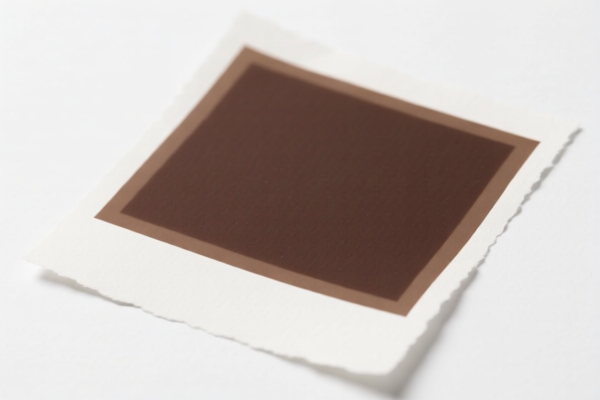
AI Analysis
📄 Photosensitive Paper Base Sheets (The Raw Material of Imaging)
🌐 HS Code Reference & Clearance Guide | 2026 Latest Tariff Analysis | Strategic Classification for Imaging Materials
📌 I. Product Definition: What Exactly Are "Photosensitive Paper Base Sheets"?
Photosensitive Paper Base Sheets refer to the untreated paper substrates used as the foundation for manufacturing photosensitive papers (such as photographic paper, X-ray film bases, or thermal paper blanks). These sheets have not yet undergone the coating process with light-sensitive emulsions (like silver halides) or heat-sensitive dyes. They are essentially high-grade, bleached, and sometimes calendered paper products ready for further industrial processing.
⚠️ Key Distinction:
- If the paper has been coated with light-sensitive chemicals (e.g., silver halide emulsion), it belongs to Chapter 37 (Photographic goods).
- If the paper is uncoated (base paper only), it belongs to Chapter 48 (Paper and paperboard).
- Common Mistake: Many importers misdeclare base sheets as "Photosensitive Paper" (Ch. 37) to avoid higher tariffs or specific regulations, but Customs requires precise declaration based on the physical state of the product at import.
📦 II. HS Code Classification Details (2026 Latest Tariff Authority Comparison)
Based on the provided data, here are the four potential HS Codes and their specific justifications for Photosensitive Paper Base Sheets:
| HS Code | Product Description & Justification | Tax Rate (Total) |
|---|---|---|
3703.10.30.60 |
Misclassification Risk: If declared as "Photosensitive Paper" due to its intended use. The system assumes it fits the "Photographic Paper" category with silver halide characteristics. | 38.7% (Base 3.7% + 25% Section 301 + 10% IEEPA) |
4816.90.01.00 |
Correct for Uncoated Base: Classified as other paper products. Justified as "paper material" matching the physical form of carbonless copy paper or general paper forms before coating. | 35.0% (Base 0.0% + 25% Section 301 + 10% IEEPA) |
3703.10.30.90 |
Alternative Photo-Category: Similar to ...60, this covers other photographic papers not elsewhere specified. Often applied if the intent is clearly "silver halide paper" even if in base sheet form (controversial). |
38.7% (Base 3.7% + 25% Section 301 + 10% IEEPA) |
4816.20.00.00 |
Correct for Carbonless/Reproduction Base: If the base sheet is specifically designed for carbonless copy paper (NCR paper) or reproduction imaging. Justified as "paper for copying and reproduction processing." | 35.0% (Base 0.0% + 25% Section 301 + 10% IEEPA) |
4803.00.40.00 |
General Base Paper: Classified as "Paper of a kind used for paper currency or similar technical paper" or general paper bases. Justified as "raw paper base" before any functional coating. | 35.0% (Base 0.0% + 25% Section 301 + 10% IEEPA) |
🔍 Critical Analysis:
- Chapter 37 (3703...) vs. Chapter 48 (4803/4816/4816): The core difference is 3.7% vs. 0.0% in the base tariff.
- Total Tax Impact: While the base tariff differs by 3.7%, the Section 301 (25%) and IEEPA (10%) add-ons are identical across all options.
- Savings: Choosing a Chapter 48 code (4816.20,4816.90,4803) saves 3.7% on the CIF value compared to Chapter 37 codes.
- Compliance Risk: Classifying an uncoated base sheet under3703is technically incorrect unless the product is already impregnated with light-sensitive agents. However, some importers do this for convenience, accepting the higher 3.7% base tax to avoid detailed technical proof of "non-photosensitivity."
💰 III. 2026 Latest Tariff Rate Breakdown (Including Surcharges & Policy Add-ons)
✅ Applicable Country: United States (US)
✅ Origin: China (CN)
✅ Effective Date: From November 10, 2025 (including subsequent imports)
🎯 1. Chapter 37 Codes: 3703.10.30.60 & 3703.10.30.90
Used if declared as "Photosensitive Paper" or if the distinction between base and coated is ignored.
| Item | Content |
|---|---|
| Base Tariff | 3.7% (ad valorem) |
| Section 301 Surcharge | +25% (USITC Footnote for photographic goods) |
| IEEPA Surcharge | +10% (China-specific tariff under International Emergency Economic Powers Act) |
| Total Tariff | 38.7% |
| Tax Calculation | CIF Value × 38.7% |
| De Minimis Eligibility | ❌ Not Eligible (Cannot use $800 exemption) |
| Legal Basis Path | IEEPA:9903.01.25 → USITC:3703.10.30.xx → FOOTNOTE:Photographic Goods |
📌 Explanation:
- These codes attract the highest base duty (3.7%).
- The 25% Section 301 tariff applies broadly to Chapter 37 goods from China.
- The 10% IEEPA tariff is a specific penalty on Chinese-origin items.
- Total Cost: Very high. Only recommended if the product is already coated and cannot be reasonably classified elsewhere.
🎯 2. Chapter 48 Codes: 4816.90.01.00, 4816.20.00.00, 4803.00.40.00
Used for uncoated paper bases, carbonless paper bases, or general technical paper bases.
| Item | Content |
|---|---|
| Base Tariff | 0.0% (ad valorem) |
| Section 301 Surcharge | +25% (USITC Footnote for certain paper products) |
| IEEPA Surcharge | +10% (China-specific tariff) |
| Total Tariff | 35.0% |
| Tax Calculation | CIF Value × 35.0% |
| De Minimis Eligibility | ❌ Not Eligible (Deny de minimis) |
| Legal Basis Path | IEEPA:9903.01.24 → USITC:4816.20.00.00 / 4816.90.01.00 / 4803.00.40.00 → FOOTNOTE:Paper Products |
📌 Explanation:
- Base Duty is 0%: This is the key advantage. Uncoated paper bases often fall into duty-free base categories.
- Same Surcharges: Despite the lower base, the 25% + 10% surcharges remain, bringing the total to 35.0%.
- Savings: You save 3.7% on the total CIF value compared to Chapter 37 codes.
- Condition: You must prove the product is uncoated. If it has any light-sensitive emulsion, it must be declared under Ch. 37.
🛠️ IV. Clearance Operational Advice (Practical Pitfall Avoidance Guide)
✅ 1. Required Documentation Checklist (Mandatory)
| Document | Must Provide | Description |
|---|---|---|
| ✅ Product Specifications | ✔️ | Must explicitly state "Uncoated" or "Base Paper Only". If coated, state the type of emulsion (e.g., Silver Halide). |
| ✅ Material Safety Data Sheet (MSDS) | ✔️ | Proves the absence of hazardous photosensitive chemicals if claiming Ch. 48. |
| ✅ Product Photos | ✔️ | Clear images showing the paper texture, absence of coating sheen, and packaging labels. |
| ✅ Commercial Invoice | ✔️ | Description must read: "Paper Base Sheets for Photosensitive Paper, Uncoated" OR "Photosensitive Paper, Silver Halide Coated" |
| ✅ Packing List | ✔️ | Weight and dimensions. Ensure no loose chemical samples are included. |
| ✅ Certificate of Origin (CO) | ✔️ | To verify Chinese origin for surcharge application. |
✅ 2. Declaration Tips (Key Mantras)
🔥 “Uncoated = Ch.48, Coated = Ch.37. Be precise or pay the price!”
| Scenario | Correct Declaration | Incorrect Declaration | Consequence |
|---|---|---|---|
| Uncoated Paper Base | 4816.90.01.00 (Paper Base) |
3703.10.30.60 (Photosensitive Paper) |
Overpayment of 3.7% base duty; potential customs query if "uncoated" not proven. |
| Coated Silver Halide Paper | 3703.10.30.60 (Photosensitive Paper) |
4816.90.01.00 (Paper Base) |
Severe Penalty: Misclassification, potential seizure, and fines for evading proper regulatory checks on photo chemicals. |
| Carbonless Paper Base | 4816.20.00.00 (Copying Paper) |
3703.10.30.90 (Other Photo Paper) |
Overpayment of 3.7%; misalignment with product function. |
| General Base Paper | 4803.00.40.00 (Technical Paper) |
4816.90.01.00 (Other Paper) |
Minor risk; 4803 is more specific for "technical/base" paper. |
✅ 3. Special Situation Handling
| Situation | Handling Advice |
|---|---|
| Sample Kits with Coated & Uncoated | Must Separate! Declare coated items under Ch. 37 and uncoated under Ch. 48. Do not mix in one shipment without clear separation in documents. |
| Imported for R&D | If the paper is coated but for testing, it is still 3703. There is no "R&D exemption" for photo chemicals under standard de minimis rules. |
| Hybrid Products (Thermal Base) | If the base is for thermal paper, it may still be Ch. 48 if uncoated. If pre-coated with thermal dye, it might fall under 4823 or 4816. Verify the coating status. |
| Re-export from Bonded Warehouse | If the base sheets are imported under Ch. 48, coated in a bonded factory, and then exported, the US import duty is suspended. However, the final export destination matters. |
🌍 V. Global Market Clearance Comparison (2026 Latest)
| Country/Region | Recommended HS Code | Base Tariff | Surcharges | Total Est. Tariff | Notes |
|---|---|---|---|---|---|
| 🇺🇸 USA | 4816.90.01.00 (Uncoated) |
0% | +25% (301) +10% (IEEPA) | 35.0% | Strict on "uncoated" proof. |
| 🇺🇸 USA | 3703.10.30.60 (Coated) |
3.7% | +25% (301) +10% (IEEPA) | 38.7% | Standard for photo paper. |
| 🇨🇳 China | 4816.90.01.00 |
0% | None | 0% | Import into China is duty-free for many paper bases. |
| 🇪🇺 EU | 4816.90.01.00 |
0% | None | 0% | No additional surcharges for paper bases. |
| 🇬🇧 UK | 4816.90.01.00 |
0% | None | 0% | Post-Brexit tariff aligns with EU for paper. |
📌 Conclusion:
- USA is the only major market with significant additional tariffs (35-38.7%) for Chinese-origin paper products.
- EU/UK/China have 0% base tariffs for these categories, making US clearance significantly more expensive.
- Strategic Tip: If you are sourcing base sheets for coating, ensure the supplier provides a technical certificate stating "Uncoated" to justify the lower 35.0% rate in the US, rather than the 38.7% rate.
📌 VI. Common Errors & Pitfall Guide (Blood-Tearing Lessons)
❌ Error 1: Declaring coated photographic paper as "Paper Base Sheets" (4816...)
👉 Consequence: Customs will detect the chemical coating via X-ray or lab test. Penalty, back-taxes, and potential seizure for misdeclaration.
❌ Error 2: Declaring uncoated base sheets as "Photosensitive Paper" (3703...)
👉 Consequence: You overpay 3.7% base duty unnecessarily. While not a "violation," it is a cost inefficiency.
❌ Error 3: Mixing coated and uncoated rolls in one container without separate packing lists
👉 Consequence: Customs may assess the entire shipment at the highest applicable rate (38.7%) or reject the entry due to ambiguous description.
❌ Error 4: Using vague descriptions like "Photo Paper" without specifying coating status
👉 Consequence: High risk of audit. Customs Brokers will ask for detailed specs. Delays in clearance.
✅ Correct Approach:
For Uncoated: "Paper Base Sheets for Photosensitive Paper, Uncoated, Bleached Kraft, Width 1200mm"
For Coated: "Silver Halide Photosensitive Paper, Unexposed, Width 1200mm, Coated Side"
🎯 VII. Conclusion: Precise Classification Saves Money and Time!
🎯 Remember the Mantra:
🔹 "Uncoated = 35%, Coated = 38.7%. Don't mix them!"
🔹 "Base Sheet is Paper (Ch.48), Not Photo (Ch.37). Prove it!"
📌 Pro Tip:
If you are importing large volumes of uncoated base sheets, consider applying for an Advance Ruling from US Customs and Border Protection (CBP) to confirm the 4816 or 4803 classification. This provides legal certainty and protects you from future disputes.
📣 Immediate Action:
📞 Contact your freight forwarder with the uncoated certificate.
📄 Ensure your invoice clearly states "UNCOATED BASE PAPER".
🚀 Avoid the 3.7% base duty trap and clear customs smoothly!
✨ Professional Clearance Starts with Accurate Classification!
💼 Your Cost, Precisely Calculated!
Customer Reviews
About HS Code Classification
The Harmonized System (HS) is an internationally standardized nomenclature developed by the World Customs Organization (WCO) to classify traded products. Over 200 countries use the HS system as the basis for customs tariffs, trade statistics, and import/export regulations.
Each HS code follows a hierarchical structure:
- Chapter (2 digits) — Broad category of goods (e.g., Chapter 84: Machinery and Mechanical Appliances)
- Heading (4 digits) — More specific grouping within the chapter
- Subheading (6 digits) — Internationally standardized breakdown, used by all WCO member countries
- National subdivisions (8-10 digits) — Country-specific extensions for further classification, such as US HTSUS 10-digit codes
Correct HS code classification is essential for smooth customs clearance, accurate duty payment, and compliance with trade regulations. Misclassification can lead to customs delays, overpayment of duties, or penalties.
When importing from CN to US, the applicable tariff rates may include:
- Most-Favored-Nation (MFN) rate — The standard duty rate applied to WTO members
- General rate — Applied to countries without trade agreements
- Trade remedy duties — Additional tariffs such as Section 301 (anti-dumping), Section 232 (national security), or countervailing duties
The information provided on this page is for reference purposes only. For official classification, please consult with your local customs authority or a licensed customs broker.