Photosensitive Paper Film
CN → US| HS Code | Tariff Rate | Origin | Destination | Doc |
|---|---|---|---|---|
| 4816200000 | 35.0% | CN | US | Official Doc |
| 3703103090 | 38.7% | CN | US | Official Doc |
| 3703103060 | 38.7% | CN | US | Official Doc |
| 4816900100 | 35.0% | CN | US | Official Doc |
| 3703103090 | 38.7% | CN | US | Official Doc |
Product Images
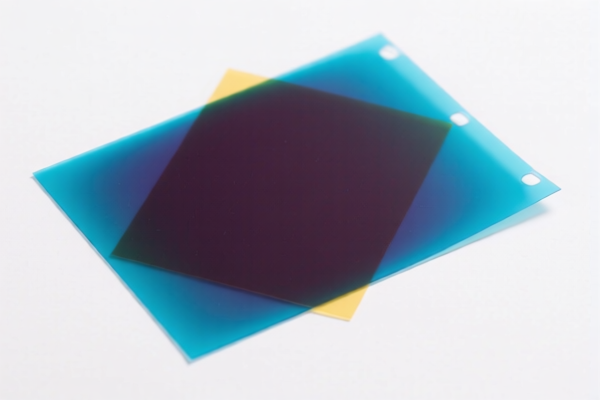


AI Analysis
📸 Photographic Papers & Films: The Ultimate HS Code & Taxation Guide (2026 Edition)
🌐 Global Customs & Tariff Mastery | HS Code Deep Dive | Professional Clearance Strategy
📌 I. Product Definition & Classification: What Exactly is "Photosensitive Paper Film"?
Photosensitive paper film refers to coated paper or plastic films impregnated with light-sensitive emulsions (typically silver halides) used for capturing, transferring, or reproducing images. In international trade, these materials are broadly categorized into:
Silver Halide Photosensitive Papers (Class 3703): Specifically designed for photographic reproduction, X-ray films, and technical imaging.
Other Photosensitive Papers (Class 4816): Includes copying, transfer, and image-processing papers not specifically listed under Class 3703 (e.g., carbon paper, wax paper, or general transfer sheets).
⚠️ Critical Distinction:
- Silver Halide Emulsions → Must be declared under 3703.10.x0.90/60 (3.7% base + 25% + 10% surcharge).
- Non-Halide/General Transfer Papers → Falls under 4816.20.00.00 or 4816.90.01.00 (0% base + 25% + 10% surcharge).
📦 II. HS Code Classification Details (2026 Tariff Reference)
| HS Code | Product Description | Core Attribute | Applicable Tax Rate (China → US) |
|---|---|---|---|
3703.10.30.90 |
Silver Halide Photosensitive Paper (General Copying/Line Reproduction) | Halide-based emulsion | 38.7% |
3703.10.30.60 |
Silver Halide Photosensitive Paper (Line Reproduction/Technical Imaging) | Halide-based emulsion | 38.7% |
4816.20.00.00 |
Other Photosensitive Papers (Copying/Transfer/Image Processing) | Non-halide paper substrate | 35.0% |
4816.90.01.00 |
Other Photosensitive Papers (Wax Paper/Carbon Paper/General Transfer) | Non-halide paper substrate | 35.0% |
🔍 Key Note:
- 3703 codes apply ONLY to papers with silver halide emulsions (classic photographic/X-ray materials).
- 4816 codes cover non-halide photosensitive papers used for copying, transferring, or general image processing.
- Both categories attract 25% Section 301 surcharge + 10% IEEPA surcharge on top of the base rate.
💰 III. 2026 Tariff Rate Breakdown (Detailed Tax Clauses)
✅ Applicable Country: USA
✅ Origin: China (CN)
✅ Effective Date: 2025-11-10 onward (including future imports)
🎯 1. 3703.10.30.90 & 3703.10.30.60 — Silver Halide Photosensitive Papers
| Item | Detail |
|---|---|
| Base Tariff | 3.7% (ad valorem) |
| Section 301 Surcharge | +25.0% (China-specific 301 tariffs) |
| IEEPA Surcharge | +10.0% (China/HK products under IEEPA 2025) |
| Total Tax Rate | 38.7% |
| Tax Calculation | CIF Value × 38.7% |
| De Minimis Exemption | ❌ Not Eligible (deny_de_minimis) |
| Legal Basis | IEEPA:9903.01.25 → Section 301:3703.10.30 → Footnote:9903.88.01 |
📌 Explanation:
- 3.7% is the standard MFN (Most Favored Nation) tariff for photographic paper.
- 25% surcharge comes from the 301 Trade Act targeting Chinese manufacturing.
- 10% surcharge is the IEEPA (International Emergency Economic Powers Act) penalty for Chinese-origin goods.
- Total = 38.7%, a high-cost scenario requiring proactive planning.
🎯 2. 4816.20.00.00 & 4816.90.01.00 — Non-Halide Photosensitive Papers
| Item | Detail |
|---|---|
| Base Tariff | 0.0% (ad valorem) |
| Section 301 Surcharge | +25.0% |
| IEEPA Surcharge | +10.0% |
| Total Tax Rate | 35.0% |
| Tax Calculation | CIF Value × 35.0% |
| De Minimis Exemption | ❌ Not Eligible |
| Legal Basis | IEEPA:9903.01.25 → Section 301:4816.90.01 → Footnote:9903.88.01 |
📌 Explanation:
- 0% base tariff because these are general paper products not classified as "photographic" in the strict sense.
- 25% + 10% surcharges still apply, resulting in a 35% total.
- Slightly cheaper than 3703 codes but still a high-cost category for Chinese exports.
🛠️ IV. Customs Clearance Practical Advice (Real-World Pitfall Guide)
✅ 1. Required Documentation Checklist (Non-Negotiable)
| Document | Mandatory? | Purpose |
|---|---|---|
| ✅ Technical Data Sheet | ✔️ | Confirms emulsion type (halide vs. non-halide), coating thickness, light sensitivity |
| ✅ Material Composition Report | ✔️ | Proves whether silver halide emulsion is used (critical for 3703 vs. 4816) |
| ✅ Product Photos | ✔️ | Shows packaging, labeling, and product form (paper/film) |
| ✅ Third-Party Lab Report | ✔️ | Validates photo-sensitivity characteristics (ISO standards) |
| ✅ Commercial Invoice | ✔️ | Must state exact HS Code and "Photosensitive Paper Film" |
| ✅ Certificate of Origin | ✔️ | Essential for verifying Chinese origin (triggers 301/IEEPA) |
| ✅ Packing List | ✔️ | Details packaging, quantity, and unit weight |
✅ 2. Declaration Best Practices (Critical Rules)
🔥 "Emulsion Type Dictates Code, Base Rate + Surcharges = Reality!"
| Scenario | Correct Declaration | Wrong Declaration | Consequence |
|---|---|---|---|
| Silver Halide Film | 3703.10.30.90 |
4816.20.00.00 |
38.7% vs 35.0% → Overpayment + Audit Risk |
| Non-Halide Copy Paper | 4816.20.00.00 |
3703.10.30.60 |
35.0% vs 38.7% → Underpayment → Penalties + Back Taxes |
| Mixed Pack (Halide + Non-Halide) | Split Declaration | Single Code | 100% of Value Taxed at Higher Rate |
✅ 3. Special Cases & Workarounds
| Situation | Recommended Strategy |
|---|---|
| OEM Custom Photosensitive Film | Provide client design specs + emulsion formula to avoid "generic" classification |
| Hybrid Paper (Halide + Digital) | Declare as 3703 (halide dominates); if <5% halide, consider 4816 (需 technical proof) |
| Export to US via Third Country | Verify Origin Shift Rules – if reprocessed in Vietnam/Mexico, may qualify for IEEPA exemption |
| Low-Value Shipments | ❌ No de minimis – even $500 shipments face 35-38.7% tax |
🌍 V. Global Market Comparison (2026 Customs Landscape)
| Country/Region | Recommended HS Code | Tax Rate (China Origin) | Certification Required | Notes |
|---|---|---|---|---|
| 🇺🇸 USA | 3703.10.30.90 / 4816.20.00.00 |
38.7% / 35.0% | None | Highest global surcharge |
| 🇨🇳 China | Same HS Codes | 3.7% (no surcharge) | CCC | No 301/IEEPA |
| 🇪🇺 EU | Same HS Codes | 0–6% | CE + RoHS | No 301 surcharge |
| 🇯🇵 Japan | Same HS Codes | 0–5% | PSE | Low tax, high safety regs |
| 🇦🇺 Australia | Same HS Codes | 5% | RCM | Moderate tax |
📌 Key Insight:
- USA is the ONLY major market imposing 35–38.7% total tax on photosensitive papers/films from China.
- Re-routing through Vietnam/Mexico (if eligible) could reduce tax to 0–5%.
📌 VI. Common Mistakes & How to Avoid Them
❌ Mistake 1: Using generic "Photo Paper" without specifying emulsion type
👉 Result: Customs classifies as 3703 (38.7%) instead of 4816 (35.0%) → Overpayment + Audit.
❌ Mistake 2: Splitting halide and non-halide products in one shipment
👉 Result: 100% of value taxed at highest rate (38.7%) → Massive loss.
❌ Mistake 3: Declaring "Film" instead of "Paper" for plastic-based photosensitive media
👉 Result: Wrong HS Code → 100% penalty + delay.
❌ Mistake 4: Ignoring IEEPA 10% surcharge for Chinese origin
👉 Result: Under-declaration → Back taxes + interest.
✅ Pro Tip:
Always specify: "Silver Halide Emulsion" or "Non-Halide Copier Paper" in your invoice and technical docs.
🎯 VII. Conclusion: Precision Declaring = Profit Protection
🔹 Golden Rule:
"Halide = 3703 (38.7%), Non-Halide = 4816 (35.0%), No Exceptions!"
🔹 Cost Impact: A 3.7% tax difference can mean thousands of dollars on large shipments.
🔹 Strategic Move: Pre-apply for Binding Tariff Information (BTI) in the US to lock in classification.
📌 Final Tip:
If your photosensitive paper/film is produced in Vietnam, Mexico, Thailand, or Malaysia, apply for IEEPA exemption via Section 301 Exclusion Program – tax drops to 0–5%!
📣 Immediate Action Required:
📞 Contact a Customs Broker + Provide Emulsion Specs → Secure HS Code Pre-Ruling
🚀 Minimize Tax, Maximize Profit, Clear US Ports Faster!
✨ Smart Classification, Strategic Compliance, Global Success!
💼 Your Tax Bill Should Be Calculated, Not Estimated!
Customer Reviews
About HS Code Classification
The Harmonized System (HS) is an internationally standardized nomenclature developed by the World Customs Organization (WCO) to classify traded products. Over 200 countries use the HS system as the basis for customs tariffs, trade statistics, and import/export regulations.
Each HS code follows a hierarchical structure:
- Chapter (2 digits) — Broad category of goods (e.g., Chapter 84: Machinery and Mechanical Appliances)
- Heading (4 digits) — More specific grouping within the chapter
- Subheading (6 digits) — Internationally standardized breakdown, used by all WCO member countries
- National subdivisions (8-10 digits) — Country-specific extensions for further classification, such as US HTSUS 10-digit codes
Correct HS code classification is essential for smooth customs clearance, accurate duty payment, and compliance with trade regulations. Misclassification can lead to customs delays, overpayment of duties, or penalties.
When importing from CN to US, the applicable tariff rates may include:
- Most-Favored-Nation (MFN) rate — The standard duty rate applied to WTO members
- General rate — Applied to countries without trade agreements
- Trade remedy duties — Additional tariffs such as Section 301 (anti-dumping), Section 232 (national security), or countervailing duties
The information provided on this page is for reference purposes only. For official classification, please consult with your local customs authority or a licensed customs broker.