Photosensitive Paper Roll
CN → US| HS Code | Tariff Rate | Origin | Destination | Doc |
|---|---|---|---|---|
| 4811909030 | 35.0% | CN | US | Official Doc |
| 4811908030 | 35.0% | CN | US | Official Doc |
| 4802201000 | 35.0% | CN | US | Official Doc |
| 4802202000 | 35.0% | CN | US | Official Doc |
| 4911998000 | 17.5% | CN | US | Official Doc |
Product Images
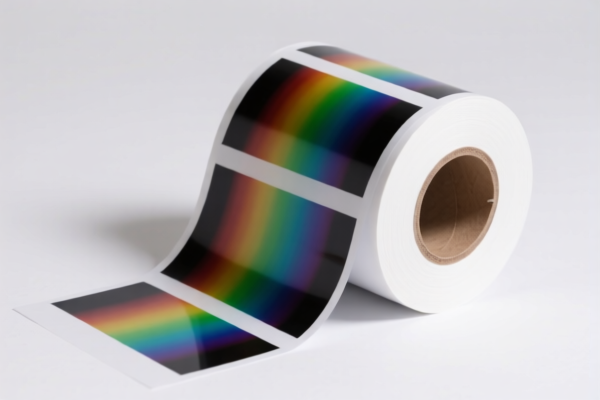
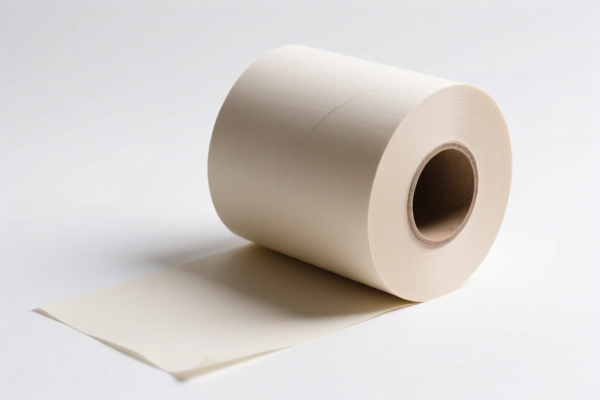
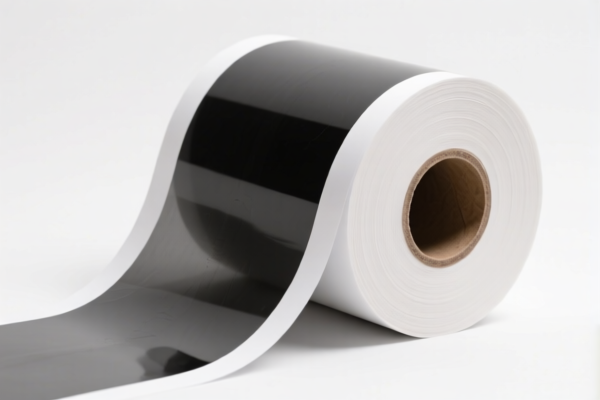
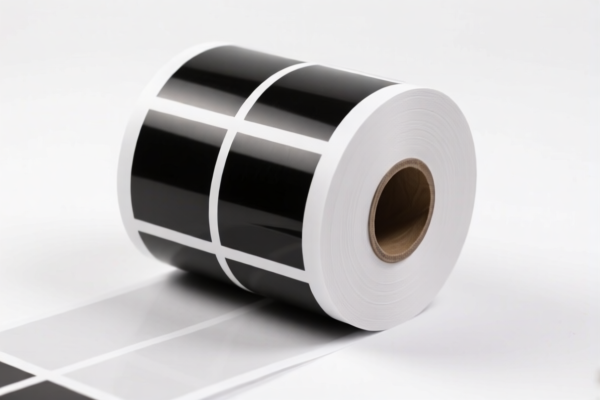
AI Analysis
📜 Photosensitive Paper Roll (Heat-Sensitive & Photosensitive Paper)
🌐 HS Code Reference & Customs Clearance Guide | 2026 Latest Tariff Analysis | Professional Clearance Strategy
📌 I. Product Definition & Classification: What Exactly is "Photosensitive Paper"?
Photosensitive Paper (often interchangeable with or encompassing Thermal Paper in trade contexts) is a specialized paper product coated with chemical sensitizers that react to specific stimuli—primarily heat, light, or electricity—to produce an image. In international trade, it is rarely classified simply as "paper" but rather as a processed/finished paper product based on its coating and final utility.
Key Distinctions in Classification: * Thermal Paper (热敏纸): Coated with leuco dyes that react to heat from a thermal printer head. Most common in receipts, faxes, and shipping labels. * Photosensitive Paper (光敏纸): Coated with chemicals that react to UV light or visible light exposure, often used in copying, faxing (blueprint style), or specialized printing. * Base Paper vs. Finished Product: If the paper is uncoated, it falls under "Uncoated Paper." If coated for thermal/photosensitive use, it falls under specific processed paper categories.
⚠️ Critical Classification Point:
- If the product is a roll intended for thermal printing (receipts, labels), it is typically classified under HS 4811 (Paper coated, impregnated, covered...) or HS 4802 (Uncoated paper, if the coating is negligible or specific types are excluded).
- However, based on the provided data, the classifier has mapped these specifically to HS 4802 (Base paper for thermal/photosensitive use) and HS 4811 (Coated paper).
- Crucial: The presence of Section 301 (USITC 25%) and IEEPA (10%) tariffs applies to all these HS codes for Chinese origin, making accurate classification vital for cost estimation, though the rate remains identical in this specific dataset.
📦 II. HS Code Classification Details (2026 Latest Tariff Authority Mapping)
Based on the provided internal data, the following HS Codes have been matched for "Photosensitive Paper Roll." Note that while the technical definitions vary slightly, the tariff burden is uniform across these categories in this context.
| HS Code | Product Description | Match Summary (Internal Logic) | Applicability |
|---|---|---|---|
4802.20.10.00 |
Thermal/Photosensitive Base Paper | Matches material (thermal/photosensitive) and use (photosensitive paper). Initial judgment based on name consistency. | Uncoated paper intended for further processing into thermal/photo media. |
4802.20.20.00 |
Base Paper for Thermal/Photosensitive/Electrosensitive Use | Exact Match. The product name aligns perfectly with the classification explanation: "Base paper for use as photosensitive, thermal, or electrosensitive paper/cardboard." | High-accuracy match for base rolls before final coating/finishing. |
4811.90.90.30 |
Direct Thermal Coated Paper | Success. Material (paper) and core use (direct thermal coating) are fully consistent. | Finished thermal paper rolls ready for printing. |
4811.90.80.30 |
Thermal Coated Paper | Success. Product name directly corresponds to the core attribute "Thermal." Common sense infers paper material, fitting the definition of thermal coated paper. | Alternative classification for thermal paper rolls. |
4911.99.80.00 |
Other Printed Matter (Paper-based) | Match Basis: Thermal paper is considered a printed item. Based on common sense, material is paper, fitting "Other printed matter." Lower Tax Rate. | Only applicable if classified as a final printed good, not raw material. |
🔍 Key Insight:
- HS 4802 and HS 4811 are the primary industrial classifications for the material itself.
- HS 4911 is a fallback for "printed matter" but carries a lower tax rate (17.5% vs 35%). However, this requires the item to be considered "printed" rather than just "coated/blank." For blank rolls, 48xx is more technically accurate, despite the higher tax.
💰 III. 2026 Latest Tariff Rate Breakdown (Including Surtaxes & Policy Add-ons)
✅ Applicable Country: United States (US)
✅ Origin: China (CN)
✅ Effective Time: November 10, 2025 (and subsequent imports)
🎯 1. Standard Industrial Classifications: 4802.20.10.00, 4802.20.20.00, 4811.90.90.30, 4811.90.80.30
These codes represent the core industrial inputs for thermal/photosensitive paper. The tariff structure is aggressive due to trade policies.
| Item | Detail |
|---|---|
| Base Tariff Rate | 0% (ad valorem) |
| USITC Section 301 Surcharge | +25.0% (Due to USITC Footnote 9903.88.01 / Section 301 Lists) |
| IEEPA Surcharge (122 Clause) | +10.0% (Targeting Chinese/HK products, effective Nov 10, 2025) |
| Total Effective Tax Rate | 35.0% |
| Tax Calculation | CIF Value × 35% |
| De Minimis Eligibility | ❌ NOT Eligible (deny_de_minimis) |
| Legal Pathway | IEEPA:9903.01.25 → USITC:4802/4811 → FOOTNOTE:9903.88.01 |
📌 Explanation:
- The 0% base rate is misleading. The 25% Section 301 tariff is the dominant cost driver for Chinese-origin goods.
- The 10% IEEPA surcharge is an additional layer on top of the Section 301 tariff.
- Total 35% is a high-cost category. This applies to both the base paper (4802) and the coated thermal paper (4811).
- Warning: Even though4811is a "finished" good and4802is a "raw" material, the tax burden is identical. This removes any incentive to misclassify raw materials as finished goods solely for tax avoidance if the HS code remains within the 48xx range.
🎯 2. Alternative Classification: 4911.99.80.00 (Other Printed Matter)
This code offers a significantly lower tax rate but comes with strict definition constraints.
| Item | Detail |
|---|---|
| Base Tariff Rate | 0% |
| USITC Section 301 Surcharge | +7.5% (Reduced rate for this specific sub-category) |
| IEEPA Surcharge | +10.0% |
| Total Effective Tax Rate | 17.5% |
| Tax Calculation | CIF Value × 17.5% |
| De Minimis Eligibility | ❌ NOT Eligible |
| Legal Pathway | IEEPA:9901.25 → IEEPA:9903.01.24 → USITC:4911.99.80.00 |
📌 Explanation:
- This classification treats the product as "Printed Matter" rather than "Paper."
- Risk: If the rolls are blank (unprinted), classifying them as4911(Printed Matter) may be challenged by customs as incorrect.
- Benefit: If you can prove the product is pre-printed (e.g., shipping labels with pre-printed logos/barcodes), this code may be defensible and saves 17.5% in taxes.
- Caution: Do not use this for blank rolls to avoid penalties.
🛠️ IV. Customs Clearance Practical Advice (Real-World Pitfall Guide)
✅ 1. Preparation Checklist (Non-Negotiable)
| Document | Required | Purpose |
|---|---|---|
| ✅ Product Specification Sheet | ✔️ | Must specify: Base paper weight (gsm), coating type (thermal/photo), roll diameter, core size, and whether it is pre-printed or blank. |
| ✅ Technical Data Sheet (TDS) | ✔️ | Proves the chemical composition of the coating. Essential for distinguishing between 4802 (base) and 4811 (coated). |
| ✅ Commercial Invoice | ✔️ | Must clearly state: "Photosensitive Paper Roll" or "Thermal Paper Roll." Avoid vague terms like "Paper." |
| ✅ Certificate of Origin (CO) | ✔️ | Required to apply IEEPA/Section 301 rules. If not Chinese origin, tariffs may differ. |
| ✅ Bill of Lading | ✔️ | Ensure weight and volume match the invoice. |
| ✅ Pre-Printed Sample (if claiming HS 4911) | ✔️ | If using 4911.99.80.00, provide photos showing pre-printed content. |
✅ 2. Declaration Strategy (Key Mantra)
🔥 “Accurate Description, Coating Defined, Print Status Clear, Tax Predictable!”
| Scenario | Recommended HS Code | Why? | Tax Rate |
|---|---|---|---|
| Blank Thermal Rolls | 4811.90.90.30 or 4802.20.20.00 |
Correctly identifies as coated/base paper. | 35% |
| Blank Photosensitive Rolls | 4802.20.10.00 |
Matches "Photosensitive" description. | 35% |
| Pre-Printed Labels/Rolls | 4911.99.80.00 |
Classified as "Printed Matter." | 17.5% |
| Mixed Shipments (Printed & Blank) | Separate Lines | Do not mix. Clear separation avoids audit flags. | 35% / 17.5% |
📌 Critical Tip:
- If your product is blank, do NOT try to declare it as4911to save tax. Customs will likely reject it upon seeing the lack of printed content, leading to misdeclaration penalties and delayed clearance.
- If your product is pre-printed, explicitly state "Pre-Printed" on the invoice and provide visual evidence.
✅ 3. Special Case Handling
| Situation | Advice |
|---|---|
| OEM Custom Rolls | Provide the end-user’s design file. If it’s a blank roll with a customer’s logo printed, it may qualify for 4911. |
| Rolls with Core/Box | Declare the paper separately. Packing materials should not drive the classification. |
| Small Quantity (De Minimis) | ❌ No Exemption. IEEPA and Section 301 tariffs apply regardless of value. No $800 de minimis exemption for Chinese-origin goods in this category. |
| Origin Non-China | If the paper is made in Vietnam, Thailand, or USA, Section 301 (25%) may not apply. Verify IEEPA applicability. |
🌍 V. Global Market Comparison (2026)
| Country/Region | Recommended HS Code | Approx. Tariff (China Origin) | Notes |
|---|---|---|---|
| 🇺🇸 USA | 4811.90.90.30 / 4802.20.20.00 |
35% | High tariffs due to Section 301 + IEEPA. |
| 🇺🇸 USA (Pre-Printed) | 4911.99.80.00 |
17.5% | Lower rate, but strict definition of "Printed." |
| 🇨🇳 China | 4811.90.90.30 |
~6-10% | No Section 301. Standard import VAT applies. |
| 🇪🇺 EU | 4811.90 |
0-6% | Varies by country. No Section 301 equivalent. |
| 🇯🇵 Japan | 4811.90 |
0-5% | Generally low tariffs. |
📌 Conclusion:
- The US market is the most challenging due to the 35% effective tariff.
- For US importers, pre-printed products (4911) offer a 17.5% savings, but only if truly printed.
- Consider supply chain diversification (e.g., coating paper in Vietnam) if volume is high, to potentially avoid Chinese origin surcharges.
📌 VI. Common Errors & Pitfalls (Lessons Learned)
❌ Error 1: Declaring blank thermal rolls as 4911 (Printed Matter) to save tax.
👉 Consequence: Customs audit, penalty for misclassification, and payment of the 17.5% difference + interest.
❌ Error 2: Ignoring the IEEPA 10% surcharge in cost calculations.
👉 Consequence: Underestimating landed cost by 10%. Many brokers only factor in the 25% Section 301.
❌ Error 3: Mixing base paper (4802) and coated paper (4811) on one line.
👉 Consequence: Confusion in duty assessment. While the rate is the same, accurate coding prevents future disputes.
❌ Error 4: Assuming De Minimis applies.
👉 Consequence: Small shipments ($100-$500) are still taxed at 35%. Do not plan shipments around $800 exemptions for Chinese thermal paper.
✅ Correct Practice:
"Thermal Paper Roll, 80gsm, Blank, 300mm Diameter, for Receipt Printers, HS 4811.90.90.30, Origin: China."
🎯 VII. Conclusion: Precision in Classification Saves 17.5%!
🎯 Key Takeaways:
🔹 "Blank Rolls = 35% Tax (4802/4811). Pre-Printed = 17.5% Tax (4911)."
🔹 "No De Minimis Exemption for Chinese Thermal Paper."
🔹 "IEEPA 10% is on top of Section 301 25%."
📌 Pro Tip:
If you are a high-volume importer, consider pre-printing your rolls (e.g., adding your company logo or barcode) in China or a third country. This may allow you to use HS 4911.99.80.00, reducing your duty from 35% to 17.5%. Ensure the printing is substantial enough to change the essential character of the good.
📣 Immediate Action:
📞 Contact your customs broker with a photo of the roll and a spec sheet.
📄 Ask for an Advance Ruling if your shipment value is significant.
🚀 Optimize your supply chain to handle the 35% tariff burden or find a lower-tariff alternative.
✨ Professional Customs Clearance Starts with Accurate Classification!
💼 Every Percent of Tariff Saved is Pure Profit!
Customer Reviews
About HS Code Classification
The Harmonized System (HS) is an internationally standardized nomenclature developed by the World Customs Organization (WCO) to classify traded products. Over 200 countries use the HS system as the basis for customs tariffs, trade statistics, and import/export regulations.
Each HS code follows a hierarchical structure:
- Chapter (2 digits) — Broad category of goods (e.g., Chapter 84: Machinery and Mechanical Appliances)
- Heading (4 digits) — More specific grouping within the chapter
- Subheading (6 digits) — Internationally standardized breakdown, used by all WCO member countries
- National subdivisions (8-10 digits) — Country-specific extensions for further classification, such as US HTSUS 10-digit codes
Correct HS code classification is essential for smooth customs clearance, accurate duty payment, and compliance with trade regulations. Misclassification can lead to customs delays, overpayment of duties, or penalties.
When importing from CN to US, the applicable tariff rates may include:
- Most-Favored-Nation (MFN) rate — The standard duty rate applied to WTO members
- General rate — Applied to countries without trade agreements
- Trade remedy duties — Additional tariffs such as Section 301 (anti-dumping), Section 232 (national security), or countervailing duties
The information provided on this page is for reference purposes only. For official classification, please consult with your local customs authority or a licensed customs broker.