Photosensitive Paperboard
CN → US| HS Code | Tariff Rate | Origin | Destination | Doc |
|---|---|---|---|---|
| 4816900100 | 35.0% | CN | US | Official Doc |
| 3703103060 | 38.7% | CN | US | Official Doc |
| 3703103090 | 38.7% | CN | US | Official Doc |
| 4816200000 | 35.0% | CN | US | Official Doc |
| 4803002000 | 35.0% | CN | US | Official Doc |
Product Images
AI Analysis
📸 Photosensitive Paperboard (感光纸板/感光纸)
🌐 HS Code Reference & Customs Clearance Guide | 2026 Latest Tariff Analysis | Professional Clearance Strategy
📌 Part I: Product Definition & Classification: What is "Photosensitive Paperboard"?
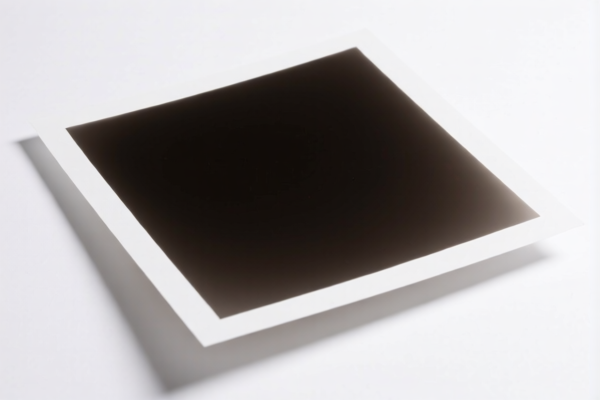
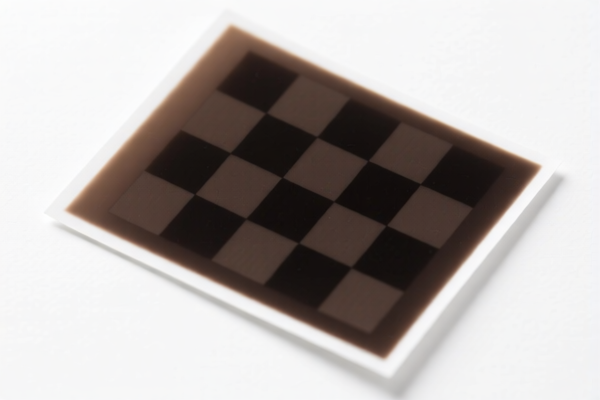
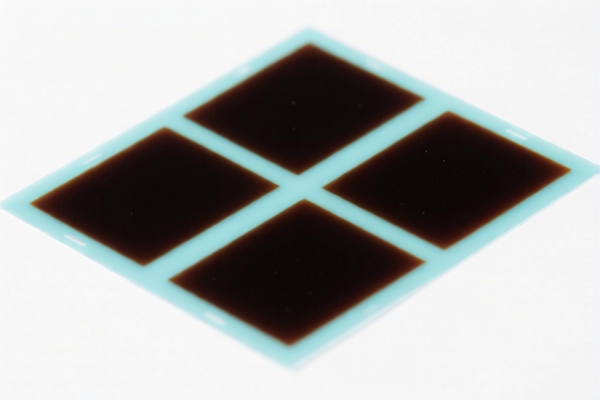
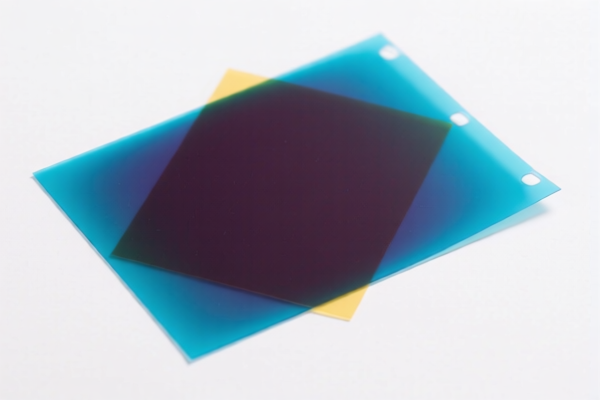
Photosensitive Paperboard refers to a specialized paper-based material coated with light-sensitive chemicals (such as silver halides) or designed for reproduction processes (like carbon paper or thermal transfer). It is a hybrid product sitting at the intersection of paper products (Chapter 48) and photographic/chemical goods (Chapter 37).
In international trade, it is critically distinguished by its functional coating and intended use: * Chemical Photosensitivity: Used for photography, X-rays, or industrial sensing (Silver Halide based). * Reproductive Function: Used for copying, printing, or transferring images (Carbon/Ribbon based).
⚠️ Key Distinction Point:
- If the paper is coated with silver halides or similar light-sensitive emulsions for capturing images → Classified under Chapter 37 (Photographic Goods).
- If the paper is used for copying, transferring, or carbon-based reproduction without light-sensitive chemical emulsions → Classified under Chapter 48 (Paper Products).
📦 Part II: HS Code Classification Details (2026 Latest Tariff Alignment)
Based on the provided data, there are 5 possible HS Codes for Photosensitive Paperboard. The correct classification depends strictly on the material composition and technical function.
| HS Code | Product Description | Technical Rationale | Total Tax Rate | Tax Breakdown |
|---|---|---|---|---|
3703.10.30.60 |
Silver Halide Photosensitive Paper | Fits the chemical characteristics of silver halide materials. | 38.7% | Base: 3.7%, Section 301: 25%, Section 301 (Item 122): 10% |
3703.10.30.90 |
Other Photosensitive Paper (Halogen Salt Type) | Defaults to halogen salt photosensitive material due to material consistency. | 38.7% | Base: 3.7%, Section 301: 25%, Section 301 (Item 122): 10% |
4816.90.01.00 |
Paper for Copying/Reproduction | Fits the physical form of carbon paper, ribbon, or wax paper. | 35.0% | Base: 0.0%, Section 301: 25%, Section 301 (Item 122): 10% |
4816.20.00.00 |
Carbon Paper/Transfer Paper | Fits the attribute of copying, transferring, or image processing paper. | 35.0% | Base: 0.0%, Section 301: 25%, Section 301 (Item 122): 10% |
4803.00.20.00 |
Base Paper for Photosensitive Materials | Refers to the paper substrate itself, fitting cellulose-based paper characteristics. | 35.0% | Base: 0.0%, Section 301: 25%, Section 301 (Item 122): 10% |
🔍 Critical Reminder:
- Chapter 37 (3703.xx) applies if the product is chemically active for photography/imaging (Higher Base Tariff 3.7%).
- Chapter 48 (4816.xx / 4803.xx) applies if the product is used for reproduction/copying or is merely the base substrate (Lower Base Tariff 0.0%).
- Section 301 Tariffs (25%) and Item 122 Tariffs (10%) apply to ALL these codes for goods originating from China.
💰 Part III: 2026 Latest Tariff Rate Breakdown (Including Surcharges)
✅ Applicable Country: United States (US)
✅ Origin: China (CN)
✅ Effective Date: Ongoing (Section 301 & Item 122 Tariffs)
🎯 1. Group A: Chemical Photosensitive Paper (HS Code: 3703.10.30.60 & .90)
| Item | Content |
|---|---|
| Base Tariff | 3.7% (Ad Valorem) |
| USITC Surcharge (Section 301) | +25% |
| Item 122 Surcharge | +10% |
| Total Effective Rate | 38.7% |
| Tax Calculation | CIF Value × 38.7% |
| De Minimis Exemption | ❌ Not Eligible (Deny De Minimis for these categories) |
| Legal Basis Path | USITC:3703.10.30.60/.90 → FOOTNOTE:301 → IEEPA:Item122 |
📌 Explanation:
- These codes fall under Chapter 37 (Photographic Goods).
- They incur the highest base tariff (3.7%) plus the full suite of trade war surcharges.
- Total Tax: 38.7%. This is a high-cost category. Precision in declaring "Silver Halide" or "Halogen Salt" is required.
🎯 2. Group B: Reproductive/Copying Paper & Substrates (HS Code: 4816.90.01.00, 4816.20.00.00, 4803.00.20.00)
| Item | Content |
|---|---|
| Base Tariff | 0.0% (Ad Valorem) |
| USITC Surcharge (Section 301) | +25% |
| Item 122 Surcharge | +10% |
| Total Effective Rate | 35.0% |
| Tax Calculation | CIF Value × 35.0% |
| De Minimis Exemption | ❌ Not Eligible |
| Legal Basis Path | USITC:4816.xx / 4803.xx → FOOTNOTE:301 → IEEPA:Item122 |
📌 Explanation:
- These codes fall under Chapter 48 (Paper Products).
- They benefit from a 0% base tariff but are still subject to the 25% Section 301 and 10% Item 122 surcharges.
- Total Tax: 35.0%. This is 3.7 percentage points cheaper than Chapter 37 codes.
- Key Strategy: If the product does not contain light-sensitive emulsions (e.g., plain copy paper, carbon paper, or base roll), always argue for Chapter 48 to save costs.
🛠️ Part IV: Customs Clearance Practical Advice (Avoiding Pitfalls)
✅ 1. Required Documentation Checklist
| Document | Mandatory? | Description |
|---|---|---|
| ✅ Product Specification Sheet | ✔️ | Must detail: Coating type (Silver Halide vs. Carbon/None), sensitivity, dimensions. |
| ✅ Technical Datasheet | ✔️ | Explains the chemical composition. Crucial for distinguishing Chapter 37 vs. 48. |
| ✅ Product Photos | ✔️ | Clear images of the packaging, labels, and the paper itself. |
| ✅ Commercial Invoice | ✔️ | Must accurately describe the product as "Photosensitive Paper" or "Copy Paper," not just "Paper." |
| ✅ Packing List | ✔️ | Weight and volume details. |
| ✅ Certificate of Origin (CO) | ✔️ | Proves origin from China (triggers surcharges). |
| ✅ Material Safety Data Sheet (MSDS) | ✔️ | Often required for chemical-coated papers (Chapter 37). |
✅ 2. Declaration Strategy (Key Tips)
🔥 "Characterize by Function, Declare by Chemistry"
| Scenario | Correct Declaration | Incorrect Declaration | Consequence |
|---|---|---|---|
| Silver Halide Photo Paper | "Silver Halide Photosensitive Paper for Medical Imaging" | "Photo Paper" (Vague) | Risk of misclassification → Audit/Delay |
| Carbon Paper / Copy Paper | "Carbon Copy Paper, Non-Photosensitive" | "Photosensitive Paper" | Overpaying 3.7% base tariff |
| Paper Substrate (Uncoated) | "Cellulose Paper Base for Photo Materials" | "Finished Photosensitive Paper" | Misclassification → Penalty |
📌 Note:
- If the paper is only a base for further processing, declare as 4803.00.20.00.
- If the paper is pre-coated for immediate photographic use, declare as 3703.10.30.xx.
✅ 3. Special Situations
| Situation | Handling Advice |
|---|---|
| Mixed Shipments | Do not mix Chapter 37 and Chapter 48 goods in one HS Code line. Declare separately to avoid ambiguity. |
| "Gray Area" Papers | Some papers are sensitive to UV but not silver halide. Provide lab tests to prove they are not Chapter 37 goods to qualify for 0% base tariff. |
| Large Volume Imports | Consider applying for an Advance Ruling (P9903) from CBP to lock in the HS Code before shipment. |
🌍 Part V: Global Market Comparison (2026 Latest)
| Country/Region | Recommended HS Code | Estimated Tariff (China Origin) | Remarks |
|---|---|---|---|
| 🇺🇸 USA | 3703.10.30.60 / 4816.20.00.00 |
38.7% or 35.0% | High due to 25% + 10% surcharges. |
| 🇨🇳 China | 3703.10.30 / 4816.20 |
3.7% or 0% | No Section 301 tariffs. |
| 🇪🇺 EU | 3703.10 / 4816.20 |
Varies (0-6.5%) | No Section 301, but VAT applies. |
| 🇯🇵 Japan | 3703.10 / 4816.20 |
3-4% | No Section 301. |
📌 Conclusion:
- The US market is significantly more expensive due to trade war tariffs.
- Chapter 48 codes (35.0%) are more cost-effective than Chapter 37 codes (38.7%) for US imports.
- Ensure your product documentation strictly supports the chosen chapter.
📌 Part VI: Common Errors & Pitfalls (Lessons Learned)
❌ Error 1: Declaring Silver Halide Paper as "General Copy Paper"
👉 Consequence: Customs may reclassify it to Chapter 37 or impose penalties for false declaration.
👉 Fix: Be honest about chemical composition. Use 3703.10.30.60 if it is truly silver halide.
❌ Error 2: Declaring Carbon Paper as "Photosensitive Paper"
👉 Consequence: Overpaying 3.7% base tariff.
👉 Fix: Use 4816.20.00.00 (Carbon/Reproduction paper) to achieve the 0% base tariff.
❌ Error 3: Ignoring Item 122 Tariffs
👉 Consequence: Underpaying by 10%.
👉 Fix: All these codes are subject to 10% additional duty under Section 301 Item 122. Total tax is NOT just 25%.
❌ Error 4: Mixing "Base Paper" with "Finished Paper"
👉 Consequence: Customs delay for clarification.
👉 Fix: If importing raw substrate, clearly state "Uncoated Paper Base".
🎯 Part VII: Conclusion: Professional Declaration Saves Money!
🎯 Remember the Formula:
🔹 "Chemical Sensitivity → Chapter 37 (38.7% Total)"
🔹 "Reproduction/Copying → Chapter 48 (35.0% Total)"
🔹 "Always add 25% + 10% for China Origin!"
✅ Correct Action Plan:
1. Identify: Does the paper have light-sensitive chemicals?
- Yes → Go for 3703.10.30.60/.90 (38.7%).
- No (Just carbon/copy) → Go for 4816.20.00.00 (35.0%).
- Uncoated Base → Go for 4803.00.20.00 (35.0%).
2. Document: Provide specs that prove the coating type.
3. Declare: Use precise English descriptions (e.g., "Silver Halide Photosensitive Paper" vs. "Carbon Copy Paper").
📌 Pro Tip:
If your Photosensitive Paperboard is uncoated base paper, always declare under 4803.00.20.00. It has the lowest base tariff (0%) and is often easier to justify than chemical goods.
📣 Immediate Action:
📞 Consult a customs broker to review your Product Data Sheet.
🚀 Save 3.7% on base tariffs by choosing the correct Chapter 48 code if applicable!
✨ Professional Customs Clearance Starts with Accurate Classification!
💼 Your every cent counts! Calculate Tariffs Precisely!
Customer Reviews
About HS Code Classification
The Harmonized System (HS) is an internationally standardized nomenclature developed by the World Customs Organization (WCO) to classify traded products. Over 200 countries use the HS system as the basis for customs tariffs, trade statistics, and import/export regulations.
Each HS code follows a hierarchical structure:
- Chapter (2 digits) — Broad category of goods (e.g., Chapter 84: Machinery and Mechanical Appliances)
- Heading (4 digits) — More specific grouping within the chapter
- Subheading (6 digits) — Internationally standardized breakdown, used by all WCO member countries
- National subdivisions (8-10 digits) — Country-specific extensions for further classification, such as US HTSUS 10-digit codes
Correct HS code classification is essential for smooth customs clearance, accurate duty payment, and compliance with trade regulations. Misclassification can lead to customs delays, overpayment of duties, or penalties.
When importing from CN to US, the applicable tariff rates may include:
- Most-Favored-Nation (MFN) rate — The standard duty rate applied to WTO members
- General rate — Applied to countries without trade agreements
- Trade remedy duties — Additional tariffs such as Section 301 (anti-dumping), Section 232 (national security), or countervailing duties
The information provided on this page is for reference purposes only. For official classification, please consult with your local customs authority or a licensed customs broker.