Photosensitive Paperboard Raw Material
CN → US| HS Code | Tariff Rate | Origin | Destination | Doc |
|---|---|---|---|---|
| 4816900100 | 35.0% | CN | US | Official Doc |
| 3703103060 | 38.7% | CN | US | Official Doc |
| 3703103090 | 38.7% | CN | US | Official Doc |
| 4816200000 | 35.0% | CN | US | Official Doc |
| 4803002000 | 35.0% | CN | US | Official Doc |
Product Images
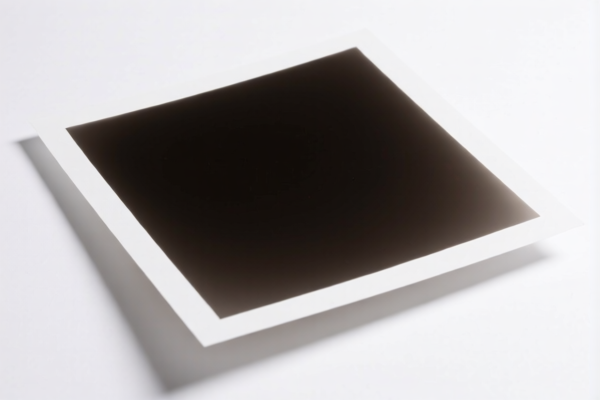
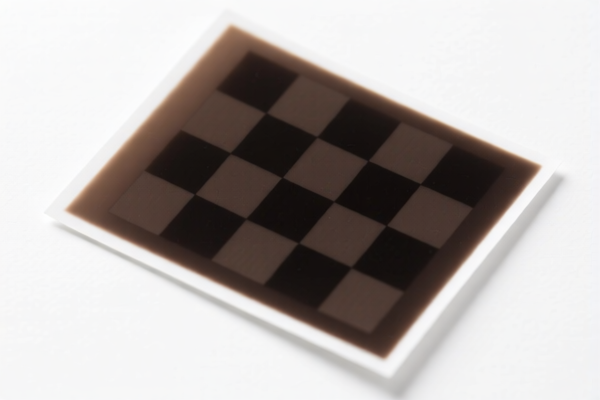
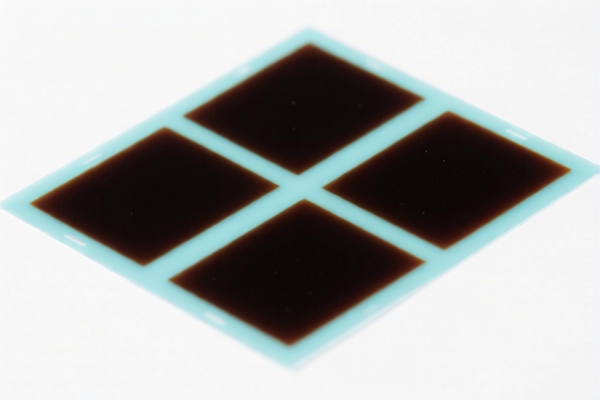
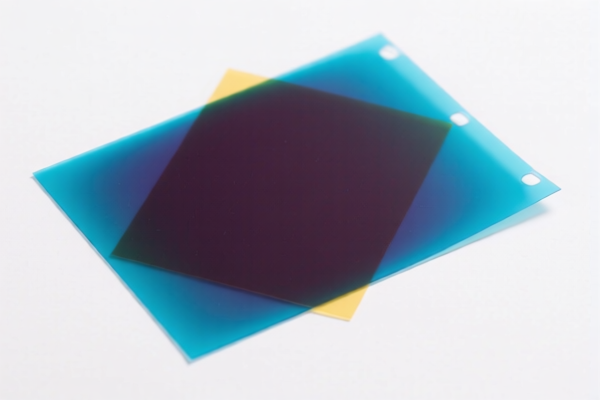
AI Analysis
📄 Photosensitive Paperboard Raw Material (Sensitized Paper / Photographic Paper Base)
🌐 HS Code Reference & Customs Clearance Guide | 2026 Latest Tariff Analysis | Professional Level Customs Strategy
📌 I. Product Definition & Classification: What Exactly is "Photosensitive Paperboard Raw Material"?
Photosensitive paper (often referred to as photographic paper or sensitized paper) consists of a paper base coated with light-sensitive chemicals (such as silver halides). In international trade, classification depends heavily on whether the classification focuses on the physical substrate (paper) or the functional coating (photosensitive material).
Key Distinction: * Paper-Based Classification (Chapter 48): If the primary characteristic is considered the paper support (cellulose fiber) used for copying, transfer, or image processing, it falls under Chapter 48. * Photosensitive Classification (Chapter 37): If the primary characteristic is the light-sensitive coating (silver halide emulsion) that defines its function, it falls under Chapter 37.
⚠️ Critical Decision Point:
- If the product is described primarily as a "paper base" for further processing or if the coating is minor relative to the paper structure → Chapter 48 Codes.
- If the product is ready-to-use photographic/photocopy paper where the emulsion is the defining feature → Chapter 37 Codes.
📦 II. HS Code Classification Details (2026 Latest Tariff Authority对照)
Based on the provided data, here are the specific HS Codes and their tax implications for importing from China to the US.
| HS Code | Product Description | Tax Category Logic | Total Tariff Rate |
|---|---|---|---|
4816.90.01.00 |
Sensitized paper (Copier/Transfer/Wax paper type) | Classified as Paper Material; fits attributes of copying/transfer paper. | 35.0% |
3703.10.30.60 |
Photosensitive/Halogen-silver Paper | Classified as Photosensitive Material; fits silver halide core material characteristics. | 38.7% |
3703.10.30.90 |
Other Photosensitive Paper | Defaulted to Halogen-silver Paper Material; matches photosensitive material traits. | 38.7% |
4816.20.00.00 |
Sensitized Paper (Copy/Transfer/Image Processing) | Classified as Paper Material; fits attributes for copy, transfer, and image processing. | 35.0% |
4803.00.20.00 |
Paper Base (Uncoated/Substrate) | Classified as Paper Base Product; fits cellulose fiber characteristics, considered raw paper stock. | 35.0% |
🔍 Key Takeaway:
- Lowest Risk/Lower Rate: Chapter 48 codes (4816.20.00.00,4816.90.01.00,4803.00.20.00) carry a 35.0% total tariff.
- Highest Rate: Chapter 37 codes (3703.10.30.60,3703.10.30.90) carry a 38.7% total tariff due to higher base duties combined with the same surcharges.
- Strategy: If your product can be legitimately argued as "paper for image processing" rather than "chemical photographic stock," Chapter 48 is the cost-effective choice.
💰 III. 2026 Latest Tariff Rate Breakdown (Including Surcharges & Policy Add-ons)
✅ Applicable Country: United States (US)
✅ Origin: China (CN)
✅ Effective Time: Since November 10, 2025 (and subsequent imports)
🎯 1. Chapter 48 Codes (4816.20.00.00, 4816.90.01.00, 4803.00.20.00)
Scenario: Classified as Paper-Based Sensitized Products
| Item | Content |
|---|---|
| Base Duty Rate | 0.0% (Ad Valorem) |
| USITC Additional Duty (Section 301) | +25.0% |
| IEEPA Additional Duty (122 Clause) | +10.0% |
| Total Tariff Rate | 35.0% |
| Tax Calculation | CIF Value × 35% |
| De Minimis Eligibility | ❌ No (deny_de_minimis applies to these surcharges) |
| Legal Basis Path | USITC:4816.xxxxxxx / USITC:4803.xxxxxxx → FOOTNOTE:301 → IEEPA:122 |
📌 Explanation:
- The 0% base duty makes these codes attractive initially.
- However, the 25% Section 301 tariff and 10% IEEPA (122 Clause) tariff stack up to a flat 35% hit on the CIF value.
- Why 35%? Base (0) + 301 (25) + 122 (10) = 35.
🎯 2. Chapter 37 Codes (3703.10.30.60, 3703.10.30.90)
Scenario: Classified as Chemical Photosensitive Material
| Item | Content |
|---|---|
| Base Duty Rate | 3.7% (Ad Valorem) |
| USITC Additional Duty (Section 301) | +25.0% |
| IEEPA Additional Duty (122 Clause) | +10.0% |
| Total Tariff Rate | 38.7% |
| Tax Calculation | CIF Value × 38.7% |
| De Minimis Eligibility | ❌ No (deny_de_minimis applies) |
| Legal Basis Path | USITC:3703.xxxxxxx → FOOTNOTE:301 → IEEPA:122 |
📌 Explanation:
- Unlike Chapter 48, Chapter 37 has a non-zero base duty (3.7%).
- Adding the same 25% (Section 301) and 10% (122 Clause) results in 38.7%.
- Cost Implication: You pay 3.7% more in total duties compared to the Chapter 48 classification.
🛠️ IV. Customs Clearance Practical Advice (Real-World Pitfall Guide)
✅ 1. Documentation Checklist (Non-Negotiable)
| Document | Required? | Notes |
|---|---|---|
| ✅ Product Specification Sheet | ✔️ | Must detail: Base paper type (e.g., coated/uncoated), coating substance (e.g., silver halide), weight, dimensions. |
| ✅ Composition Statement | ✔️ | Clearly state: % Paper Base vs. % Chemical Coating. This is crucial for Chapter 37 vs. 48 distinction. |
| ✅ Product Photos (with Label) | ✔️ | Show roll/packaging, brand, model, and any safety warnings. |
| ✅ Commercial Invoice | ✔️ | Description should match the chosen HS Code logic (e.g., "Sensitized Copying Paper" vs. "Photographic Silver Halide Paper"). |
| ✅ Certificate of Origin (CO) | ✔️ | Required for verifying China origin to apply surcharges. |
| ✅ Packing List | ✔️ | Net/Gross weight must align with invoice. |
✅ 2. Declaration Strategy (Key Mantras)
🔥 "Paper Base = Ch48, Silver Halide = Ch37; Choose Wisely, Save 3.7%!"
| Situation | Recommended Declaration | Consequence of Error |
|---|---|---|
| Product is primarily paper support for copying/transfer | 4816.20.00.00 or 4816.90.01.00 |
If misdeclared as Ch37 → +3.7% extra tax. |
| Product is standard photographic paper with strong emulsion | 3703.10.30.60 / 90 |
If misdeclared as Ch48 → Risk of reclassification & penalties. |
| Product is uncoated paper base for further sensitization | 4803.00.20.00 |
Correctly identified as "paper raw material." |
| Mixed shipments | Split Declaration | Do not mix Ch37 and Ch48 items in one line if possible to avoid audit triggers. |
✅ 3. Special Cases Handling
| Case | Handling Advice |
|---|---|
| OEM Custom Paper | Provide the client's design specs. If the coating is customized but the base is generic paper, argue for Ch48. |
| Industrial X-Ray Film Base | If used for industrial imaging, still often falls under Ch37. Ensure accurate description. |
| Sample Shipments | Even samples are subject to 35-38.7% duties if classified under these codes. Do not rely on "gift" exemptions. |
| Hybrid Products (e.g., Thermal Paper) | Note: Thermal paper is often 3811 or 4811. If your product is chemically photosensitive (silver halide), it is Ch37 or Ch48. Do not confuse with thermal. |
🌍 V. Global Market Comparison (2026 Snapshot)
| Country/Region | Recommended HS Code | Approx. Total Duty (China Origin) | Notes |
|---|---|---|---|
| 🇺🇸 USA | 4816.20.00.00 / 3703.10.30.x0 |
35.0% - 38.7% | Includes 25% (301) + 10% (122). |
| 🇨🇳 China | 4816.20.00.00 / 3703.10.30.x0 |
Varies (Import Duty) | China import duties may differ; check MOFCOM. |
| 🇪🇺 EU | 4816.90 / 3703.10 |
Varies (Check Tariff) | No Section 301 equivalent, but may have anti-dumping duties. |
| 🇦🇺 Australia | 4816.90 / 3703.10 |
Varies | Generally lower base duties, no 301/122 surcharges. |
📌 Conclusion:
- The US market is significantly more expensive due to the layered surcharges.
- Chapter 48 (4816) is the optimal choice for cost-saving if the product qualifies, saving 3.7% compared to Chapter 37.
📌 VI. Common Mistakes & Pitfalls (Lessons Learned)
❌ Mistake 1: Declaring "Photosensitive Paper" as generic "Paper" (4801 or 4802)
👉 Result: Severe under-declaration. Customs will reclassify to 4816 or 3703 + Penalties.
❌ Mistake 2: Ignoring the 122 Clause (IEEPA)
👉 Result: If you only account for the 25% Section 301 tariff, you will underpay by 10%, leading to back taxes and interest.
❌ Mistake 3: Confusing Thermal Paper with Silver Halide Paper
👉 Result: Thermal paper often has different HS codes (3811 or 4811). Misclassification leads to rejection or re-inspection.
❌ Mistake 4: Assuming "De Minimis" ($800) applies
👉 Result: False. Surcharges (301 & 122) deny de minimis eligibility. All shipments are subject to duty calculation.
✅ Best Practice:
"Define by Base: Paper = Ch48 (35%), Silver Halide = Ch37 (38.7%). Always include 122 Clause in cost model."
🎯 VII. Conclusion: Professional Declaration, Cost Optimization
🎯 Remember the Mantra:
🔹 "Paper Base Wins (35%), Silver Halide Costs (38.7%). 122 Clause is Non-Negotiable!"
🔹 "HS Code Determines Profit; 3.7% Difference is Significant at Scale."
📌 Pro Tip:
If your production involves coating a generic paper base, emphasize the "Paper Material" aspect in your technical dossier to support a Chapter 48 classification. This saves 3.7% on the CIF value.
For high-volume shipments, consider applying for an Advance Ruling from US Customs (CBP) to lock in the classification and avoid post-entry audits.
📣 Immediate Action Required:
📞 Consult your customs broker with the Technical Specification Sheet.
📝 Confirm if the product is "Sensitized Copying Paper" (Ch48) or "Photographic Film/Paper" (Ch37).
🚀 Calculate landed cost with 35% or 38.7% duty to ensure margin protection!
✨ Accurate Classification is the First Step to Profitable Importing!
💼 Don't let hidden duties eat your margins!
Customer Reviews
About HS Code Classification
The Harmonized System (HS) is an internationally standardized nomenclature developed by the World Customs Organization (WCO) to classify traded products. Over 200 countries use the HS system as the basis for customs tariffs, trade statistics, and import/export regulations.
Each HS code follows a hierarchical structure:
- Chapter (2 digits) — Broad category of goods (e.g., Chapter 84: Machinery and Mechanical Appliances)
- Heading (4 digits) — More specific grouping within the chapter
- Subheading (6 digits) — Internationally standardized breakdown, used by all WCO member countries
- National subdivisions (8-10 digits) — Country-specific extensions for further classification, such as US HTSUS 10-digit codes
Correct HS code classification is essential for smooth customs clearance, accurate duty payment, and compliance with trade regulations. Misclassification can lead to customs delays, overpayment of duties, or penalties.
When importing from CN to US, the applicable tariff rates may include:
- Most-Favored-Nation (MFN) rate — The standard duty rate applied to WTO members
- General rate — Applied to countries without trade agreements
- Trade remedy duties — Additional tariffs such as Section 301 (anti-dumping), Section 232 (national security), or countervailing duties
The information provided on this page is for reference purposes only. For official classification, please consult with your local customs authority or a licensed customs broker.