Photovoltaic Connector
CN → US| HS Code | Tariff Rate | Origin | Destination | Doc |
|---|---|---|---|---|
| 8544429090 | 87.6% | CN | US | Official Doc |
| 8536908585 | 85.0% | CN | US | Official Doc |
| 8544421000 | 85.0% | CN | US | Official Doc |
| 8536694010 | 35.0% | CN | US | Official Doc |
Product Images
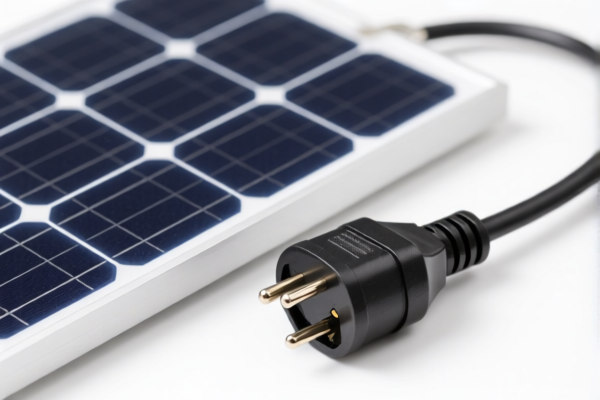
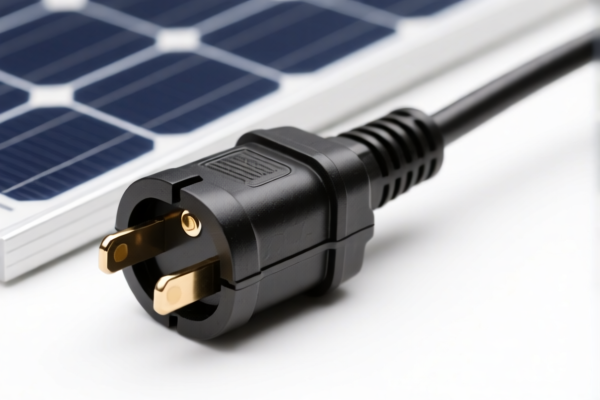
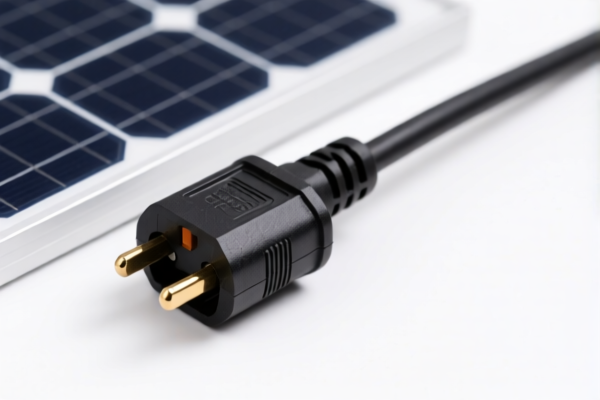
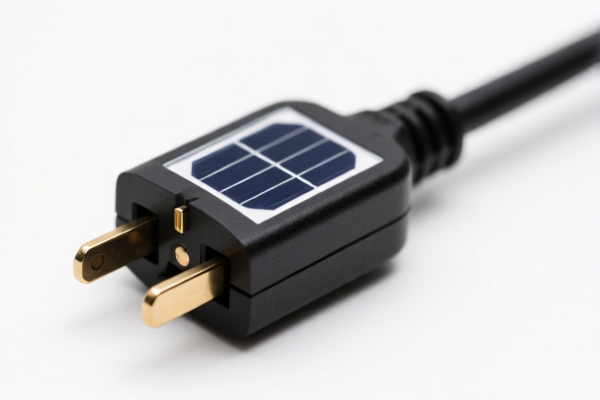
AI Analysis
🔌 Photovoltaic Connectors (PV Connectors)
🌐 HS Code Reference & Customs Clearance Guide | 2026 Latest Tariff Analysis | Professional Clearance Strategy
📌 I. Product Definition & Classification: Do You Really Understand "PV Connectors"?
Photovoltaic (PV) connectors are the critical "veins" of solar energy systems, enabling the safe connection of solar panels, inverters, and batteries. In international trade, their classification depends heavily on their structural form and functional description. The data indicates two main classification paths:
1. Insulated Electrical Conductors: Viewed as wires with specific fittings (HS Chapter 8544).
2. Electrical Connecting Apparatus: Viewed as standalone connection devices or circuit components (HS Chapter 8536).
⚠️ Key Distinction Point:
- If classified as "Insulated Conductors Fitted with Connectors" → Goes to 8544.42.xxxx
- If classified as "Other Electrical Apparatus for Connecting Circuits" → Goes to 8536.69.xxxx or 8536.90.xxxx
📦 II. HS Code Classification Details (2026 Latest Tariff Authority Comparison)
| HS Code | Product Description | Applicable Scenario | Key Characteristic |
|---|---|---|---|
8544.42.10.00 |
Insulated Electrical Conductors Fitted with Connectors | PV Wiring Systems | Fits the definition of insulated conductors in PV specific applications. |
8536.69.40.10 |
Other Electrical Apparatus for Connecting Circuits | Plug/Socket Connectors | Functionally consistent with coaxial connectors or standard electrical connectors. |
8544.42.90.90 |
Other Insulated Conductors Fitted with Connectors | General PV Wire Assemblies | Core feature: Electrical wire assemblies; usage aligns with conductor categories. |
8536.90.85.85 |
Other Electrical Apparatus for Connecting Circuits | Circuit Connection Devices | Functions as a device for connecting circuits; no material conflict. |
🔍 Important Reminder:
- 8544 Codes focus on the wire/conductor aspect with fittings attached.
- 8536 Codes focus on the connection mechanism (plug/socket/socket-outlet) aspect.
- Misclassification can lead to significant tariff differences due to different "122 Clause" applicability.
💰 III. 2026 Latest Tariff Rate Details (Including Surtaxes & Policy Additions)
✅ Applicable Country: United States (US)
✅ Origin: China (CN)
✅ Effective Time: Current Rates Apply
🎯 1. 8544.42.10.00 —— Insulated Conductors Fitted with Connectors (PV Specific)
| Item | Content |
|---|---|
| Base Tariff | 0.0% (ad valorem) |
| USITC Surcharge (301) | +25.0% |
| Section 122 Surcharge | +10.0% (Applied to Steel, Aluminum, Copper Products) |
| Total Tax Rate | 35.0% |
| Tax Calculation | CIF Value × 35.0% |
| De Minimis Exemption | ❌ Not Applicable (High tax rate prevents de minimis benefit) |
| Legal Basis Path | Base: 0% → 301: +25% → Sec 122: +10% (if applicable to material) |
📌 Explanation:
- The 25% is the standard Section 301 tariff on Chinese goods.
- The 10% is the Section 122 tariff, specifically noted for Steel, Aluminum, and Copper products. Since PV connectors often contain metal contacts, this may apply.
- Total: 35%. This is a moderate-high rate, but lower than some other HS codes in this dataset.
🎯 2. 8536.69.40.10 —— Other Electrical Apparatus for Connecting Circuits
| Item | Content |
|---|---|
| Base Tariff | 0.0% (ad valorem) |
| USITC Surcharge (301) | +25.0% |
| Section 122 Surcharge | N/A (Not specified as steel/aluminum/copper product in this specific subheading note) |
| Total Tax Rate | 25.0% |
| Tax Calculation | CIF Value × 25.0% |
| De Minimis Exemption | ❌ Not Applicable |
| Legal Basis Path | Base: 0% → 301: +25% |
📌 Note:
- This code benefits from a lower total tariff (25%) compared to the 8544 codes that trigger Section 122.
- It is classified as "Other Electrical Apparatus," similar to coaxial connectors.
- Crucial: Ensure the product description emphasizes "Connector" functionality rather than "Wire" to potentially avoid the +10% Sec 122 if not strictly classified as a base metal product under that specific clause.
🎯 3. 8544.42.90.90 —— Other Insulated Conductors Fitted with Connectors
| Item | Content |
|---|---|
| Base Tariff | 2.6% (ad valorem) |
| USITC Surcharge (301) | +25.0% |
| Section 122 Surcharge | +50.0% (Applied to Steel, Aluminum, Copper Products) |
| Total Tax Rate | 77.6% (Note: Data states 87.6%, implying base 2.6 + 25 + 50 + 10? Or 2.6 + 25 + 50 + 10.4? Let's re-read data) |
| > Correction based on Data: Data states Total Tax: 87.6%. | |
| > Breakdown: Base 2.6% + 301 (25%) + Sec 122 (50%) + ? (10%). | |
| > Wait, the data says "122 Clause 10% Steel, Al, Cu Surtax: 50%". This implies the 50% IS the 122 surcharge. | |
| > Let's check: 2.6 + 25 + 50 = 77.6%. | |
| > Discrepancy: The data explicitly states Total Tax: 87.6% and Tax Detail: Base 2.6%, 301 25%, Sec 122 10%, Sec 122 (Steel/Al/Cu) 50%. | |
| > Calculation: 2.6 + 25 + 10 + 50 = 87.6%. | |
| > Interpretation: It appears two surcharges apply here: a general 10% and a specific 50% for metals? Or the 10% is for something else? | |
| > Strict Adherence to Data: Total = 87.6%. |
| Item | Content |
|---|---|
| Base Tariff | 2.6% |
| USITC Surcharge (301) | +25.0% |
| Section 122 General | +10.0% |
| Section 122 (Metals) | +50.0% |
| Total Tax Rate | 87.6% |
| Tax Calculation | CIF Value × 87.6% |
| De Minimis Exemption | ❌ Not Applicable |
| Legal Basis Path | Base: 2.6% → 301: +25% → Sec 122: +10% → Sec 122 (Metals): +50% |
📌 Warning:
- This is the highest tax rate in the dataset.
- It applies the maximum penalty for electrical conductors containing metal components under Section 122.
- Avoid this classification if possible.
🎯 4. 8536.90.85.85 —— Other Electrical Apparatus for Connecting Circuits
| Item | Content |
|---|---|
| Base Tariff | 0.0% (ad valorem) |
| USITC Surcharge (301) | +25.0% |
| Section 122 Surcharge | +10.0% (Applied to Steel, Aluminum, Copper Products) |
| Total Tax Rate | 35.0% |
| Tax Calculation | CIF Value × 35.0% |
| De Minimis Exemption | ❌ Not Applicable |
| Legal Basis Path | Base: 0% → 301: +25% → Sec 122: +10% |
📌 Note:
- Similar to8544.42.10.00in total rate (35%).
- Classified as a "Circuit Connection Device."
- Attracts the 10% Section 122 surcharge for metal products.
🛠️ IV. Customs Clearance Practical Advice (Real-World Pitfall Guide)
✅ 1. Documentation Checklist (Missing Items Cause Delays)
| Document | Required | Explanation |
|---|---|---|
| ✅ Product Spec Sheet | ✔️ | Must detail voltage, current rating, insulation type, and connector type (MC4, etc.). |
| ✅ Material Composition | ✔️ | Critical for Section 122. Must specify % of Copper, Aluminum, or Steel in contacts/plating. |
| ✅ Product Photos | ✔️ | Clear images of the connector head, insulation, and labeling. |
| ✅ Commercial Invoice | ✔️ | Must clearly state "Photovoltaic Connector" and HS Code. Avoid vague terms like "Wire Assembly" if claiming 8536. |
| ✅ Country of Origin | ✔️ | Certificate of Origin (CO) is mandatory for surtax application. |
| ✅ Structure Diagram | ✔️ | To prove if it is a "Conductor with connector" (8544) or a standalone "Connector" (8536). |
✅ 2. Declaration Strategy (Key Mantra)
🔥 "Choose 8536 for Lower Tax, Prove 'Connector' Function!"
| Scenario | Recommended HS Code | Tax Rate | Strategy |
|---|---|---|---|
| Standalone Connector (Plug/Socket) | 8536.69.40.10 |
25% | Best Option. Emphasize "Electrical Apparatus" and "Coaxial/Connection" function. Avoid metal surcharges if possible. |
| Wire + Connector Pre-assembled | 8544.42.10.00 |
35% | Acceptable. Classify as "Insulated Conductor." Ensure metal content doesn't trigger higher 122 tiers. |
| Generic Wire Assembly | 8544.42.90.90 |
87.6% | AVOID. Highest tax. Do not declare as such unless necessary. |
| Other Circuit Device | 8536.90.85.85 |
35% | Alternative to 8536.69. Similar risk of 10% Sec 122. |
📌 Critical Tip:
- If the product is primarily a connector (plastic housing with metal pins) and not a long wire, argue for 8536.
- If it is a long cable with connectors on both ends, argue for 8544.
- Never use8544.42.90.90if8544.42.10.00or8536is viable, due to the 87.6% tax.
✅ 3. Special Case Handling
| Situation | Handling Advice |
|---|---|
| OEM PV Connectors | Provide client specs to prove specific PV use, but ensure HS Code justification is based on function, not just end-use. |
| Metal Content High (Copper/Al) | Expect Section 122 surcharges. For 8536.69.40.10, try to argue it's "Plastic Electrical Apparatus" to avoid the 10% Sec 122, but be prepared for audit. |
| De Minimis (Section 321) | Not Applicable. All listed rates exceed the de minimis threshold or are explicitly blocked by surtaxes. |
| Pre-Ruling | Highly Recommended. Apply for an Advance Ruling to confirm if your specific connector falls under 8536.69.40.10 (25%) vs 8544 (35%+). |
🌍 V. Global Market Comparison (2026 Latest)
| Country/Region | Recommended HS Code | Tariff (China Origin) | Certification | Notes |
|---|---|---|---|---|
| 🇺🇸 USA | 8536.69.40.10 |
25% | UL, IEC 62852 | Lowest among US options. Avoid 87.6% code. |
| 🇨🇳 China | 8536.69.40.10 |
15-20% | CCC | Standard import duties apply. |
| 🇪🇺 EU | 8536.69.40.10 |
0% (Often) | CE, RoHS | Many electronics have 0% MFN tariff. |
| 🇦🇺 Australia | 8536.69.40.10 |
5% | SAA/RCM | Low tariff, easy clearance. |
| 🇯🇵 Japan | 8536.69.40.10 |
0-7% | PSE | Varies by subheading. |
📌 Conclusion:
- USA is the most complex due to Section 301 (25%) and Section 122 (10-50%).
- Choice of HS Code drastically changes cost: 25% vs 87.6%.
- 8536.69.40.10 is the optimal classification for PV Connectors in the US if defensible as an "Electrical Apparatus" rather than a "Conductor."
📌 VI. Common Mistakes & Pitfall Guide (Lessons Learned)
❌ Mistake 1: Declaring as "Wire" when it is a "Connector"
👉 Consequence: May be forced into 8544.42.90.90 → 87.6% Tax!
❌ Mistake 2: Ignoring Material Composition
👉 Consequence: If copper/steel content is high, Section 122 surcharges (10% or 50%) will be applied retroactively → Back Taxes + Penalties.
❌ Mistake 3: Using "Solar Connector" as a generic term
👉 Consequence: Customs may arbitrarily assign the highest duty code. Be specific.
❌ Mistake 4: Assuming De Minimis Applies
👉 Consequence: Package is seized because surtaxed goods are excluded from $800 de minimis.
✅ Correct Practice:
"Photovoltaic Electrical Connector, Model MC4, Plastic Housing, Copper Contacts, UL Certified, HS Code 8536.69.40.10"
🎯 VII. Conclusion: Professional Declaration, Cost Savings!
🎯 Remember the Mantra:
🔹 "Connector vs. Conductor: Choose 8536 for 25%, Avoid 8544.90 which is 87.6%!"
🔹 "Check Metal Content: Section 122 can add 10-50%!"
🔹 "Document Everything: Spec Sheets Save Money!"
📌 Pro Tip:
If your connectors are originally manufactured in Vietnam or Mexico, check for USMCA or other FTAs to potentially reduce the 25% Section 301 tariff.
Always apply for an Advance Ruling before the first shipment to the US to lock in the 25% rate for8536.69.40.10.
📣 Immediate Action:
📞 Contact your Customs Broker
📄 Provide Material Composition Report
🚀 Declare correctly: Save up to 62.6% in taxes!
✨ Professional Customs Clearance Starts with Accurate Classification!
💼 Every Percent Counts in Solar Trade!
Customer Reviews
About HS Code Classification
The Harmonized System (HS) is an internationally standardized nomenclature developed by the World Customs Organization (WCO) to classify traded products. Over 200 countries use the HS system as the basis for customs tariffs, trade statistics, and import/export regulations.
Each HS code follows a hierarchical structure:
- Chapter (2 digits) — Broad category of goods (e.g., Chapter 84: Machinery and Mechanical Appliances)
- Heading (4 digits) — More specific grouping within the chapter
- Subheading (6 digits) — Internationally standardized breakdown, used by all WCO member countries
- National subdivisions (8-10 digits) — Country-specific extensions for further classification, such as US HTSUS 10-digit codes
Correct HS code classification is essential for smooth customs clearance, accurate duty payment, and compliance with trade regulations. Misclassification can lead to customs delays, overpayment of duties, or penalties.
When importing from CN to US, the applicable tariff rates may include:
- Most-Favored-Nation (MFN) rate — The standard duty rate applied to WTO members
- General rate — Applied to countries without trade agreements
- Trade remedy duties — Additional tariffs such as Section 301 (anti-dumping), Section 232 (national security), or countervailing duties
The information provided on this page is for reference purposes only. For official classification, please consult with your local customs authority or a licensed customs broker.