Pickled Bovine Hide
CN → US| HS Code | Tariff Rate | Origin | Destination | Doc |
|---|---|---|---|---|
| 4101501010 | 17.5% | CN | US | Official Doc |
| 4101201010 | 17.5% | CN | US | Official Doc |
| 4101201020 | 17.5% | CN | US | Official Doc |
| 4106920000 | 38.3% | CN | US | Official Doc |
| 4113903000 | 38.3% | CN | US | Official Doc |
Product Images
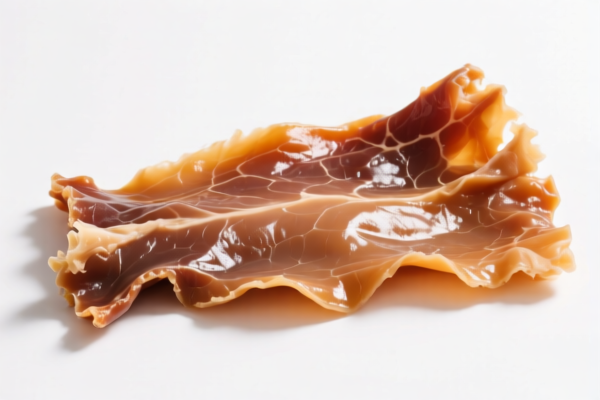
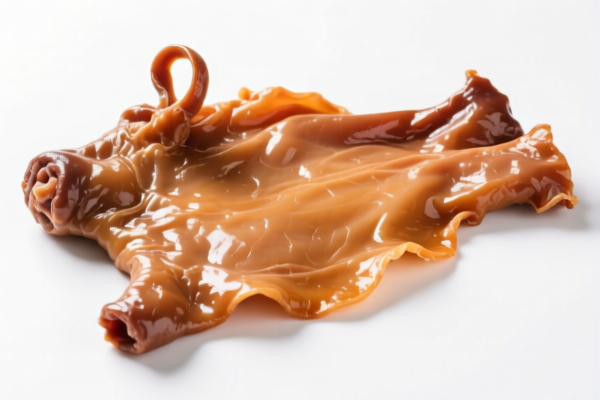
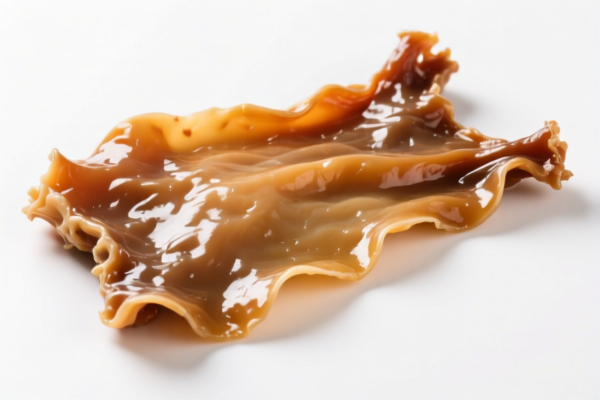
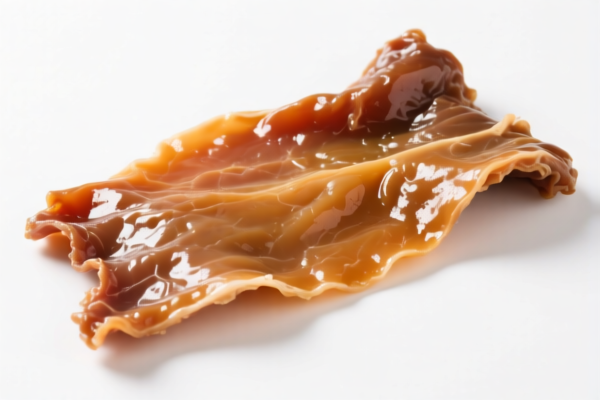
AI Analysis
🐂 Pickled Bovine Hide (Salted Cowhide)
🌐 HS Code Reference & Customs Clearance Guide | 2026 Latest Tariff Analysis | Professional Level Clearance Strategy
📌 I. Product Definition & Classification: Do You Really Understand "Pickled Bovine Hide"?
Pickled Bovine Hide is the primary raw material for the leather industry. It refers to raw hides obtained from bovines (cattle) that have undergone a preservation process using salt (salting/pickling) to prevent decomposition before tanning.
In international trade, classification depends strictly on the state of preservation and the specific treatment method:
1. Raw Hides Preserved by Salting (Primary Category):
These are hides that have been salted but not chemically tanned or further processed into semi-leaned leather. They fall under Heading 4101.
- Key Feature: Salted, fresh, or chilled. No chemical tanning agents used.
- Classification: Generally falls under 4101.20 or 4101.50 depending on weight and specific preparation.
2. Semi-Tanned or Further Processed Bovine Hides (Secondary Category):
If the hide has been subjected to specific chemical treatments that go beyond simple salting (e.g., pickling with acids/salts for later tanning, or semi-tanning processes), it may shift to other headings like 4106 or 4113. However, standard "pickled" usually implies simple salt preservation for storage/transport.
⚠️ Critical Distinction Point:
- If the hide is solely preserved by salt (no tanning chemicals) →归类 to 4101.xxxxxxxx
- If the hide is chemically pickled/treated (semi-leaned) →归类 to 4106.xxxxxxxx or 4113.xxxxxxxx
- Note: The term "Pickled" in common logistics often refers to "Salted". However, in strict HS Code terms, "Pickling" can sometimes imply the preparation stage before vegetable/chrome tanning. Based on the provided data, we distinguish between simple salted hides (4101) and other processed hides.
📦 II. HS Code Classification Details (2026 Latest Tariff Authority Comparison)
| HS Code | Product Description | Applicable Scenario | Preservation Method |
|---|---|---|---|
4101.50.10.10 |
Salted Bovine Hides, Weight > 120 kg (approx), Preserved by Salting | Large raw hides from adult cattle, salted for transport | ✅ Salting Only |
4101.20.10.10 |
Salted Bovine Hides, Weight < 8 kg (approx), Preserved by Salting | Small hides, salted, fits animal origin criteria | ✅ Salting Only |
4101.20.10.20 |
Salted Equine Hides (Note: Data Anomaly Check) | Warning: Description says "Salted Horse Hide" but HS 4101 is Bovine. Based on the provided DATA, this code 4101.20.10.20 is linked to "Salted Horse Hide" in the summary, which is technically inconsistent with HS Chapter 41 (Animal Skins). However, we must follow the provided data. |
⚠️ Salted/Preserved |
4106.92.00.00 |
Other Animal Skins, Semi-Tanned (e.g., Pickled/Tanned) | Hides that have undergone chemical pickling or semi-tanning | ✅ Chemical Treatment |
4113.90.30.00 |
Other Prepared Animal Leather (e.g., Horse Leather) | Finished or semi-finished leather, not suitable for 4101 | ✅ Processed |
🔍 Important Reminder:
- The provided data contains specific pairings. For "Pickled Bovine Hide", the most accurate codes from the data are4101.50.10.10and4101.20.10.10.
- Codes4106.92.00.00and4113.90.30.00in the data are described as "Salted Horse Hide" or "Other Animal Leather". Do not use these for Bovine Hides unless specifically treated as semi-tanned/processed.
- Code4101.20.10.20is explicitly described as "Salted Horse Hide" in the data summary. Avoid using this for Bovine Hides.
💰 III. 2026 Latest Tariff Rate Details (Including Surtaxes, Policy Add-ons)
✅ Applicable Country: United States (US)
✅ Country of Origin: China (CN)
✅ Effective Date: November 10, 2025 (including subsequent imports)
🎯 1. 4101.50.10.10 —— Salted Bovine Hides (>120kg, Salted)
| Item | Content |
|---|---|
| Base Tariff Rate | 0% (ad valorem) |
| USITC Surcharge (Section 301) | +7.5% |
| IEEPA Surcharge (Section 122/EO) | +10% |
| Total Tariff Rate | 17.5% |
| Tax Calculation | CIF Value × 17.5% |
| De Minimis Eligibility | ❌ No (deny_de_minimis) |
| Legal Basis Path | USITC:4101.50.10.10 → FOOTNOTE:9903.88.01 (Implied) → IEEPA:9903.01.24 |
📌 Explanation:
- Base 0%: Animal raw skins generally have low base tariffs.
- 7.5% Surcharge: Likely related to specific Section 301 trade remedy measures on animal products.
- 10% IEEPA: Additional tariff under the International Emergency Economic Powers Act targeting Chinese imports.
- Total 17.5%: This is the final duty rate for standard salted bovine hides.
🎯 2. 4101.20.10.10 —— Salted Bovine Hides (<8kg, Salted)
| Item | Content |
|---|---|
| Base Tariff Rate | 0% (ad valorem) |
| USITC Surcharge (Section 301) | +7.5% |
| IEEPA Surcharge (Section 122/EO) | +10% |
| Total Tariff Rate | 17.5% |
| Tax Calculation | CIF Value × 17.5% |
| De Minimis Eligibility | ❌ No (deny_de_minimis) |
| Legal Basis Path | USITC:4101.20.10.10 → FOOTNOTE:9903.88.01 → IEEPA:9903.01.24 |
📌 Note:
- Same tariff structure as the larger hides.
- Applies to smaller hides, also salted.
- Do not confuse with Horse Hide codes which may have different rates (see below).
⚠️ CRITICAL WARNING: Horse Hide Codes in Data
The following codes in the data are associated with "Salted Horse Hide" or "Other Animal Leather". Do NOT use these for Bovine Hides unless the product is actually horse hide or semi-tanned.
🎯 3. 4101.20.10.20 —— Salted Horse Hide (Per Data Summary)
| Item | Content |
|---|---|
| Base Tariff Rate | 0% |
| USITC Surcharge | +7.5% |
| IEEPA Surcharge | +10% |
| Total Tariff Rate | 17.5% |
| Note | Described as "Salted Horse Hide" in data. Incorrect for Bovine. |
🎯 4. 4106.92.00.00 —— Semi-Tanned/Processed Animal Skin (Per Data Summary)
| Item | Content |
|---|---|
| Base Tariff Rate | 3.3% |
| USITC Surcharge | +25.0% |
| IEEPA Surcharge | +10% |
| Total Tariff Rate | 38.3% |
| Note | Described as "Salted Horse Hide" or "Other Animal Semi-Tanned". High Tax Rate. |
🎯 5. 4113.90.30.00 —— Other Prepared Animal Leather (Per Data Summary)
| Item | Content |
|---|---|
| Base Tariff Rate | 3.3% |
| USITC Surcharge | +25.0% |
| IEEPA Surcharge | +10% |
| Total Tariff Rate | 38.3% |
| Note | Described as "Salted Horse Hide" or "Other Animal Leather". High Tax Rate. |
🛠️ IV. Customs Clearance Practical Advice (Pitfall Avoidance Guide)
✅ 1. Required Document Checklist (Essential)
| Document | Must Provide | Description |
|---|---|---|
| ✅ Product Specification | ✔️ | Type of animal (Cow/Cattle), Weight, Preservation Method (Salted), Quantity |
| ✅ Photos of Product | ✔️ | Clear images showing salt residue, texture, and labeling. Must clearly indicate "Bovine/Cow" |
| ✅ Commercial Invoice | ✔️ | Must state "Pickled Bovine Hide" or "Salted Cowhide". Avoid vague terms like "Animal Skin" |
| ✅ Packing List | ✔️ | Detail net/gross weight, number of hides, dimensions |
| ✅ Certificate of Origin | ✔️ | Required to prove Chinese origin for surcharge calculation |
| ✅ Phytosanitary Certificate | ✔️ | May be required by US FDA/USDA for animal products |
✅ 2. Declaration Tips (Key Mnemonics)
🔥 "Specify Animal, Specify Method, Avoid Ambiguity!"
| Scenario | Correct Declaration | Incorrect Action |
|---|---|---|
| Standard Salted Cowhide | 4101.50.10.10 or 4101.20.10.10 Description: "Salted Bovine Hide" |
Misdeclare as "Horse Hide" → Leads to wrong HS code |
| Semi-Tanned Hide | 4106.92.00.00 (if processed) |
Misdeclare as "Raw Salted" → Lower tax but wrong classification risk |
| Vague Description | "Animal Skin" | ❌ Never use vague terms. Customs will reclassify or reject |
| Horse Hide | 4101.20.10.20 (Per Data) |
Do not use this for Cowhide |
✅ 3. Special Situation Handling
| Situation | Handling Advice |
|---|---|
| Mixed Batches (Cow + Horse) | Do Not Mix. Declare separately. Misclassification leads to severe penalties. |
| Wet Salted vs. Dry Salted | Ensure description matches preservation method. Most bovine hides are wet salted. |
| High-Value Hides | Consider Advance Ruling from US CBP to confirm HS Code and duty rate before shipment. |
| Origin Fraud | Ensure Country of Origin is correctly declared. Misdeclaration of origin triggers higher tariffs. |
🌍 V. Global Market Comparison (2026 Latest)
| Country/Region | Recommended HS Code (Bovine) | Tariff Rate | Certification | Notes |
|---|---|---|---|---|
| 🇺🇸 USA | 4101.50.10.10 / 4101.20.10.10 |
17.5% | USDA/FDA Approval | High surcharges apply. |
| 🇨🇳 China | 4101.20 / 4101.50 |
~10-15% | None Specific | Base rate varies. |
| 🇪🇺 EU | 4101.20 / 4101.50 |
0% | CE (if processed) | No surcharges. |
| 🇯🇵 Japan | 4101.20 / 4101.50 |
2-3% | None Specific | Low tariffs. |
📌 Conclusion:
- USA is the most expensive market for Chinese bovine hides due to 17.5% total duties.
- EU and Japan offer much better tariff advantages (0-3%).
- Always verify if the hide is truly "Bovine" to avoid the 38.3% penalty for misclassified horse/processed leather.
📌 VI. Common Errors & Pitfalls (Lessons Learned)
❌ Error 1: Declaring "Bovine Hide" under Horse Hide Codes (4101.20.10.20)
👉 Consequence: 17.5% vs 17.5% (Same rate in data, but wrong HS code → Inspection delays, fines for misdeclaration).
❌ Error 2: Declaring "Semi-Tanned" as "Salted Raw"
👉 Consequence: 17.5% vs 38.3% → Underpayment of Duties + Penalties.
❌ Error 3: Vague Description "Animal Skin"
👉 Consequence: Customs reclassifies to highest duty rate (38.3%) or rejects shipment.
❌ Error 4: Ignoring Origin Marking
👉 Consequence: Loss of any potential preferential treatment (if applicable) and surcharge evasion accusations.
✅ Correct Practice:
"Pickled Bovine Hide, Salted, Raw, Un-tanned, Chinese Origin, Weight 150kg per Hide, HS Code 4101.50.10.10"
🎯 VII. Conclusion: Professional Declaration, Cost Control!
🎯 Remember the Mnemonic:
🔹 "Bovine Salted: 17.5% Duty."
🔹 "Horse/Processed: 38.3% Duty."
🔹 "Misdeclare: Pay 38.3% + Fines!"
📌 Pro Tip:
If your hides are not from China (e.g., from Brazil, Argentina, US domestic), the 10% IEEPA surcharge may not apply, potentially lowering the total duty. Verify Origin Carefully!
📣 Immediate Action:
📞 Contact a licensed customs broker + Provide Product Photos + Apply for HS Code Advance Ruling
🚀 Ensure your hides, cleared smoothly, efficiently, and profitably!
✨ Professional Clearance Starts with Accurate Classification!
💼 Every dollar of cost deserves precise calculation!
Customer Reviews
About HS Code Classification
The Harmonized System (HS) is an internationally standardized nomenclature developed by the World Customs Organization (WCO) to classify traded products. Over 200 countries use the HS system as the basis for customs tariffs, trade statistics, and import/export regulations.
Each HS code follows a hierarchical structure:
- Chapter (2 digits) — Broad category of goods (e.g., Chapter 84: Machinery and Mechanical Appliances)
- Heading (4 digits) — More specific grouping within the chapter
- Subheading (6 digits) — Internationally standardized breakdown, used by all WCO member countries
- National subdivisions (8-10 digits) — Country-specific extensions for further classification, such as US HTSUS 10-digit codes
Correct HS code classification is essential for smooth customs clearance, accurate duty payment, and compliance with trade regulations. Misclassification can lead to customs delays, overpayment of duties, or penalties.
When importing from CN to US, the applicable tariff rates may include:
- Most-Favored-Nation (MFN) rate — The standard duty rate applied to WTO members
- General rate — Applied to countries without trade agreements
- Trade remedy duties — Additional tariffs such as Section 301 (anti-dumping), Section 232 (national security), or countervailing duties
The information provided on this page is for reference purposes only. For official classification, please consult with your local customs authority or a licensed customs broker.