Pickled bovine hides
CN → USProduct Images
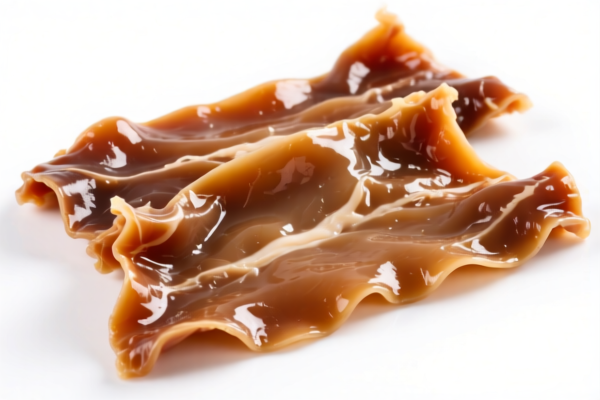
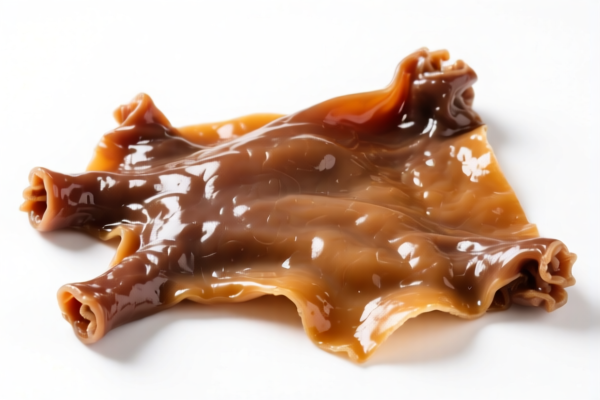
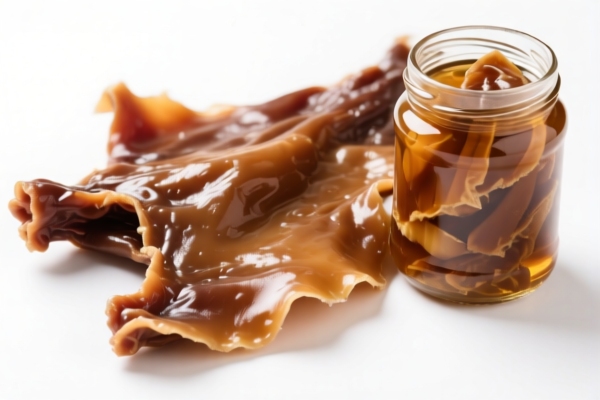
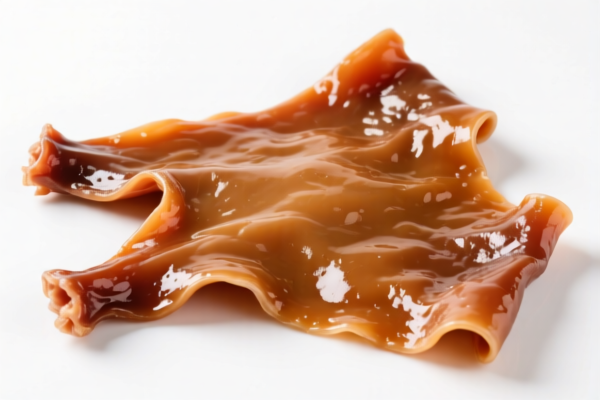
AI Analysis
🐄 Pickled Bovine Hides (Salted Cattle Skins)
🌐 HS Code Reference & Customs Clearance Guide | 2026 Latest Tariff Analysis | Professional Clearance Strategy
📌 I. Product Definition & Classification: What Exactly is "Pickled Bovine Hide"?
Pickled bovine hides are raw cattle skins that have undergone a preservation process using salt (salting) or brine to prevent decomposition and bacterial growth prior to tanning. In international trade, they fall under Chapter 41 (Raw Hides and Skins).
Key characteristics include: * Material: Cattle skin (Bovine). * State: Un-tanned, preserved primarily through salting (wet-salted or dry-salted). * Condition: Must meet the definition of "raw hides" suitable for tanning.
⚠️ Critical Distinction:
- If the hide is cattle (bovine) and salted/pickled → It falls under heading 4101.
- If the hide is horse/mule (equine) or horse/mule processed further → It falls under 4106 or 4113.
- Do not confuse bovine hides with equine hides, as the HS codes and tax rates differ significantly.
📦 II. HS Code Classification Details (2026 Latest Tariff Authority Comparison)
Based on the provided data, here are the relevant HS Codes for Pickled Bovine Hides:
| HS Code | Product Description | Applicability | Key Feature |
|---|---|---|---|
4101.50.10.10 |
Salted Bovine Hides | Raw cattle skins, salted preservation, matching bovine raw skin characteristics | ✅ Bovine, Salted |
4101.20.10.10 |
Salted Bovine Hides | Raw cattle skins, salted treatment, fitting bovine animal raw skin classification | ✅ Bovine, Salted |
4101.20.10.20 |
Note: Data Label "Pickled Horse Hide" | ❗ Mismatch Alert | This code description in the data refers to Horse Hides, not Bovine. Use with caution. If the product is truly Bovine, DO NOT use this code. It likely mislabels bovine hides in the source data or applies to a specific sub-classification of equine hides mistakenly grouped here. For standard pickled BOVINE hides, stick to 4101 series. |
4106.92.00.00 |
Note: Data Label "Pickled Horse Hide" | ❗ Not for Bovine | This code is for Half-tanned or semi-tanned hides (often equine in this dataset's context). Not applicable to raw salted bovine hides. |
4113.90.30.00 |
Note: Data Label "Pickled Horse Hide" | ❗ Not for Bovine | This code is for Other animal leather (often equine in this dataset). Not applicable to raw salted bovine hides. |
🔍 Key Reminder:
- The primary HS Codes for Pickled Bovine Hides are4101.50.10.10and4101.20.10.10.
- Codes4101.20.10.20,4106.92.00.00, and4113.90.30.00are explicitly described as "Pickled Horse Hides" or "Other Animal Leather" in the provided data. Misclassifying bovine hides as horse hides can lead to severe customs penalties.
- Ensure the material is 100% Bovine before selecting4101codes.
💰 III. 2026 Latest Tariff Rate Details (Including Surtax, Policy Add-ons)
✅ Applicable Country: United States (US)
✅ Origin: China (CN)
✅ Effective Date: From November 10, 2025 (including subsequent imports)
🎯 1. 4101.50.10.10 & 4101.20.10.10 —— Pickled Bovine Hides
| Item | Content |
|---|---|
| Base Tariff | 0.0% (ad valorem) |
| USITC Surtax (Section 301) | +7.5% |
| IEEPA Surtax (Section 122) | +10.0% |
| Total Tax Rate | 17.5% |
| Tax Calculation | CIF Value × 17.5% |
| De Minimis Exemption Eligible? | ❌ No (Not eligible for de minimis) |
| Legal Basis Path | Base: 0% → Section 301: 7.5% → Section 122: 10% |
📌 Explanation:
- "Base Tariff 0%": Raw hides often have low or zero base tariffs.
- "Section 301 Surtax 7.5%": Additional duty imposed on certain Chinese goods under U.S. Trade Act Section 301.
- "Section 122 IEEPA Surtax 10%": Emergency economic power act surtax targeting specific Chinese imports.
- Total 17.5%: This is a significant cost to consider. It is not the high 45%+ rates seen on some tech products, but still substantial for raw materials.
🛠️ IV. Customs Clearance Practical Advice (Field Avoidance Guide)
✅ 1. Required Documentation Checklist (All Mandatory)
| Document | Must Provide | Description |
|---|---|---|
| ✅ Product Specification Sheet | ✔️ | Include species (Bovine), preservation method (Salted/Brined), weight, dimensions. |
| ✅ Photos of Hides | ✔️ | Clear images showing salt crystals, texture, and any brand/processing marks. |
| ✅ Commercial Invoice | ✔️ | Must clearly state "Pickled Bovine Hides" and HS Code 4101.50.10.10 or 4101.20.10.10. |
| ✅ Certificate of Origin | ✔️ | To verify Chinese origin and apply surtaxes accurately. |
| ✅ Packing List | ✔️ | Detail gross/net weight, number of hides, and packaging type. |
| ✅ Treatment Certificate | ✔️ | Proof of salting/pickling process to distinguish from raw/unpreserved hides. |
✅ 2. Declaration Tips (Key Mantras)
🔥 “Bovine is Key, Horse is Not! Salted State, Tax Rate 17.5%!”
| Scenario | Correct Declaration | Incorrect Practice |
|---|---|---|
| Pickled Bovine Hides | 4101.50.10.10 or 4101.20.10.10 |
Using 4106 or 4113 (Horse codes) → High Risk of Penalty |
| Dry-Salted Bovine Hides | 4101.50.10.10 |
Declaring as "Leather" → Wrong Chapter |
| Wet-Salted Bovine Hides | 4101.20.10.10 |
Mixing with equine hides → Classification Error |
| Horse Hides | 4106.92.00.00 or 4113.90.30.00 |
Using 4101 codes → Underpayment of Tax (38.3% vs 17.5%) |
⚠️ Warning:
- Do not mix bovine and equine hides in the same shipment declaration without clear separation.
- Ensure the description explicitly states "Bovine" to avoid customs querying the species.
✅ 3. Special Case Handling
| Scenario | Handling Advice |
|---|---|
| OEM Custom Hides | Provide client order + design specs to avoid "non-standard" classification issues. |
| Hides with Minor Tanning | If lightly tanned, it may fall under 4106 (38.3% tax). Ensure it meets "raw hide" criteria for 4101. |
| Mixed Species Shipment | Strictly separate bovine and equine hides. Different HS codes, different tax rates. |
| Destination: USA | Be prepared for 17.5% total tax. No de minimis exemption. |
🌍 V. Global Market Comparison (2026 Latest)
| Country/Region | Recommended HS Code | Tariff Rate | Certification Requirement | Notes |
|---|---|---|---|---|
| 🇺🇸 USA | 4101.50.10.10 / 4101.20.10.10 |
17.5% | None specific | Includes 7.5% Sec 301 + 10% IEEPA |
| 🇨🇳 China | 4101 series |
0-5% | None | No additional surtaxes |
| 🇪🇺 EU | 4101 series |
0-5% | EC Regulation on Animal By-Products | Check ABP regulations |
| 🇦🇺 Australia | 4101 series |
5% | None | No additional surtaxes |
| 🇯🇵 Japan | 4101 series |
0-5% | JAS Standards | No additional surtaxes |
📌 Conclusion:
- USA is the most cost-sensitive market due to the 17.5% total tariff.
- EU, AU, JP have much lower or zero base tariffs, making them more favorable for raw hide imports.
📌 VI. Common Errors & Avoidance Guide (Lessons Learned)
❌ Error 1: Declaring Bovine Hides under Horse HS Codes (4106, 4113)
👉 Consequence: Underpayment of Tax! (17.5% vs 38.3%). Customs will demand back payments + fines.
❌ Error 2: Declaring Horse Hides under Bovine HS Codes (4101)
👉 Consequence: Overpayment? No, but Misclassification. Customs may reclassify, causing delays.
❌ Error 3: Not specifying "Salted" or "Pickled"
👉 Consequence: Customs may assume Raw Unpreserved Hides, which could have different biosecurity restrictions.
❌ Error 4: Mixing Bovine and Equine Hides in One BL
👉 Consequence: Inspection Delay. Separate shipments for different species.
✅ Correct Practice:
"Pickled Bovine Hides, Salted Preservation, Bovine Species, HS Code 4101.50.10.10, Origin China, CIF Value $X, Total Duty 17.5%"
🎯 VII. Conclusion: Precise Declaration Saves Money!
🎯 Remember the Mantra:
🔹 "Bovine is 4101, Horse is 4106/4113!"
🔹 "USA Tax 17.5% for Bovine, 38.3% for Horse!"
🔹 "Declare Species Clearly, Avoid Customs Delay!"
📌 Tips:
- If your hides are originating from Vietnam, Mexico, Thailand, check for IEEPA Exemptions.
- Consider Advance Ruling from U.S. Customs if unsure about species classification.
📣 Immediate Action:
📞 Contact Professional Customs Broker + Provide Photos + Apply for HS Code Advance Ruling
🚀 Ensure Smooth Clearance, Reduce Costs, Maximize Profit!
✨ Professional Clearance Starts with Accurate Classification!
💼 Every Dollar Saved is a Dollar Earned!
Customer Reviews
About HS Code Classification
The Harmonized System (HS) is an internationally standardized nomenclature developed by the World Customs Organization (WCO) to classify traded products. Over 200 countries use the HS system as the basis for customs tariffs, trade statistics, and import/export regulations.
Each HS code follows a hierarchical structure:
- Chapter (2 digits) — Broad category of goods (e.g., Chapter 84: Machinery and Mechanical Appliances)
- Heading (4 digits) — More specific grouping within the chapter
- Subheading (6 digits) — Internationally standardized breakdown, used by all WCO member countries
- National subdivisions (8-10 digits) — Country-specific extensions for further classification, such as US HTSUS 10-digit codes
Correct HS code classification is essential for smooth customs clearance, accurate duty payment, and compliance with trade regulations. Misclassification can lead to customs delays, overpayment of duties, or penalties.
When importing from CN to US, the applicable tariff rates may include:
- Most-Favored-Nation (MFN) rate — The standard duty rate applied to WTO members
- General rate — Applied to countries without trade agreements
- Trade remedy duties — Additional tariffs such as Section 301 (anti-dumping), Section 232 (national security), or countervailing duties
The information provided on this page is for reference purposes only. For official classification, please consult with your local customs authority or a licensed customs broker.