Picnic Basket with Plastic or Textile Outer Surface
CN → US| HS Code | Tariff Rate | Origin | Destination | Doc |
|---|---|---|---|---|
| 4823908620 | 35.0% | CN | US | Official Doc |
| 4823908680 | 35.0% | CN | US | Official Doc |
| 6307909891 | 24.5% | CN | US | Official Doc |
| 6307908995 | 17.0% | CN | US | Official Doc |
| 3926901000 | 20.9% | CN | US | Official Doc |
| 3926909989 | 22.8% | CN | US | Official Doc |
| 4202920809 | 42.0% | CN | US | Official Doc |
| 4202920807 | 42.0% | CN | US | Official Doc |
Product Images
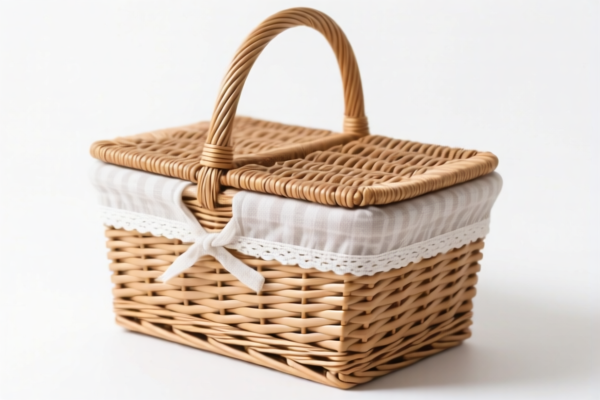
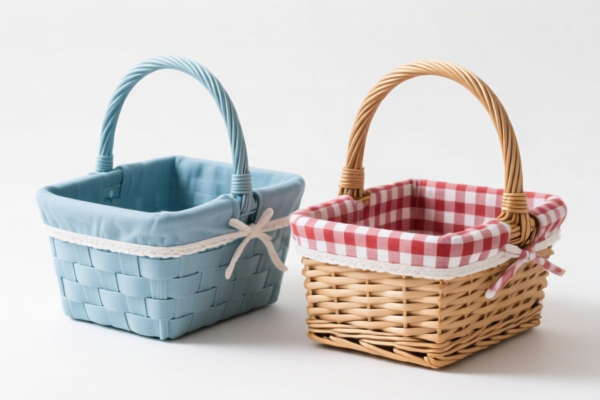
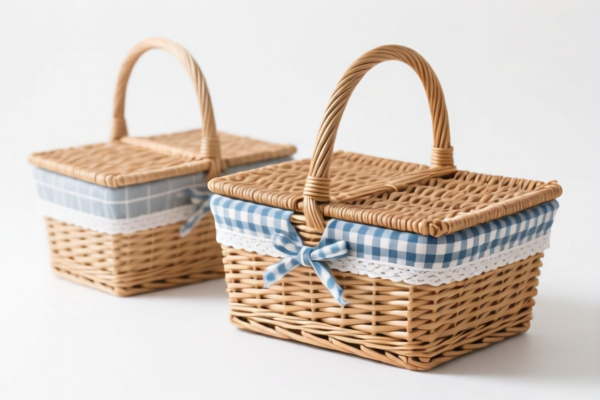
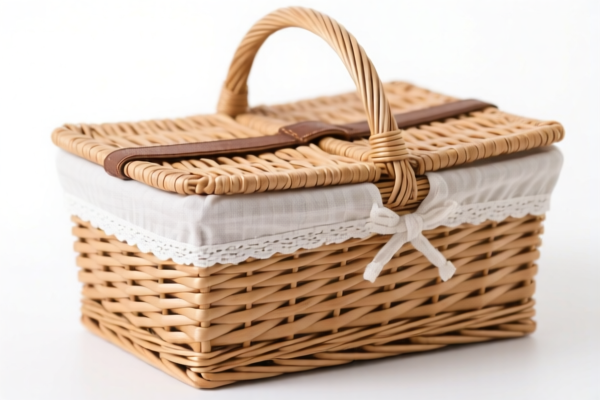
AI Analysis
🧺 Picnic Basket with Plastic or Textile Outer Surface (Insulated Food/Beverage Bags)
🌐 HS Code Reference & Customs Clearance Guide | 2026 Latest Tariff Analysis | Professional Clearance Strategy 📌 I. Product Definition & Classification: What Exactly Is a "Picnic Basket"?
In international trade, the term "Picnic Basket" is rarely a standalone HS Code. It is technically classified under Chapter 42 (Articles of leather or composition leather; traveling bags, etc.).
The critical factor determining your HS Code and tariff rate is Material and Function:
- Insulated Function: If the basket is designed to keep food/drinks hot or cold (often containing foam or thermal lining), it falls under 4202.92 (Insulated food or beverage bags).
- Outer Surface Material:
- Textile Materials (e.g., Polyester, Nylon, Canvas): Generally attract 0% Base Tariff and 0% Section 301/IEEPA Additional Tariff for the specific sub-codes provided in the dataset.
- Plastic Sheeting: Also generally 0% in this specific context for buckets/pails, but "Other" plastic articles may vary.
⚠️ Key Distinction Point: * If the item is a non-insulated wicker/plastic basket used for carrying items, it might fall under 4202.92.08 (Other bags) or potentially 3926 (Plastic articles) if it lacks fabric/leather covering entirely. * However, based on the provided
<DATA>, we focus on Insulated Bags with textile/plastic outer surfaces, which enjoy favorable 0% tax rates in the specific entries listed.
📦 II. HS Code Classification Details (Based on Provided <DATA>)
| HS Code | Product Description | Outer Surface Material | Tax Rate (Total) | Base Tariff | Additional Tariff |
|---|---|---|---|---|---|
4202.92.08.09 |
Insulated food or beverage bags | Textile Materials | 0.0% | 0.0% | 0.0% |
4202.92.08.07 |
Insulated food or beverage bags | Man-made Fibers (Textile) | 0.0% | 0.0% | 0.0% |
3926.90.10.00 |
Buckets and pails (Plastic) | Plastic | 0.0% | 0.0% | 0.0% |
3926.90.99.89 |
Other articles of plastics | Plastic | 12.8% | 5.3% | 7.5% |
🔍 Important Note on "Picnic Baskets": * If your "Picnic Basket" is essentially a soft-sided cooler bag with zippers and handles, it is correctly classified under 4202.92.08. * If it is a hard-sided rigid container (like a plastic pail or rigid basket) without textile/leather covering, it may fall under 3926.90.10.00 (Buckets/Pails) or 3926.90.99.89. * Crucial: The Textile/Man-made Fiber options under 4202 offer 0% total tax, while the General Plastic option (3926.90.99.89) incurs a 12.8% total tax.
💰 III. 2026 Latest Tariff Rate Breakdown (Detailed Analysis)
✅ Applicable Country: United States (US) ✅ Origin: China (CN) [Assumed based on standard trade context, verify if applicable] ✅ Effective Time: Current USITC/IEEPA Regulations
🎯 1. 4202.92.08.09 & 4202.92.08.07 —— Insulated Food/Beverage Bags (Textile/Man-Made Fiber)
| Item | Content |
|---|---|
| Product Type | Soft-sided insulated bags, totes, or baskets with textile outer surface. |
| Base Tariff | 0.0% |
| Additional Tariff (Section 301 / IEEPA) | 0.0% |
| Total Effective Tax Rate | 0.0% |
| Tax Calculation | Duty = CIF Value × 0% = $0 |
| De Minimis Eligibility | ✅ Yes (Likely eligible under $800 threshold if shipped via small parcel, subject to CBP enforcement). |
| Legal Basis | HS Heading 4202; Subheading 4202.92.08. |
📌 Explanation: * These items are considered "Traveling bags" or "Shopping bags" with insulation. * The US government currently imposes zero additional duties on these specific textile-based insulated containers from China. * This makes them a highly competitive product for US importers compared to plastic alternatives that may face higher duties.
🎯 2. 3926.90.10.00 —— Buckets and Pails (Plastic)
| Item | Content |
|---|---|
| Product Type | Rigid plastic containers, buckets, pails. |
| Base Tariff | 0.0% |
| Additional Tariff | 0.0% |
| Total Effective Tax Rate | 0.0% |
| Tax Calculation | Duty = CIF Value × 0% = $0 |
📌 Explanation: * If the "Picnic Basket" is a rigid plastic bucket/pail style, it benefits from the same 0% total tax.
⚠️ 3. 3926.90.99.89 —— Other Plastic Articles (Non-Bucket)
| Item | Content |
|---|---|
| Product Type | Other plastic articles not specified elsewhere (e.g., decorative plastic baskets not classified as buckets). |
| Base Tariff | 5.3% |
| Additional Tariff (Section 301) | 7.5% |
| Total Effective Tax Rate | 12.8% |
| Tax Calculation | Duty = CIF Value × 12.8% |
📌 Warning: * Do not misclassify an insulated textile basket as a "general plastic article." * If you ship a plastic basket that is NOT a "bucket/pail," you risk facing 12.8% duty. * Always ensure the description matches "Insulated bag" (if soft) or "Bucket" (if rigid) to qualify for 0%.
🛠️ IV. Customs Clearance Practical Advice (Real-World Pitfall Guide)
✅ 1. Required Documentation Checklist
| Document | Mandatory? | Notes |
|---|---|---|
| ✅ Commercial Invoice | ✔️ | Must clearly state "Insulated Food Bag" or "Picnic Basket." |
| ✅ Material Composition | ✔️ | Specify % of Polyester/Nylon (for 4202) or type of plastic. |
| ✅ Product Photos | ✔️ | Show insulation lining (if applicable) to prove it's an "insulated bag." |
| ✅ Packaging List | ✔️ | Confirm no other goods mixed in. |
| ✅ Origin Certificate | ✔️ | If claiming preferential rates under other FTAs (not applicable here for China-US). |
✅ 2. Declaration Tips (Key Mnemonic)
🔥 “Insulated = Textile/Bag = 0% Tax” “Rigid Plastic Bucket = 0% Tax” “Other Plastic Article = 12.8% Tax!”
| Scenario | Correct HS Code | Error to Avoid |
|---|---|---|
| Soft-sided cooler bag with handles | 4202.92.08.09 |
Misclassifying as "Plastic Article" (3926.90.99.89) → 12.8% Penalty |
| Rigid plastic ice bucket | 3926.90.10.00 |
Misclassifying as "Bucket of Leather" → High Duty |
| Wicker basket with plastic liner | 4202.92.08.09 |
Misclassifying as "Basket" (4601) → Check Duty |
✅ 3. Special Considerations
| Case | Handling Advice |
|---|---|
| Hybrid Materials | If the outer surface is Plastic-coated Fabric, it is still considered Textile (4202) if the fabric provides the essential character. |
| Empty vs. Lined | Ensure the item has insulation or is marketed as a "Bag" for food. If it's just a woven basket with no lining, it might fall under Chapter 46 (Plaiting materials) or 4602, which has different duties. |
| De Minimis ($800) | Since the tax is 0%, small shipments under $800 are extremely low risk and fast to clear. |
🌍 V. Global Market Comparison (2026)
| Country/Region | Recommended HS Code | Duty Rate (China Origin) | Notes |
|---|---|---|---|
| 🇺🇸 USA | 4202.92.08.09 |
0.0% | Best option for textile-based picnic bags. |
| 🇨🇳 China | 4202.92.08.09 |
10-12% | Import duty into China is higher. |
| 🇪🇺 EU | 4202.92.00 |
4.0% - 6.0% | Check local VAT. No Section 301 equivalent. |
| 🇬🇧 UK | 4202.92.00 |
4.0% | Post-Brexit rules apply. |
📌 VI. Common Errors & Pitfalls (Lessons Learned)
❌ Error 1: Classifying a Textile Insulated Bag as "Other Plastic Articles" (3926.90.99.89) 👉 Consequence: Pay 12.8% instead of 0%. Loss of profit.
❌ Error 2: Declaring a Rigid Plastic Basket as an "Insulated Bag" 👉 Consequence: Customs may reject it if no insulation is found. May reclassify to 3926.90.99.89 (12.8%) or 3926.90.10.00 (0%) if deemed a bucket.
❌ Error 3: Ignoring Lining Material 👉 Consequence: If the outer is textile but the inner is plastic, it is still Textile for classification purposes. Ensure the invoice reflects "Textile Outer Surface."
✅ Correct Declaration Example:
"Insulated Picnic Basket, Outer Surface: Polyester Textile, Lining: Foamed PE, With Handles, Model XYZ"
🎯 VII. Conclusion: Professional Classification for Cost Savings
🎯 Remember the Golden Rule:
🔹 Textile Outer + Insulated = 0% Duty (4202.92.08) 🔹 Plastic Bucket/Pail = 0% Duty (3926.90.10) 🔹 Other Plastic Articles = 12.8% Duty (3926.90.99.89)
📌 Pro Tip: If you are importing from China, always opt for Textile-based (4202) or Bucket (3926.10) designs to maximize the 0% tariff advantage. Avoid "Other Plastic" categories unless necessary, as the 12.8% duty significantly impacts margins.
📣 Immediate Action:
📞 Verify your product's outer material (Textile vs. Plastic). 📦 Use
4202.92.08.09for textile picnic bags/baskets. 🚀 Save 12.8% by correct classification!
✨ Smart Classification Starts with Details! 💼 Your Profit Margin Depends on the First 4 Digits of the HS Code!
Customer Reviews
About HS Code Classification
The Harmonized System (HS) is an internationally standardized nomenclature developed by the World Customs Organization (WCO) to classify traded products. Over 200 countries use the HS system as the basis for customs tariffs, trade statistics, and import/export regulations.
Each HS code follows a hierarchical structure:
- Chapter (2 digits) — Broad category of goods (e.g., Chapter 84: Machinery and Mechanical Appliances)
- Heading (4 digits) — More specific grouping within the chapter
- Subheading (6 digits) — Internationally standardized breakdown, used by all WCO member countries
- National subdivisions (8-10 digits) — Country-specific extensions for further classification, such as US HTSUS 10-digit codes
Correct HS code classification is essential for smooth customs clearance, accurate duty payment, and compliance with trade regulations. Misclassification can lead to customs delays, overpayment of duties, or penalties.
When importing from CN to US, the applicable tariff rates may include:
- Most-Favored-Nation (MFN) rate — The standard duty rate applied to WTO members
- General rate — Applied to countries without trade agreements
- Trade remedy duties — Additional tariffs such as Section 301 (anti-dumping), Section 232 (national security), or countervailing duties
The information provided on this page is for reference purposes only. For official classification, please consult with your local customs authority or a licensed customs broker.