Picnic Woven Basket
CN → US| HS Code | Tariff Rate | Origin | Destination | Doc |
|---|---|---|---|---|
| 4602110900 | 45.0% | CN | US | Official Doc |
| 4602110700 | 35.0% | CN | US | Official Doc |
| 4601920500 | 37.7% | CN | US | Official Doc |
| 3926909989 | 22.8% | CN | US | Official Doc |
Product Images
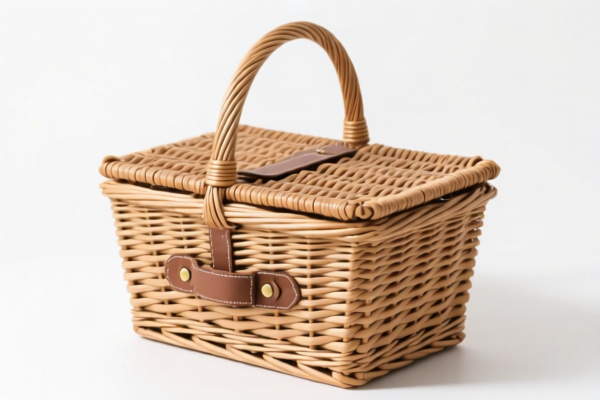
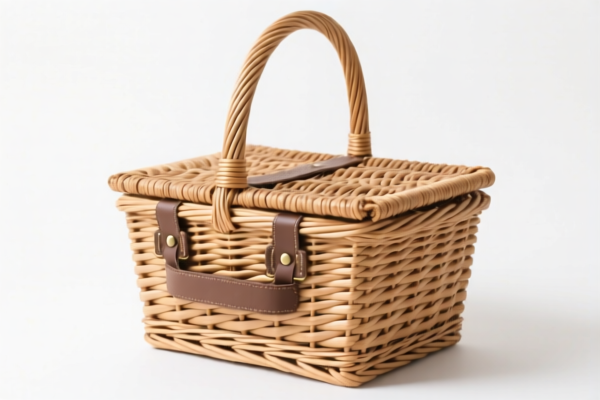
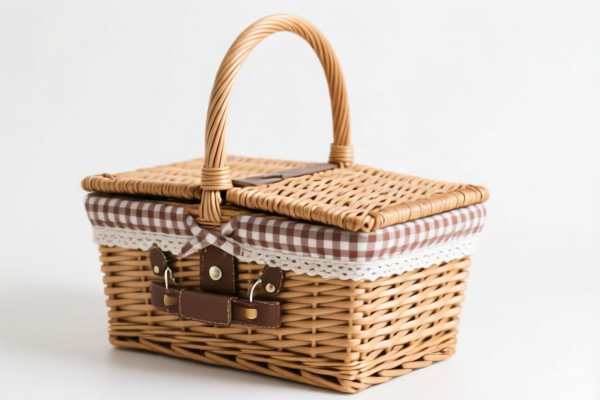
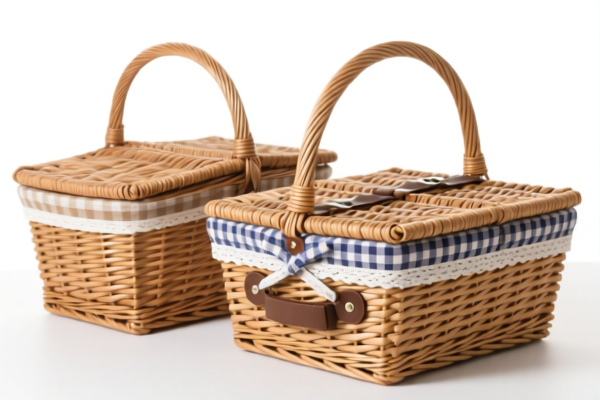
AI Analysis
🧺 Picnic Woven Basket (Plant-Based & Synthetic Variants)
🌐 HS Code Reference & Customs Clearance Guide | 2026 Latest Tariff Analysis | Professional Entry Strategies
📌 I. Product Definition & Classification: Do You Really Understand the "Woven Basket"?
The Picnic Woven Basket is a versatile storage and presentation item, widely used for food transport, outdoor activities, and home organization. In international trade, its classification depends heavily on material composition and manufacturing technique. It generally falls into two broad categories:
1. Vegetable Plaiting Materials (Ch. 46): - Plant-based Materials: Made from bamboo, rattan, willow, reed, or straw. These are considered "plaiting materials" or "products of plaiting materials." - Key Feature: Natural origin, flexible stems/branches woven together.
2. Plastic Products (Ch. 39): - Synthetic Materials: Made from plastic fibers, wicker-effect plastic, or PVC/PE strands that mimic natural weaving. - Key Feature: Synthetic origin, uniform texture, often machine-woven.
⚠️ Critical Distinction:
- If the basket is made of natural plant fibers (bamboo, rattan, etc.) → It belongs to Chapter 46 (Vegetable Plaiting Materials).
- If the basket is made of plastic strands designed to look like woven material → It belongs to Chapter 39 (Plastics and Articles Thereof).
- Note: Misclassification here can lead to significant tax differences (45% vs. 22.8%) and potential customs delays.
📦 II. HS Code Classification Details (2026 Latest Tariff Authority Comparison)
Based on the provided data, the following HS Codes are relevant for Picnic Woven Baskets imported into the USA from China:
| HS Code | Product Description | Material Inference | Key Characteristics |
|---|---|---|---|
4602.11.09.00 |
Woven articles of vegetable plaiting materials; baskets, basketware, and other goods | Plant-based (Bamboo, Rattan, etc.) | Classic "Picnic Basket" shape. Natural weaving. High tax impact due to specific subheading. |
4602.11.07.00 |
Woven articles of vegetable plaiting materials; baskets, basketware, and other goods | Plant-based (Bamboo, Willow, etc.) | Similar to above but may differ in specific weaving technique or product form under the same chapter. Lower base tariff. |
4601.92.05.00 |
Woven mats, matting, screens, and similar products of vegetable plaiting materials; other | Plant-based (Inferred from craft context) | May apply if the item is considered a "woven product" rather than a finished "basket" or if the form is less structured. |
3926.90.99.89 |
Other articles of plastics and articles of other materials of heading 3901 to 3914; other | Plastic/Synthetic (Plastic fibers mimicking weave) | "Plastic wicker." Looks like a basket but is made of synthetic strands. Lower total tax rate. |
🔍 Key Insight:
- Ch. 46 (Plant Materials): Generally faces higher tariffs (45% or 37.7%) due to the combination of base duties and Section 301/122 additional duties.
- Ch. 39 (Plastics): Faces lower tariffs (22.8%) because the base duty is lower (5.3%) and Section 301 duties may be reduced (7.5% vs. 25%).
- Clarification: The data shows4602.11.09.00and4602.11.07.00both list baskets, suggesting fine distinctions in weaving style or exact product form within the "baskets" subheading.
💰 III. 2026 Latest Tariff Rate Breakdown (Including Additional Duties & Policy Surcharges)
✅ Applicable Country: United States (US)
✅ Country of Origin: China (CN)
✅ Effective Time: Current tariffs apply (Section 301 and IEEPA provisions active)
🎯 1. 4602.11.09.00 —— Woven Basket (Plant Material: Bamboo/Rattan)
| Item | Content |
|---|---|
| Base Tariff | 10.0% (ad valorem) |
| Section 301 Additional Duty | +25.0% (List 4A/B/C/D) |
| 122-Clause Duty | +10.0% (Section 122 of the Trade Act) |
| Total Tax Rate | 45.0% |
| Tax Calculation | CIF Value × 45% |
| De Minimis Eligibility | ❌ No (High tax rate exceeds de minimis threshold benefits) |
| Legal Basis Path | HTSUS:4602.11.09.00 → USITC:301_25% → USITC:122_10% |
📌 Explanation:
- This is the highest tax bracket for woven baskets.
- The 25% is from the ongoing US-China trade tensions (Section 301).
- The 10% is an additional safeguard or specific trade remedy duty.
- Total 45% makes this product highly sensitive to price increases.
🎯 2. 4602.11.07.00 —— Woven Basket (Plant Material: Willow/Bamboo)
| Item | Content |
|---|---|
| Base Tariff | 0.0% (ad valorem) |
| Section 301 Additional Duty | +25.0% |
| 122-Clause Duty | +10.0% |
| Total Tax Rate | 35.0% |
| Tax Calculation | CIF Value × 35% |
| De Minimis Eligibility | ❌ No |
| Legal Basis Path | HTSUS:4602.11.07.00 → USITC:301_25% → USITC:122_10% |
📌 Note:
- Significant Savings: Compared to4602.11.09.00, this code saves 10% (35% vs 45%) because the base duty is 0%.
- Strategy: If your basket is made of willow or certain types of bamboo weaving, check if it qualifies for4602.11.07.00instead of09.00.
🎯 3. 4601.92.05.00 —— Woven Matting/Products (Plant Material)
| Item | Content |
|---|---|
| Base Tariff | 2.7% (ad valorem) |
| Section 301 Additional Duty | +25.0% |
| 122-Clause Duty | +10.0% |
| Total Tax Rate | 37.7% |
| Tax Calculation | CIF Value × 37.7% |
| De Minimis Eligibility | ❌ No |
| Legal Basis Path | HTSUS:4601.92.05.00 → USITC:301_25% → USITC:122_10% |
📌 Observation:
- This code is typically for mats, screens, or less structured woven goods.
- If your "basket" is actually a mat or a loosely woven container that doesn't fit the strict "basket" definition of Chapter 46.2, this code might apply.
- 37.7% is still high, but better than09.00.
🎯 4. 3926.90.99.89 —— Other Plastic Articles (Synthetic Weave)
| Item | Content |
|---|---|
| Base Tariff | 5.3% (ad valorem) |
| Section 301 Additional Duty | +7.5% (Reduced from 25% for some plastic articles under specific conditions/updates) |
| 122-Clause Duty | +10.0% |
| Total Tax Rate | 22.8% |
| Tax Calculation | CIF Value × 22.8% |
| De Minimis Eligibility | ❌ No |
| Legal Basis Path | HTSUS:3926.90.99.89 → USITC:301_7.5% → USITC:122_10% |
📌 Strategic Advantage:
- Lowest Tax Rate: 22.8% is significantly lower than plant-based options.
- Material: This applies to plastic wicker or synthetic fiber baskets.
- Action: If your product is made of plastic (even if it looks like bamboo), classify it here to save over 20 percentage points in taxes.
🛠️ IV. Customs Clearance Practical Advice (Battle-Tested Pitfall Guide)
✅ 1. Required Documentation Checklist (Non-Negotiable)
| Document | Required? | Description |
|---|---|---|
| ✅ Product Composition Report | ✔️ | Must explicitly state Material Percentage (e.g., "100% Bamboo" or "100% Polyethylene Plastic"). |
| ✅ Product Photos | ✔️ | Clear images showing the weaving texture. Natural fibers look different from plastic strands. |
| ✅ Commercial Invoice | ✔️ | Clearly state: "Woven Picnic Basket, Made of [Material]". Do NOT just write "Basket". |
| ✅ Packing List | ✔️ | Include dimensions and weight to verify it fits standard basket classifications. |
| ✅ Fiber Test Report (If Disputed) | ✔️ | If customs doubts the material, a lab report proving it's plant-based or plastic is critical. |
✅ 2. Classification Strategy (Key Mantras)
🔥 “Material is King, Look is Deceiving, Plastic Saves Money!”
| Scenario | Correct HS Code | Incorrect HS Code | Consequence |
|---|---|---|---|
| Natural Bamboo/Rattan Basket | 4602.11.09.00 or 4602.11.07.00 |
3926.90.99.89 |
Overpayment? No, Underpayment → Penalty + Back Duties. |
| Plastic "Wicker" Basket | 3926.90.99.89 |
4602.11.09.00 |
Overpayment (35-45% vs 22.8%). Lost Profit. |
| Bamboo Mat used as Basket | 4601.92.05.00 |
4602.11.09.00 |
Slight tax saving, but risk of misclassification if structure is basket-like. |
| Mixed Material (Bamboo Frame + Plastic Lining) | Depends on Essential Character | Mixed code | Customs may classify based on the main material. |
✅ 3. Special Cases & Handling
| Case | Handling Advice |
|---|---|
| "Eco-Friendly" Plastic | Even if marketed as "eco-friendly," if it's plastic, use Ch. 39. Do NOT misdeclare as natural to avoid fraud allegations. |
| Mixed Packaging (Basket + Cutlery) | If the basket is the primary item, classify the whole set as a basket. If cutlery is separate, declare separately. |
| Bamboo vs. Willow | Check if your specific weaving style fits 4602.11.07.00 (0% base) vs 4602.11.09.00 (10% base). Consult a customs broker for precise fit. |
| Section 122 Duty (10%) | This applies to both Ch. 46 and Ch. 39 in the provided data. No avoidance here. Focus on reducing base duty and Section 301 rate. |
🌍 V. Global Market Comparison (2026 Latest)
| Country/Region | Recommended HS Code | Estimated Tax (China Origin) | Certification | Notes |
|---|---|---|---|---|
| 🇺🇸 USA | 3926.90.99.89 (Plastic) |
22.8% | None specific | Best for Profit. Plant-based: 35-45% |
| 🇺🇸 USA | 4602.11.07.00 (Willow) |
35.0% | None specific | Good for Natural. 0% Base Duty helps. |
| 🇨🇳 China | 4602.11.09.00 |
~10-14% | CCC (if applicable) | Export from China is easy; focus on US import costs. |
| 🇪🇺 EU | 4602.11.09.00 |
0% - 6% (Most Favored) | FSC (if timber) | EU has lower tariffs on plant baskets. |
| 🇬🇧 UK | 4602.11.09.00 |
0% - 6% | None | Post-Brexit, UK follows similar structure. |
📌 Conclusion:
- USA is the most expensive market for woven baskets due to Section 301 and 122 duties.
- Plastic baskets (Ch. 39) offer the best cost efficiency in the US market (22.8% total).
- Natural baskets are taxed heavily (35-45%). Consider sourcing from non-China origins (e.g., Vietnam, Indonesia) if possible to mitigate Section 301 duties.
📌 VI. Common Mistakes & Pitfall Guide (Lessons Learned the Hard Way)
❌ Mistake 1: Declaring Plastic Baskets as Natural Bamboo
👉 Consequence: Customs lab test reveals plastic → Penalty + Retroactive 22.8% vs 45%? No, they will assess the higher duty if you under-declared, or penalize for fraud. Also, risk of seizure.
❌ Mistake 2: Using Generic Terms like "Woven Container"
👉 Consequence: Customs may assign the highest default duty rate or delay clearance for further inspection. Always specify material.
❌ Mistake 3: Ignoring Section 122 Duties
👉 Consequence: All HS Codes in the provided data include a 10% 122-Clause Duty. If you forget this, your cost calculation will be wrong by 10% on the CIF value.
❌ Mistake 4: Assuming De Minimis (Section 321) Applies
👉 Consequence: Baskets with >22.8% tax do NOT qualify for de minimis entry. Must file formal entry (Form 7501). Small shipments will still face full duties.
✅ Correct Approach:
"Woven Picnic Basket, Made of 100% High-Density Polyethylene (HDPE) Plastic Strands, Model PB-100"
→ Use HS Code 3926.90.99.89 → 22.8% Total Tax.
🎯 VII. Conclusion: Smart Classification, Maximize Margins!
🎯 Remember the Mantra:
🔹 “Plastic is Cheaper, Natural is Pricier, Check the Base Duty First!”
🔹 “22.8% for Plastic, 35-45% for Plant, Don’t Guess, Verify!”
📌 Pro Tip:
If you sell natural bamboo baskets, consider sourcing from Vietnam or Indonesia to avoid Section 301 duties (25%). Even with 122 duties, total tax may drop to 10-15%.
For plastic baskets, the China origin + 22.8% total is still competitive.
📣 Immediate Action:
📞 Contact your Customs Broker: Provide material samples and photos.
📄 Request an Advance Ruling (Preliminary Determination): Get official HS Code confirmation before shipping large volumes.
🚀 Optimize Cost: Choose Plastic (3926.90.99.89) for US market if possible to save ~15-22% in taxes.
✨ Professional Clearance Starts with Accurate Classification!
💼 Your Margin Depends on the HS Code!
Customer Reviews
About HS Code Classification
The Harmonized System (HS) is an internationally standardized nomenclature developed by the World Customs Organization (WCO) to classify traded products. Over 200 countries use the HS system as the basis for customs tariffs, trade statistics, and import/export regulations.
Each HS code follows a hierarchical structure:
- Chapter (2 digits) — Broad category of goods (e.g., Chapter 84: Machinery and Mechanical Appliances)
- Heading (4 digits) — More specific grouping within the chapter
- Subheading (6 digits) — Internationally standardized breakdown, used by all WCO member countries
- National subdivisions (8-10 digits) — Country-specific extensions for further classification, such as US HTSUS 10-digit codes
Correct HS code classification is essential for smooth customs clearance, accurate duty payment, and compliance with trade regulations. Misclassification can lead to customs delays, overpayment of duties, or penalties.
When importing from CN to US, the applicable tariff rates may include:
- Most-Favored-Nation (MFN) rate — The standard duty rate applied to WTO members
- General rate — Applied to countries without trade agreements
- Trade remedy duties — Additional tariffs such as Section 301 (anti-dumping), Section 232 (national security), or countervailing duties
The information provided on this page is for reference purposes only. For official classification, please consult with your local customs authority or a licensed customs broker.