Picture Hanging Bracket
CN → US| HS Code | Tariff Rate | Origin | Destination | Doc |
|---|---|---|---|---|
| 3926909989 | 22.8% | CN | US | Official Doc |
| 9701990000 | 17.5% | CN | US | Official Doc |
| 9701910000 | 17.5% | CN | US | Official Doc |
| 3926400090 | 15.3% | CN | US | Official Doc |
| 4414900000 | 21.4% | CN | US | Official Doc |
Product Images
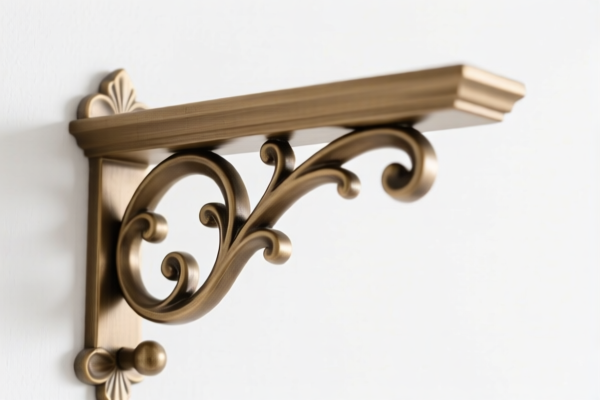
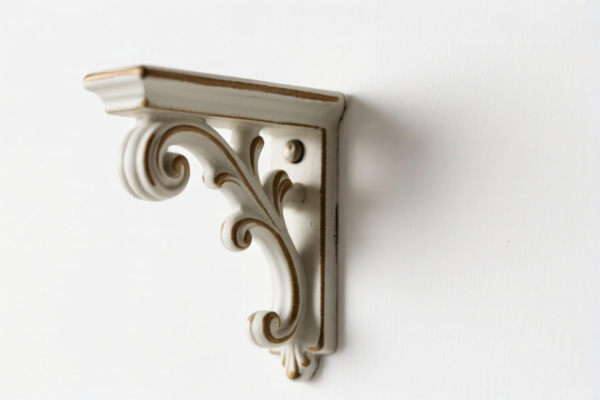
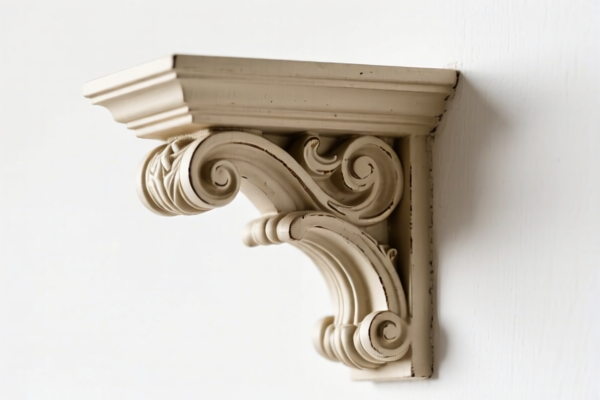

AI Analysis
🖼️ Picture Hanging Bracket (Wall Mounting Hardware)
🌐 HS Code Reference & Customs Clearance Guide | 2026 Latest Tariff Analysis | Professional-Level Clearance Strategy
📌 Part 1: Product Definition & Classification: Do You Really Understand “Picture Hanging Brackets”?
Picture hanging brackets are essential hardware components used to suspend artwork, mirrors, frames, or heavy décor on walls. In international trade, they fall under Base Metal Mountings, Fittings, and Similar Articles. However, their specific HS Code classification depends heavily on their material, intended application (building vs. furniture), and design features.
⚠️ Key Distinction Point:
- If the bracket is designed specifically for building structures (walls, windows, doors, stairs) → It falls under 8302.41.60 or 8302.41.90.
- If the bracket is designed for furniture (e.g., hanging art from inside a cabinet) → It may fall under a different heading (not covered in ).
- If it is made of iron/steel, aluminum, or zinc, the tariff implications vary significantly due to Section 301 and IEEPA additional duties.
📦 Part 2: HS Code Classification Details (2026 Latest Tariff Authority Comparison)
Based on the provided data, Picture Hanging Brackets intended for building applications (most common for wall-mounted art/mirrors) are classified as follows:
| HS Code | Product Description | Application Scenario | Material | Tax Status |
|---|---|---|---|---|
8302.41.60.80 |
Other mountings, fittings, similar articles; Suitable for buildings; Of iron or steel, of aluminum, or of zinc | Wall hooks, heavy-duty picture hangers, metal brackets for interior/exterior walls | Iron, Steel, Aluminum, Zinc | 🚨 High Tax (50.0%) |
8302.41.90.80 |
Other mountings, fittings, similar articles; Suitable for buildings; Other | Brackets not made of iron/steel/aluminum/zinc (e.g., plastic, wood, ceramic bases with metal pins) | Non-base metal or mixed materials (not specified as Fe/Al/Zn) | ✅ Low Tax (0.0%) |
🔍 Critical Reminder:
- Most metal picture hanging brackets (steel, aluminum, zinc alloys) fall under8302.41.60.80.
- The phrase "Of iron or steel, of aluminum or of zinc" is the key determinant. If your product is primarily metallic, it triggers the 50% additional duty.
-8302.41.90.80is a "catch-all" for non-metallic or unspecified materials. If you can prove the bracket is not primarily made of Fe/Al/Zn (e.g., a plastic clip with a tiny steel pin), you might qualify for 0%, but this is risky and requires strong documentation.
💰 Part 3: 2026 Latest Tariff Rate Breakdown (Including Additional Duties & Policy Surcharges)
✅ Applicable Country: United States (US)
✅ Country of Origin: China (CN)
✅ Effective Date: 2025+ (Current Policy)
🎯 1. 8302.41.60.80 —— Base Metal Mountings (Suitable for Buildings)
| Item | Content |
|---|---|
| Base Duty Rate | 0.0% |
| Section 301 Additional Duty | +50% (Steel, Aluminum, Copper Products Surcharge) |
| IEEPA Additional Duty | 0.0% (Not listed for this code in ) |
| Total Tax Rate | 50.0% |
| Tax Calculation | CIF Value × 50% |
| De Minimis Exemption Eligible? | ❌ No (High duty rate usually excludes de minimis benefits for direct shipments) |
| Legal Basis Path | USITC:8302.41.60.80 → FOOTNOTE:Steel/Aluminum/Copper Surcharge 50% |
📌 Explanation:
- Although the base MFN duty is 0%, the Section 301 additional duty of 50% applies because the product is made of base metals (iron, steel, aluminum, zinc) and is suitable for buildings.
- This is a high-cost category. For a $1,000 shipment, you pay $500 in duties.
- Note: The data explicitly states "Steel, Aluminum, Copper Products Surcharge: 50%" for this HS code.
🎯 2. 8302.41.90.80 —— Other Base Metal Mountings (Suitable for Buildings)
| Item | Content |
|---|---|
| Base Duty Rate | 0.0% |
| Section 301 Additional Duty | 0.0% (Not listed for this code in ) |
| IEEPA Additional Duty | 0.0% |
| Total Tax Rate | 0.0% |
| Tax Calculation | CIF Value × 0% |
| De Minimis Exemption Eligible? | ✅ Yes (Likely eligible due to 0% total duty) |
| Legal Basis Path | USITC:8302.41.90.80 |
📌 Caution:
- This code applies only if the product is NOT primarily made of iron, steel, aluminum, or zinc.
- If customs inspectors determine the bracket is metallic (even if it has a plastic coating or small steel pin), they may reclassify it to8302.41.60.80and assess the 50% duty.
- Risk: Misclassification can lead to back duties + penalties.
🛠️ Part 4: Customs Clearance Practical Advice (Real-World Pitfall Guide)
✅ 1. Required Documentation Checklist (None of these are optional)
| Document | Required | Explanation |
|---|---|---|
| ✅ Product Specification Sheet | ✔️ | Must detail material composition (e.g., "Stainless Steel 304", "Aluminum Alloy 6061") |
| ✅ Material Test Report | ✔️ | Prove if the bracket is NOT primarily Fe/Al/Zn if claiming 8302.41.90.80 |
| ✅ Product Photos (Clear) | ✔️ | Show mounting method, hooks, brackets, and any labels |
| ✅ Commercial Invoice | ✔️ | Clearly state: "Picture Hanging Bracket, Wall Mount, Aluminum Alloy" |
| ✅ Packing List | ✔️ | List items clearly; avoid vague terms like "Hardware" |
| ✅ Use Case Description | ✔️ | Specify: "For interior wall mounting of artwork/mirrors in residential/commercial buildings" |
✅ 2. Declaration Tips (Key Mantra)
🔥 “Metal Brackets = 50% Tax; Non-Metal = 0% Risk; Be Specific, Avoid Ambiguity!”
| Scenario | Correct Declaration | Wrong Practice |
|---|---|---|
| Standard Steel Hook | 8302.41.60.80 – "Steel Picture Hanger for Wall" |
Vague: "Hardware" → High risk of reclassification |
| Aluminum Bracket | 8302.41.60.80 – "Aluminum Wall Mount Bracket" |
Vague: "Metal Bracket" → 50% duty applies |
| Plastic Hook with Steel Pin | Risky: Likely still 8302.41.60.80 |
Claiming 8302.41.90.80 without proof → Penalty risk |
| Wood/Metal Composite | 8302.41.90.80 (if wood is primary) |
Misdeclaring as "Metal" → 50% duty |
✅ 3. Special Case Handling
| Scenario | Handling Advice |
|---|---|
| Plated Steel Brackets | Still classified as "Iron or Steel". Plating does not exempt from 50% duty. |
| Brackets with Plastic Coating | If the base material is steel/aluminum, it is still 8302.41.60.80. |
| Non-Building Use | If the bracket is for furniture (e.g., hanging art inside a bookshelf), it may fall under 8302.10 (not in ). Ensure clear description: "Furniture Mounting Bracket, Not for Building Use". |
| Mixed Materials | Provide material breakdown. If >50% by weight is non-metal, consider 8302.41.90.80. |
🌍 Part 5: Global Market Comparison (2026 Latest)
| Country/Region | Recommended HS Code | Duty Rate | Certification | Note |
|---|---|---|---|---|
| 🇺🇸 United States | 8302.41.60.80 |
50% (Chinese Origin) | None Specific | High duty due to base metal + building use |
| 🇺🇸 United States | 8302.41.90.80 |
0% | None Specific | Only if non-metal (high scrutiny) |
| 🇨🇳 China | 8302.41.60.80 |
~2-5% | None | Lower duty for exports to China |
| 🇪🇺 EU | 8302.41.60 |
0-2.7% | CE (if applicable) | No Section 301 equivalent |
| 🇬🇧 UK | 8302.41.60 |
0-2.7% | UKCA | Post-Brexit tariff independent |
📌 Conclusion:
- US Market is the most expensive for metal picture hanging brackets due to the 50% additional duty.
- If you are sourcing from China and exporting to the US, factor in 50% duty for metal brackets.
- Consider non-metal alternatives (e.g., high-strength plastic, composite materials) if targeting the US market to achieve 0% duty, but ensure durability compliance.
📌 Part 6: Common Mistakes & Pitfalls (Lessons Learned)
❌ Mistake 1: Declaring "Metal Brackets" without specifying material
👉 Consequence: Customs assigns 8302.41.60.80 by default → 50% duty applied.
❌ Mistake 2: Claiming "Plastic Brackets" when they are actually Steel with Plastic Coating
👉 Consequence: Rejected at customs → 50% duty + Penalty + Delay.
❌ Mistake 3: Using vague terms like "Hardware" or "Fittings"
👉 Consequence: Customs has discretion → Likely 50% duty.
❌ Mistake 4: Ignoring "Suitable for Buildings" clause
👉 Consequence: If used for furniture, it should be declared as such, but if used for walls, it is "Building Suitable" → 50% duty.
✅ Correct Approach:
“Picture Hanging Bracket, Wall Mount, Made of 304 Stainless Steel, for Residential Artwork Display”
🎯 Part 7: Conclusion: Professional Declaration, Save Costs, Avoid Risks!
🎯 Remember the Mantra:
🔹 “Steel/Aluminum/Zinc + Building Use = 50% Duty”
🔹 “Non-Metal + Building Use = 0% Duty (with Proof)”
🔹 “Vague Description = High Risk + High Cost”
📌 Pro Tip:
- If your bracket is stainless steel, it is still "Iron or Steel" under HS rules → 50% duty applies.
- For de minimis shipments (under $800), 50% duty may still apply if not exempted by specific trade policies. Always check current IEEPA/Section 301 exemptions.
📣 Immediate Action:
📞 Consult a licensed customs broker + Provide material specs + Apply for Pre-Ruling if high volume
🚀 Optimize your supply chain: Consider non-metal materials for US market to save 50% in duties!
✨ Professional clearance starts with accurate classification!
💼 Every dollar saved in duties is pure profit!
Customer Reviews
About HS Code Classification
The Harmonized System (HS) is an internationally standardized nomenclature developed by the World Customs Organization (WCO) to classify traded products. Over 200 countries use the HS system as the basis for customs tariffs, trade statistics, and import/export regulations.
Each HS code follows a hierarchical structure:
- Chapter (2 digits) — Broad category of goods (e.g., Chapter 84: Machinery and Mechanical Appliances)
- Heading (4 digits) — More specific grouping within the chapter
- Subheading (6 digits) — Internationally standardized breakdown, used by all WCO member countries
- National subdivisions (8-10 digits) — Country-specific extensions for further classification, such as US HTSUS 10-digit codes
Correct HS code classification is essential for smooth customs clearance, accurate duty payment, and compliance with trade regulations. Misclassification can lead to customs delays, overpayment of duties, or penalties.
When importing from CN to US, the applicable tariff rates may include:
- Most-Favored-Nation (MFN) rate — The standard duty rate applied to WTO members
- General rate — Applied to countries without trade agreements
- Trade remedy duties — Additional tariffs such as Section 301 (anti-dumping), Section 232 (national security), or countervailing duties
The information provided on this page is for reference purposes only. For official classification, please consult with your local customs authority or a licensed customs broker.