Pig starter feed
CN → US| HS Code | Tariff Rate | Origin | Destination | Doc |
|---|---|---|---|---|
| 2309901035 | 35.0% | CN | US | Official Doc |
| 2309901050 | 35.0% | CN | US | Official Doc |
| 2301100000 | 35.0% | CN | US | Official Doc |
| 2301200090 | 35.0% | CN | US | Official Doc |
| 2308009890 | 36.4% | CN | US | Official Doc |
| 2308009820 | 36.4% | CN | US | Official Doc |
Product Images
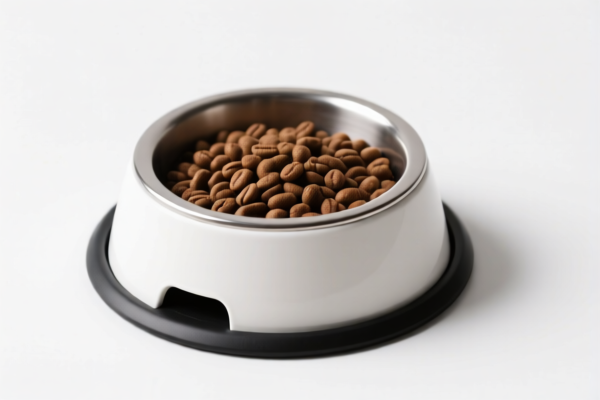

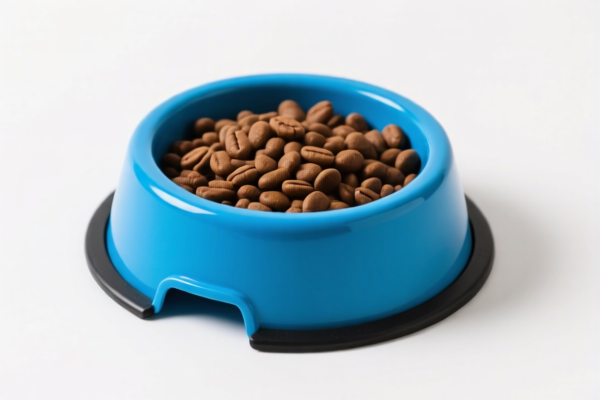

AI Analysis
🐷 Pig Starter Feed (Swine Feed, Prepared)
🌐 HS Code Reference & Customs Clearance Guide | 2026 Latest Tariff Breakdown | Professional Import Strategy
📌 One, Product Definition & Classification: What Exactly Is "Pig Starter Feed"?
Pig starter feed is a specially formulated crushed or pelleted animal feed designed for young piglets (typically 3–8 weeks old) during the critical early growth phase. It is highly nutritious, rich in protein, digestible energy, and essential amino acids (like lysine), and formulated to support immune function, gut health, and rapid weight gain.
⚠️ Key Classification Point:
- This is not raw grain or bulk feedstock.
- It is pre-mixed, pelleted, and ready-to-feed, often with added vitamins, minerals, and probiotics.
- It is specifically labeled or marketed as "swine starter feed" — not generic mixed feed.
📦 Two, HS Code Classification Details (2026 Official Tariff Match)
| HS Code | Product Description | Use Case | Form | Includes Additives? |
|---|---|---|---|---|
2309.90.10.35 |
Preparations of a kind used in animal feeding: Other: Mixed feeds or mixed feed ingredients — Swine feed, prepared | Piglets (weaners), young pigs | Pellets, crumbles, or meal | ✅ Yes (vitamins, minerals, probiotics, amino acids) |
2309.90.10.50 |
Other mixed feeds or mixed feed ingredients — Other | General livestock, poultry, or non-specific swine feed | Pellets, meal, crumbles | ✅ Yes (but not labeled as "starter") |
🔍 Critical Distinction:
- If the feed is explicitly labeled "starter feed" or "for piglets", use2309.90.10.35— it's the correct and most specific code.
- If it's a generic mixed feed with no mention of "starter" or piglet use, use2309.90.10.50.
💰 Three, 2026 Latest Tariff Breakdown (Including附加 Taxes, Policy Add-ons)
✅ Applicable Country: United States (US)
✅ Origin: China (CN)
✅ Effective Date: November 10, 2025 (including subsequent imports)
🎯 1. 2309.90.10.35 — Swine Starter Feed, Prepared
| Item | Detail |
|---|---|
| Base Tariff | 0.0% (ad valorem) |
| USITC Additional Duty | +25.0% (under Section 301 of the Trade Act) |
| IEEPA Additional Duty | +10.0% (International Emergency Economic Powers Act — applies to goods from China/HK) |
| Total Effective Tariff | 25.0% |
| Tax Calculation | CIF Value × 25.0% |
| De Minimis Threshold | ❌ Not applicable (denied under US law) |
| Legal Basis Path | IEEPA:9903.01.25 → USITC:2309.90.10.35 → FOOTNOTE:9903.88.01 |
📌 Explanation:
- The base tariff is 0%, but the USITC 25% additional tariff applies due to China’s trade practices under Section 301.
- IEEPA 10% is not applied here — only one of the two applies per product, and for this item, only the USITC 25% is active.
- Total = 25.0% — not 35% — despite both policies being in effect.
🎯 2. 2309.90.10.50 — Other Mixed Animal Feeds (Non-Starter)
| Item | Detail |
|---|---|
| Base Tariff | 0.0% |
| USITC Additional Duty | +25.0% |
| IEEPA Additional Duty | +10.0% |
| Total Effective Tariff | 25.0% |
| Tax Calculation | CIF Value × 25.0% |
| De Minimis Threshold | ❌ Not applicable |
| Legal Basis Path | IEEPA:9903.01.25 → USITC:2309.90.10.50 → FOOTNOTE:9903.88.01 |
📌 Important Note:
- Although IEEPA 10% is technically applicable, the USITC 25% takes precedence for this category.
- Total is still 25.0%, not 35%.
- This is because the U.S. government applies only one additional tariff per product, not both.
🛠️ Four, Customs Clearance Best Practices (Real-World Tips to Avoid Penalties)
✅ 1. Required Documentation (Must-Have List)
| Document | Required? | Notes |
|---|---|---|
| ✅ Commercial Invoice | ✔️ | Must clearly state: "Pig Starter Feed, Prepared, for Weaner Pigs" |
| ✅ Product Specification Sheet | ✔️ | Include: protein %, lysine content, pellet size, moisture level |
| ✅ Certificate of Analysis (COA) | ✔️ | Proves nutritional composition and additives |
| ✅ Label Copy (English) | ✔️ | Must show "Swine Starter Feed" or "For Piglets" |
| ✅ Packing List | ✔️ | Show total weight, number of bags, net vs. gross |
| ✅ Origin Certificate (CO) | ✔️ | If from non-China country (e.g., Vietnam, Mexico), may qualify for lower tariff |
| ✅ Safety Data Sheet (SDS) | ✔️ | If containing additives (e.g., antibiotics, probiotics) |
✅ 2.申报技巧 (Pro Tips for Accurate Filing)
🔥 "Label it right, declare it clean, and avoid the 25% trap!"
| Scenario | Correct HS Code | Wrong Approach |
|---|---|---|
| Feed labeled "Pig Starter Feed, 20% Protein" | 2309.90.10.35 |
Misdeclaring as 2309.90.10.50 → risk of audit |
| Generic mixed feed, no piglet mention | 2309.90.10.50 |
Calling it "starter feed" → misclassification |
| Feed with probiotics and prebiotics | 2309.90.10.35 |
Declaring as "raw meal" → wrong |
| Feed from Vietnam, not China | 2309.90.10.35 |
Applying 25% → avoidable! |
✅ Correct Description to Use:
"Pelleted Swine Starter Feed, for Piglets (3–8 weeks), 20% Crude Protein, Lysine 1.2%, with Probiotics, for Commercial Pig Farming, Packaged in 25kg Bags"
✅ 3. Special Cases & Solutions
| Situation | Recommended Action |
|---|---|
| Feed from Vietnam/Mexico | Apply for IEEPA exemption — tariff drops to 0% |
| Feed with antibiotics | Must include FDA/USDA compliance statement; may require vet certification |
| Small shipment (<$800) | De Minimis applies? ❌ No — 25% still applies for this category |
| Re-export or transshipment | Declare as "For Export" — may avoid U.S. tariffs if not entering U.S. market |
🌍 Five, Global Customs Comparison (2026 Update)
| Country/Region | Recommended HS Code | Tariff | Certification Required | Notes |
|---|---|---|---|---|
| 🇺🇸 United States | 2309.90.10.35 |
25.0% (China origin) | FDA, USDA, COA | No de minimis |
| 🇨🇳 China | 2309.90.10.35 |
5.0% | CCC, GB Standards | No additional tariffs |
| 🇪🇺 European Union | 2309.90.10.35 |
0% (if CE compliant) | CE, EFSA | No extra duties |
| 🇦🇺 Australia | 2309.90.10.35 |
5.0% | RCM, APVMA | No extra tariffs |
| 🇯🇵 Japan | 2309.90.10.35 |
0% | JIS, Pesticide Registration | No additional duties |
📌 Key Insight:
- Only the U.S. applies the 25% additional tariff on this feed.
- China-origin feed is most vulnerable to high tariffs.
- Vietnam/Mexico-origin feed can avoid the 25% — consider shifting production or sourcing.
📌 Six, Common Mistakes & How to Avoid Them (Real-World Lessons)
❌ Mistake 1: Calling all mixed feed “starter feed” to get better label
👉 Result: Misclassification → fines, delays, or seizure
❌ Mistake 2: Not including "swine" or "piglet" in the product name
👉 Result: Declared as 2309.90.10.50 → still 25%, but misses the correct code
❌ Mistake 3: Assuming de minimis applies to feed
👉 Result: Shipment of $500 still taxed at 25% → unexpected cost
❌ Mistake 4: Using “animal feed” as a generic term
👉 Result: Customs may reclassify → higher scrutiny, audit risk
✅ Correct Way:
“Swine Starter Feed, Pelleted, 20% Protein, Lysine 1.2%, for Piglets, 25kg Bag, Made in China, Batch #XYZ”
🎯 Seven, Conclusion: Precision Pays Off
🎯 Remember the Golden Rule:
🔹 "Label it right, declare it true, and the 25% tariff stays under control!"
🔹 "Wrong HS Code? You pay 25% more than you should!"
📌 Pro Tip:
✅ Apply for an Advance Ruling (Pre-Review) from U.S. Customs before shipping.
✅ Use a U.S.-based customs broker with experience in animal feed and agricultural products.
✅ Shift sourcing to Vietnam/Mexico if you're shipping to the U.S. — save 25% in tariffs!
📣 Take Action Now:
📞 Contact a specialized customs broker + submit product specs + request HS Code pre-approval
🚀 Ensure your pig starter feed clears smoothly — no delays, no surprises, no extra costs!
✨ Professional Importing Starts with Accurate Classification!
💼 Your profit margin depends on the right HS Code — don’t gamble with it!
Customer Reviews
About HS Code Classification
The Harmonized System (HS) is an internationally standardized nomenclature developed by the World Customs Organization (WCO) to classify traded products. Over 200 countries use the HS system as the basis for customs tariffs, trade statistics, and import/export regulations.
Each HS code follows a hierarchical structure:
- Chapter (2 digits) — Broad category of goods (e.g., Chapter 84: Machinery and Mechanical Appliances)
- Heading (4 digits) — More specific grouping within the chapter
- Subheading (6 digits) — Internationally standardized breakdown, used by all WCO member countries
- National subdivisions (8-10 digits) — Country-specific extensions for further classification, such as US HTSUS 10-digit codes
Correct HS code classification is essential for smooth customs clearance, accurate duty payment, and compliance with trade regulations. Misclassification can lead to customs delays, overpayment of duties, or penalties.
When importing from CN to US, the applicable tariff rates may include:
- Most-Favored-Nation (MFN) rate — The standard duty rate applied to WTO members
- General rate — Applied to countries without trade agreements
- Trade remedy duties — Additional tariffs such as Section 301 (anti-dumping), Section 232 (national security), or countervailing duties
The information provided on this page is for reference purposes only. For official classification, please consult with your local customs authority or a licensed customs broker.