Pillow Insert
CN → US| HS Code | Tariff Rate | Origin | Destination | Doc |
|---|---|---|---|---|
| 9404902060 | 23.5% | CN | US | Official Doc |
| 9404901060 | 22.8% | CN | US | Official Doc |
| 6307908995 | 17.0% | CN | US | Official Doc |
| 6307909891 | 24.5% | CN | US | Official Doc |
Product Images
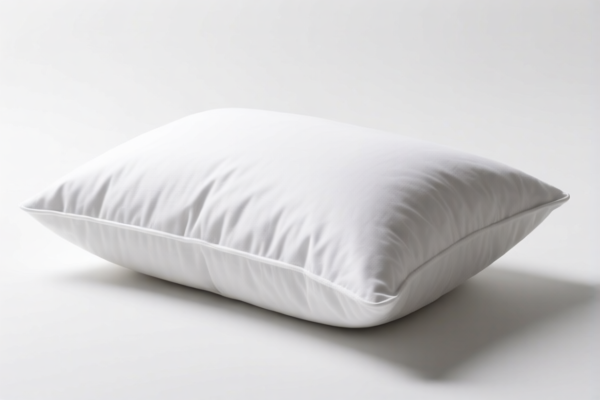
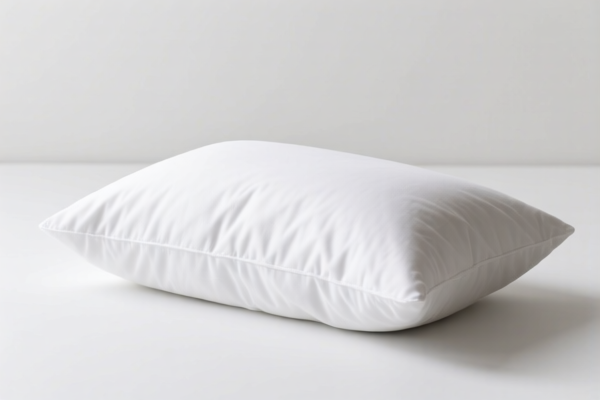
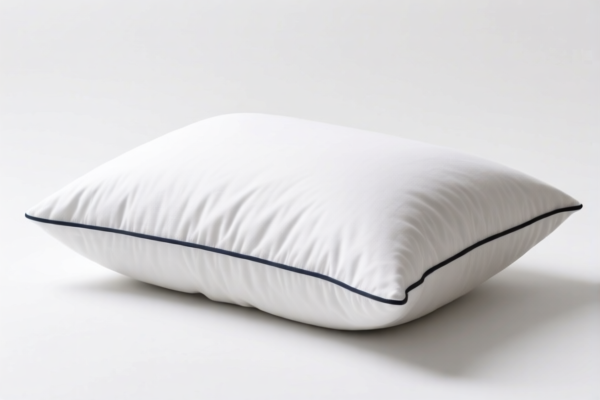
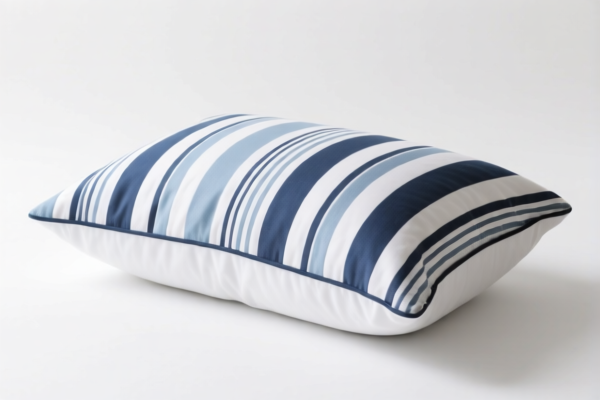
AI Analysis
🛌 Pillow Inserts (Goose Down Fill)
🌐 HS Code Reference & Customs Clearance Guide | 2026 Latest Tariff Analysis | Professional Clearance Strategy
📌 I. Product Definition & Classification: Do You Really Understand "Goose Down Pillow Inserts"?
Pillow inserts, specifically those filled with goose down, are essential bedding products. In international trade, their classification is critical because different HS codes lead to vastly different total tax rates (ranging from 17.0% to 24.5%). The key to accurate classification lies in the specific description provided by customs authorities regarding the form, usage, and material composition.
⚠️ Key Distinction:
- Is it classified as a specific "bedding item" (9404)?
- Or is it classified as a "textile article" (6307)?
- The difference determines your tax burden by up to 7.5%!
📦 II. HS Code Classification Details (2026 Latest Tariff Authority Comparison)
Based on the provided data, here are the four possible HS Code classifications for Goose Down Pillow Inserts:
| HS Code | Product Summary | Application/Usage | Fill Material | Total Tax Rate |
|---|---|---|---|---|
| 9404.90.20.60 | Goose down pillow insert, fill is goose down | Bedding/Pillow use | Goose Down | 23.5% |
| 9404.90.10.60 | Goose down pillow insert, form is pillow, fill is non-foam other fillers | Bedding use | Non-foam fillers* | 22.8% |
| 6307.90.89.95 | Goose down pillow insert, belongs to quilts/pillow inserts category | Textile articles | Goose Down | 17.0% |
| 6307.90.98.91 | Goose down pillow insert, belongs to finished consumer goods | Consumer goods/Textile | Textile/Filler materials | 24.5% |
🔍 Important Note on Data Consistency:
- All entries refer to "Goose Down Pillow Inserts," but the HS Code definition varies slightly in the "Summary" field.
- 9404.90 generally covers "Bedding and similar furnishing articles."
- 6307.90 covers "Other made-up articles, namely finished products."
- Crucial: The tax rate varies significantly based on which specific subheading customs officers assign, depending on how the "pillow insert" is described in commercial invoices (e.g., as a "bedding article" vs. a "textile good").
💰 III. 2026 Latest Tariff Rate Details (Detailed Breakdown of Tax Clauses)
✅ Applicable Country: United States (US)
✅ Origin: China (CN)
✅ Effective Time: Current regulations (Post-2025 adjustments)
🎯 1. 9404.90.20.60 —— Bedding Item (Goose Down Pillow)
| Item | Content |
|---|---|
| Base Tariff | 6.0% |
| Section 301 Surcharge | 7.5% |
| Section 122 Tariff | 10.0% |
| Total Tax Rate | 23.5% |
| Tax Calculation | CIF Value × 23.5% |
| Legal Basis | Standard bedding classification with full additional tariffs |
📌 Explanation:
- This classification treats the product as a standard bedding article.
- It is subject to all three layers of tariffs: Base, Section 301, and Section 122.
🎯 2. 9404.90.10.60 —— Bedding Item (Other Non-Foam Fillers)
| Item | Content |
|---|---|
| Base Tariff | 5.3% |
| Section 301 Surcharge | 7.5% |
| Section 122 Tariff | 10.0% |
| Total Tax Rate | 22.8% |
| Tax Calculation | CIF Value × 22.8% |
| Legal Basis | Slightly lower base tariff for "other non-foam fillers" within bedding |
📌 Note:
- Although the summary says "Goose Down," this code lists "Non-foam other fillers." If customs interprets "goose down" as a "non-foam filler" rather than a specific "goose down" category, this rate may apply.
- It is 0.7% cheaper than the previous code.
🎯 3. 6307.90.89.95 —— Textile Article (Pillow Insert)
| Item | Content |
|---|---|
| Base Tariff | 7.0% |
| Section 301 Surcharge | 0.0% |
| Section 122 Tariff | 10.0% |
| Total Tax Rate | 17.0% |
| Tax Calculation | CIF Value × 17.0% |
| Legal Basis | Classified under "Other made-up textile articles" |
📌 Critical Advantage:
- This is the LOWEST tax rate (17.0%).
- Why? The Section 301 Surcharge (7.5%) is EXEMPT for this specific textile subheading.
- Risk: You must ensure the product is declared strictly as a "textile article" or "pillow insert" under Chapter 63, not Chapter 94, to qualify. Misclassification can lead to heavy penalties.
🎯 4. 6307.90.98.91 —— Finished Consumer Good (Textile/Filler)
| Item | Content |
|---|---|
| Base Tariff | 7.0% |
| Section 301 Surcharge | 7.5% |
| Section 122 Tariff | 10.0% |
| Total Tax Rate | 24.5% |
| Tax Calculation | CIF Value × 24.5% |
| Legal Basis | Classified under "Other finished consumer goods" |
📌 Disadvantage:
- This is the HIGHEST tax rate (24.5%).
- It includes all three tariffs.
- Avoid this classification unless the product is explicitly defined as a "finished consumer good" distinct from standard textiles or bedding.
🛠️ IV. Customs Clearance Practical Advice (Real-World Pitfall Guide)
✅ 1. Material Preparation Checklist (Mandatory)
| Document | Required | Explanation |
|---|---|---|
| ✅ Product Specification Sheet | ✔️ | Must clearly state: "Goose Down Pillow Insert," material composition, and filling weight. |
| ✅ Commercial Invoice | ✔️ | Description must match the chosen HS Code. If claiming 6307.90.89.95, use terms like "Textile Pillow Insert" or "Bedding Accessory" rather than just "Pillow." |
| ✅ Packing List | ✔️ | Itemize contents clearly. Avoid vague terms. |
| ✅ Origin Certificate (CO) | ✔️ | Essential for determining duty-free or reduced rates if applicable (though here, all are taxed). |
| ✅ Third-Party Test Report | ✔️ | Proof of down content (e.g., "100% Goose Down") to support classification. |
✅ 2. Declaration Strategy (Key Tips)
🔥 “Low Tax, High Risk, Precise Description is Key!”
| Scenario | Recommended Declaration | Risk/Outcome |
|---|---|---|
| Goal: Lowest Tax | Declare as 6307.90.89.95 (Textile Article) |
17.0% Tax. Requires strong argument that it is a "textile good," not "bedding." Customs may challenge if it looks like a standard pillow. |
| Safe Standard | Declare as 9404.90.20.60 (Bedding) |
23.5% Tax. High certainty, but higher cost. Suitable for standard retail pillows. |
| Ambiguous Description | Vague description like "Pillow" | Risk of being reassigned to 6307.90.98.91 → 24.5% Tax. Avoid! |
| Mixed Materials | Claim "Non-foam filler" | May qualify for 9404.90.10.60 → 22.8% Tax. Ensure documentation supports "non-foam" classification. |
✅ 3. Special Cases & Mitigation
| Situation | Handling Advice |
|---|---|
Customs Challenges 6307 Code |
If customs insists on Chapter 94 (Bedding), be prepared to pay the 23.5% or 22.8%. Have a fallback plan. |
| Section 122 Tariff Impact | All categories include 10% Section 122. This is non-negotiable for most textile/bedding imports from China. |
| Product Redesign | If possible, modify the product description to emphasize "textile component" rather than "bedding article" to aim for 6307.90.89.95. |
| Pre-Ruling Application | Highly Recommended! Apply for an Advance Ruling from US Customs to confirm the correct HS Code and tariff rate before shipment. |
🌍 V. Global Market Comparison (2026 Latest)
| Country/Region | Recommended HS Code | Tariff (China Origin) | Notes |
|---|---|---|---|
| 🇺🇸 USA | 6307.90.89.95 |
17.0% (Best Option) | Avoids Section 301 surcharge. |
| 🇺🇸 USA | 9404.90.20.60 |
23.5% | Standard bedding rate. |
| 🇪🇺 EU | 6307.90 | Varies | EU tariffs generally lower, but VAT applies. |
| 🇨🇳 China | 9404.90 | 5-6% | Export from China has no tariff. |
📌 Conclusion for US Importers:
- The 17.0% rate under6307.90.89.95is significantly more cost-effective than the 23.5% or 24.5% rates.
- However, it requires precise documentation to avoid reclassification.
📌 VI. Common Mistakes & Pitfalls (Lessons Learned)
❌ Mistake 1: Using "Pillow" as the sole description.
👉 Consequence: Customs may default to the highest tax rate (24.5%) or the standard bedding rate (23.5%).
❌ Mistake 2: Ignoring Section 122 Tariff.
👉 Consequence: All four HS codes include 10% Section 122. Failing to budget for this will disrupt cash flow.
❌ Mistake 3: Assuming all "Down Products" are treated equally.
👉 Consequence: Misunderstanding the difference between Chapter 94 (Bedding) and Chapter 63 (Textiles) leads to unexpected bills.
✅ Correct Approach:
Use detailed descriptions: "Goose Down Pillow Insert, Textile Cover, Non-Bedding Form, for Hotel Spa Use" to support classification under
6307.90.89.95.
🎯 VII. Conclusion: Professional Declaration Saves Money!
🎯 Remember the Golden Rule:
🔹 "Textile Code (6307) = 17.0% | Bedding Code (9404) = 23.5% | Consumer Good Code = 24.5%"
🔹 "A small change in description can save 7.5% in taxes!"
📌 Pro Tip:
If your shipment volume is large, consult a licensed customs broker to apply for a Pre-Ruling. This ensures you get the 17.0% rate legally and avoids penalties for misclassification.
📣 Immediate Action:
📞 Contact your customs broker today.
📄 Update your Commercial Invoice to emphasize "Textile/Pillow Insert" nature.
🚀 Optimize your clearance strategy and maximize your profit margins!
✨ Professional Clearance Starts with Accurate Classification!
💼 Every Percent Saved is Pure Profit!
Customer Reviews
About HS Code Classification
The Harmonized System (HS) is an internationally standardized nomenclature developed by the World Customs Organization (WCO) to classify traded products. Over 200 countries use the HS system as the basis for customs tariffs, trade statistics, and import/export regulations.
Each HS code follows a hierarchical structure:
- Chapter (2 digits) — Broad category of goods (e.g., Chapter 84: Machinery and Mechanical Appliances)
- Heading (4 digits) — More specific grouping within the chapter
- Subheading (6 digits) — Internationally standardized breakdown, used by all WCO member countries
- National subdivisions (8-10 digits) — Country-specific extensions for further classification, such as US HTSUS 10-digit codes
Correct HS code classification is essential for smooth customs clearance, accurate duty payment, and compliance with trade regulations. Misclassification can lead to customs delays, overpayment of duties, or penalties.
When importing from CN to US, the applicable tariff rates may include:
- Most-Favored-Nation (MFN) rate — The standard duty rate applied to WTO members
- General rate — Applied to countries without trade agreements
- Trade remedy duties — Additional tariffs such as Section 301 (anti-dumping), Section 232 (national security), or countervailing duties
The information provided on this page is for reference purposes only. For official classification, please consult with your local customs authority or a licensed customs broker.