Pin
CN → US| HS Code | Tariff Rate | Origin | Destination | Doc |
|---|---|---|---|---|
| 7319909000 | 70.4% | CN | US | Official Doc |
| 7319901000 | 67.5% | CN | US | Official Doc |
| 8205513060 | 38.7% | CN | US | Official Doc |
| 8205517500 | 38.7% | CN | US | Official Doc |
Product Images


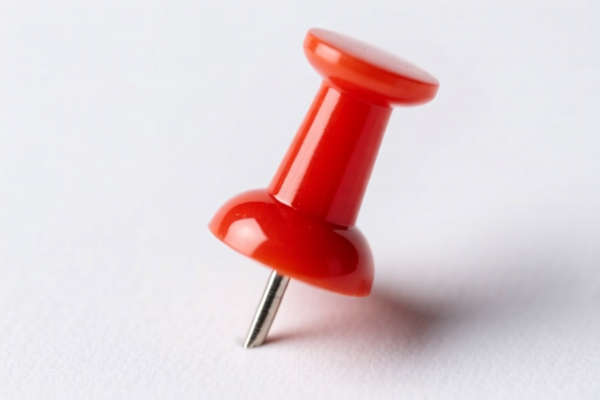
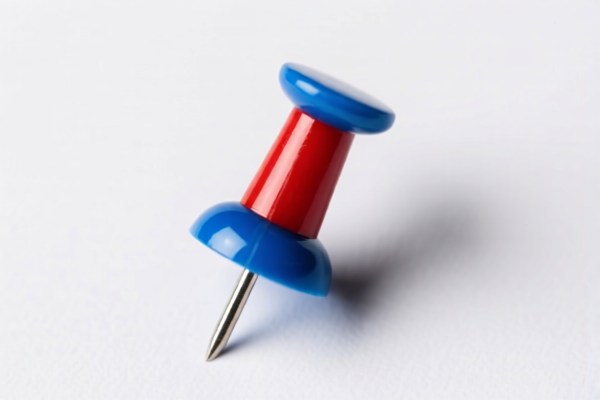
AI Analysis
🧵 Pins (Sewing/Emergency Needles)
🌐 HS Code Reference & Customs Clearance Guide | 2026 Latest Tariff Analysis | Professional Entry Strategies
📌 I. Product Definition & Classification: Do You Really Understand "Pins"?
In international trade, "Pins" (specifically large-eye needles/emergency pins) are often categorized ambiguously. They can fall under Textile Accessories, Metal Articles, or Hand Tools, depending on their precise material and intended use.
Metal Sewing/Embroidery Pins: Made of iron or steel, used for fastening fabric. General Metal Pins: Generic metal fasteners or structural pins. Hand Tools: Pins classified as manual implements for non-industrial use.
⚠️ Key Distinction Point:
- If the pin is specifically for sewing/embroidery and is iron/steel → Consider 7319.90.10.00 (Low Base Duty).
- If it is a general metal pin without specific sewing classification → Consider 7319.90.90.00 (Higher Base Duty).
- If considered a manual tool (non-machine driven) → Consider 8205.51.30.60 / 8205.51.75.00 (Moderate Base Duty).
📦 II. HS Code Classification Details (2026 Latest Tariff Authority Comparison)
| HS Code | Product Description | Application Scenario | Material Basis |
|---|---|---|---|
7319.90.10.00 |
Pins (other than sewing machines') for sewing or embroidery; iron or steel | Embroidery supplies, garment finishing, hand-sewing kits | ✅ Iron/Steel |
7319.90.90.00 |
Other pins (not specified for sewing); iron or steel | General hardware, industrial fasteners, generic metal pins | ✅ Iron/Steel |
8205.51.30.60 |
Other hand tools; unspecified category | Treated as general "other hand tools" due to metal nature | ✅ Metal |
8205.51.75.00 |
Other hand tools for household use | Classified as "other household tools and parts" | ✅ Metal |
🔍 Key Reminder:
- 7319 is the most precise for sewing/embroidery pins. If the product is explicitly for sewing, this chapter takes precedence over general metal articles or tools.
- 7319.90.90.00 is a "catch-all" for metal pins not classified under 7319.90.10. It carries a higher base duty.
- 8205 classification is risky unless the pin is part of a tool set or explicitly marketed as a "hand tool." It is generally not recommended for simple sewing pins.
💰 III. 2026 Latest Tariff Rate Breakdown (Including Surcharges & Policy Add-ons)
✅ Applicable Country: United States (US)
✅ Origin: China (CN)
✅ Effective Date: Ongoing (Subject to Section 301 and IEEPA rules)
🎯 1. 7319.90.10.00 —— Pins for Sewing or Embroidery (Iron/Steel)
| Item | Content |
|---|---|
| Base Duty Rate | 0.0% (Ad Valorem) |
| Section 301 Surcharge | +7.5% |
| IEEPA Surcharge (Sec 122) | +10% (Steel/Aluminum/Copper Products) |
| Steel/Aluminum Surcharge (Sec 232) | +50% |
| Total Effective Tax Rate | 67.5% |
| Tax Calculation | CIF Value × 67.5% |
| De Minimis Eligibility | ❌ Not Eligible (Due to high duty rates) |
| Legal Authority Path | IEEPA:9903.01.24 → USITC:7319.90.10.00 → FOOTNOTE:232 |
📌 Interpretation:
- Base Duty is 0%: This is a significant advantage!
- High Surcharges: However, the 50% Steel Surcharge + 10% IEEPA + 7.5% Section 301 drives the total to 67.5%.
- Critical: Even with 0% base duty, the total cost impact is massive due to anti-dumping/surcharge layers on steel products.
🎯 2. 7319.90.90.00 —— Other Pins (Iron/Steel)
| Item | Content |
|---|---|
| Base Duty Rate | 2.9% (Ad Valorem) |
| Section 301 Surcharge | +7.5% |
| IEEPA Surcharge (Sec 122) | +10% (Steel/Aluminum/Copper Products) |
| Steel/Aluminum Surcharge (Sec 232) | +50% |
| Total Effective Tax Rate | 70.4% |
| Tax Calculation | CIF Value × 70.4% |
| De Minimis Eligibility | ❌ Not Eligible |
| Legal Authority Path | IEEPA:9903.01.24 → USITC:7319.90.90.00 → FOOTNOTE:232 |
📌 Note:
- 2.9% higher total duty than 7319.90.10.00 due to the non-zero base rate.
- Both sub-headings are subject to the same steel surcharges.
- Do not underestimate the 50% Steel Surcharge: It applies to most iron/steel pins.
🎯 3. 8205.51.30.60 & 8205.51.75.00 —— Other Hand Tools
| Item | Content |
|---|---|
| Base Duty Rate | 3.7% (Ad Valorem) |
| Section 301 Surcharge | +25.0% (Note: Data shows 25%, different from 7.5% above) |
| IEEPA Surcharge (Sec 122) | +10% |
| Steel/Aluminum Surcharge (Sec 232) | ❌ Not Applied (Based on provided data) |
| Total Effective Tax Rate | 38.7% |
| Tax Calculation | CIF Value × 38.7% |
| De Minimis Eligibility | ❌ Not Eligible |
| Legal Authority Path | IEEPA:9903.01.24 → USITC:8205.51.xxxx |
📌 Comparison:
- Significantly Lower Total Duty (38.7%) compared to sewing pins (67.5%-70.4%).
- Why? The 50% Steel Surcharge (Sec 232) does not apply to these "hand tool" classifications in the provided data.
- Risk: Misclassification! If Customs determines the pin is primarily for sewing (7319), they will reclassify it, leading to back taxes + penalties.
- Strategy: Only use 8205 if the pin is part of a tool kit, or if it has a non-sewing primary function (e.g., a locking pin for machinery).
🛠️ IV. Customs Clearance Practical Advice (Real-World Pitfall Guide)
✅ 1. Required Documentation List (Non-Negotiable)
| Document | Must Provide | Explanation |
|---|---|---|
| ✅ Product Specification Sheet | ✔️ | Must clearly state: "Needle for Sewing/Embroidery" vs. "General Metal Pin" |
| ✅ Product Photos | ✔️ | Show the eye shape, tip type, and packaging |
| ✅ Material Declaration | ✔️ | Confirm if it is Iron or Steel. This triggers the 50% Sec 232 surcharge if Steel. |
| ✅ Intended Use Statement | ✔️ | "For Hand Sewing" supports 7319.90.10. "For Tool Kit" supports 8205. |
| ✅ Commercial Invoice | ✔️ | Describe accurately: "Sewing Pins, Iron, Embroidery Use" |
| ✅ Packing List | ✔️ | Detail quantity and weight |
✅ 2. Classification Strategy & Tips
🔥 “Classify by Use, Not Just Material! Save 30% with Correct Code!”
| Scenario | Recommended HS Code | Total Duty | Reason |
|---|---|---|---|
| Sewing/Embroidery Pins | 7319.90.10.00 |
67.5% | Correct specific classification. High steel surcharge applies. |
| General Metal Pins | 7319.90.90.00 |
70.4% | Catch-all. Avoid if possible. |
| Pins in Tool Kit / Non-Sewing Use | 8205.51.30.60 / 8205.51.75.00 |
38.7% | Lower Duty! But must prove non-sewing primary function. |
⚠️ Warning:
- If you declare "Pins" under 8205 to save duty, but Customs sees "sewing needles" on your invoice/photos, you will face reclassification penalties.
- Steel Surcharge (50%) is unavoidable for 7319 classification if made of steel. No workaround unless material changes.
✅ 3. Special Case Handling
| Situation | Recommendation |
|---|---|
| OEM Custom Pins | Provide design drawings proving specific use (sewing vs. tool). |
| Plastic-Coated Pins | If coating makes it non-iron/steel, HS code may change. Confirm material composition. |
| Small Quantity (De Minimis) | Do NOT rely on De Minimis exemption. All listed codes exceed the $800 threshold duty impact due to high rates. |
| Mixed Containers | Separate sewing pins from general hardware pins in documentation to avoid blanket misclassification. |
🌍 V. Global Market Comparison (2026 Latest)
| Country/Region | Recommended HS Code | Duty Impact | Key Certification | Notes |
|---|---|---|---|---|
| 🇺🇸 US | 7319.90.10.00 |
67.5% (Steel) | None specific | 50% Steel Surcharge is critical. |
| 🇺🇸 US | 8205.51.75.00 |
38.7% | None specific | Lower rate, but classification risk. |
| 🇪🇺 EU | 7319.90.10 |
~0-2% | CE (if tool) | No steel surcharge. Favorable for sewing pins. |
| 🇨🇳 China | 7319.90.10 |
5-10% | CCC (if tool) | Domestic production lower. |
📌 Conclusion:
- US Market is Expensive: Steel surcharges dominate.
- EU is Favorable: No extra steel tariffs.
- Optimization: If exporting to US, consider if plastic components can reduce "iron/steel" classification, or if the product can be marketed as a tool (if legally accurate) to leverage the 38.7% rate.
📌 VI. Common Errors & Pitfalls (Lessons Learned)
❌ Error 1: Declaring "Sewing Pins" as 8205 to avoid steel surcharge.
👉 Consequence: Customs audit → Back taxes + 20% penalty.
👉 Fix: Only use 8205 if the pin is genuinely a tool part.
❌ Error 2: Ignoring the 50% Steel Surcharge.
👉 Consequence: Budget miscalculation → Loss of profit margin.
👉 Fix: Always calculate Total Landed Cost including 67.5% tax for steel pins.
❌ Error 3: Using vague descriptions like "Metal Pins."
👉 Consequence: Customs assigns worst-case HS code (7319.90.90.00 → 70.4%).
👉 Fix: Be specific: "Embroidery Needles, Iron."
✅ Best Practice:
“Sewing Pins for Embroidery, Iron Material, Packaged in Retail Boxes, Model XYZ”
🎯 VII. Conclusion: Precision Classification Saves Money!
🎯 Remember These Rules:
🔹 “Sewing Pins = 7319. Steel = 50% Surcharge. Total ~67.5%.”
🔹 “Tool Pins = 8205. No Steel Surcharge. Total ~38.7%. But Risky!”
🔹 “Vague Description = Worst Code (70.4%). Be Specific!”
📌 Pro Tip:
If your pins are not made of steel (e.g., brass, plastic), the 50% Steel Surcharge may not apply. Confirm material composition with your supplier!
📣 Immediate Action:
📞 Consult a licensed customs broker for Advance Ruling if unsure.
🚀 Provide material specs and use-case documentation to secure the correct HS Code.
✨ Professional Clearance Starts with Accurate Classification!
💼 Every percentage point counts in your profit margin!
Customer Reviews
About HS Code Classification
The Harmonized System (HS) is an internationally standardized nomenclature developed by the World Customs Organization (WCO) to classify traded products. Over 200 countries use the HS system as the basis for customs tariffs, trade statistics, and import/export regulations.
Each HS code follows a hierarchical structure:
- Chapter (2 digits) — Broad category of goods (e.g., Chapter 84: Machinery and Mechanical Appliances)
- Heading (4 digits) — More specific grouping within the chapter
- Subheading (6 digits) — Internationally standardized breakdown, used by all WCO member countries
- National subdivisions (8-10 digits) — Country-specific extensions for further classification, such as US HTSUS 10-digit codes
Correct HS code classification is essential for smooth customs clearance, accurate duty payment, and compliance with trade regulations. Misclassification can lead to customs delays, overpayment of duties, or penalties.
When importing from CN to US, the applicable tariff rates may include:
- Most-Favored-Nation (MFN) rate — The standard duty rate applied to WTO members
- General rate — Applied to countries without trade agreements
- Trade remedy duties — Additional tariffs such as Section 301 (anti-dumping), Section 232 (national security), or countervailing duties
The information provided on this page is for reference purposes only. For official classification, please consult with your local customs authority or a licensed customs broker.