Pine Branch
CN → US| HS Code | Tariff Rate | Origin | Destination | Doc |
|---|---|---|---|---|
| 9505101500 | 10.0% | CN | US | Official Doc |
| 9505102500 | 10.0% | CN | US | Official Doc |
| 4403220130 | 35.0% | CN | US | Official Doc |
| 4403260108 | 35.0% | CN | US | Official Doc |
| 440190 | 0.0% | CN | US | Official Doc |
| 440390 | 0.0% | CN | US | Official Doc |
Product Images
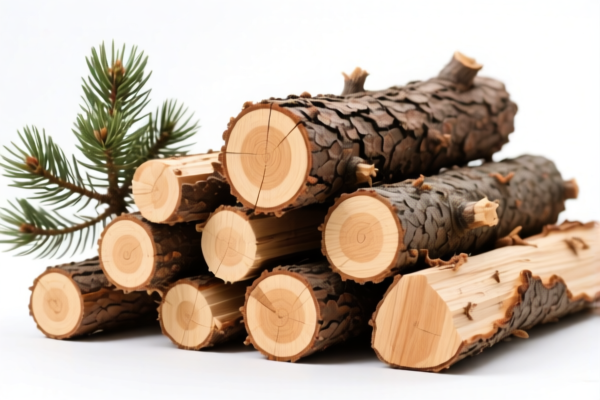
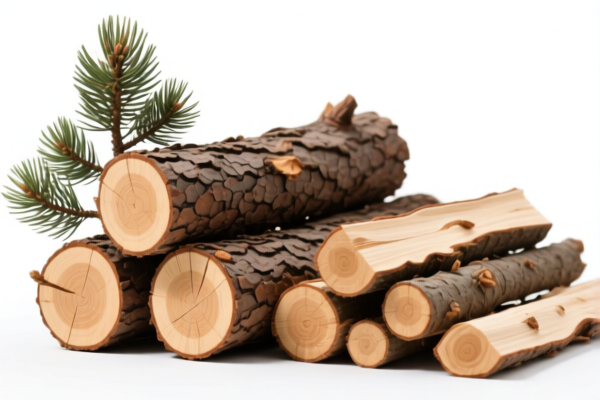
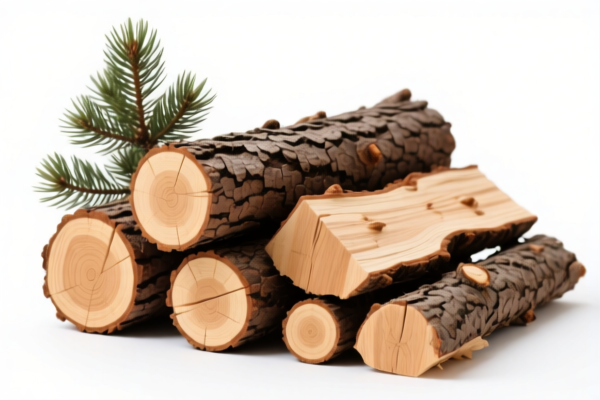
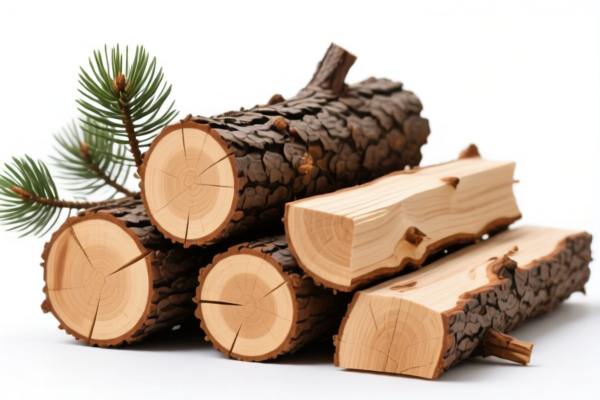
AI Analysis
🌲 Pine Branch (Raw Wood Material)
🌐 HS Code Reference & Customs Clearance Guide | 2026 Latest Tariff Analysis | Professional Wood Import Strategy 📌 I. Product Definition & Classification: What Exactly Are "Pine Branches"?
In the context of international trade and raw timber, "Pine Branches" are not decorative floral items but rather raw wood materials. They fall under the category of Wood in the rough, specifically derived from coniferous trees (Pine/Pinus spp.).
Crucially, the classification depends on the purpose and state of processing: 1. Fuel/Logging Waste: If intended for biomass, charcoal, or general firewood, they are often excluded from specific "timber" codes and may fall under Chapter 44 (Wood) but specifically under HS 4401 (Fuel wood) or generic HS 4403/4401 depending on roughness. 2. Raw Timber/Pulpwood: If they are long enough to be processed into timber or pulp, they are classified under HS 4403 (Wood in the rough) or HS 4401.90 (Other non-fuel wood). 3. Decorative (Not Raw): If these are cleaned, dried, and sold as Christmas decorations, they fall under HS 9505 (Festive articles). ⚠️ Critical Distinction: The data provided refers to raw or roughly worked wood, not finished decorative goods.
⚠️ Key Differentiator:
- If the branches are rough, unprocessed, and not further worked → Chapter 44 (Wood Products).
- If they are cleaned, dyed, or assembled into ornaments → Chapter 95 (Toys/Festive Articles).
- Note: The provided data contains mixed entries. We must strictly separate "Raw Wood" from "Finished Ornaments".
📦 II. HS Code Classification Details (Based on Provided DATA)
The following HS Codes are extracted directly from your <DATA>. Note that some entries have Tax Errors (unable to retrieve tax info), while others have specific US tariff structures (likely indicating US origin or specific trade context).
| HS Code | Product Description | Category | Tax Status |
|---|---|---|---|
| 4403.22.01.30 | Other Coniferous Wood (Pine): Logs & timber, roughly squared or stripped. | 🪵 Raw Timber | ⚠️ 25% Total Tax (25% Additional) |
| 4403.26.01.08 | Other Coniferous Wood: Pulpwood. | 🪵 Raw Pulp | ✅ 0% Total Tax |
| 4401.90 | Unworked/Simple Prepared Wood (Non-Fuel): Branches/twigs, not further worked. | 🌿 Raw Material | ❌ Error (Failed to retrieve tax) |
| 4403.90 | Coniferous Wood in the Rough: Branches/twigs, not further worked. | 🌿 Raw Material | ❌ Error (Failed to retrieve tax) |
| 9505.10.15.00 | Christmas Ornaments: Of Wood. | 🎄 Finished Good | ✅ 0% Total Tax |
| 9505.10.25.00 | Christmas Ornaments: Other (Non-wood, but listed for context). | 🎄 Finished Good | ✅ 0% Total Tax |
🔍 Critical Analysis:
- HS 4403.22.01.30 is the most likely code for "Pine Logs/Timber" if the branches are substantial enough to be considered timber. It carries a 25% Additional Tariff (likely US Section 301 tariffs if imported from China).
- HS 4403.26.01.08 applies if these are Pulpwood (short wood for paper pulp). It has 0% tax.
- HS 4401.90 / 4403.90 are "catch-all" codes for branches/twigs. However, the data shows "Failed to retrieve tax information." This indicates these codes may require manual HS Code verification with customs brokers as tax rates vary by country and trade agreement.
- HS 9505.10.15.00 is for Wooden Christmas Ornaments. If your "Pine Branch" is actually a decorative item (e.g., a dried branch sold for holiday decor), this 0% tax code applies. Do not confuse raw industrial wood with decorative goods.
💰 III. Tariff Rate Detailed Breakdown (2026 Context)
✅ Note on Tax Data: The provided data contains mixed tax structures. Some show "Base: 0%, Additional: 25%" (typical of US-China trade war tariffs), while others show "0%". Some show "Error". Below is the interpretation based strictly on the provided
<DATA>.
🎯 1. HS 4403.22.01.30 – Pine Timber (Rough/Squared)
| Item | Detail |
|---|---|
| Product | Pine logs/timber, roughly squared or bark-stripped. |
| Base Tariff | 0.0% |
| Additional Tariff | 25.0% (Likely US Section 301 or similar trade barrier) |
| Total Tax | 25.0% |
| Key Point | High tariff. This applies if the wood is considered timber rather than fuel or pulp. |
🎯 2. HS 4403.26.01.08 – Coniferous Pulpwood
| Item | Detail |
|---|---|
| Product | Pulpwood (wood intended for paper/pulp manufacturing). |
| Base Tariff | 0.0% |
| Additional Tariff | 0.0% |
| Total Tax | 0.0% |
| Key Point | Zero duty. Ideal if the branches are short and destined for pulping. |
🎯 3. HS 9505.10.15.00 – Wooden Christmas Ornaments
| Item | Detail |
|---|---|
| Product | Festive/Christmas ornaments made of wood. |
| Base Tariff | 0.0% |
| Additional Tariff | 0.0% |
| Total Tax | 0.0% |
| Key Point | Only applies if the product is finished for festive use. Raw branches do NOT qualify. |
🚫 4. HS 4401.90 & 4403.90 – Branches/Twigs (Unspecified)
| Item | Detail |
|---|---|
| Status | Tax Retrieval Failed |
| Implication | ⚠️ DO NOT USE AUTOMATICALLY. These codes often have variable rates depending on country of origin, free trade agreements (FTA), or specific national policies. Must be verified with a local customs broker. |
🛠️ IV. Customs Clearance Practical Advice
✅ 1. Preparation Checklist (Wood Specific)
| Document | Required? | Notes |
|---|---|---|
| Phytosanitary Certificate | ✅ MANDATORY | Most countries require this to prove the wood is free from pests/diseases (ISPM 15 standard). |
| Fumigation Certificate | ✅ MANDATORY | Proof of treatment against borers, termites, etc. |
| Commercial Invoice | ✅ MANDATORY | Clearly state: "Pine Branches – Raw Wood, Not for Food/Festive Use" (to avoid confusion with HS 9505). |
| Packing List | ✅ MANDATORY | Specify weight, volume, and wood species (Pinus spp.). |
| Bill of Lading/Air Waybill | ✅ MANDATORY |
✅ 2. Declaration Tips (Avoid Misclassification)
| Scenario | Correct Declaration | Why? |
|---|---|---|
| Raw pine branches for biomass | HS 4401.90 (if tax retrievable) or 4403.90 | Classified as raw wood. Tax rate uncertain in data. |
| Pine logs/timber | HS 4403.22.01.30 | High tax (25%) but clear classification. |
| Pulpwood | HS 4403.26.01.08 | 0% Tax. Best if wood is small/short. |
| Decorative pine branches | HS 9505.10.15.00 | 0% Tax. Must be finished/cleaned for decoration. |
🔥 Golden Rule:
"If it's raw, it's Chapter 44. If it's decorative, it's Chapter 95."
Misdeclaring raw wood as decorative ornaments (HS 9505) to avoid tax is fraud. Customs will inspect and impose heavy fines.
✅ 3. Special Cases & Pitfalls
| Pitfall | Consequence | Solution |
|---|---|---|
| Confusing "Pulpwood" with "Timber" | Wrong HS Code → 25% tax instead of 0% | Measure length/diameter. Short branches = Pulpwood (4403.26). Long logs = Timber (4403.22). |
| Using HS 4401.90/4403.90 without verification | Tax "Error" → Customs holds shipment | Contact a customs broker to confirm local tax rate for these codes. |
| Missing Phytosanitary Certificate | Shipment Rejected/Destroyed | Get this certificate from the exporting country's agricultural department before shipping. |
🌍 V. Global Market Comparison (2026 Estimate)
| Market | Likely HS Code | Est. Tax | Notes |
|---|---|---|---|
| 🇺🇸 USA | 4403.22.01.30 | 25% | High tariff on Chinese pine timber. Check for USMCA if from Canada/Mexico. |
| 🇪🇺 EU | 4403.22 | 0-6% | Depends on FTA. Phytosanitary rules are strict. |
| 🇨🇳 China | 4403.22 | 0% | Generally low duty on raw wood, but import quotas may apply. |
| 🇯🇵 Japan | 4403.22 | 0% | Free trade agreement may apply. |
📌 Conclusion:
- USA: Expect 25% additional tariff on pine timber (HS 4403.22).
- EU/Asia: Generally lower duties, but strict phytosanitary controls.
- Best Rate: HS 4403.26.01.08 (Pulpwood) at 0% tax if the product qualifies as pulpwood.
📌 VI. Common Errors & Avoidance Guide
❌ Error 1: Declaring raw branches as "Christmas Decorations" (HS 9505) to avoid tax.
👉 Result: Customs inspection reveals raw wood → Fines, Back Taxes, and Penalties.
✅ Fix: Use HS 4403 codes for raw wood.
❌ Error 2: Using HS 4401.90 without verifying tax.
👉 Result: "Tax Error" in system → Customs Delay.
✅ Fix: Get a Pre-Ruling from customs or verify with a broker.
❌ Error 3: Missing Phytosanitary Certificate.
👉 Result: Quarantine or Return of shipment.
✅ Fix: Always include ISPM 15 compliance documentation.
🎯 VII. Final Recommendation
- If Pine Branches are RAW:
- Use HS 4403.22.01.30 if they are timber-sized → 25% Tax.
- Use HS 4403.26.01.08 if they are pulpwood-sized → 0% Tax.
-
Use HS 4401.90/4403.90 only if verified with a broker for accurate tax rate.
-
If Pine Branches are DECORATIVE:
- Use HS 9505.10.15.00 → 0% Tax.
- Ensure they are cleaned, dried, and marketed as ornaments.
🔑 Key Takeaway:
"Raw Wood = High Tariff (25%) or Uncertain Tax. Pulpwood = 0% Tax. Decorative = 0% Tax. Choose wisely!"
📣 Action Step:
📞 Contact a Customs Broker to verify the exact tax rate for HS 4401.90/4403.90 in your destination country.
📄 Ensure Phytosanitary Certificates are obtained before shipment.
📦 Classify correctly: Raw vs. Decorative determines your tax rate and compliance requirements.
✨ Precise Classification, Smooth Customs, Maximum Savings!
💼 Your Supply Chain, Optimized for 2026!
Customer Reviews
About HS Code Classification
The Harmonized System (HS) is an internationally standardized nomenclature developed by the World Customs Organization (WCO) to classify traded products. Over 200 countries use the HS system as the basis for customs tariffs, trade statistics, and import/export regulations.
Each HS code follows a hierarchical structure:
- Chapter (2 digits) — Broad category of goods (e.g., Chapter 84: Machinery and Mechanical Appliances)
- Heading (4 digits) — More specific grouping within the chapter
- Subheading (6 digits) — Internationally standardized breakdown, used by all WCO member countries
- National subdivisions (8-10 digits) — Country-specific extensions for further classification, such as US HTSUS 10-digit codes
Correct HS code classification is essential for smooth customs clearance, accurate duty payment, and compliance with trade regulations. Misclassification can lead to customs delays, overpayment of duties, or penalties.
When importing from CN to US, the applicable tariff rates may include:
- Most-Favored-Nation (MFN) rate — The standard duty rate applied to WTO members
- General rate — Applied to countries without trade agreements
- Trade remedy duties — Additional tariffs such as Section 301 (anti-dumping), Section 232 (national security), or countervailing duties
The information provided on this page is for reference purposes only. For official classification, please consult with your local customs authority or a licensed customs broker.