Pine Communication Poles
CN → US| HS Code | Tariff Rate | Origin | Destination | Doc |
|---|---|---|---|---|
| 4421997020 | 35.0% | CN | US | Official Doc |
| 4418300100 | 38.2% | CN | US | Official Doc |
| 4403210112 | 35.0% | CN | US | Official Doc |
| 4403220112 | 35.0% | CN | US | Official Doc |
| 4418999140 | 38.2% | CN | US | Official Doc |
Product Images
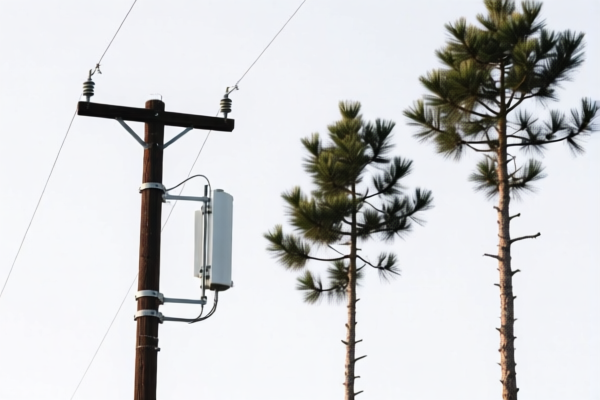
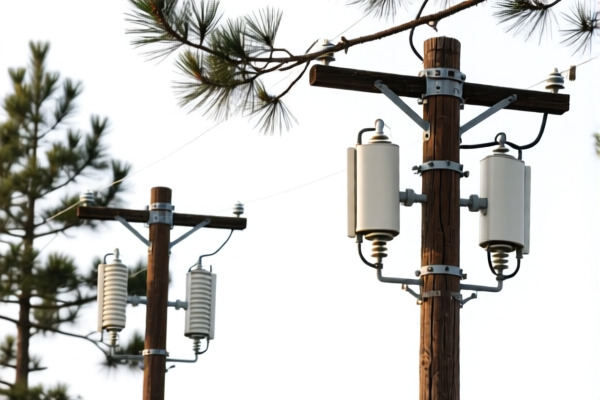
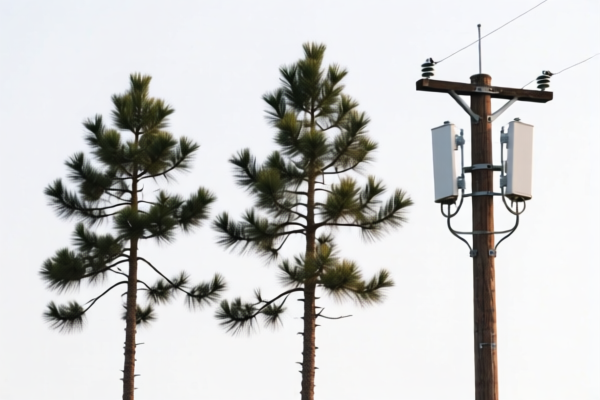
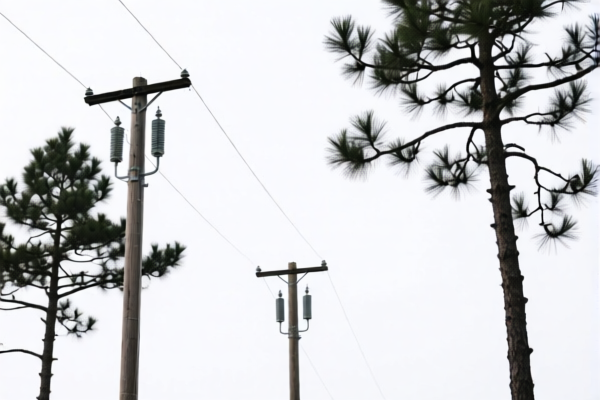
AI Analysis
🌲 Pine Communication Poles: The Ultimate HS Code & Customs Clearance Guide
🌐 HS Code Classification & Customs Clearance Guide | 2026 Latest Tariff Analysis | Professional Compliance Strategy
📌 I. Product Definition & Classification: Do You Really Understand "Pine Communication Poles"?
Pine communication poles are critical infrastructure components for telecommunications, power transmission, and networking. They are primarily made of pine wood (a type of softwood/coniferous wood) and processed into cylindrical or conical shapes for vertical installation.
In international trade, their classification is complex because it depends on the degree of processing, specific use, and structural characteristics. Misclassification can lead to significant tariff penalties or customs delays.
⚠️ Key Distinction Point:
- If the pole is simply cut to length and treated (basic timber) → It falls under Chapter 44 (03/03) as "Wood and articles of wood".
- If the pole is part of a larger prefabricated structure or specific building component → It may fall under Chapter 44 (18/21) as "Wooden building components".
- Crucial Note: The destination country (often the US in these contexts) imposes heavy additional tariffs (Section 301, Section 122/IEEPA) on Chinese-origin wood products.
📦 II. HS Code Classification Details (Latest Tariff Concordance)
Based on the provided data, there are 5 potential HS Codes for Pine Communication Poles. Each reflects a different level of processing or regulatory interpretation.
| HS Code | Product Description | Application Scenario | Processing Level |
|---|---|---|---|
4421.99.70.20 |
Pine poles (for telecom), wooden material, pillar shape | Classified under "Sawn fencing, palings, posts, rails, and similar items" | ✅ Intermediate (Post/Pillar specific) |
4418.30.01.00 |
Pine poles (for telecom), pine material, pillar shape | Classified under "Wooden building/infrastructure joinery" | ✅ Advanced (Prefabricated component) |
4403.21.01.12 |
Pine poles (for telecom), coniferous material, pole/pile shape | Classified under "Coniferous wood, treated or not" | ✅ Basic (Raw/Treated Timber) |
4403.22.01.12 |
Pine poles (for telecom), coniferous/pine material, telephone/telegraph/power poles | Classified under "Coniferous wood, specifically for telephone/telegraph/power poles" | ✅ Basic (Specific Use Timber) |
4418.99.91.40 |
Pine poles (for telecom), wooden material, prefabricated structural component | Classified under "Other prefabricated structural wood components" | ✅ Advanced (General Prefab Component) |
🔍 Critical Reminder:
- Chapter 4403/0403: Covers "Wood in the rough or roughly squared." If your poles are just cut, planed, and chemically treated (creosote, etc.) but not part of a pre-assembled unit, they likely fall here (4403.21or4403.22).
- Chapter 4418/4421: Covers "Wooden articles of carpentry/carpentry." If the poles have specific fittings, pre-drilled holes for cross-arms, or are part of a kit, they might be argued as "prefabricated" (4418) or "posts/rails" (4421).
- Tax Impact: The choice between4403(Basic) and4418/4421(Finished/Component) can affect the Base Duty (0% vs 3.2%), though the Additional Duties remain high.
💰 III. 2026 Latest Tariff Rate Breakdown (Including Add-ons & Policy Levies)
✅ Applicable Country: USA (US)
✅ Origin: China (CN) (Assumed based on "Section 122" and typical trade context for these codes)
✅ Effective Date: Current rates apply (Note: Section 122/IEEPA rates have evolved; the data provided reflects a specific high-tariff scenario).
🎯 1. 4421.99.70.20 — Wooden Posts/Rails (Intermediate Processing)
| Item | Content |
|---|---|
| Base Duty | 0.0% (ad valorem) |
| Additional Duty (Section 301) | +25.0% |
| Section 122/IEEPA Duty | +10.0% |
| Total Rate | 35.0% |
| Calculation | CIF Value × 35% |
| De Minimis Eligibility | ❌ No (High value items, specific wood restrictions) |
| Legal Basis Path | USITC:4421.99.70.20 → Section 301 Footnote → IEEPA/Section 122 |
📌 Explanation:
- This code treats the pole as a "post or rail" similar to fencing components.
- Base duty is 0%, which might seem attractive, but the 25% Section 301 and 10% Section 122 make the total burden high.
- Warning: Ensure the product matches the "post/rail" description exactly. If it's a "pole" for vertical structural support, customs may challenge this.
🎯 2. 4418.30.01.00 — Wooden Joinery/Building Components (Advanced Processing)
| Item | Content |
|---|---|
| Base Duty | 3.2% |
| Additional Duty (Section 301) | +25.0% |
| Section 122/IEEPA Duty | +10.0% |
| Total Rate | 38.2% |
| Calculation | CIF Value × 38.2% |
| De Minimis Eligibility | ❌ No |
| Legal Basis Path | USITC:4418.30.01.00 → Section 301 → IEEPA/Section 122 |
📌 Explanation:
- This code classifies the pole as a "building/infrastructure joinery" item.
- Higher Base Duty (3.2%) compared to4421, resulting in a higher total tax.
- Use this if the pole has significant finishing, pre-assembly, or is part of a prefabricated telecom tower kit.
🎯 3. 4403.21.01.12 — Coniferous Wood, Treated (Basic Processing)
| Item | Content |
|---|---|
| Base Duty | 0.0% |
| Additional Duty (Section 301) | +25.0% |
| Section 122/IEEPA Duty | +10.0% |
| Total Rate | 35.0% |
| Calculation | CIF Value × 35.0% |
| De Minimis Eligibility | ❌ No |
| Legal Basis Path | USITC:4403.21.01.12 → Section 301 → IEEPA/Section 122 |
📌 Explanation:
- "Pine" is a coniferous wood. If the pole is simply cut, dried, and chemically treated (e.g., with creosote for rot resistance), it falls under Chapter 4403.
- Best for basic, untreated (except for preservation) poles. No extra processing like drilling or fitting.
🎯 4. 4403.22.01.12 — Coniferous Wood, for Telephone/Telegraph/Power Poles
| Item | Content |
|---|---|
| Base Duty | 0.0% |
| Additional Duty (Section 301) | +25.0% |
| Section 122/IEEPA Duty | +10.0% |
| Total Rate | 35.0% |
| Calculation | CIF Value × 35.0% |
| De Minimis Eligibility | ❌ No |
| Legal Basis Path | USITC:4403.22.01.12 → Section 301 → IEEPA/Section 122 |
📌 Explanation:
- This is a highly specific subheading for wood used in telecommunication and power infrastructure.
- Recommended if the pole is explicitly marketed and used for telephone, telegraph, or power lines.
- Same rate as4403.21(35%), but the specific description reduces audit risk.
🎯 5. 4418.99.91.40 — Other Prefabricated Wooden Components (Advanced Processing)
| Item | Content |
|---|---|
| Base Duty | 3.2% |
| Additional Duty (Section 301) | +25.0% |
| Section 122/IEEPA Duty | +10.0% |
| Total Rate | 38.2% |
| Calculation | CIF Value × 38.2% |
| De Minimis Eligibility | ❌ No |
| Legal Basis Path | USITC:4418.99.91.40 → Section 301 → IEEPA/Section 122 |
📌 Explanation:
- A "catch-all" for prefabricated wooden structural components not specified elsewhere.
- Use cautiously. Only apply if the pole is part of a larger, pre-assembled structural unit that doesn't fit4418.30(joinery) or4421(posts/rails).
🛠️ IV. Customs Clearance Practical Advice (Battle-Tested Pitfall Guide)
✅ 1. Required Documentation Checklist (Non-Negotiable)
| Document | Mandatory? | Notes |
|---|---|---|
| ✅ Product Specification Sheet | ✔️ | Must specify: Material (Pine/Coniferous), Length, Diameter, Treatment (e.g., Creosote, Pressure-Treated), and Use (Telecom/Power). |
| ✅ Treatment Certificate | ✔️ | Proof of chemical treatment (critical for wood imports to avoid pests). |
| ✅ Commercial Invoice | ✔️ | Must clearly state: "Pine Wood Communication Pole" and HS Code. Do not use vague terms like "Wooden Stick." |
| ✅ Packing List | ✔️ | Detail dimensions and weight. Poles are bulky; freight costs affect CIF value. |
| ✅ Certificate of Origin (CO) | ✔️ | Essential for proving origin (China) and applying (or defending against) Section 301/122 tariffs. |
| ✅ Phytosanitary Certificate | ✔️ | Required for raw wood products to prove freedom from pests/diseases. |
✅ 2. Classification Strategy (Key Mantra)
🔥 "Material First, Use Second, Processing Level Determines HS Code!"
| Scenario | Recommended HS Code | Reason |
|---|---|---|
| Raw/Treated Poles (Cut, planed, chemically treated, no fittings) | 4403.21.01.12 or 4403.22.01.12 |
Best fit for "wood in the rough" or "treated wood." Lowest audit risk for basic poles. |
| Poles with Pre-Drilled Holes/Fittings (Ready to assemble towers) | 4421.99.70.20 |
Classified as "posts/rails" or similar structural elements. |
| Prefabricated Tower Sections (Including cross-arms, bases) | 4418.30.01.00 or 4418.99.91.40 |
Classified as "prefabricated building components." |
📌 Pro Tip:
- Avoid Vague Descriptions: Never use "Wooden Pole" alone. Use "Pressure-Treated Pine Wood Telecom Pole, 12m Length, Class 3 Strength."
- Consistency is Key: Ensure the HS Code on the Invoice matches the Packing List and the Phytosanitary Certificate.
✅ 3. Special Cases & Risk Mitigation
| Situation | Action |
|---|---|
| Chemical Treatment | Declare the treatment type clearly (e.g., "Creosote," "ACQ"). Undeclared chemical treatments can lead to seizure. |
| Bark Present | If bark is removed, specify "Debarked." If present, may trigger stricter phytosanitary rules. |
| Mixed Shipments | If shipping poles with other wood products (e.g., lumber), declare separately to avoid misclassification. |
| Section 301/122 Appeals | If you believe the product does not fall under "Section 122" (e.g., if not specifically targeted), consult a trade lawyer. However, wood products from China are broadly targeted. |
🌍 V. Global Market Comparison (2026 Latest)
| Country/Region | Recommended HS Code | Base Tariff | Additional Tariffs | Notes |
|---|---|---|---|---|
| 🇺🇸 USA | 4403.21.01.12 / 4403.22.01.12 |
0% | +35% (25% Sec 301 + 10% Sec 122) | Highest Cost. Strict phytosanitary rules. |
| 🇨🇳 China | 4403.21.01.12 |
Varies | None (for imports) | N/A for export from China. |
| 🇪🇺 EU | 4403.21.01.12 |
0-3% | None (generally) | No Section 301/122. Phytosanitary rules apply. |
| 🇯🇵 Japan | 4403.21.01.12 |
2-5% | None | Strict quarantine for wood. |
| 🇦🇺 Australia | 4403.21.01.12 |
5% | None | Very strict biosecurity. |
📌 Conclusion:
- USA is the most expensive market due to Section 301 and Section 122 tariffs.
- Other markets (EU, Japan, Australia) have no political tariffs but have strict phytosanitary inspections.
- Strategy: For USA, ensure accurate classification to avoid penalties. For other markets, focus on phytosanitary compliance.
📌 VI. Common Mistakes & Pitfalls (Lessons from the Field)
❌ Mistake 1: Declaring "Wooden Poles" without specifying "Pine" or "Coniferous"
👉 Consequence: Customs may reclassify to a higher-duty code or request extensive testing.
✅ Fix: Always specify wood species (e.g., "Southern Yellow Pine," "Douglas Fir," or generic "Coniferous Wood").
❌ Mistake 2: Ignoring the "Treatment" status
👉 Consequence: Seizure by USDA APHIS (USA) or equivalent agencies.
✅ Fix: Declare treatment type (e.g., "Pressure-Treated with Creosote") and provide lab reports.
❌ Mistake 3: Misclassifying as "Building Materials" (4418) when it's "Timber" (4403)
👉 Consequence: Overpaying duty (3.2% vs 0% base) or audit flags.
✅ Fix: If the pole is just cut and treated, use 4403. Only use 4418 if it's part of a prefabricated structure.
❌ Mistake 4: Assuming De Minimis applies
👉 Consequence: Goods seized. Wood products are excluded from de minimis exemptions in many countries, especially the USA for certain HS codes.
✅ Fix: Always declare properly, regardless of value.
🎯 VII. Conclusion: Precise Classification, Smooth Clearance
🎯 Remember the Mantra:
🔹 "Specify Species, Declare Treatment, Choose Correct Chapter!"
🔹 "4403 for Basic Poles, 4418/4421 for Components!"
🔹 "USA Tariffs are 35-38.2%, Plan Your Cost Accordingly!"
📌 Pro Tip:
If you are shipping to the USA, consider applying for an Advance Ruling (Harbor Maintenance Fee/HTSUS) from CBP to lock in your HS Code and avoid post-import audits. For other countries, focus on Phytosanitary Certificates to ensure quick release.
📣 Immediate Action:
📞 Consult a Customs Broker: Wood products are high-risk. Get a professional review.
📄 Prepare Documentation: Invoice, Packing List, Phytosanitary Certificate, Treatment Report.
🚀 Ensure Compliance: Avoid penalties, delays, and seizures.
✨ Professional Customs Clearance Starts with Accurate Classification!
💼 Your Profit Margin Depends on Precise Tariff Calculation!
Customer Reviews
About HS Code Classification
The Harmonized System (HS) is an internationally standardized nomenclature developed by the World Customs Organization (WCO) to classify traded products. Over 200 countries use the HS system as the basis for customs tariffs, trade statistics, and import/export regulations.
Each HS code follows a hierarchical structure:
- Chapter (2 digits) — Broad category of goods (e.g., Chapter 84: Machinery and Mechanical Appliances)
- Heading (4 digits) — More specific grouping within the chapter
- Subheading (6 digits) — Internationally standardized breakdown, used by all WCO member countries
- National subdivisions (8-10 digits) — Country-specific extensions for further classification, such as US HTSUS 10-digit codes
Correct HS code classification is essential for smooth customs clearance, accurate duty payment, and compliance with trade regulations. Misclassification can lead to customs delays, overpayment of duties, or penalties.
When importing from CN to US, the applicable tariff rates may include:
- Most-Favored-Nation (MFN) rate — The standard duty rate applied to WTO members
- General rate — Applied to countries without trade agreements
- Trade remedy duties — Additional tariffs such as Section 301 (anti-dumping), Section 232 (national security), or countervailing duties
The information provided on this page is for reference purposes only. For official classification, please consult with your local customs authority or a licensed customs broker.