Pine Construction Timber
CN → US| HS Code | Tariff Rate | Origin | Destination | Doc |
|---|---|---|---|---|
| 4409104010 | 35.0% | CN | US | Official Doc |
| 4418300100 | 38.2% | CN | US | Official Doc |
| 4407110043 | 35.0% | CN | US | Official Doc |
| 4407110001 | 35.0% | CN | US | Official Doc |
| 4418810000 | 38.2% | CN | US | Official Doc |
Product Images
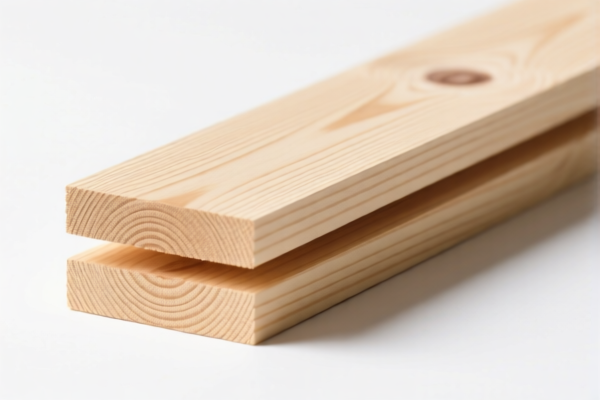
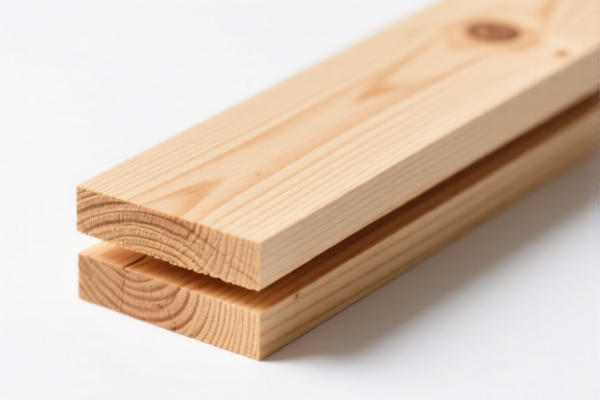
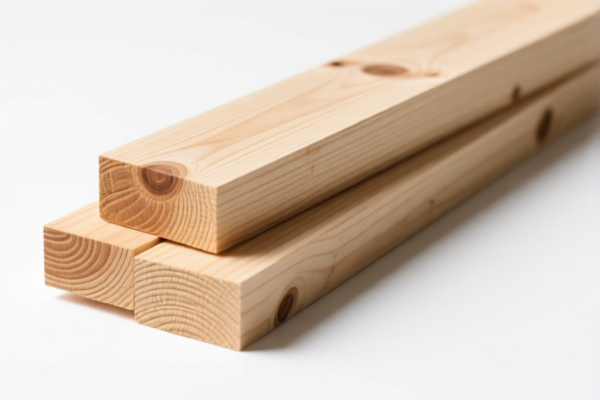
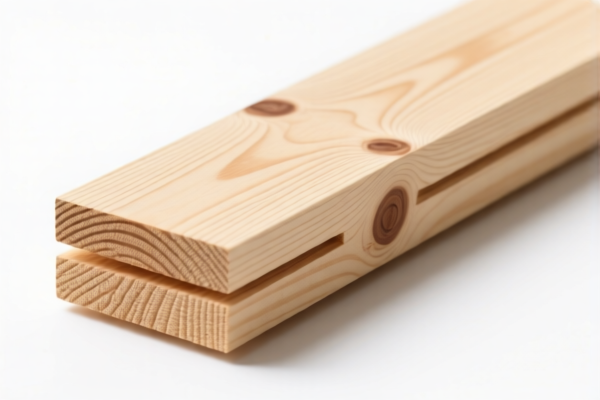
AI Analysis
🌲 Pine Construction Timber (Softwood for Construction)
🌐 HS Code Reference & Customs Clearance Guide | 2026 Latest Tariff Analysis | Professional-Level Clearance Strategy
📌 Part I: Product Definition & Classification: Do You Really Understand “Pine Construction Timber”?
Pine construction timber represents a critical category in international trade, specifically falling under Chapter 44 (Wood and Articles of Wood; Wood Charcoal). In the context of trade with the United States, these products are heavily scrutinized due to specific trade remedies.
Internationally, softwood lumber is generally categorized based on its state of processing: 1. Sawn/Wooden Chipped (HS 4407): Wood that has been sawn lengthwise, chipped, or split, but not further worked (e.g., planed, tongued, grooved). This includes raw logs processed into beams or planks. 2. Builders’ Joinery/Carpentry (HS 4418): Items specifically shaped or prepared for use in construction, such as rafters, beams with specific joints, or engineered wood products like glulam.
⚠️ Key Distinction Point:
- If the pine wood is merely sawed, planed, or sliced but lacks specific joinery or engineering integration → It typically falls under HS 4407 or HS 4409 (Continuously Shaped).
- If the pine wood is specifically designed for structural assembly, such as Glulam (Glued Laminated Timber) or specific joinery components → It falls under HS 4418.
📦 Part II: HS Code Classification Details (2026 Official Tariff Cross-Reference)
Based on the provided dataset, here is the breakdown of the specific Pine Construction Timber categories and their corresponding HS Codes:
| HS Code | Product Description & Application | Processing State | Key Identifier |
|---|---|---|---|
4409.10.40.10 |
Pine Construction Timber: Matched material for construction purposes. | Continuously shaped (tongued, grooved, etc.) | Matched/Profiled |
4418.30.01.00 |
Pine Construction Timber: Compliant with building jointers and carpentry works. | Specific joinery/building components | Jointer/Carpentry |
4407.11.00.43 |
Pine Construction Timber: Unprocessed coniferous wood category. | Sawn/Chipped but not further shaped | Unprocessed/Sawn |
4407.11.00.01 |
Pine Construction Timber: Longitudinally sawn or sliced wood. | Sawn lengthwise | Sawn/Sliced |
4418.81.00.00 |
Pine Construction Timber: Compliant with Glulam or engineered structural wood products. | Engineered Wood (Glued Laminated) | Glulam/Engineered |
🔍 Critical Reminder:
- Engineered Wood (Glulam) under4418.81.00.00often carries a different duty structure than raw sawn lumber because it is considered a "value-added" construction component.
- Raw Sawn Lumber (4407series) is typically the most susceptible to Section 301 and IEEPA tariffs unless specific processing exemptions apply.
💰 Part III: 2026 Latest Tariff Rate Breakdown (Including Surcharges & Policy Add-ons)
✅ Applicable Market: United States (US)
✅ Country of Origin: China (CN)
✅ Effective Date: Current trade regime (Post-2025 adjustments)
🎯 1. 4409.10.40.10 & 4407.11.00.43 & 4407.11.00.01
Category: Continuously Shaped or Sawn Pine Wood
| Item | Details |
|---|---|
| Base Duty Rate | 0.0% (For 4407 variants); Varies (For 4409 matched timber, but data indicates 0.0% base in this context) |
| Section 301 Surcharge | +25.0% (Trade Remedy Tariff) |
| Section 122 / IEEPA Surcharge | +10.0% (Additional levy on Chinese wood products) |
| Total Effective Rate | 35.0% |
| Tax Calculation | CIF Value × 35.0% |
| De Minimis Eligibility | ❌ Not Eligible (High-value construction materials are generally excluded from de minimis exemptions) |
| Legal Basis Path | USITC:4407/4409 → USITC:Footnote 9903.88.01 (Section 301) → IEEPA:9903.01.24/25 (122 Clause/IEEPA 10%) |
📌 Explanation:
- The 25% Section 301 tariff is the standard duty on Chinese wood products.
- The 10% IEEPA/Section 122 tariff is an additional layer specifically targeting certain Chinese imports, significantly raising the cost.
- Total 35% applies to raw or simply processed pine lumber (4407) and matched profiled timber (4409).
🎯 2. 4418.30.01.00 & 4418.81.00.00
Category: Builders’ Joinery, Glulam, and Engineered Wood
| Item | Details |
|---|---|
| Base Duty Rate | 3.2% (For HS 4418 variants) |
| Section 301 Surcharge | +25.0% |
| Section 122 / IEEPA Surcharge | +10.0% |
| Total Effective Rate | 38.2% |
| Tax Calculation | CIF Value × 38.2% |
| De Minimis Eligibility | ❌ Not Eligible |
| Legal Basis Path | USITC:4418 → USITC:Footnote 9903.88.01 → IEEPA:9903.01.24/25 |
📌 Explanation:
- These codes have a higher base rate (3.2%) compared to raw lumber because they are considered "finished" construction components.
- The additional 35% (25% + 10%) is still applied on top of the base rate.
- Total 38.2% makes engineered pine wood slightly more expensive to import than raw sawn lumber in this specific tariff structure.
🛠️ Part IV: Customs Clearance Practical Advice (Real-World Pitfall Avoidance)
✅ 1. Documentation Checklist (Essential for Clearance)
| Document | Required? | Explanation |
|---|---|---|
| ✅ Product Specification Sheet | ✔️ | Must detail species (Pinus spp.), grade, moisture content, and dimensions. |
| ✅ Processing Description | ✔️ | Clearly state if it is "Sawn," "Planed," "Glulam," or "Matched." Misclassification here is the #1 cause of delays. |
| ✅ Commercial Invoice | ✔️ | Must explicitly list the HS Code and value. Use terms like "Pine Lumber, Sawn" or "Glued Laminated Timber." |
| ✅ Phytosanitary Certificate | ✔️ | Mandatory for all wood products entering the US to prevent pest introduction. |
| ✅ Lacey Act Declaration | ✔️ | Required for all wood products to verify legal harvesting. |
| ✅ Certificate of Origin (CO) | ✔️ | To confirm Chinese origin, which triggers the specific tariffs listed above. |
✅ 2. Declaration Tactics (Key Mnemonics)
🔥 “Process Defines Code, Origin Defines Tax!”
| Scenario | Correct Declaration | Error to Avoid |
|---|---|---|
| Raw Pine Planks | 4407.11.00.01 (Sawn) |
Do NOT declare as 4418 (Joinery) unless it has joints. |
| Tongued & Grooved Pine | 4409.10.40.10 |
Do NOT declare as 4407; profiled wood is 4409. |
| Glulam Beams | 4418.81.00.00 |
Do NOT declare as 4407; engineered wood is 4418. |
| Mixed Container | Separate HS Codes per item | Do NOT lump all wood under one code; this triggers audits. |
✅ 3. Special Situations Handling
| Situation | Handling Advice |
|---|---|
| OEM Custom Sizes | Provide manufacturing drawings. If the wood is cut to specific lengths for a specific building project, it may still be 4407 unless it has joinery. |
| Moisture Content Issues | Ensure wood is kiln-dried if specified. Wet wood can be rejected for phytosanitary reasons. |
| Re-export from 3rd Country | If processed in Canada or Mexico, the origin changes. Check rules of origin carefully; USMCA may offer 0% tariffs if substantial transformation occurs. |
| Engineered vs. Solid | Glulam (4418) is often viewed more favorably by engineers but carries higher tariffs. Ensure your BOM (Bill of Materials) matches the HS code description exactly. |
🌍 Part V: Global Market Comparison (2026 Latest)
| Country/Region | Recommended HS Code | Duty Rate (China Origin) | Certification Requirements | Notes |
|---|---|---|---|---|
| 🇺🇸 USA | 4407 / 4418 |
35.0% - 38.2% | Lacey Act + Phytosanitary | Highest cost due to Section 301 + IEEPA. |
| 🇨🇳 China | 4407 / 4418 |
Varies (5-10%) | FSC/PEFC (if exported back) | Domestic consumption has different duty structures. |
| 🇪🇺 EU | 4407 / 4418 |
0% - 10% (FLEGT) | FLEGT License + EUTR Compliance | Strict deforestation regulations (EUDR). |
| 🇨🇦 Canada | 4407 / 4418 |
0% (USMCA) | Phytosanitary | Major supplier to the US; many US pine imports originate here. |
| 🇲🇽 Mexico | 4407 / 4418 |
0% - 5% | Phytosanitary | Growing hub for engineered wood exports. |
📌 Conclusion:
- The US market is uniquely difficult for Chinese pine timber due to the cumulative 35-38% tariff burden.
- Strategy: If possible, source pine timber from North American suppliers (Canada/Mexico) to leverage USMCA 0% duty.
- If importing from China, ensure accurate HS classification to avoid penalties, and factor the 35-38% cost into your landed price.
📌 Part VI: Common Errors & Pitfall Guide (Lessons Learned)
❌ Mistake 1: Declaring Glulam (4418.81.00.00) as Raw Sawn Lumber (4407.11.00.01)
👉 Consequence: Under-declaration of value/duty. Base rate is 3.2% vs 0.0%, but more importantly, it misrepresents the product nature. Customs may assess penalties for misclassification.
❌ Mistake 2: Ignoring the 10% IEEPA/Section 122 Surcharge
👉 Consequence: Budgeting only for the 25% Section 301 tariff. The actual cost is 35-38%, not 25%. This leads to significant profit margin erosion.
❌ Mistake 3: Failing to provide a Lacey Act Declaration
👉 Consequence: Cargo seizure. The US Department of Agriculture (USDA) and US Customs (CBP) strictly enforce wood declarations. No Lacey form = No entry.
❌ Mistake 4: Confusing "Matched" (Profiled) with "Sawn"
👉 Consequence: Declaring 4409 (Matched) as 4407 (Sawn). While both are 35%, the HS code mismatch can trigger a request for further inspection and delay clearance by weeks.
✅ Correct Practice:
“Pine Lumber, Kiln-Dried, Sawn, Grade #2, 2x4x8ft, Species: Pinus Sylvestris, Phytosanitary Cert #XXXX, Lacey Act Decl Filed.”
🎯 Part VII: Conclusion: Professional Declaration, Cost Control, Efficiency!
🎯 Remember the Mnemonic:
🔹 “Sawn is 4407, Matched is 4409, Joinery/Glulam is 4418.”
🔹 “Base 0 or 3.2, Plus 25, Plus 10, Total 35 or 38.”
🔹 “Lacey and Phytosanitary are mandatory, or face seizure and delay!”
📌 Pro Tip:
If your pine construction timber is sourced from Canada, Mexico, or Vietnam, verify if it qualifies for preferential duty rates (0%) under USMCA or other FTAs. Chinese-origin pine timber faces non-negotiable tariffs of 35-38%.
Recommendation: Apply for a Binding Ruling from US Customs and Border Protection (CBP) if your product is a borderline case between 4407 and 4418 to ensure accurate duty payment and avoid future audits.
📣 Immediate Action:
📞 Contact a licensed customs broker + Provide technical specs + File Lacey Act Declaration
🚀 Ensure your pine timber clears customs smoothly, minimizes duty exposure, and maintains supply chain integrity!
✨ Professional Clearance Starts with Accurate Classification!
💼 Every percent of duty matters in the wood trade!
Customer Reviews
About HS Code Classification
The Harmonized System (HS) is an internationally standardized nomenclature developed by the World Customs Organization (WCO) to classify traded products. Over 200 countries use the HS system as the basis for customs tariffs, trade statistics, and import/export regulations.
Each HS code follows a hierarchical structure:
- Chapter (2 digits) — Broad category of goods (e.g., Chapter 84: Machinery and Mechanical Appliances)
- Heading (4 digits) — More specific grouping within the chapter
- Subheading (6 digits) — Internationally standardized breakdown, used by all WCO member countries
- National subdivisions (8-10 digits) — Country-specific extensions for further classification, such as US HTSUS 10-digit codes
Correct HS code classification is essential for smooth customs clearance, accurate duty payment, and compliance with trade regulations. Misclassification can lead to customs delays, overpayment of duties, or penalties.
When importing from CN to US, the applicable tariff rates may include:
- Most-Favored-Nation (MFN) rate — The standard duty rate applied to WTO members
- General rate — Applied to countries without trade agreements
- Trade remedy duties — Additional tariffs such as Section 301 (anti-dumping), Section 232 (national security), or countervailing duties
The information provided on this page is for reference purposes only. For official classification, please consult with your local customs authority or a licensed customs broker.