Pine Construction Timber (Preservative)
CN → US| HS Code | Tariff Rate | Origin | Destination | Doc |
|---|---|---|---|---|
| 4409104090 | 35.0% | CN | US | Official Doc |
| 4407110002 | 35.0% | CN | US | Official Doc |
| 4409104010 | 35.0% | CN | US | Official Doc |
Product Images
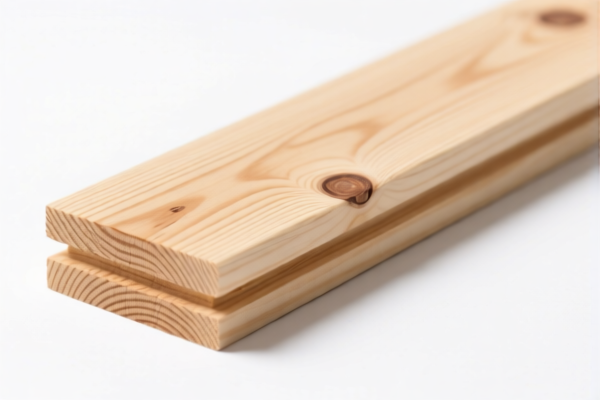
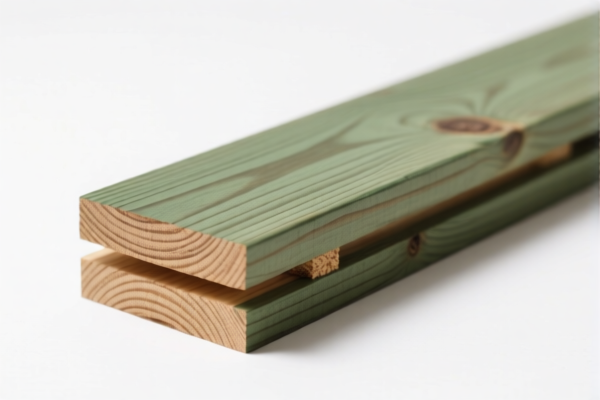
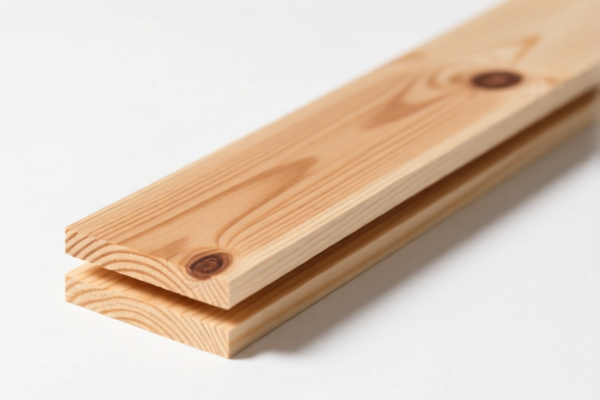
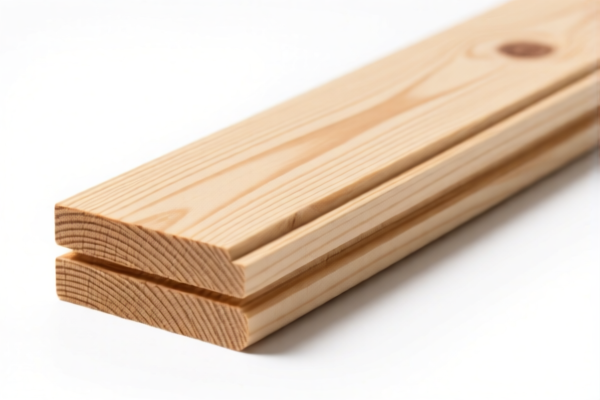
AI Analysis
🌲 Pine Construction Timber (Preservative Treated)
🌐 HS Code Reference & Customs Clearance Guide | 2026 Latest Tariff Full Analysis | Professional-Level Clearance Strategy
📌 Part 1: Product Definition & Classification: Do You Really Understand "Preservative Pine Timber"?
Pine Construction Timber (Preservative Coated/Treated) refers to pine wood that has undergone chemical treatment to resist decay, fungi, and insect damage, making it suitable for outdoor construction, landscaping, and structural applications. In international trade, the classification depends heavily on the shape/form of the timber (sawn, planed, etc.) and the state of the wood.
Key Distinction: - Sawn/Chipped Wood: Wood that has been mechanically processed into beams, planks, or posts. → Classified under Chapter 44, Heading 4409 (Continuously shaped along its entire length). - Rough Timber: Wood that is simply sawn but not continuously shaped. → Classified under Chapter 44, Heading 4407.
⚠️ Critical Classification Point:
- If the pine timber is continuously shaped (e.g., tongue-and-groove, chamfered, or uniformly planed) along its length, it falls under 4409.
- If it is simple sawn wood (even if treated with preservatives), it may fall under 4407.
- Preservative Treatment does not change the HS Code heading but is a critical declaration item for customs to ensure compliance with phytosanitary and environmental regulations.
📦 Part 2: HS Code Classification Details (2026 Latest Tariff Authority Comparison)
Based on the provided data, the following HS Codes are applicable for Pine (Preserved/Coated):
| HS Code | Product Description | Applicable Scenario | Tax Rate |
|---|---|---|---|
4409.10.40.90 |
Pine (Preserved Coating) - Other continuously shaped pine wood | Sawn/planed pine timber with preservative coating, not elsewhere specified | 35.0% |
4407.11.00.02 |
Pine (Preserved Coating) - Sawn wood, of pine species | Raw or simply sawn pine timber, treated with preservatives | 35.0% |
4409.10.40.10 |
Pine (Preserved Coating) - Continuously shaped pine wood | Specifically shaped pine timber (e.g., for construction beams) with preservative coating | 35.0% |
🔍 Key Takeaway:
- All three codes carry the same total tax rate of 35.0% due to US-China trade policies.
- The distinction between4409and4407lies in the physical shape of the wood.
- Preservative Coating is explicitly mentioned in all summaries, indicating that the treatment does not alter the base tariff but must be declared.
💰 Part 3: 2026 Latest Tariff Rate Breakdown (Including Surtaxes & Policy Add-ons)
✅ Applicable Country: United States (US)
✅ Country of Origin: China (CN)
✅ Effective Date: 2025年11月10日起 (Including subsequent imports)
🎯 1. 4409.10.40.90 & 4409.10.40.10 —— Pine Timber (Continuously Shaped, Preserved)
| Item | Details |
|---|---|
| Base Tariff Rate | 0.0% (ad valorem) |
| USITC Additional Tariff | +25.0% (Under USITC Footnote regarding Section 301 tariffs) |
| Section 122 Tariff | +10.0% (Specific surcharge for certain Chinese goods) |
| Total Tax Rate | 35.0% |
| Tax Calculation | CIF Value × 35.0% |
| De Minimis Exemption | ❌ Not Eligible (Denied under current US-China trade rules) |
| Legal Basis Path | USITC:4409.10.40.90 / 4409.10.40.10 → Section 301: 25% → Section 122: 10% |
📌 Explanation:
- Base Rate 0%: Pine timber generally has a low base duty under normal trade conditions.
- Section 301 Tariff (25%): This is the standard additional duty imposed on Chinese imports under Section 301 of the Trade Act.
- Section 122 Tariff (10%): An additional surcharge applicable to specific categories of Chinese wood products.
- Total 35%: A significant cost factor that must be factored into pricing strategies.
🎯 2. 4407.11.00.02 —— Pine Sawn Wood (Preserved)
| Item | Details |
|---|---|
| Base Tariff Rate | 0.0% (ad valorem) |
| USITC Additional Tariff | +25.0% (Under USITC Footnote regarding Section 301 tariffs) |
| Section 122 Tariff | +10.0% (Specific surcharge for certain Chinese goods) |
| Total Tax Rate | 35.0% |
| Tax Calculation | CIF Value × 35.0% |
| De Minimis Exemption | ❌ Not Eligible |
| Legal Basis Path | USITC:4407.11.00.02 → Section 301: 25% → Section 122: 10% |
📌 Note:
- Despite being classified under a different heading (4407 vs. 4409), the tax burden is identical.
- This highlights the importance of accurate product description rather than relying on HS code differences for tax savings in this category.
🛠️ Part 4: Customs Clearance Practical Advice (Battle-Tested Pitfall Guide)
✅ 1. Required Documentation Checklist (No Exceptions)
| Document | Required | Notes |
|---|---|---|
| ✅ Product Specification Sheet | ✔️ | Must detail wood species (Pine), treatment type (Preservative/Coating), dimensions, and usage. |
| ✅ Phytosanitary Certificate | ✔️ | Critical for wood products. Must confirm pest-free status and treatment compliance. |
| ✅ Treatment Certificate | ✔️ | Proof of preservative application (e.g., CCA, ACQ, or other approved chemicals). |
| ✅ Commercial Invoice | ✔️ | Clearly state "Pine Construction Timber (Preservative Coated)" and HS Codes. |
| ✅ Packing List | ✔️ | Detail weight, volume, and packaging type (e.g., palletized, wrapped). |
| ✅ Certificate of Origin | ✔️ | Required to confirm Chinese origin for tariff application. |
| ✅ Customs Declaration Form | ✔️ | Accurate description matching the HS code summary. |
✅ 2. Declaration Tips (Key Mantras)
🔥 “Shape Determines Code, Treatment is Disclosure, Tariff is Fixed at 35%!”
| Scenario | Correct Declaration | Wrong Practice |
|---|---|---|
| Continuously Shaped Pine | 4409.10.40.10 or 4409.10.40.90 |
Misdeclare as rough sawn wood (4407) → Risk of penalty |
| Rough Sawn Pine | 4407.11.00.02 |
Misdeclare as shaped wood (4409) → Inaccuracy risk |
| Preservative Treated | Explicitly state "Preservative Coated/Treated" | Omit treatment info → Phytosanitary hold |
| Mixed Shipments | Declare each type separately | Combine under one generic code → Customs seizure risk |
✅ 3. Special Handling for Preservative Timber
| Issue | Handling Advice |
|---|---|
| Chemical Composition | Declare specific preservative agents (e.g., CCA, ACQ). Some chemicals may be restricted or require additional safety data sheets (SDS). |
| Phytosanitary Compliance | Ensure treatment meets ISPM 15 standards if applicable for pallets, but note that treated timber itself may have different requirements. |
| Labeling | Products should be labeled with treatment type and date to facilitate customs inspection. |
| Inspection Risk | High. Be prepared for physical inspection by CBP (Customs and Border Protection) and USDA (United States Department of Agriculture). |
🌍 Part 5: Global Market Comparison (2026 Latest)
| Country/Region | Recommended HS Code | Tariff (China Origin) | Certification Requirements | Notes |
|---|---|---|---|---|
| 🇺🇸 USA | 4409.10.40.90 / 4407.11.00.02 |
35.0% | Phytosanitary Certificate, Treatment Proof | High tariff burden due to Section 301 & 122 |
| 🇨🇳 China | 4409.10.40.90 / 4407.11.00.02 |
0% - 5% (Export) | Fumigation Certificate (if required) | Export incentives may apply |
| 🇪🇺 EU | 4409 / 4407 |
0% - 1.7% | PEFC/FSC Certification (Sustainability) | Strict environmental regulations |
| 🇯🇵 Japan | 4409 / 4407 |
0% - 3.2% | IPPC Mark (if packaging) | Quality standards for timber are high |
📌 Conclusion:
- USA has the highest effective tariff (35%) for Chinese pine timber due to trade policies.
- EU and Japan have lower tariffs but stricter sustainability and environmental certifications (e.g., FSC, PEFC).
- Cost Advantage: Consider sourcing from non-China origins (e.g., Southeast Asia, Russia) if targeting the US market to avoid the 35% tariff.
📌 Part 6: Common Errors & Pitfalls (Lessons Learned)
❌ Error 1: Failing to declare "Preservative Coated"
👉 Consequence: Customs may classify as untreated wood → Phytosanitary rejection or fines.
❌ Error 2: Misclassifying "Shaped" timber as "Rough Sawn"
👉 Consequence: Incorrect HS code → Audit trail and potential penalties.
❌ Error 3: Assuming De Minimis applies
👉 Consequence: 35% tax is due on all shipments, no matter the value. No exemption.
❌ Error 4: Providing incomplete Treatment Certificates
👉 Consequence: USDA hold or destruction of goods if treatment is not verified.
✅ Correct Practice:
“Pine Construction Timber, Continuously Shaped, Preservative Coated (ACQ), 2x4x8ft, FSC Certified, Country of Origin: China”
🎯 Part 7: Conclusion: Precise Classification, Cost Control, Smooth Clearance!
🎯 Remember the Mantra:
🔹 “Shape dictates the Code, Treatment demands Disclosure, 35% is the Truth!”
🔹 “HS Code determines destiny, 35% tax is fixed, declaration must be perfect!”
📌 Pro Tip:
- If your pine timber is not treated with restricted chemicals, consider FSC/PEFC certification to appeal to eco-conscious buyers in the EU and Japan.
- For US imports, pre-apply for an Advance Ruling if the product form is ambiguous (e.g., partially shaped) to avoid misclassification risks.
- Supply Chain Strategy: Evaluate sourcing from Vietnam, Mexico, or Russia for US-bound shipments to potentially bypass the 35% China-specific surcharges.
📣 Immediate Action:
📞 Contact a licensed customs broker + Provide product specs + Verify treatment certificates
🚀 Ensure your pine timber clears customs smoothly, avoids delays, and protects your profit margins!
✨ Professional clearance starts with accurate classification!
💼 Every percentage point of tax matters!
Customer Reviews
About HS Code Classification
The Harmonized System (HS) is an internationally standardized nomenclature developed by the World Customs Organization (WCO) to classify traded products. Over 200 countries use the HS system as the basis for customs tariffs, trade statistics, and import/export regulations.
Each HS code follows a hierarchical structure:
- Chapter (2 digits) — Broad category of goods (e.g., Chapter 84: Machinery and Mechanical Appliances)
- Heading (4 digits) — More specific grouping within the chapter
- Subheading (6 digits) — Internationally standardized breakdown, used by all WCO member countries
- National subdivisions (8-10 digits) — Country-specific extensions for further classification, such as US HTSUS 10-digit codes
Correct HS code classification is essential for smooth customs clearance, accurate duty payment, and compliance with trade regulations. Misclassification can lead to customs delays, overpayment of duties, or penalties.
When importing from CN to US, the applicable tariff rates may include:
- Most-Favored-Nation (MFN) rate — The standard duty rate applied to WTO members
- General rate — Applied to countries without trade agreements
- Trade remedy duties — Additional tariffs such as Section 301 (anti-dumping), Section 232 (national security), or countervailing duties
The information provided on this page is for reference purposes only. For official classification, please consult with your local customs authority or a licensed customs broker.