Pine Construction Wood (Preserved)
CN → US| HS Code | Tariff Rate | Origin | Destination | Doc |
|---|---|---|---|---|
| 4409104090 | 35.0% | CN | US | Official Doc |
| 4407110002 | 35.0% | CN | US | Official Doc |
| 4409104010 | 35.0% | CN | US | Official Doc |
Product Images
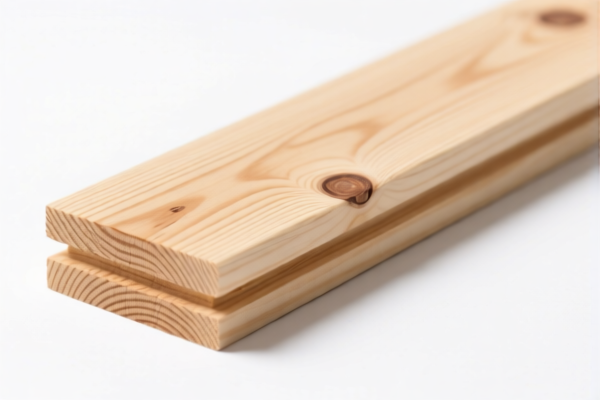
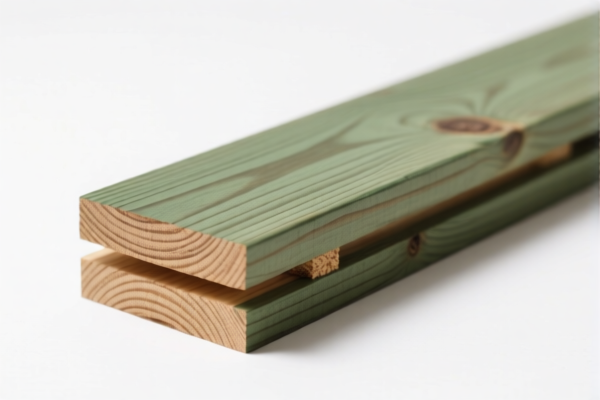
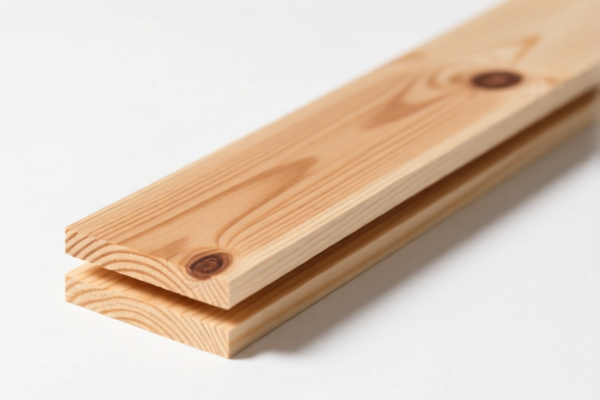
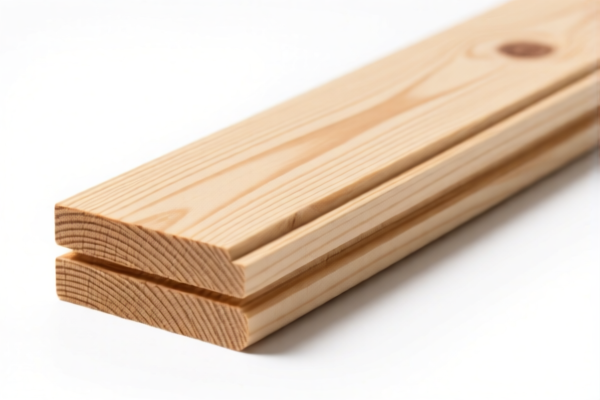
AI Analysis
🌲 Pine Construction Wood (Preserved Coating)
🌐 HS Code Reference & Customs Clearance Guide | 2026 Latest Tariff Analysis | Professional Level Entry Strategy
📌 I. Product Definition & Classification: Do You Truly Understand "Preserved Pine"?
Pine Construction Wood, specifically treated with preserved coatings, is a critical material in global infrastructure, residential framing, and outdoor landscaping. In international trade, this product is not a monolithic entity; its classification hinges on its physical form (solid wood vs. processed) and its surface treatment status (preserved/coated).
Key Distinction Points: * Rough/Turned Pine (4409): Pine wood that has been longitudinally shaped (dressed, tongued, grooved, etc.) but retains its structural integrity as lumber. If it is "Preserved Coating," it falls here if it meets the turned/profiled criteria. * Sawn Pine (4407): Pine wood that has been sawn or chipped lengthwise but not further processed into specific profiles (like tongue-and-groove). Preserved treated sawn pine also fits here under specific subheadings.
⚠️ Critical Classification Trigger:
- If the wood is sawn but not further profiled → Look at 4407.11
- If the wood is turned/profiled (e.g., tongue & groove, decking boards) → Look at 4409.10
- Common Misconception: "Preserved" (treated with chemicals) does not change the HS Code to Chapter 38 (Chemicals). It remains in Chapter 44 (Wood), but requires strict declaration of the preservative type for phytosanitary compliance.
📦 II. HS Code Classification Details (2026 Latest Tariff Authority对照)
Based on the provided data, here are the precise HS Codes for Pine (Preserved Coating):
| HS Code | Product Description | Applicable Scenario | Profile State |
|---|---|---|---|
4409.10.40.90 |
Pine (Preserved Coating) | Matched material, conforms to wood category, no obvious conflicts. | Profiled/Turned (Generic) |
4407.11.00.02 |
Pine (Preserved Coating), Coniferous, Preserved | Matched successfully. Sawn/coniferous pine with preservative coating. | Sawn/Unprofiled |
4409.10.40.10 |
Pine (Preserved Coating) | Conforms to Coniferous-Pine requirements, no obvious profile conflicts. | Profiled/Turned (Specific Pine) |
🔍 Key Reminder:
- All three codes above carry a Total Tax Rate of 35.0%. - The difference lies in the processing degree:4407is for sawn wood, while4409is for turned/profiled wood (e.g., flooring, decking, moldings). - "Preserved Coating" implies chemical treatment. Ensure your Phytosanitary Certificate matches the specific preservative used to avoid quarantine rejection.
💰 III. 2026 Latest Tariff Rate Breakdown (Including Additional Taxes & Policy Add-ons)
✅ Applicable Country: USA (US)
✅ Origin: China (CN)
✅ Effective Date: Includes all imports post-2025 policies (Section 301 & IEEPA)
🎯 1. 4409.10.40.90 —— Pine, Preserved Coating (Profiled)
| Item | Content |
|---|---|
| Base Rate | 0.0% (ad valorem) |
| Section 301 Add-on | +25.0% |
| Section 122 Clause Tariff | +10.0% |
| Total Tax Rate | 35.0% |
| Tax Calculation | CIF Value × 35% |
| De Minimis Exemption? | ❌ No (Denied for wood products under Section 301) |
| Legal Basis Path | USITC:4409.10.40.90 → Section 301: 25% → Section 122: 10% |
📌 Explanation:
- The 0% base rate reflects standard USMFN (Most Favored Nation) treatment for processed wood. - The +25% is the standard Section 301 tariff on Chinese wood products. - The +10% is the specific "Section 122 Clause" tariff applied to certain Chinese imports. - Total: 35%. This is a high-cost item. Profit margins must absorb this fully.
🎯 2. 4407.11.00.02 —— Sawn Pine, Preserved (Coniferous)
| Item | Content |
|---|---|
| Base Rate | 0.0% |
| Section 301 Add-on | +25.0% |
| Section 122 Clause Tariff | +10.0% |
| Total Tax Rate | 35.0% |
| Tax Calculation | CIF Value × 35% |
| De Minimis Exemption? | ❌ No |
| Legal Basis Path | USITC:4407.11.00.02 → Section 301: 25% → Section 122: 10% |
📌 Note:
- Even though it is "Sawn" (4407) rather than "Profiled" (4409), the tariff burden is identical (35%). - Ensure the product description explicitly states "Sawn" and "Preserved" to distinguish from raw logs (4403) or unprocessed timber.
🎯 3. 4409.10.40.10 —— Pine, Preserved Coating (Specific Profile)
| Item | Content |
|---|---|
| Base Rate | 0.0% |
| Section 301 Add-on | +25.0% |
| Section 122 Clause Tariff | +10.0% |
| Total Tax Rate | 35.0% |
| Tax Calculation | CIF Value × 35% |
| De Minimis Exemption? | ❌ No |
| Legal Basis Path | USITC:4409.10.40.10 → Section 301: 25% → Section 122: 10% |
📌 Explanation:
- This code is for pine that is profiled (e.g., tongue-and-groove flooring, decking) and preserved. - The tax rate is uniform across all three provided codes: 35%. - Choose4409.10.40.10if your wood has specific profiles (like decking grooves) that distinguish it from generic4409.10.40.90.
🛠️ IV. Customs Clearance Practical Advice (Battle-Tested Pitfall Avoidance)
✅ 1. Documentation Checklist (Mandatory)
| Document | Must Provide? | Notes |
|---|---|---|
| ✅ Commercial Invoice | ✔️ | Must state "Pine Wood, Preserved Coating," include CIF value, and country of origin. |
| ✅ Phytosanitary Certificate | ✔️ | CRITICAL. Issued by the exporting country's plant protection agency. Must specify the chemical agent used for preservation. |
| ✅ ** fum Wood Packaging Mark (ISPM 15)** | ✔️ | If packaged in wood crates, the pallets/crates must have the ISPM 15 stamp. |
| ✅ Material Safety Data Sheet (MSDS) | ✔️ | For the "Preserved Coating" chemicals, to prove compliance with US EPA/TSCA regulations. |
| ✅ Packing List | ✔️ | Detail dimensions, volume (CBM), and gross/net weight. |
| ✅ Bill of Lading/Air Waybill | ✔️ | Standard shipping document. |
✅ 2. Declaration Tips (Key Mantra)
🔥 "Preserved = Chemicals, Profile = 4409, Sawn = 4407, Declare Accurate!"
| Scenario | Correct Declaration | Wrong Practice |
|---|---|---|
| Decking Boards (Tongue & Groove) | 4409.10.40.10 or 4409.10.40.90 |
Declaring as "Lumber" (4407) → Risk of reclassification & penalty |
| Standard 2x4 Framing (Sawn) | 4407.11.00.02 |
Declaring as "Flooring" → Misclassification |
| Raw Logs (Unprocessed) | Not in list (4403) |
Using 4407 codes → Rejected (Logs have different quarantine rules) |
| Unpreserved Wood | Different codes (No 10% S122?) | Declaring "Preserved" when it's not → Fraud Risk |
✅ 3. Special Handling & Compliance
| Situation | Handling Advice |
|---|---|
| Chemical Treatment Proof | Provide the MSDS and Treatment Certificate proving the wood meets US EPA standards for the specific preservative (e.g., ACQ, CCA). |
| Pest Control | Even if "preserved," customs may inspect for insect activity. Ensure the wood is kiln-dried and treated per ISPM 15 if shipped in wood packaging. |
| Mixed Shipments | If packing pine with other goods, declare separately. Do not bundle under a generic "Wood Products" code. |
| Pre-Ruling | If unsure between 4407 and 4409, apply for an Advance Ruling from CBP before shipment. |
🌍 V. Global Market Comparison (2026 Latest)
| Country/Region | Recommended HS Code | Tariff | Certification Req. | Notes |
|---|---|---|---|---|
| 🇺🇸 USA | 4409.10.40.x / 4407.11.00.02 |
35% | Phytosanitary + EPA | High tariff barrier. |
| 🇨🇳 China | 4409 / 4407 |
5-10% | N/A (Import) | Lower entry cost for raw material sourcing. |
| 🇪🇺 EU | 4409 / 4407 |
0-20% | FSC/PEFC (Eco-cert) | Strict deforestation regulations (EUDR). |
| 🇯🇵 Japan | 4409 / 4407 |
0-5% | ISPM 15 | Focus on quality and moisture content. |
📌 Conclusion:
- The USA imposes the heaviest burden with the 35% effective rate. - EU and Japan focus more on sustainability certification (FSC/PEFC) and phytosanitary compliance than high tariffs. - Profitability in the US market for preserved pine is tight; consider value-added processing (e.g., pre-fab components) to justify the cost.
📌 VI. Common Errors & Pitfall Guide (Lessons Learned)
❌ Error 1: Declaring "Preserved Wood" without a Phytosanitary Certificate.
👉 Consequence: Shipment held at port, fum quarantined, or destroyed. Delay: 2-4 weeks.
❌ Error 2: Using 4403 (Logs) for processed lumber.
👉 Consequence: Tariff mismatch (Logs may have different duties) + Quarantine Rejection.
❌ Error 3: Ignoring the Section 122 Clause.
👉 Consequence: Underpayment of 10%. CBP will demand back taxes + interest.
❌ Error 4: Confusing "Sawn" (4407) with "Profiled" (4409).
👉 Consequence: If decking (profiled) is declared as sawn lumber, CBP may reclassify it, leading to penalties.
✅ Correct Practice:
"Pine Lumber, Tongue & Groove, Pressure-Treated with [Chemical Name], Kiln-Dried, ISPM 15 Packaging, HS: 4409.10.40.10"
🎯 VII. Conclusion: Professional Declaration, Safe Passage, Cost Control!
🎯 Remember the Mantra:
🔹 "Profiled is 4409, Sawn is 4407, Preserved Needs Cert, 35% is the Rate!"
🔹 "HS Code Dictates Duty, Tax Diff is Huge, Declaration Mistake Costs Thousands!"
📌 Pro Tip:
If your pine wood is sourced from Vietnam, Thailand, or Malaysia, you may qualify for lower Section 301 rates or FTAA (Free Trade Agreement) benefits.
Recommend applying for a Certificate of Origin (Form E for ASEAN) to potentially reduce the 25% Section 301 component, bringing the total tax down significantly.
📣 Immediate Action:
📞 Contact a licensed Customs Broker + Provide Treatment Certificate + Apply for HS Code Pre-Ruling
🚀 Ensure your Pine Construction Wood passes customs smoothly, avoiding delays and maximizing profit!
✨ Professional Customs Clearance Starts with Precise Classification!
💼 Every cent of tax savings counts!
Customer Reviews
About HS Code Classification
The Harmonized System (HS) is an internationally standardized nomenclature developed by the World Customs Organization (WCO) to classify traded products. Over 200 countries use the HS system as the basis for customs tariffs, trade statistics, and import/export regulations.
Each HS code follows a hierarchical structure:
- Chapter (2 digits) — Broad category of goods (e.g., Chapter 84: Machinery and Mechanical Appliances)
- Heading (4 digits) — More specific grouping within the chapter
- Subheading (6 digits) — Internationally standardized breakdown, used by all WCO member countries
- National subdivisions (8-10 digits) — Country-specific extensions for further classification, such as US HTSUS 10-digit codes
Correct HS code classification is essential for smooth customs clearance, accurate duty payment, and compliance with trade regulations. Misclassification can lead to customs delays, overpayment of duties, or penalties.
When importing from CN to US, the applicable tariff rates may include:
- Most-Favored-Nation (MFN) rate — The standard duty rate applied to WTO members
- General rate — Applied to countries without trade agreements
- Trade remedy duties — Additional tariffs such as Section 301 (anti-dumping), Section 232 (national security), or countervailing duties
The information provided on this page is for reference purposes only. For official classification, please consult with your local customs authority or a licensed customs broker.