Pine Construction Wood Preserved
CN → US| HS Code | Tariff Rate | Origin | Destination | Doc |
|---|---|---|---|---|
| 4409104010 | 35.0% | CN | US | Official Doc |
| 4409104090 | 35.0% | CN | US | Official Doc |
| 4403110060 | 35.0% | CN | US | Official Doc |
| 4403210165 | 35.0% | CN | US | Official Doc |
| 3824994900 | 41.5% | CN | US | Official Doc |
Product Images
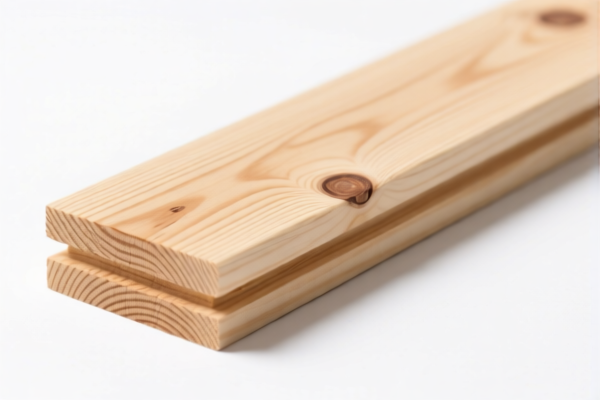
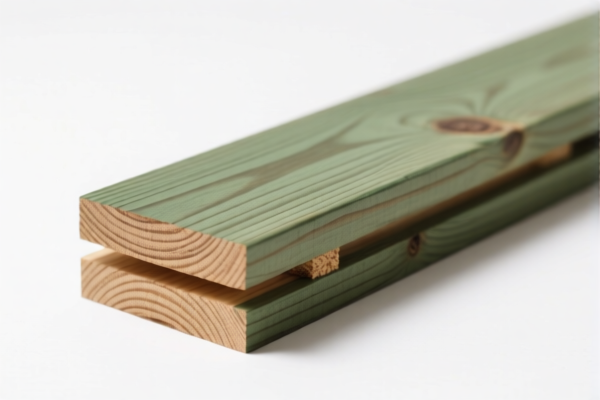
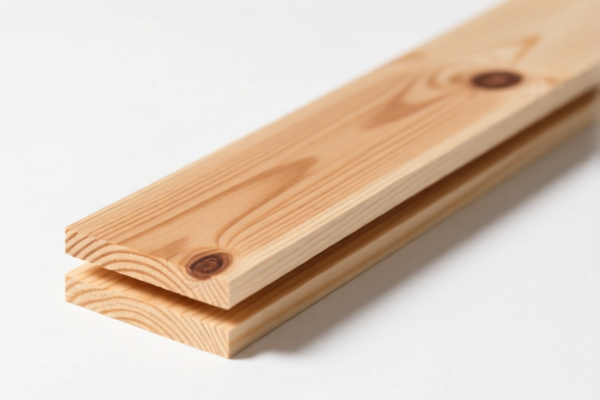
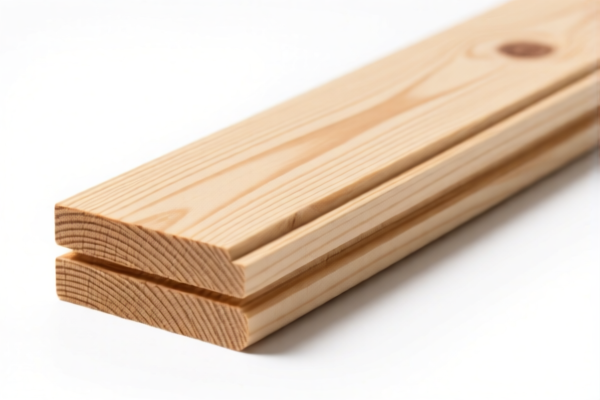
AI Analysis
🌲 Preserved Pine Construction Wood: HS Code Classification & Customs Clearance Guide
🌐 HS Code Reference & Customs Clearance Guide | 2026 Latest Tariff Analysis | Professional Clearance Strategy
📌 I. Product Definition & Classification: Do You Truly Understand "Preserved Pine Wood"?
Preserved pine wood is not a single commodity but a category dependent on its processing depth, form, and intended use. In international trade, "pine construction wood" spans from raw logs to finished lumber. The critical distinction lies in whether the wood has been sawn, planed, or merely treated.
- Raw Logs/Unprocessed Timber: Pine trees cut down, debarked (or not), and treated with preservatives. These are considered "Wood in the rough."
- Sawn/Lathed Wood: Pine wood that has been cut into beams, planks, or boards. This is "Wood continuously shaped along the whole length."
- Wood Chips/Scraps: Byproducts or waste wood treated with preservatives, often classified under chemical products or residues.
⚠️ Key Distinction Point:
- If the wood is in log form or rough-cut for sawmills → Classified under Chapter 44.03 (Wood prepared for woodworking).
- If the wood is sawn/lathed into construction beams/boards → Classified under Chapter 44.09 (Wood continuously shaped).
- If the material is wood chips/dust (not structural) → Classified under Chapter 38.24 (Prepared binders/residues).
📦 II. HS Code Classification Details (2026 Latest Tariff Authority Reference)
| HS Code | Product Description | Application Scenario | Processing State |
|---|---|---|---|
4403.11.00.60 |
Preserved Pine, Wood of conifers, in the rough, whether or not stripped of bark or sapwood, or roughly squared | Raw logs, rough beams, railway sleepers | ✅ Log/Rough Cut |
4403.21.01.65 |
Preserved Pine, Wood of pine species, in the rough, whether or not stripped of bark or sapwood, or roughly squared | Specific pine logs, softwood timber | ✅ Log/Rough Cut |
4409.10.40.10 |
Preserved Pine, wood continuously shaped along its length, tongue, grooved, reeded, beaded, center-routed, barbeled, V-jointed, splayed, tenoned, mortised, valled, profiled, similar (other) | Finished lumber, floorboards, molding, tongue-and-groove planks | ✅ Sawn/Planed |
4409.10.40.90 |
Preserved Pine, wood continuously shaped along its length... other (falling in other headings) | Other shaped pine wood not listed specifically (catch-all for shaped pine) | ✅ Sawn/Planed |
3824.99.49.00 |
Preserved Pine Chips/Shavings, other prepared binders for foundry molds or cores, other chemical products and preparations | Wood chips, sawdust, wood waste treated with preservatives | ✅ Chip/Residue |
🔍 Critical Reminder:
- "Rough" vs. "Shaped": If the wood has any continuous shaping (sawing into specific profiles, tongue/groove), it moves from 4403 to 4409.
- "Pine" Specificity:4403.21is specific to pine, while4403.11covers conifers broadly. Precision in material description matters.
- "Chip" Classification: Treated wood waste is not wood; it is a chemical residue due to the preservation treatment, hence 3824.
💰 III. 2026 Latest Tariff Rate Details (Including Surcharges, Policy Add-ons)
✅ Applicable Country: United States (US)
✅ Origin: China (CN)
✅ Effective Date: From November 10, 2025 (including subsequent imports)
🎯 1. 4403.11.00.60 & 4403.21.01.65 —— Preserved Pine Logs/Rough Timber
| Item | Content |
|---|---|
| Base Tariff | 0% (ad valorem) |
| USITC Surcharge (Section 301) | +25% |
| IEEPA Surcharge | +10% (Targeting China/HK products, effective Nov 10, 2025) |
| Total Tax Rate | 35.0% |
| Tax Calculation | CIF Value × 35% |
| De Minimis Exemption | ❌ Not Eligible (deny_de_minimis) |
| Legal Basis Path | IEEPA:9903.01.25 → IEEPA:9903.01.24 → USITC:4403.xx → FOOTNOTE:9903.88.01 |
📌 Explanation:
- The "25% USITC Surcharge" comes from Section 301 of the US Trade Act;
- The "10% IEEPA Surcharge" is an additional levy under the International Emergency Economic Powers Act;
- Total 35%, a high duty rate for raw timber, requiring upfront cost calculation.
🎯 2. 4409.10.40.10 & 4409.10.40.90 —— Preserved Pine Lumber/Shaped Wood
| Item | Content |
|---|---|
| Base Tariff | 0% |
| USITC Surcharge | +25% |
| IEEPA Surcharge | +10% |
| Total Tax Rate | 35.0% |
| Tax Calculation | CIF × 35% |
| De Minimis Exemption | ❌ Not Eligible |
| Legal Basis Path | IEEPA:9901.25 → IEEPA:9903.01.24 → USITC:4409.10.40.xx → FOOTNOTE:9903.88.01 |
📌 Note:
- Same tax rate as logs; however, shaped wood often has a higher commercial value, so the absolute tax amount is higher.
- Ensure the description specifies "Continuously Shaped" to avoid misclassification.
🎯 3. 3824.99.49.00 —— Preserved Pine Chips/Residues
| Item | Content |
|---|---|
| Base Tariff | 6.5% |
| USITC Surcharge | +25% |
| IEEPA Surcharge | +10% |
| Total Tax Rate | 41.5% |
| Tax Calculation | CIF × 41.5% |
| De Minimis Exemption | ❌ Not Eligible |
| Legal Basis Path | IEEPA:9903.01.24 → USITC:3824.99.49.00 → FOOTNOTE:9903.88.01 |
📌 Important:
- This is the highest tax rate due to the non-zero base tariff (6.5%).
- Correctly classifying "chips" vs. "wood" is crucial. Misclassifying chips as lumber (4409) might save 6.5% base but risks severe penalties for false declaration.
🛠️ IV. Customs Clearance Practical Advice (Combat Pitfall Guide)
✅ 1. Documentation Checklist (Essential Items)
| Document | Mandatory | Explanation |
|---|---|---|
| ✅ Product Specification Sheet | ✔️ | Must specify: Preservative type (e.g., CCA, ACQ, Copper Azole), pressure treatment level, moisture content. |
| ✅ Material Safety Data Sheet (MSDS) | ✔️ | Required for 3824 and treated wood to verify chemical content. |
| ✅ ISPM 15 Phytosanitary Certificate | ✔️ | Crucial! Even if treated, wood entering the US must comply with ISPM 15 standards (fumigation/markings). |
| ✅ Commercial Invoice | ✔️ | Clearly state "Preserved Pine," HS Code, and CIF value. Distinguish between "Logs" and "Sawn Lumber." |
| ✅ Packing List | ✔️ | Detail dimensions, weight, and number of bundles. |
| ✅ Certificate of Origin | ✔️ | Required for tariff calculation. |
✅ 2. Declaration Tips (Key Mnemonics)
🔥 "Logs are 4403, Shaped is 4409, Chips are 3824. Be precise!"
| Scenario | Correct Declaration | Common Error |
|---|---|---|
| Pine logs for sawmills | 4403.11.00.60 or 4403.21.01.65 |
Misdeclare as "Lumber" → Risk of penalty |
| Tongue & Groove Pine Boards | 4409.10.40.10 |
Misdeclare as "Logs" → Incorrect tax base |
| Treated Wood Chips | 3824.99.49.00 |
Misdeclare as "Wood" → Missed base tax (6.5%) |
| Untreated Pine Logs | 4403.91 (Different) |
Confusing with Preserved Logs → Wrong HS |
✅ 3. Special Handling Cases
| Scenario | Handling Advice |
|---|---|
| High Moisture Content | Ensure wood is dry enough to prevent mold, but declared accurately. Wet wood may attract additional scrutiny. |
| Preservative Chemicals | Must declare the specific chemical (e.g., Copper Azole, Chromated Copper Arsenate). Some chemicals may face additional EPA regulations. |
| Mixed Shipments | If a container has both logs and lumber, separate lines in the bill of lading and invoice are recommended to avoid confusion. |
| ISPM 15 Markings | Verify the "HT" (Heat Treated) or "MB" (Methyl Bromide) stamp is visible and valid. Lack of marking = Rejection. |
🌍 V. Global Market Comparison (2026 Latest)
| Country/Region | Recommended HS Code | Tariff (CN Origin) | Certification | Notes |
|---|---|---|---|---|
| 🇺🇸 USA | 4403.xxxx / 4409.xxxx |
35% | ISPM 15 + EPA (for chemicals) | High surcharges. Strict phytosanitary checks. |
| 🇨🇳 China | 4403.xxxx / 4409.xxxx |
~0-5% | Fumigation Certificate | Low import duty, but strict environmental checks. |
| 🇪🇺 EU | 4403.xxxx / 4409.xxxx |
~0% | ISPM 15 + FSC Certification | Carbon footprint documentation increasingly required. |
| 🇬🇧 UK | 4403.xxxx / 4409.xxxx |
~0% | UKCA + FSC | Post-Brexit rules apply. |
| 🇦🇺 Australia | 4403.xxxx / 4409.xxxx |
~0% | ISPM 15 + MLD | Very strict biosecurity. |
📌 Conclusion:
- USA is the most expensive market for preserved pine wood due to the 35% combined tariff.
- Biosecurity (ISPM 15) is universal and critical. Failure to comply results in rejection or destruction, regardless of tariff.
📌 VI. Common Mistakes & Pitfalls (Lessons Learned)
❌ Mistake 1: Declaring "Wood Chips" as "Sawn Lumber"
👉 Consequence: Evading the 6.5% base tariff leads to heavy fines and potential blacklisting.
❌ Mistake 2: Ignoring ISPM 15 Markings
👉 Consequence: Cargo rejected at port or re-exported at exporter’s cost.
❌ Mistake 3: Vague Description ("Pine Wood")
👉 Consequence: Customs cannot determine if it’s log (4403) or shaped (4409), causing delays and additional examination fees.
❌ Mistake 4: Not Disclosing Preservative Type
👉 Consequence: Failure to comply with EPA regulations under TSCA, leading to seizure.
✅ Correct Approach:
"Preserved Pine Lumber, Tongue & Groove, Heat Treated, Chemical: Copper Azole, ISPM 15 Compliant, HS: 4409.10.40.10"
🎯 VII. Conclusion: Professional Declaration Saves Cost & Time!
🎯 Remember the Mnemonic:
🔹 "Logs 4403, Shaped 4409, Chips 3824. Tax is 35%, Chips 41.5!"
🔹 "ISPM 15 is King, Without it, No Entry!"
🔹 "HS Code Determines Life, Declaration Precision Saves Millions!"
📌 Pro Tip:
If your pine wood is sourced from Vietnam, Malaysia, or Thailand, you may be eligible for preferential tariffs under trade agreements (like CPTPP or ASEAN-US FTA). However, preservative treatment may complicate origin rules.
Recommendation: Apply for a Pre-Ruling (Advance Ruling) from US Customs and Border Protection (CBP) before shipment to confirm the exact HS Code and tax liability.
📣 Immediate Action:
📞 Contact a licensed customs broker + Provide Product Specs + Apply for HS Code Pre-Ruling
🚀 Let your preserved pine wood clear customs smoothly, reduce costs, and boost profits!
✨ Professional Clearance Starts with Accurate Classification!
💼 Every Dollar of Cost Deserves Precise Calculation!
Customer Reviews
About HS Code Classification
The Harmonized System (HS) is an internationally standardized nomenclature developed by the World Customs Organization (WCO) to classify traded products. Over 200 countries use the HS system as the basis for customs tariffs, trade statistics, and import/export regulations.
Each HS code follows a hierarchical structure:
- Chapter (2 digits) — Broad category of goods (e.g., Chapter 84: Machinery and Mechanical Appliances)
- Heading (4 digits) — More specific grouping within the chapter
- Subheading (6 digits) — Internationally standardized breakdown, used by all WCO member countries
- National subdivisions (8-10 digits) — Country-specific extensions for further classification, such as US HTSUS 10-digit codes
Correct HS code classification is essential for smooth customs clearance, accurate duty payment, and compliance with trade regulations. Misclassification can lead to customs delays, overpayment of duties, or penalties.
When importing from CN to US, the applicable tariff rates may include:
- Most-Favored-Nation (MFN) rate — The standard duty rate applied to WTO members
- General rate — Applied to countries without trade agreements
- Trade remedy duties — Additional tariffs such as Section 301 (anti-dumping), Section 232 (national security), or countervailing duties
The information provided on this page is for reference purposes only. For official classification, please consult with your local customs authority or a licensed customs broker.