Pine Finger Jointed Wood for Furniture
CN → US| HS Code | Tariff Rate | Origin | Destination | Doc |
|---|---|---|---|---|
| 4409290655 | 38.2% | CN | US | Official Doc |
| 9403910080 | 35.0% | CN | US | Official Doc |
| 4409100500 | 38.2% | CN | US | Official Doc |
| 4407190001 | 35.0% | CN | US | Official Doc |
| 4407110001 | 35.0% | CN | US | Official Doc |
Product Images
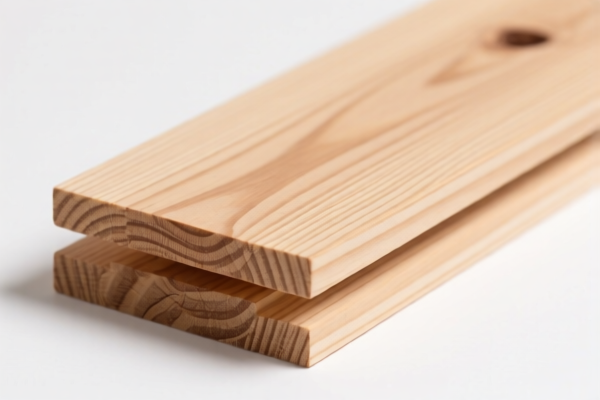
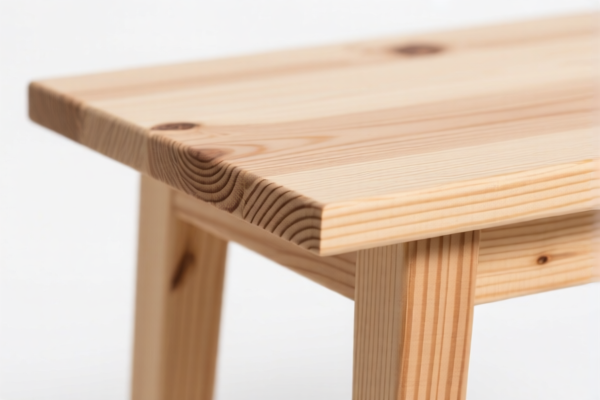
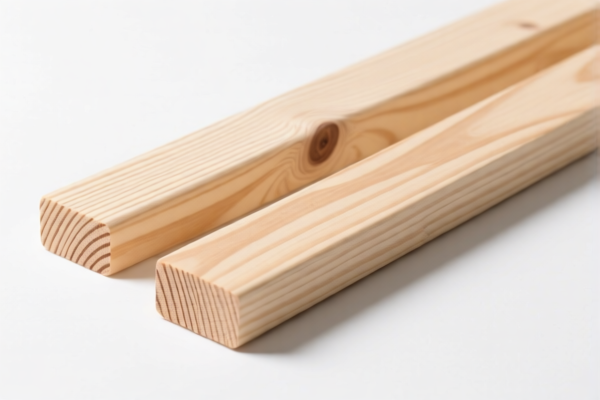
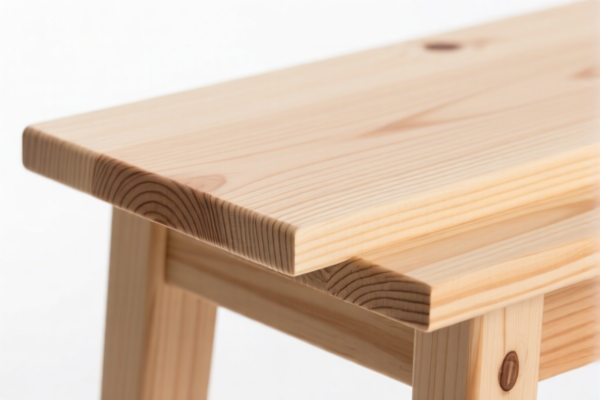
AI Analysis
🪵 Pine Finger Jointed Wood for Furniture (Wooden Pallet Finger-Jointed Boards)
🌐 HS Code Reference & Customs Clearance Guide | 2026 Latest Tariff Analysis | Professional Clearance Strategy
📌 I. Product Definition & Classification: What Exactly is "Pine Finger-Jointed Wood"?
Pine finger-jointed wood (often referred to as finger-jointed boards or solid wood strips) is a processed wood product where short pieces of pine timber are joined end-to-end using a finger-like interlocking joint. It is widely used in: 1. Wooden Pallets: As structural components for pallet deck blocks and stringers. 2. Furniture Parts: As structural components for wooden furniture (legs, frames, shelves). 3. Flooring: As continuous end-formed pieces for wood flooring applications.
⚠️ Key Distinction:
- If the wood is processed longitudinally (molded along the length) and used for pallets/furniture, it falls under Chapter 44 (Wood and Wood Products) or Chapter 94 (Furniture).
- If it is plain sawn but used for pallets, it may fall under Chapter 44 (Wood) but with different subheadings based on species (coniferous vs. non-coniferous).
- Critical Point: The "Finger Joint" feature often pushes classification toward 4409 (Wood continuously shaped along all its sides...) if the shaping is integral to the product's form, rather than just plain sawn boards.
📦 II. HS Code Classification Details (2026 Latest Tariff Authority Comparison)
| HS Code | Product Description | Application Scenario | Key Feature |
|---|---|---|---|
4409.29.06.55 |
Finger-jointed boards for wooden pallets, matching non-coniferous wood materials and flooring form | Pallets using hardwoods or mixed wood; Flooring applications | ✅ Non-coniferous + Shaped |
9403.91.00.80 |
Finger-jointed boards for wooden pallets, matching wooden furniture parts material and structural function | Furniture components, structural frames for furniture | ✅ Furniture Part |
4409.10.05.00 |
Finger-jointed boards for wooden pallets, matching coniferous (pine) wood end-continuous forming characteristics | Pallets using pine/spruce/fir; Continuous end-formed features | ✅ Coniferous + Shaped |
4407.19.00.01 |
Finger-jointed boards for wooden pallets, matching wood material and finger-jointed form (general) | General use, not specifically shaped along all sides, or plain sawn coniferous | ✅ Coniferous + Plain Sawed |
4407.11.00.01 |
Finger-jointed boards for wooden pallets, matching finger-jointed form and longitudinal sawn board characteristics | Longitudinally sawn coniferous wood for pallets | ✅ Coniferous + Longitudinal |
🔍 Important Reminder:
- Pine (Pinus spp.) is classified as coniferous wood. Therefore, HS codes starting with4407.1xor4409.1xare more likely than4409.2x(non-coniferous).
- If the product is used as a furniture part,9403.91.00.80may apply, even if the raw material is pine.
- If the product is plain sawn (not continuously shaped along all sides), it falls under4407, not4409.
💰 III. 2026 Latest Tariff Rate Details (Including Additional Taxes & Policy Surcharges)
✅ Applicable Country: United States (US)
✅ Origin: China (CN)
✅ Effective Date: From November 10, 2025 (including subsequent imports)
🎯 1. 4409.29.06.55 —— Finger-Jointed Boards (Non-Coniferous, Pallet/Flooring Use)
| Item | Content |
|---|---|
| Base Tariff | 3.2% (ad valorem) |
| Section 301 Additional Tariff | +25.0% (from USITC Footnote 9903.88.01) |
| Section 122 Tariff | +10.0% (from IEEPA Footnote) |
| Total Rate | 38.2% |
| Tax Calculation | CIF Value × 38.2% |
| De Minimis Eligible? | ❌ No (deny_de_minimis) |
| Legal Basis Path | IEEPA:9903.01.25 → IEEPA:9903.01.24 → USITC:4409.29.06.55 → FOOTNOTE:9903.88.01 |
📌 Explanation:
- The 3.2% base rate applies to non-coniferous wood products under HTSUS 4409.29.
- The 25% Section 301 tariff is applied to all Chinese-origin wood products under this heading.
- The 10% Section 122 tariff is a specific surcharge for certain wood products under IEEPA.
- Total 38.2% is a high cost driver.
🎯 2. 9403.91.00.80 —— Wooden Furniture Parts (Finger-Jointed Boards for Furniture)
| Item | Content |
|---|---|
| Base Tariff | 0.0% (ad valorem) |
| Section 301 Additional Tariff | +25.0% |
| Section 122 Tariff | +10.0% |
| Total Rate | 35.0% |
| Tax Calculation | CIF Value × 35.0% |
| De Minimis Eligible? | ❌ No |
| Legal Basis Path | IEEPA:9901.25 → IEEPA:9903.01.24 → USITC:9403.91.00.80 → FOOTNOTE:9903.88.01 |
📌 Note:
- Even though the base rate is 0%, the 35% total tariff is still significant.
- Classification as a furniture part (rather than raw wood) can sometimes lower the base rate, but additional tariffs still apply heavily.
🎯 3. 4409.10.05.00 —— Finger-Jointed Boards (Coniferous/Pine, Continuous Shaping)
| Item | Content |
|---|---|
| Base Tariff | 3.2% (ad valorem) |
| Section 301 Additional Tariff | +25.0% |
| Section 122 Tariff | +10.0% |
| Total Rate | 38.2% |
| Tax Calculation | CIF Value × 38.2% |
| De Minimis Eligible? | ❌ No |
| Legal Basis Path | IEEPA:9903.01.25 → IEEPA:9903.01.24 → USITC:4409.10.05.00 → FOOTNOTE:9903.88.01 |
📌 Explanation:
- This code is for coniferous wood (pine) that is continuously shaped (finger-jointed).
- Base rate 3.2% + 25% + 10% = 38.2%.
- High risk of misclassification if the wood is not properly shaped along all sides.
🎯 4. 4407.19.00.01 —— Plain Sawn Coniferous Wood (Pine, General Use)
| Item | Content |
|---|---|
| Base Tariff | 0.0% (ad valorem) |
| Section 301 Additional Tariff | +25.0% |
| Section 122 Tariff | +10.0% |
| Total Rate | 35.0% |
| Tax Calculation | CIF Value × 35.0% |
| De Minimis Eligible? | ❌ No |
| Legal Basis Path | IEEPA:9901.25 → IEEPA:9903.01.24 → USITC:4407.19.00.01 → FOOTNOTE:9903.88.01 |
📌 Note:
- If the wood is not continuously shaped (i.e., plain sawn but finger-jointed at ends only), it may fall here.
- Base rate 0% + 25% + 10% = 35.0%.
🎯 5. 4407.11.00.01 —— Longitudinally Sawn Coniferous Wood (Pine)
| Item | Content |
|---|---|
| Base Tariff | 0.0% (ad valorem) |
| Section 301 Additional Tariff | +25.0% |
| Section 122 Tariff | +10.0% |
| Total Rate | 35.0% |
| Tax Calculation | CIF Value × 35.0% |
| De Minimis Eligible? | ❌ No |
| Legal Basis Path | IEEPA:9901.25 → IEEPA:9903.01.24 → USITC:4407.11.00.01 → FOOTNOTE:9903.88.01 |
📌 Note:
- For coniferous wood (pine) that is longitudinally sawn (e.g., planks, strips) for pallets.
- Base rate 0% + 25% + 10% = 35.0%.
🛠️ IV. Customs Clearance Practical Advice (Battle-Tested Pitfall Avoidance Guide)
✅ 1. Preparation Checklist (Mandatory Documents)
| Document | Required | Description |
|---|---|---|
| ✅ Product Specification Sheet | ✔️ | Dimensions, wood species (Pine/Non-coniferous), joint type, usage (pallet/furniture) |
| ✅ Product Photos (with Nameplate) | ✔️ | Clear images of finger-joints, packaging, and labels |
| ✅ Commercial Invoice | ✔️ | Must clearly state: "Pine Finger-Jointed Boards for Pallets/Furniture" |
| ✅ Packing List | ✔️ | Detail weight, volume, and number of packages |
| ✅ Certificate of Origin (CO) | ✔️ | If non-Chinese origin, for potential preference |
| ✅ Wood Treatment Certificate | ✔️ | ISPM 15 compliance for pallets (heat treatment/fumigation) |
✅ 2. Declaration Tips (Key Mantra)
🔥 "Specify Wood Type, Define Use, Avoid Misclassification!"
| Scenario | Correct Declaration | Wrong Practice |
|---|---|---|
| Pine (Coniferous) + Shaped | 4409.10.05.00 |
Misdeclare as non-coniferous → 38.2% |
| Pine + Plain Sawn | 4407.19.00.01 or 4407.11.00.01 |
Misdeclare as shaped → 35.0% vs 38.2% |
| Furniture Part | 9403.91.00.80 |
Misdeclare as raw wood → 35.0% vs 38.2% |
| Non-Coniferous Wood | 4409.29.06.55 |
Misdeclare as pine → 38.2% |
✅ 3. Special Cases Handling
| Case | Handling Advice |
|---|---|
| OEM Custom Pallets | Provide design drawings to prove end-use |
| Furniture-Grade Wood | If used for furniture, declare as furniture parts (9403) |
| Mixed Wood Types | Declare separately for coniferous vs. non-coniferous |
| ISPM 15 Compliance | Ensure pallets are heat-treated and marked to avoid rejection |
🌍 V. Global Market Comparison (2026 Latest)
| Country/Region | Recommended HS Code | Tariff Rate | Certification | Notes |
|---|---|---|---|---|
| 🇺🇸 USA | 4409.10.05.00 / 9403.91.00.80 |
35%-38.2% | ISPM 15 | High additional tariffs |
| 🇨🇳 China | 4409.10.05.00 |
5% | None | No additional tariffs |
| 🇪🇺 EU | 4409.10.05.00 |
0% (if FSC) | FSC/PEFC | No additional tariffs |
| 🇬🇧 UK | 4409.10.05.00 |
0% | UKCA | No additional tariffs |
| 🇯🇵 Japan | 4409.10.05.00 |
0% | FSC | No additional tariffs |
📌 Conclusion:
- USA is the only major market with high additional tariffs (35-38.2%) for Chinese-origin wood products.
- EU, UK, Japan offer much lower or zero tariffs, but require strict FSC/PEFC certification for sustainable wood sourcing.
📌 VI. Common Mistakes & Pitfall Avoidance (Lessons Learned)
❌ Mistake 1: Declaring "Pine" when it's actually "Hardwood"
👉 Consequence: HS Code misclassification → 38.2% vs 35.0% → Back Taxes + Penalties!
❌ Mistake 2: Ignoring ISPM 15 for Pallets
👉 Consequence: Goods held at customs, fumigation required, delayed delivery + extra costs.
❌ Mistake 3: Not specifying "Finger-Jointed"
👉 Consequence: Customs may classify as plain sawn wood → Different HS Code → Different Tax Rate.
❌ Mistake 4: Using "Wooden Boards" as a generic description
👉 Consequence: Ambiguous declaration → Customs delays, possible inspection.
✅ Correct Declaration Example:
"Pine Finger-Jointed Boards, Heat-Treated per ISPM 15, for Wooden Pallet Construction, HS Code 4409.10.05.00"
🎯 VII. Conclusion: Professional Declaration, Save Time & Money!
🎯 Remember the Mantra:
🔹 "Specify Wood Type, Define Use, ISPM 15 is Key!"
🔹 "HS Code Decides Tax, Rate Difference 3%, Declaration Saves Thousands!"
📌 Pro Tip:
If your wood products are originating from Vietnam, Mexico, Thailand, or Malaysia, you may be eligible for IEEPA Exemptions, reducing tariffs to 0%-5%.
It is highly recommended to apply for Advance Ruling before shipment to avoid clearance risks.
📣 Immediate Action:
📞 Contact a Professional Customs Broker + Provide Product Photos + Apply for HS Code Advance Ruling
🚀 Let your wood products clear customs smoothly, ship efficiently, and maximize profits!
✨ Professional Customs Clearance Starts with Accurate Classification!
💼 Every Penny of Your Cost Deserves Precise Calculation!
Customer Reviews
About HS Code Classification
The Harmonized System (HS) is an internationally standardized nomenclature developed by the World Customs Organization (WCO) to classify traded products. Over 200 countries use the HS system as the basis for customs tariffs, trade statistics, and import/export regulations.
Each HS code follows a hierarchical structure:
- Chapter (2 digits) — Broad category of goods (e.g., Chapter 84: Machinery and Mechanical Appliances)
- Heading (4 digits) — More specific grouping within the chapter
- Subheading (6 digits) — Internationally standardized breakdown, used by all WCO member countries
- National subdivisions (8-10 digits) — Country-specific extensions for further classification, such as US HTSUS 10-digit codes
Correct HS code classification is essential for smooth customs clearance, accurate duty payment, and compliance with trade regulations. Misclassification can lead to customs delays, overpayment of duties, or penalties.
When importing from CN to US, the applicable tariff rates may include:
- Most-Favored-Nation (MFN) rate — The standard duty rate applied to WTO members
- General rate — Applied to countries without trade agreements
- Trade remedy duties — Additional tariffs such as Section 301 (anti-dumping), Section 232 (national security), or countervailing duties
The information provided on this page is for reference purposes only. For official classification, please consult with your local customs authority or a licensed customs broker.