Pine Logs with Cross Section of 15 cm or More
CN → US| HS Code | Tariff Rate | Origin | Destination | Doc |
|---|---|---|---|---|
| 4403210130 | 35.0% | CN | US | Official Doc |
| 4403210125 | 35.0% | CN | US | Official Doc |
| 4401110000 | 35.0% | CN | US | Official Doc |
| 4403210165 | 35.0% | CN | US | Official Doc |
| 4407110053 | 10.0% | CN | US | Official Doc |
Product Images
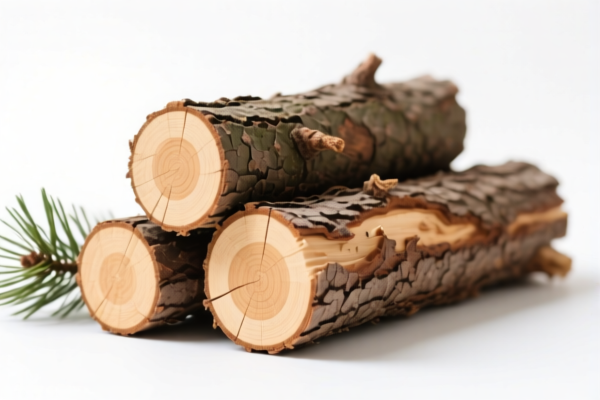
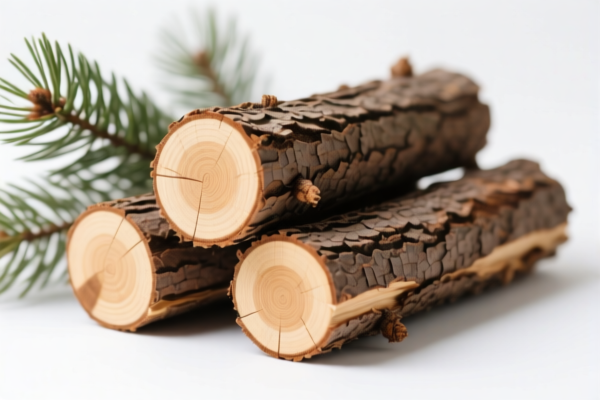
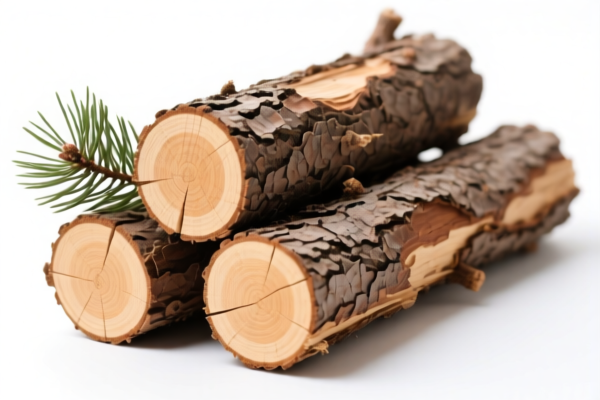
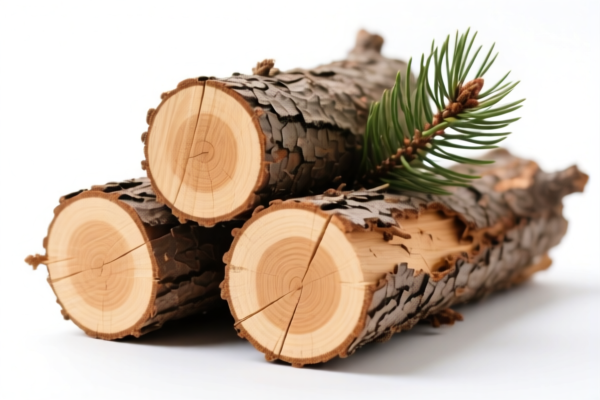
AI Analysis
🌲 Pine Logs (Cross Section ≥ 15cm) | HS Code Classification & Tariff Strategy 2026
🌐 HS Code Reference & Customs Clearance Guide | Latest Tariff Rates & Professional Clearance Strategy
📌 1. Product Definition & Classification: Do You Really Understand "Pine Logs"?
Pine logs are the primary raw material for the timber industry. In international trade, their classification depends strictly on processing level, cross-sectional dimensions, and intended use.
Key Distinctions: * Raw Timber (Logs): Unprocessed, simply delimbed or rough-squared. Classified under Chapter 44 (Wood and articles of wood). * Fuel Wood: If the pine logs are small, irregular, or specifically intended for burning, they may fall under "Fuel wood." * Dimensional Threshold: The 15cm minimum cross-section is a critical boundary for classification as "logs" suitable for sawing/veneer vs. smaller timber products.
⚠️ Critical Distinction Point: * If the wood is unprocessed, has a diameter/cross-section ≥15cm, and is not specified as fuel → Chapter 44.03. * If the wood is explicitly defined as fuel wood (e.g., small diameters, irregular shapes, destined for combustion) → Chapter 44.01. * Note on Processing: "Unprocessed" means only bark/rough edges removed. If planed, sawn into planks, or turned, it moves to Chapter 44.03 (treated wood) or 44.07 (sawn wood).
📦 2. HS Code Classification Details (2026 Latest Tariff Reference)
Based on the provided data, here is the precise breakdown for Pine Logs with a cross-section of 15cm or more:
| HS Code | Product Description | Applicable Scenario | Total Tax Rate | Tax Breakdown |
|---|---|---|---|---|
| 4403.21.01.30 | Pine logs, minimum cross-section 15cm or more | Standard commercial pine logs for sawing/veneer | 35.0% | Base: 0%, Section 301: 25%, Section 122: 10% |
| 4403.21.01.25 | Pine logs, minimum cross-section 15cm or more | Standard commercial pine logs (Alternative sub-heading) | 35.0% | Base: 0%, Section 301: 25%, Section 122: 10% |
| 4401.11.00.00 | Pine logs, conforming to definition of coniferous fuel wood | Pine logs intended for burning/fuel, regardless of size if defined as fuel | 35.0% | Base: 0%, Section 301: 25%, Section 122: 10% |
| 4403.21.01.65 | Pine logs, diameter 15cm or above | Pine logs meeting specific diameter criteria | 35.0% | Base: 0%, Section 301: 25%, Section 122: 10% |
| 4407.11.00.53 | Coniferous pine wood logs, unprocessed, diameter ≥15cm | Specific Exemption/Exception Case | 10.0% | Base: 0%, Section 301: 0%, Section 122: 10% |
🔍 Key Insight: * Most pine logs with a cross-section ≥15cm fall under 4403.21.01.xx and incur a 35% total tax. * Exception: HS Code 4407.11.00.53 offers a significantly lower rate of 10% because it is exempt from the 25% Section 301 tariff, though it still carries the 10% Section 122 tariff. This classification is highly specific and may require proof of origin or processing status.
💰 3. 2026 Latest Tariff Rate Breakdown (Including Surtaxes)
✅ Applicable Country: United States (US)
✅ Origin: China (CN) (Implied by Section 122 & 301 surcharges)
✅ Effective Date: Ongoing (Subject to current trade policies)
🎯 1. Standard Classification: 4403.21.01.30 / .25 / .65
(Pine Logs, Cross Section ≥ 15cm)
| Item | Content |
|---|---|
| Base Tariff Rate | 0% (Ad Valorem) |
| USITC Surtax (Section 301) | +25% |
| IEEPA Surtax (Section 122) | +10% |
| Total Tariff Rate | 35.0% |
| Tax Calculation | CIF Value × 35% |
| De Minimis Eligibility | ❌ No (High value threshold, typically de minimis not applied to timber) |
| Legal Basis Path | USITC:4403.21.01.xx → FOOTNOTE:301 → IEEPA:122 |
📌 Explanation: * The 25% Section 301 tariff is applied to most Chinese-origin timber products as part of trade remedy measures. * The 10% Section 122 tariff applies to specific categories of goods (often linked to national security or supply chain issues). * Total: 35%. This is a significant cost factor and must be included in your landed cost calculation.
🎯 2. Exception Classification: 4401.11.00.00
(Pine Logs as Fuel Wood)
| Item | Content |
|---|---|
| Base Tariff Rate | 0% |
| USITC Surtax (Section 301) | +25% |
| IEEPA Surtax (Section 122) | +10% |
| Total Tariff Rate | 35.0% |
| Tax Calculation | CIF Value × 35% |
| De Minimis Eligibility | ❌ No |
| Legal Basis Path | USITC:4401.11.00.00 → FOOTNOTE:301 → IEEPA:122 |
📌 Note: Even if classified as "fuel wood," the 35% total rate applies. There is no tariff advantage for fuel wood logs in this dataset.
🎯 3. Preferred Classification: 4407.11.00.53
(Coniferous Pine Wood Logs, Unprocessed, Diameter ≥ 15cm)
| Item | Content |
|---|---|
| Base Tariff Rate | 0% |
| USITC Surtax (Section 301) | 0% (Exempt) |
| IEEPA Surtax (Section 122) | +10% |
| Total Tariff Rate | 10.0% |
| Tax Calculation | CIF Value × 10% |
| De Minimis Eligibility | ❌ No |
| Legal Basis Path | USITC:4407.11.00.53 → IEEPA:122 |
📌 Critical Advantage: * This HS Code is exempt from the 25% Section 301 tariff. * Total Tax: 10%. This is a 25% reduction compared to standard pine logs. * Requirement: Must strictly meet the definition of "Coniferous pine wood logs, unprocessed, diameter ≥15cm." Misclassification here can lead to severe penalties.
🛠️ 4. Customs Clearance Practical Advice (Avoid Pitfalls)
✅ 1. Required Documentation (Mandatory)
| Document | Required | Notes |
|---|---|---|
| ✅ Commercial Invoice | ✔️ | Must clearly state "Pine Logs," "Diameter/Cross-Section," and "HS Code." |
| ✅ Packing List | ✔️ | Detail quantity, weight, and dimensions (crucial for proving ≥15cm cross-section). |
| ✅ Phytosanitary Certificate | ✔️ | Mandatory for wood products. Must be issued by the exporting country's agricultural authority. |
| ✅ Fumigation Certificate | ✔️ | Proof of treatment against pests (e.g., ISPM 15 standard). |
| ✅ Bill of Lading/Air Waybill | ✔️ | Standard shipping documents. |
| ✅ Country of Origin Certificate | ✔️ | Required for tariff determination and potential FTZ claims. |
| ✅ Technical Specification | ✔️ | Include logs' species (Pinus), dimensions, and processing level (unprocessed). |
✅ 2. Classification Strategy & Tips
🔥 "Prove the Diameter, Prove the Species, Choose the Right Code!"
| Scenario | Recommended HS Code | Reason |
|---|---|---|
| Standard Pine Logs (≥15cm cross-section) | 4403.21.01.30 / .25 / .65 |
Standard commercial logs. Expect 35% tax. |
| Pine Logs Intended for Fuel | 4401.11.00.00 |
If small/irregular or explicitly for burning. Still 35% tax. |
| Pine Logs Meeting Specific "Unprocessed" Criteria | 4407.11.00.53 |
Target this code! If you can prove it fits this narrow definition, you save 25% in Section 301 taxes. |
📌 Warning: * Do not use
4407.11.00.53unless you are certain the logs meet all its specific criteria. Customs may reclassify them to4403.21.01.xxif documentation is insufficient, leading to back taxes + penalties. * Ensure the cross-section is consistently measured and documented. If some logs are below 15cm, they may be reclassified or rejected.
✅ 3. Special Handling
| Scenario | Advice |
|---|---|
| Mixed Diameters | If logs vary, ensure all meet the minimum 15cm requirement for 4403.21.xx or 4407.11.00.53. If mixed, consult a customs broker. |
| Treatment Status | Ensure logs are unprocessed (bark removed but no sawing/planing). If sawn, they move to Chapter 44.07 (sawn wood) or 44.03 (treated wood) with different rates. |
| Pest Control | Failure to provide a valid Phytosanitary Certificate will result in detention or return at US ports. |
| Origin Declaration | Clearly declare China origin to avoid misclassification. Incorrect origin can lead to higher tariffs or legal issues. |
🌍 5. Global Market Comparison (2026)
| Country/Region | Recommended HS Code | Tariff (China Origin) | Certification | Notes |
|---|---|---|---|---|
| 🇺🇸 USA | 4403.21.01.30 / 4407.11.00.53 |
35% (Standard) 10% (If 4407.11.00.53) |
Phytosanitary Certificate | Section 301 & 122 apply. 4407.11.00.53 is the optimal code if eligible. |
| 🇨🇳 China | 4403.21.01.30 |
~5-10% | Phytosanitary Certificate | No Section 301/122 surcharges. |
| 🇪🇺 EU | 4403.21.00 |
0% (Most Favored Nation) | Fumigation Certificate | No Section 301/122. Easier clearance. |
| 🇦🇺 Australia | 4403.21.00 |
5% | Phytosanitary Certificate | Strict biosecurity. |
| 🇯🇵 Japan | 4403.21.00 |
0% | Phytosanitary Certificate | No surcharges. |
📌 Conclusion: * The US market has the highest tariff burden (up to 35%) due to Section 301 and Section 122. * Strategy: If your pine logs meet the criteria for
4407.11.00.53, prioritize this classification to reduce taxes from 35% to 10%. * For other markets (EU, Japan, Australia), tariffs are much lower, but phytosanitary compliance is critical everywhere.
📌 6. Common Mistakes & Pitfalls (Lessons Learned)
❌ Mistake 1: Misclassifying sawn wood as logs
👉 Consequence: If wood is sawn, it should be 4407.xx, not 4403.xx. Misclassification leads to penalties.
❌ Mistake 2: Ignoring the 15cm cross-section requirement
👉 Consequence: If logs are smaller, they may fall under different sub-headings with different tax rates or be deemed non-compliant.
❌ Mistake 3: Failing to provide a Phytosanitary Certificate
👉 Consequence: Immediate detention or return of cargo. Biosecurity is strict for timber.
❌ Mistake 4: Assuming all pine logs have the same tax rate
👉 Consequence: Missing the opportunity to classify under 4407.11.00.53 (10% tax) vs. 4403.21.01.30 (35% tax). Potential 25% tax savings!
✅ Correct Approach:
"Pine Logs, Unprocessed, Diameter ≥15cm, Species: Pinus sylvestris, Treated per ISPM 15, Origin: China"
🎯 7. Conclusion: Precision in Classification Saves Money!
🎯 Key Takeaway:
🔹 "15cm is the threshold, 35% is the norm, 10% is the goal!"
🔹 "Section 301 is the enemy,4407.11.00.53is the ally!"
🔹 "No Phytosanitary Certificate = No Entry!"
📌 Pro Tip:
If your pine logs are from Vietnam, Malaysia, or other non-China origins, you may avoid Section 301 and Section 122 tariffs entirely, reducing the rate to 0% (depending on the HS Code).
Action: Consult a customs broker to evaluate if your supply chain can leverage non-China origin for significant cost savings.
📣 Immediate Action:
📞 Verify HS Code Eligibility for
4407.11.00.53with your supplier.
📄 Ensure Phytosanitary Certificates are issued before shipment.
🚀 Optimize Costs: Aim for the 10% tax rate by meeting the specific criteria for4407.11.00.53.
✨ Precision Classification, Maximum Savings!
💼 Your Timber Shipment, Your Competitive Advantage!
Customer Reviews
About HS Code Classification
The Harmonized System (HS) is an internationally standardized nomenclature developed by the World Customs Organization (WCO) to classify traded products. Over 200 countries use the HS system as the basis for customs tariffs, trade statistics, and import/export regulations.
Each HS code follows a hierarchical structure:
- Chapter (2 digits) — Broad category of goods (e.g., Chapter 84: Machinery and Mechanical Appliances)
- Heading (4 digits) — More specific grouping within the chapter
- Subheading (6 digits) — Internationally standardized breakdown, used by all WCO member countries
- National subdivisions (8-10 digits) — Country-specific extensions for further classification, such as US HTSUS 10-digit codes
Correct HS code classification is essential for smooth customs clearance, accurate duty payment, and compliance with trade regulations. Misclassification can lead to customs delays, overpayment of duties, or penalties.
When importing from CN to US, the applicable tariff rates may include:
- Most-Favored-Nation (MFN) rate — The standard duty rate applied to WTO members
- General rate — Applied to countries without trade agreements
- Trade remedy duties — Additional tariffs such as Section 301 (anti-dumping), Section 232 (national security), or countervailing duties
The information provided on this page is for reference purposes only. For official classification, please consult with your local customs authority or a licensed customs broker.