Pine Logs with Diameter 15cm and Above
CN → US| HS Code | Tariff Rate | Origin | Destination | Doc |
|---|---|---|---|---|
| 4403210165 | 35.0% | CN | US | Official Doc |
| 4403210130 | 35.0% | CN | US | Official Doc |
| 4401110000 | 35.0% | CN | US | Official Doc |
| 4401120000 | 35.0% | CN | US | Official Doc |
| 4407110052 | 35.0% | CN | US | Official Doc |
| 4407110053 | 10.0% | CN | US | Official Doc |
Product Images
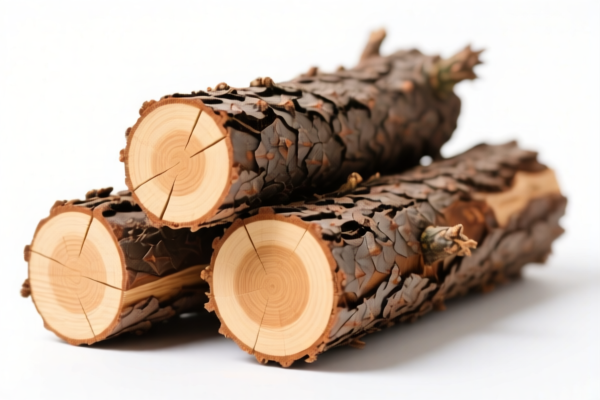
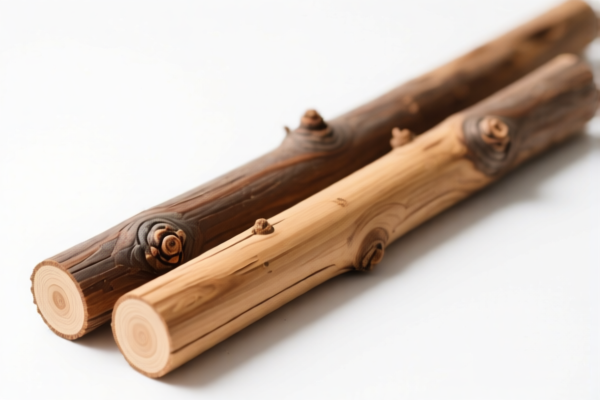
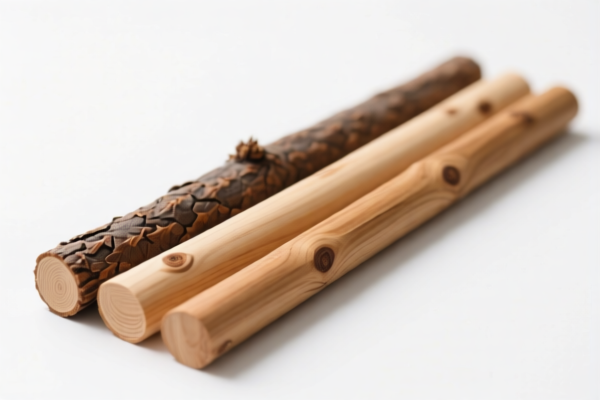
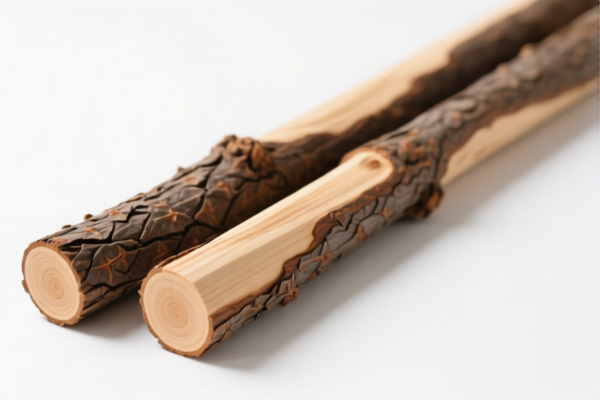
AI Analysis
🌲 Pine Logs (Diameter ≥ 15cm) – Global HS Code & Duty Guide
🌐 HS Code Reference & Clearance Strategy | 2026 Tariff Update | Professional Wood Import Strategy
📌 I. Product Definition & Classification: Do You Know Your "Pine Logs"?
Pine logs with a diameter of 15 cm or more are classified under Section XI (Wood and Wood Products), specifically as Coniferous timber in their "rough" state. These logs are critical for construction, furniture, and industrial processing but face significant trade barriers when imported from China to the US due to geopolitical tariffs.
In international trade, they are strictly distinguished by: - Species: Pinus spp. (Pine family, e.g., Scots Pine, Lodgepole, Ponderosa). - State: "In the rough" – meaning they may be stripped of bark/sapwood but are not sawn or chipped beyond the rough-squared stage. - Size Threshold: The smallest cross-sectional dimension must be ≥ 15 cm.
⚠️ Critical Distinction:
- If the log is sawn (cut into planks/lumber) → It shifts to 4407 series (Sawn wood).
- If the log is < 15 cm in diameter → It falls under different sub-headings.
- If the wood is processed (planed, treated, etc.) → Higher duty rates or different codes apply.
📦 II. HS Code Classification Details (2026 Tariff Authority)
Based on the provided data, here are the exact HS codes for your product:
| HS Code | Product Description | Application Scenario | Tax Category |
|---|---|---|---|
| 4403.21.01.65 | Wood in the rough, coniferous, of Pinus spp., smallest dimension ≥ 15 cm, Other (Non-Logs/Timber specific) | Raw pine logs for export, industrial processing, or construction framing | 🇺🇸 25% Total |
| 4403.21.01.30 | Wood in the rough, coniferous, of Pinus spp., smallest dimension ≥ 15 cm, Logs and Timber (Other) | Standard pine logs destined for sawmills, lumber mills, or bulk transport | 🇺🇸 25% Total |
🔍 Key Insight:
- Both codes belong to 4403.21.01 (Pine, rough, ≥15cm).
- The difference lies in the sub-category:.30for "Logs and Timber" and.65for "Other" (often used for specific commercial forms or non-standard log sizes within the same dimension range).
- Both carry the exact same tariff burden in the US market.
💰 III. 2026 Tariff Rate Analysis (Detailed Breakdown)
✅ Applicable Market: United States (US)
✅ Origin: China (CN) (Assumed based on "Section 301" context)
✅ Effective Date: Ongoing (Section 301 tariffs active since 2018, with potential updates in 2026)
🎯 1. HS Code 4403.21.01.65 & 4403.21.01.30
(Pine Logs, Rough, ≥15cm)
| Item | Detail |
|---|---|
| Base Duty Rate | 0.0% (Ad valorem under standard Most Favored Nation - MFN status) |
| Section 301 Additional Tariff | +25.0% (Imposed under U.S. Trade Representative Section 301 actions against Chinese products) |
| Total Effective Duty | 25.0% |
| Calculation Method | CIF Value × 25% |
| De Minimis Exemption | ❌ Not Applicable |
| Legal Basis | Section 301 of the Trade Act of 1974; USITC Footnotes; USTR List 4A/4B |
📌 Explanation:
- Although the base MFN rate is 0%, the 25% "Additional Duty" is the dominant factor.
- This tariff is mandatory for pine logs of this specification imported from China.
- There is no temporary exemption for standard pine logs under current trade policies.
- Result: Every $10,000 CIF value incurs $2,500 in duties.
🛠️ IV. Clearance Practical Advice (Avoiding Pitfalls)
✅ 1. Documentation Checklist (Essential for Customs)
| Document | Requirement | Why It Matters |
|---|---|---|
| ✅ Commercial Invoice | ✔️ Must explicitly state "Pine Logs, Rough, Pinus spp." and "Smallest Dimension: 15cm+" | Prevents classification disputes |
| ✅ Packing List | ✔️ Detail log dimensions (diameter range) and count | Customs may verify the ≥15cm threshold physically |
| ✅ Species Certificate | ✔️ Proof of Pinus spp. origin (e.g., Forest Certification) | Confirms "Coniferous" status; non-coniferous codes have different rules |
| ✅ Fumigation Certificate | ✔️ ISPM 15 compliant (if applicable) | Prevents quarantine rejection for pests |
| ✅ Bill of Lading | ✔️ Clearly mark "Logs" not "Lumber" | Prevents misclassification to higher-duty sawn wood codes |
🔥 Warning: If the logs are sawn even slightly beyond "rough-squared," they will be reclassified under 4407, which may attract different or higher Section 301 tariffs.
✅ 2. Declaration Strategy
🔥 "Dimension is Key, Species is King, Rough is the Rule!"
| Scenario | Correct Declaration | Risk if Incorrect |
|---|---|---|
| Logs exactly ≥15cm | Use 4403.21.01.30 or 4403.21.01.65 |
If declared as <15cm → Lower duty? No, still 25%, but risk of audit if measured differently. |
| Sawn timber (planks) | 4407.11.00.52 / 4407.11.00.53 |
If declared as "logs" → Seizure/Return (Misdeclaration) |
| Non-Pine (Hardwood) | 4403.12... |
If declared as Pine → Audit/Fine (Species fraud) |
| Treated/Painted Logs | 4403.20... |
May attract different Section 301 rates or additional EPA regulations |
✅ 3. Special Situations
| Situation | Recommendation |
|---|---|
| Mixed Loads (Pine + Non-Pine) | Split Shipment: Declare separately to avoid "general goods" classification that might trigger higher scrutiny. |
| Logs from Non-China Origin | If sourced from Canada, Russia, or EU, check for MFN 0% rates (no 25% Section 301). |
| Small Diameter (<15cm) | Re-classify to 4403.21.01.xx (Other sub-codes) – verify if the 25% applies to all sizes. |
| "Rough-Squared" Definition | Ensure the logs are not planed/sanded. If sanded, they become "Sawn Wood" (4407) and risk 25% + potential anti-dumping duties. |
🌍 V. Global Market Comparison (2026 Update)
| Country/Region | Recommended HS Code | Base Duty | Additional Tariff | Total Duty | Notes |
|---|---|---|---|---|---|
| 🇺🇸 USA | 4403.21.01.30/65 |
0% | +25% (Section 301) | 25% | Highest barrier; requires strict origin proof |
| 🇨🇳 China (Import) | N/A (Export market) | 0% | N/A | 0% | Domestic consumption |
| 🇪🇺 EU | 4403.21.01 |
0-5% | 0% (if FTA) | 0-5% | Lower barrier; no Section 301 |
| 🇯🇵 Japan | 4403.21.01 |
0% | 0% | 0% | Very low barrier |
| 🇰🇷 South Korea | 4403.21.01 |
0% | 0% | 0% | FTA benefits |
📌 Conclusion:
- USA is the only major market imposing the 25% "Additional Duty" on Chinese pine logs.
- Cost Impact: A $100,000 shipment of pine logs incurs $25,000 in US duties alone.
- Strategy: Consider transshipment via non-China origins (e.g., Vietnam, Malaysia) if possible, but beware of anti-circumvention rules.
📌 VI. Common Mistakes & How to Avoid Them
❌ Mistake 1: Declaring "Sawn Lumber" as "Logs" to avoid Section 301
👉 Consequence: Customs inspection reveals saw marks → 25% + Anti-Dumping Duties + Fine.
❌ Mistake 2: Failing to specify the 15cm diameter threshold
👉 Consequence: If logs are <15cm, they may fall under different sub-codes with different tariff structures (though still 25% for China).
❌ Mistake 3: Mixing "Rough" logs with "Planed" logs in one shipment
👉 Consequence: HS Code Mismatch → Entire shipment delayed or rejected.
❌ Mistake 4: Ignoring Species Verification
👉 Consequence: If wood is not Pine (e.g., Spruce), the HS code changes to 4403.22... – still 25%, but misclassification leads to audit.
✅ Correct Approach:
"Pinus spp. Logs, Rough, Diameter ≥15cm, UNFUMED, Origin: China"
→ HS Code:4403.21.01.30or4403.21.01.65
→ Duty: 25% (Calculate on CIF value)
🎯 VII. Final Strategy: Professional Clearance Checklist
- Verify Dimensions: Measure all logs to ensure smallest dimension ≥ 15cm.
- Confirm Species: Ensure the wood is Pinus spp. (Pine).
- Check State: Confirm logs are in the rough (no planing, sanding, or treatment).
- Calculate Duty: CIF × 25% (No de minimis exemption).
- Document Origin: Prepare Non-China Origin proof if seeking alternatives.
- Pre-Arrival: File Entry Summary (CBP Form 7501) with correct HS codes.
🚀 Pro Tip: If you are importing from China, budget 25% extra for duties. If you can source from Canada or Russia, you may save 25% (if no other anti-dumping duties apply).
🌟 Conclusion: Precision is Profitable!
🎯 Remember:
🔹 "Logs ≥15cm, Pine, Rough = 25% Duty in US"
🔹 "Sawn = Different Code, Same Duty, Higher Risk"
🔹 "Documentation = Your Shield Against Seizures"
📌 Action Item:
📞 Contact a Customs Broker immediately to review your Bill of Lading and Packing List.
🚀 Avoid costly delays by ensuring your pine logs are declared under 4403.21.01.30/65 with full dimensional and species details.
✨ Smart Import, Smart Export, Smart Profit!
💼 Your 25% duty is unavoidable, but your compliance can be flawless!
Customer Reviews
About HS Code Classification
The Harmonized System (HS) is an internationally standardized nomenclature developed by the World Customs Organization (WCO) to classify traded products. Over 200 countries use the HS system as the basis for customs tariffs, trade statistics, and import/export regulations.
Each HS code follows a hierarchical structure:
- Chapter (2 digits) — Broad category of goods (e.g., Chapter 84: Machinery and Mechanical Appliances)
- Heading (4 digits) — More specific grouping within the chapter
- Subheading (6 digits) — Internationally standardized breakdown, used by all WCO member countries
- National subdivisions (8-10 digits) — Country-specific extensions for further classification, such as US HTSUS 10-digit codes
Correct HS code classification is essential for smooth customs clearance, accurate duty payment, and compliance with trade regulations. Misclassification can lead to customs delays, overpayment of duties, or penalties.
When importing from CN to US, the applicable tariff rates may include:
- Most-Favored-Nation (MFN) rate — The standard duty rate applied to WTO members
- General rate — Applied to countries without trade agreements
- Trade remedy duties — Additional tariffs such as Section 301 (anti-dumping), Section 232 (national security), or countervailing duties
The information provided on this page is for reference purposes only. For official classification, please consult with your local customs authority or a licensed customs broker.