Pine Outdoor Wood (Preserved)
CN → US| HS Code | Tariff Rate | Origin | Destination | Doc |
|---|---|---|---|---|
| 4409104090 | 35.0% | CN | US | Official Doc |
| 4407110002 | 35.0% | CN | US | Official Doc |
| 4409104010 | 35.0% | CN | US | Official Doc |
Product Images
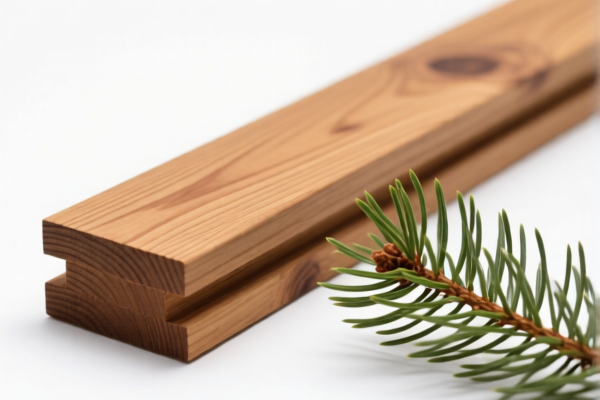
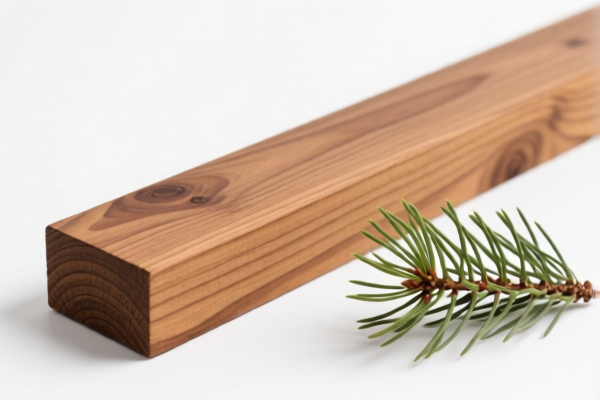
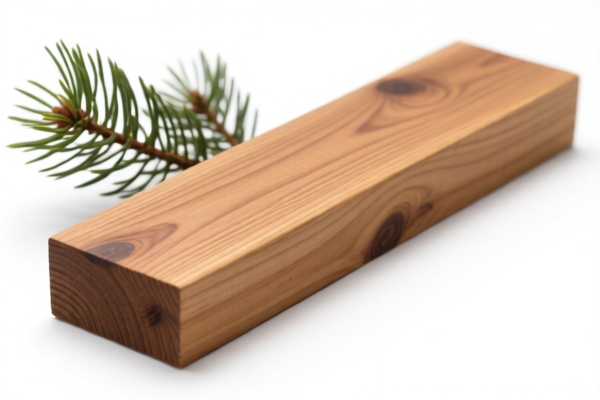
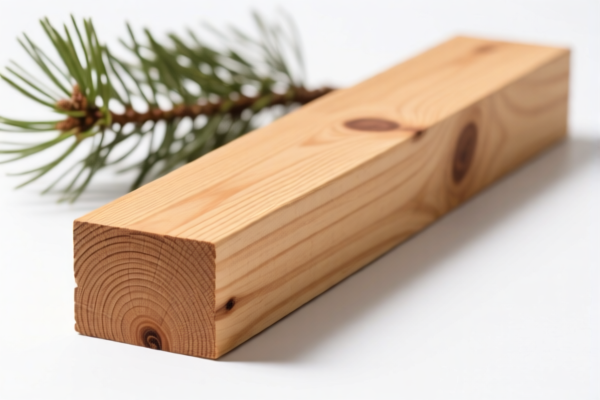
AI Analysis
🌲 Pine Outdoor Wood (Preserved)
🌐 HS Code Reference & Customs Clearance Guide | 2026 Latest Tariff Analysis | Professional Entry Strategy
📌 I. Product Definition & Classification: Do You Really Understand "Preserved Pine"?
Pine Outdoor Wood (Preserved), in international trade, refers to pine wood (Pinus species) that has undergone chemical treatment (preservative coating) to resist decay, insects, and moisture, specifically for outdoor use.
In customs classification, the key distinction lies in the processing depth: * Sawn/Chopped Wood (Heading 4407): Wood sawn along the length, containing the bark or sapwood, primarily used for structural or rough construction. * Continuous Wood Veneer / Lath / Shingle / Tongue-and-Groove (Heading 4409): Wood processed into specific profiles (like tongue-and-groove, lath, or shingle) for finishing, cladding, or specialized outdoor applications.
⚠️ Key Distinction Point:
- If the pine is simply sawn into boards/planks for structural use → 4407
- If the pine is processed into tongue-and-groove, lath, shingle, or specific profiled shapes for outdoor decking/cladding → 4409
- Crucial Note: The "Preserved Coating" (treated) status does not change the primary HS Code chapter but is a critical declaration element for customs inspection.
📦 II. HS Code Classification Details (2026 Latest Tariff Authority Match)
Based on the provided data, here are the matched HS Codes for "Pine Outdoor Wood (Preserved)":
| HS Code | Product Description | Matching Logic | Tax Status |
|---|---|---|---|
4409.10.40.90 |
Pine wood (Preserved Coating), material match, form fits wood category, no obvious conflict. | Matches "Wood continuously shaped along its length" for non-coniferous/specific pine types with coating. | 35.0% |
4407.11.00.02 |
Pine wood (Preserved Coating), coniferous pine with preservative treatment, match successful. | Matches "Sawed or chipped lengthwise" of coniferous species, specifically pine. | 35.0% |
4409.10.40.10 |
Pine wood (Preserved Coating), meets coniferous-pine requirements, allows reasonable material inference. | Matches "Tongue, groove, chamfered, etc." for pine, allowing inference of treated pine profiles. | 35.0% |
🔍 Important Reminder:
- All three codes apply to Pine (Pinus) that is Preserved/Treated.
- The difference between4407(Sawed) and4409(Profiled/Shaped) depends on the physical form of the final product (e.g., plain plank vs. tongue-and-groove deck board).
- Do not misclassify untreated wood as "preserved" or vice versa; chemical treatment requires specific declaration.
💰 III. 2026 Latest Tariff Rate Breakdown (Including Surcharges & Policy Add-ons)
✅ Applicable Country: United States (US)
✅ Origin: China (CN)
✅ Effective Date: From November 10, 2025 (including subsequent imports)
🎯 1. 4407.11.00.02 —— Sawn Pine Wood (Preserved)
| Item | Content |
|---|---|
| Base Tariff | 0.0% (ad valorem) |
| Section 301 Additional Tariff | +25.0% |
| Section 122 Tariff | +10.0% |
| Total Tariff | 35.0% |
| Tax Calculation | CIF Value × 35% |
| De Minimis Eligibility | ❌ Not Eligible (High risk of seizure) |
| Legal Basis Path | USITC:4407.11.00.02 → Section 301: Footnote 9903.88.01 → Section 122: 10% surcharge |
📌 Explanation:
- "Base Tariff 0%": Standard most-favored-nation (MFN) rate for many sawn woods is low or zero, but this is heavily offset by trade remedies.
- "Section 301: 25%": The Trump-era/Biden-continued tariff on Chinese goods under Trade Act Section 301.
- "Section 122: 10%": A specific surcharge often applied to certain imports to protect domestic industries or address national security concerns.
- Total 35%: This is a very high tariff burden. Importers must factor this into landed cost calculations.
🎯 2. 4409.10.40.90 & 4409.10.40.10 —— Processed Pine Wood (Preserved)
| Item | Content |
|---|---|
| Base Tariff | 0.0% (ad valorem) |
| Section 301 Additional Tariff | +25.0% |
| Section 122 Tariff | +10.0% |
| Total Tariff | 35.0% |
| Tax Calculation | CIF Value × 35% |
| De Minimis Eligibility | ❌ Not Eligible |
| Legal Basis Path | USITC:4409.10.40.xx → Section 301 → Section 122 |
📌 Note:
- Both4409codes carry the same total rate of 35% as the4407code.
- Whether you classify as4409.10.40.90or4409.10.40.10depends on the exact profile (e.g., shingle vs. lath vs. other continuous shapes).
- No tariff advantage is gained by choosing one4409sub-code over the other in terms of total tax rate.
🛠️ IV. Customs Clearance Practical Advice (Battle-Tested Pitfall Guide)
✅ 1. Required Documentation Checklist (All Mandatory)
| Document | Must Provide | Description |
|---|---|---|
| ✅ Product Spec Sheet | ✔️ | Must detail wood species (Pinus), treatment type (preservative coating), dimensions, and intended use (outdoor). |
| ✅ Treatment Certificate | ✔️ | Proof of preservation process (e.g., ACQ, CCA, or organic preservatives) to confirm "Preserved" status. |
| ✅ Product Photos | ✔️ | Clear images showing the coating texture, end-grain, and any profiles (tongue/groove). |
| ✅ Commercial Invoice | ✔️ | Must explicitly state: "Pine Wood, Preserved Coating, for Outdoor Use". Avoid vague terms like "Lumber." |
| ✅ Packing List | ✔️ | Must specify net/gross weight, number of pieces, and packaging type. |
| ✅ Fumigation Certificate | ✔️ | If not fully treated by preservative, additional fumigation may be required for IPM (International Plant Protection) standards. |
✅ 2. Declaration Tips (Key Mnemonic)
🔥 "Preserve it, Profile it, Declare it Right!"
| Scenario | Correct Declaration | Wrong Practice |
|---|---|---|
| Plain Sawed Pine Boards | 4407.11.00.02 |
Misdeclare as 4409 → Risk of penalty |
| Tongue-and-Groove Decking | 4409.10.40.90 or 4409.10.40.10 |
Misdeclare as 4407 → Incorrect form classification |
| Untreated Wood | Different HS Code (No 35% tariff) | Declare as "Preserved" when it’s not → Fraud/Seizure |
| Vague Description | "Pine Lumber" | ❌ Forbidden → Must specify "Preserved Coating" |
✅ 3. Special Circumstances Handling
| Situation | Handling Advice |
|---|---|
| Mixed Shipments | If shipment contains both treated and untreated pine, must separate and declare separately. Mixed declaration leads to rejection. |
| Wood vs. Wood Products | If the pine is part of a larger assembled product (e.g., a deck kit with hardware), consider if it qualifies as a "part" rather than raw wood. |
| Chemical Compliance | Ensure the preservative coating meets EPA/CPSIA standards. Certain chemicals (e.g., CCA) may be restricted for residential use. |
| Phytosanitary Requirements | Even treated wood may require a Phytosanitary Certificate if the treatment is not recognized as equivalent to ISPM 15 standards. |
🌍 V. Global Market Comparison (2026 Latest)
| Country/Region | Recommended HS Code | Tariff (China Origin) | Certification | Notes |
|---|---|---|---|---|
| 🇺🇸 USA | 4407.11.00.02 / 4409.10.40.xx |
35% (0% + 25% + 10%) | None specific, but treatment docs needed | High tariff burden; no de minimis |
| 🇨🇳 China | 4407.11.00.02 / 4409.10.40.xx |
~10-13% (Import) | None | Low duty, but export from China may face environmental checks |
| 🇪🇺 EU | 4407 / 4409 |
0% (Mostly) | CE, REACH | No Section 301 equivalent, but strict wood regulations |
| 🇬🇧 UK | 4407 / 4409 |
0% | UKCA | Post-Brexit rules apply |
📌 Conclusion:
- The US is the most challenging market due to the 35% total tariff (Section 301 + Section 122).
- EU/UK offer much better duty rates (often 0%) but have stricter environmental and chemical compliance (REACH).
- Profit Margin Alert: For US-bound pine wood, the 35% tariff significantly impacts margins. Consider pricing strategies or alternative sourcing.
📌 VI. Common Errors & Pitfalls (Lessons Learned)
❌ Error 1: Declaring "Pine Wood" without specifying "Preserved"
👉 Consequence: Customs may suspect untreated wood with pests → Detention & Fumigation Costs.
❌ Error 2: Misclassifying Profiled Wood (4409) as Sawed Wood (4407)
👉 Consequence: While the total tariff may be the same (35%), incorrect classification can lead to penalties for misdeclaration and delays.
❌ Error 3: Assuming "Preserved" means no fumigation needed
👉 Consequence: If the treatment protocol is not ISPM 15 compliant, wood may be rejected at port.
❌ Error 4: Ignoring Section 122 Tariff
👉 Consequence: Underpaying by 10% → Back taxes + Interest + Penalties.
✅ Correct Practice:
"Pine Wood Boards, Tongue-and-Groove, Chemically Preserved for Outdoor Decking, Treated with [Chemical Name], Model XYZ, Origin: China"
🎯 VII. Conclusion: Precision in Classification Saves Money!
🎯 Remember the Mnemonic:
🔹 "Preserve it, Profile it, Declare it Right!"
🔹 "35% Total Tariff for US, 0% Base, 25% 301, 10% 122!"
📌 Pro Tip:
- If your pine wood is not from China (e.g., Vietnam, Thailand), check for FTA benefits (e.g., ASEAN-US). However, note that Section 301 may still apply depending on specific rulings.
- Pre-clearance is highly recommended. Submit a Binding Tariff Information (BTI) or Advance Ruling request to US CBP before shipment to confirm the correct HS Code and tariff liability.
📣 Immediate Action:
📞 Contact a licensed US Customs Broker
📄 Prepare Treatment Certificates & Spec Sheets
🚀 Ensure Smooth Customs Clearance & Avoid 35% Surprise Costs!
✨ Professional Classification Starts with Accuracy!
💼 Your Bottom Line Depends on Precise Declarations!
Customer Reviews
About HS Code Classification
The Harmonized System (HS) is an internationally standardized nomenclature developed by the World Customs Organization (WCO) to classify traded products. Over 200 countries use the HS system as the basis for customs tariffs, trade statistics, and import/export regulations.
Each HS code follows a hierarchical structure:
- Chapter (2 digits) — Broad category of goods (e.g., Chapter 84: Machinery and Mechanical Appliances)
- Heading (4 digits) — More specific grouping within the chapter
- Subheading (6 digits) — Internationally standardized breakdown, used by all WCO member countries
- National subdivisions (8-10 digits) — Country-specific extensions for further classification, such as US HTSUS 10-digit codes
Correct HS code classification is essential for smooth customs clearance, accurate duty payment, and compliance with trade regulations. Misclassification can lead to customs delays, overpayment of duties, or penalties.
When importing from CN to US, the applicable tariff rates may include:
- Most-Favored-Nation (MFN) rate — The standard duty rate applied to WTO members
- General rate — Applied to countries without trade agreements
- Trade remedy duties — Additional tariffs such as Section 301 (anti-dumping), Section 232 (national security), or countervailing duties
The information provided on this page is for reference purposes only. For official classification, please consult with your local customs authority or a licensed customs broker.