Pine Poles
CN → US| HS Code | Tariff Rate | Origin | Destination | Doc |
|---|---|---|---|---|
| 4417008010 | 40.1% | CN | US | Official Doc |
| 4404100080 | 35.0% | CN | US | Official Doc |
| 4417008090 | 40.1% | CN | US | Official Doc |
| 4421997040 | 35.0% | CN | US | Official Doc |
| 4404100090 | 35.0% | CN | US | Official Doc |
| 4403210112 | 35.0% | CN | US | Official Doc |
Product Images
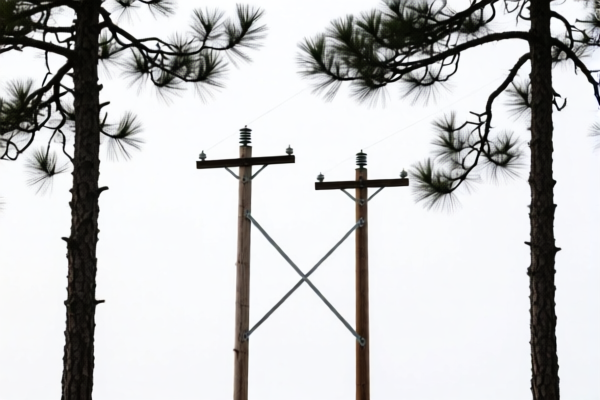
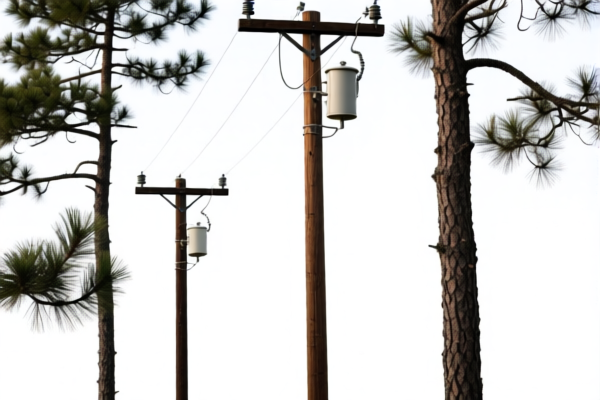
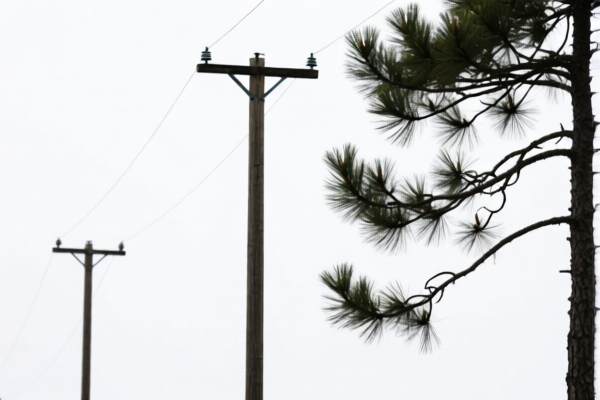
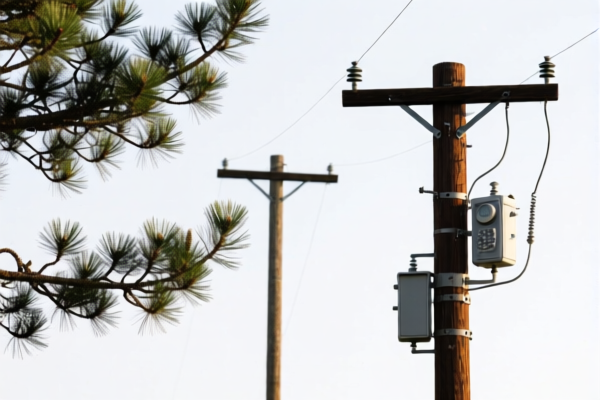
AI Analysis
🌲 Pine Poles (Wooden Poles & Stakes)
🌐 HS Code Reference & Customs Clearance Guide | 2026 Latest Tariff Analysis | Professional Entry Strategy 📌 I. Product Definition & Classification: What Exactly Are "Pine Poles"?
Pine Poles generally refer to roundwood or processed wooden poles made from pine trees, used for construction, agriculture, fencing, or utility purposes. In international trade, classification depends heavily on two factors: 1. Processing Level: Is it raw roundwood (logs/strips) or manufactured articles? 2. Specific Application: Is it for telecommunication lines, construction formwork, or general fencing?
⚠️ Key Classification Distinctions: * Raw/Minimal Processing: If the pine is sawn into poles but retains its natural cylindrical shape without complex shaping, it often falls under Chapter 44 (Wood and Articles of Wood) in the "Sawn wood/Strip/Flooring" or "Other wood" categories. * Utility Specific: If designated explicitly for telephone/telegraph/power lines, specific subheadings apply. * Manufactured Articles: If shaped into tool handles, broom sticks, or specific structural posts, they may fall under "Other wood articles."
📦 II. HS Code Classification Details (2026 Latest Tariff Concordance)
Based on the provided data, here are the five possible HS Codes for "Pine Poles," ranging from raw materials to finished articles.
| HS Code | Product Description (Summary) | Applicable Scenario | Processing Status |
|---|---|---|---|
4403.21.01.12 |
Pine Telecommunication Poles | Matching coniferous wood material with usage for telephone, telegraph, electric power, and electric wires | Raw/Prepared Roundwood |
4404.10.00.80 |
Pine Poles | Matching coniferous wood material with pole/pile/post morphology | Sawn/Chipped but not further worked |
4404.10.00.90 |
Pine Poles | Matching coniferous wood material with other specified pole specifications | Sawn/Chipped but not further worked |
4421.99.70.40 |
Pine Poles | Matching wood article material with sawn pole/post category | Manufactured Article |
4417.00.80.10 |
Pine Poles | Matching wood material with rod/handle characteristics | Manufactured Article (Rod/Handle) |
4417.00.80.90 |
Pine Poles | Matching wood article material with tool body/broom handle morphology | Manufactured Article (Tool/Broom) |
🔍 Critical Reminder: *
4403/4404Codes: Generally apply to semi-processed wood (e.g., debarked, squared, or cut to length but not assembled). *4417Codes: Apply to finished wood articles (e.g., tool handles, broom sticks). *4421Codes: Apply to miscellaneous wood articles (e.g., sawn posts used in construction).
💰 III. 2026 Latest Tariff Rate Breakdown (Including Surtaxes & Policy Surcharges)
✅ Applicable Country: USA (US)
✅ Origin: China (CN)
✅ Effective Date: Current rates include Section 301 and Section 122 tariffs.
🎯 1. 4403.21.01.12 — Pine Telecommunication Poles
| Item | Content |
|---|---|
| Base Tariff | 0.0% (ad valorem) |
| Section 301 Surcharge | +25.0% (USITC Footnote 9903.88.01) |
| Section 122 Surcharge | +10.0% (Targeting specific Chinese imports) |
| Total Tariff | 35.0% |
| Tax Calculation | CIF Value × 35% |
| De Minimis Eligibility | ❌ No (Not eligible for Section 321 de minimis exemption) |
| Legal Basis Path | IEEPA:9903.01.25 → USITC:4403.21.01.12 → SECTION122 |
📌 Explanation: * Although the base tariff for coniferous sawn wood is 0%, the 25% Section 301 tariff applies to all Chinese-origin wood products listed in the action list. * The additional 10% Section 122 tariff further increases the cost. * Total 35% is a significant cost barrier. Accurate description as "Telecommunication Poles" is crucial to avoid misclassification penalties.
🎯 2. 4404.10.00.80 — Pine Poles (Coniferous, Pole Morphology)
| Item | Content |
|---|---|
| Base Tariff | 0.0% |
| Section 301 Surcharge | +25.0% |
| Section 122 Surcharge | +10.0% |
| Total Tariff | 35.0% |
| Tax Calculation | CIF Value × 35% |
| De Minimis Eligibility | ❌ No |
| Legal Basis Path | IEEPA:9903.01.24 → USITC:4404.10.00.80 → SECTION122 |
📌 Note: * Applies to pine strips or poles of a cross-section exceeding 6 cm, non-coniferous wood is excluded here. * Same 35% total rate. Ensure the product description clearly states "Pine" (Coniferous) and "Pole Post" shape.
🎯 3. 4404.10.00.90 — Pine Poles (Other Specifications)
| Item | Content |
|---|---|
| Base Tariff | 0.0% |
| Section 301 Surcharge | +25.0% |
| Section 122 Surcharge | +10.0% |
| Total Tariff | 35.0% |
| Tax Calculation | CIF Value × 35% |
| De Minimis Eligibility | ❌ No |
| Legal Basis Path | IEEPA:9901.25 → USITC:4404.10.00.90 → SECTION122 |
📌 Note: * This is a residual category for pine poles that don't fit the specific "utility" description of
4403or the specific shape of4404.80. * Use this only if the product does not meet the specific criteria of the other4404subheading.
🎯 4. 4421.99.70.40 — Pine Poles (Sawn Pole/Post Category)
| Item | Content |
|---|---|
| Base Tariff | 0.0% |
| Section 301 Surcharge | +25.0% |
| Section 122 Surcharge | +10.0% |
| Total Tariff | 35.0% |
| Tax Calculation | CIF Value × 35% |
| De Minimis Eligibility | ❌ No |
| Legal Basis Path | IEEPA:9903.01.24 → USITC:4421.99.70.40 → SECTION122 |
📌 Note: * Classifies as "Other wood articles." This code is often used for sawn posts used in construction or landscaping that are not specifically for utilities. * Ensure the product is not being mistaken for a "tool" (which would fall under
4417).
🎯 5. 4417.00.80.10 — Pine Poles (Rod/Handle Characteristics)
| Item | Content |
|---|---|
| Base Tariff | 5.1% |
| Section 301 Surcharge | +25.0% |
| Section 122 Surcharge | +10.0% |
| Total Tariff | 40.1% |
| Tax Calculation | CIF Value × 40.1% |
| De Minimis Eligibility | ❌ No |
| Legal Basis Path | IEEPA:9903.01.25 → USITC:4417.00.80.10 → SECTION122 |
📌 Warning: * This code has a higher base tariff (5.1%) compared to the raw wood codes (0%). * Only use if the pine pole is explicitly used as a rod, handle, or shaft (e.g., for tools, umbrellas, or specific machinery). * Total 40.1% is the highest rate. Misclassifying a simple fence post as a "tool handle" will result in overpayment or customs scrutiny.
🎯 6. 4417.00.80.90 — Pine Poles (Tool Body/Broom Handle Morphology)
| Item | Content |
|---|---|
| Base Tariff | 5.1% |
| Section 301 Surcharge | +25.0% |
| Section 122 Surcharge | +10.0% |
| Total Tariff | 40.1% |
| Tax Calculation | CIF Value × 40.1% |
| De Minimis Eligibility | ❌ No |
| Legal Basis Path | IEEPA:9903.01.24 → USITC:4417.00.80.90 → SECTION122 |
📌 Note: * Similar to above, but for other wood articles like broom handles or tool bodies not classified as rods/handles. * Total 40.1%. Do not use for simple structural poles.
🛠️ IV. Customs Clearance Practical Advice (Avoid Pitfalls Guide)
✅ 1. Document Checklist (Mandatory)
| Document | Required | Explanation |
|---|---|---|
| ✅ Product Specification Sheet | ✔️ | Must detail dimensions (diameter, length), wood species (Pinus spp.), and treatment (treated/untreated). |
| ✅ Product Photos | ✔️ | Clear images showing the natural shape, cuts, and any branding/treatments. |
| ✅ Commercial Invoice | ✔️ | Must explicitly state "Pine Wood Poles" and HS Code. Avoid vague terms like "Wood Parts." |
| ✅ Certificate of Origin (CO) | ✔️ | Essential for proving Chinese origin to apply (or challenge) surtaxes. |
| ✅ Phytosanitary Certificate | ✔️ | Critical for Wood Products! USDA APHIS requires this to prevent pest introduction. |
| ✅ Treatment Certificate | ✔️ | If wood is heat-treated (HT) or fumigated, provide proof to meet ISPM 15 standards. |
✅ 2. Declaration Tips (Key Mantras)
🔥 "Be Specific, Be Precise, Avoid Ambiguity!"
| Situation | Correct Declaration | Incorrect Practice |
|---|---|---|
| Utility Poles | "Pine Telecommunication Poles, Coniferous, Treated" (4403.21.01.12) |
"Wooden Poles" → Risk of misclassification. |
| Fence Posts | "Sawed Pine Posts for Fencing, Coniferous" (4404.10.00.80) |
"Wooden Sticks" → Could be seen as simple material. |
| Tool Handles | "Pine Wood Broom Handles" (4417.00.80.90) |
"Pine Poles" → Incorrect if used for brooms. |
| Mixed Cargo | Separate HS Codes for each type | Mixing raw poles and finished handles → Customs audit risk. |
✅ 3. Special Handling
| Situation | Recommendation |
|---|---|
| Treated Wood | Ensure treatment method (e.g., Creosote, CCA) is declared. Untreated pine may be rejected for pest reasons. |
| Small Samples | Still subject to de minimis rules? NO. Wood products are often excluded from Section 321 due to agricultural risks. |
| Wood Waste | If poles are damaged and declared as "wood waste," different HS codes apply, but still subject to inspections. |
🌍 V. Global Market Comparison (2026 Latest)
| Country/Region | Recommended HS Code | Tariff Rate | Certification Requirements | Notes |
|---|---|---|---|---|
| 🇺🇸 USA | 4403.21.01.12 / 4404.10.00.80 |
35% (301+122) | USDA APHIS, Phytosanitary Cert | Highest Risk Market due to surtaxes and biosecurity. |
| 🇨🇳 China | 4403.21.01.12 |
5-10% (Import) | None | Main exporter, low import tariffs for other countries. |
| 🇪🇺 EU | 4403.21.01.12 |
0-2% | FSC/PEFC Certification | Strict sustainability rules. No Section 301. |
| 🇯🇵 Japan | 4403.21.01.12 |
0-3% | ISPM 15 Compliance | Strict phytosanitary checks. |
📌 Conclusion: * USA: High tariffs (35-40.1%) + Strict Biosecurity. Plan margins accordingly. * EU/Japan: Lower tariffs but higher compliance costs (sustainability certs).
📌 VI. Common Mistakes & Pitfalls (Lessons Learned)
❌ Mistake 1: Using "Wooden Sticks" or "Wooden Rods" on the invoice. 👉 Consequence: Customs may classify under general "Wood Articles" with higher base tariffs or reject the shipment for lack of specificity.
❌ Mistake 2: Ignoring the Phytosanitary Certificate. 👉 Consequence: Shipment held at port, fumigated at owner's expense, or returned/destroyed.
❌ Mistake 3: Misclassifying treated utility poles as simple fence posts.
👉 Consequence: If the poles are for telecommunication, they must use 4403.21.01.12. Misclassification can lead to penalties or missing specific regulatory requirements.
✅ Correct Practice:
"Pine Telecommunication Poles, Coniferous, Heat Treated, Length: 30ft, Diameter: 6-8 inch, Model: PT-300, USDA Certified"
🎯 VII. Conclusion: Professional Classification, Efficient Clearance!
🎯 Remember the Mantra:
🔹 "Raw Wood = 0% Base, Finished = 5.1% Base. Section 301 = 25%, Section 122 = 10%. Total = 35% or 40.1%. No De Minimis!" 🔹 "Phytosanitary Cert is King! No Cert, No Entry!"
📌 Tip: If your pine poles are originating from Vietnam, Thailand, or Malaysia, you may be exempt from US Section 301 tariffs (0-5% total). Consider Supply Chain Diversification or applying for an Advance Ruling to confirm the correct HS Code.
📣 Immediate Action:
📞 Contact a licensed customs broker + Provide Product Photos + Obtain Phytosanitary Certificate 🚀 Ensure your Pine Poles clear customs smoothly, avoid delays, and maximize profitability!
✨ Professional Clearance Starts with Accurate Classification! 💼 Every Cent of Cost Must Be Precisely Calculated!
Customer Reviews
About HS Code Classification
The Harmonized System (HS) is an internationally standardized nomenclature developed by the World Customs Organization (WCO) to classify traded products. Over 200 countries use the HS system as the basis for customs tariffs, trade statistics, and import/export regulations.
Each HS code follows a hierarchical structure:
- Chapter (2 digits) — Broad category of goods (e.g., Chapter 84: Machinery and Mechanical Appliances)
- Heading (4 digits) — More specific grouping within the chapter
- Subheading (6 digits) — Internationally standardized breakdown, used by all WCO member countries
- National subdivisions (8-10 digits) — Country-specific extensions for further classification, such as US HTSUS 10-digit codes
Correct HS code classification is essential for smooth customs clearance, accurate duty payment, and compliance with trade regulations. Misclassification can lead to customs delays, overpayment of duties, or penalties.
When importing from CN to US, the applicable tariff rates may include:
- Most-Favored-Nation (MFN) rate — The standard duty rate applied to WTO members
- General rate — Applied to countries without trade agreements
- Trade remedy duties — Additional tariffs such as Section 301 (anti-dumping), Section 232 (national security), or countervailing duties
The information provided on this page is for reference purposes only. For official classification, please consult with your local customs authority or a licensed customs broker.