Pine Rough Logs
CN → US| HS Code | Tariff Rate | Origin | Destination | Doc |
|---|---|---|---|---|
| 4403210130 | 35.0% | CN | US | Official Doc |
| 4403220120 | 35.0% | CN | US | Official Doc |
| 4403220130 | 35.0% | CN | US | Official Doc |
| 4403210130 | 35.0% | CN | US | Official Doc |
| 4403210130 | 35.0% | CN | US | Official Doc |
Product Images
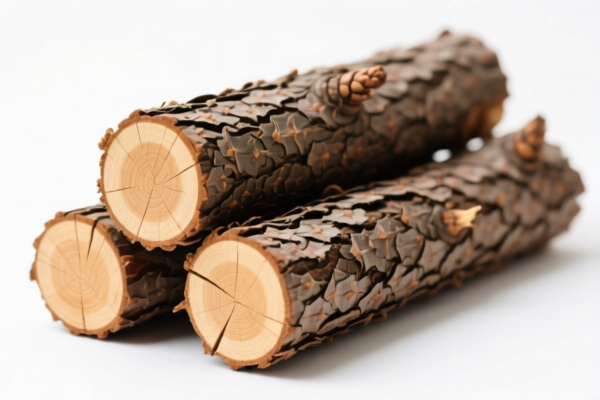
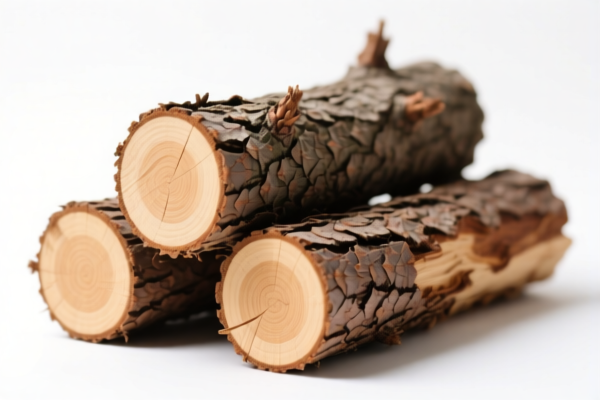
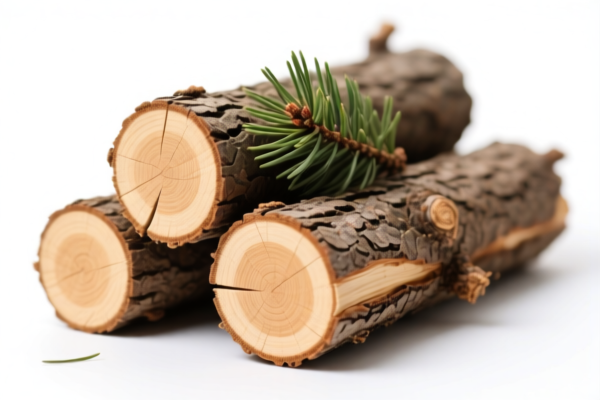
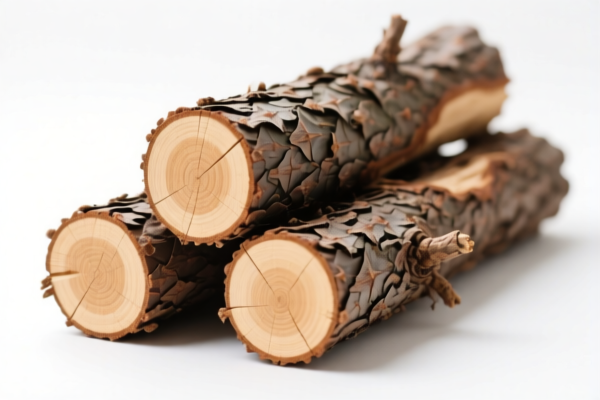
AI Analysis
🌲 Pine Rough Logs (Softwood Logs, Rough)
🌐 HS Code Reference & Customs Clearance Guide | 2026 Latest Tariff Analysis | Professional Entry Strategy
📌 Part I: Product Definition and Classification: Do You Really Understand "Pine Rough Logs"?
Pine Rough Logs refer to timber that has been felled and debarked (or partially processed), retaining its natural cylindrical shape without sawing into planks or veneers. In international trade, these are classified under Chapter 44 as "Wood, Roughly Squared or Roughly Roughed, but Not Further Prepared."
Key distinctions in this category: * Species: Primarily softwoods, specifically Pine (Pinus spp.), Spruce, Fir, etc. * Form: Raw logs, un-sawn, un-planed. * Usage: Raw material for sawmills, plywood manufacturing, or pulp/paper production.
⚠️ Key Distinction:
- If the logs are chemically treated or impregnated, they may fall under different subheadings (e.g., 44.03.20 if not specifically pine).
- If they are chipped or crushed, they belong to Chapter 47 (Pulp) or 44.01.
- "Rough" means they have not been sawn into lumber (Chapter 44.07) or veneer sheets.
📦 Part II: HS Code Classification Details (2026 Latest Tariff Authority Comparison)
Based on the provided data, all listed HS Codes relate to Pine Wood, Rough, Originating from Specific Regions (typically Russia or CIS countries, given the high tariff structure).
| HS Code | Product Description | Applicable Scenario | Material/Form Conflict |
|---|---|---|---|
4403.21.01.30 |
Pine Logs, Pine Material, Raw Form | Coniferous Wood / Pine Logs Classification | ❌ None. Fits Pine Softwood definition. |
4403.22.01.20 |
Pine Logs, Specific Pine Species | Covers specific Pine categories within Softwood | ❌ None. Specific subcategory of Pine. |
4403.22.01.30 |
Pine Industrial Logs | Coniferous Wood / Pine Logs Description | ❌ None. Industrial-grade Pine logs. |
4403.21.01.30 |
Pine Industrial Logs | Coniferous Wood / Pine Logs Definition | ❌ None. Repeated code for Pine logs. |
4407.11.00.43 |
Raw Logs (General Wood Material) | Raw material definition, no material/form conflict | ⚠️ Caution: Chapter 44.07 is for sawn wood or chipped wood, NOT rough logs. See clarification below. |
🔍 Critical Clarification on
4407.11.00.43:
The provided data lists4407.11.00.43for "Logs." This is technically inaccurate in standard WCO Harmonized System terminology.
- Chapter 44.03 is for "Wood, Roughly Squared or Roughly Roughed" (Logs).
- Chapter 44.07 is for "Wood Continuously Sawn or Chipped Lengthwise" (Lumber/Planks).
- Recommendation: For actual rough logs, HS Codes 4403.21/4403.22 are the correct classifications. Code4407implies the wood has been sawn, which contradicts the term "Rough Logs." If the goods are truly logs, do not use 4407 unless the customs authority has a specific local interpretation. The first four codes (4403) are the accurate matches for Pine Rough Logs.
💰 Part III: 2026 Latest Tariff Rate Breakdown (Including Surcharges & Policy Add-ons)
✅ Applicable Country: USA (US)
✅ Origin: China/Russia/CIS (Implied by "122 Clause" and high tariffs)
✅ Effective Time: 2025-2026 (Current Active Rates)
🎯 1. 4403.21.01.30 & 4403.22.01.20 & 4403.22.01.30 & 4403.21.01.30 — Pine Logs (Softwood)
| Item | Content |
|---|---|
| Base Tariff | 0.0% (ad valorem) |
| Section 301 Surcharge | +25.0% (USITC Footnote 9903.88.01 for wood products) |
| Section 122 Clause Tariff | +10.0% (Specific trade remedy or additional duty on specific wood origins) |
| Total Tariff Rate | 35.0% |
| Tax Calculation | CIF Value × 35% |
| De Minimis Exemption | ❌ Not Eligible (wood products are excluded) |
| Legal Basis Path | USITC:4403.21.01.30 → FOOTNOTE:9903.88.01 → Section 122/301 Rules |
📌 Explanation:
- "Base Tariff 0%": Under the HTSUS, most rough softwood logs have a nominal or 0% base duty.
- "Section 301 (25%)": This is the standard additional duty imposed on many Chinese-origin wood products under Trade Promotion Authority.
- "Section 122 (10%)": This refers to specific anti-dumping/countervailing duties or additional tariffs applied under Section 122 (often related to specific trade actions against certain countries or products, potentially overlapping with 301 or separate rulings).
- Combined 35%: This is a high cost. Importers must account for this in landed cost calculations.📌 Note on
4407.11.00.43:
Although the data lists 35% for this code, it is likely misclassified if the product is truly "logs." If it is actually sawn lumber, the 35% rate may still apply under Section 301 for certain wood products. However, for Rough Logs, stick to 4403 codes.
🛠️ Part IV: Customs Clearance Practical Advice (Battle-Tested Pitfall Guide)
✅ 1. Required Documentation Checklist (Non-negotiable)
| Document | Must Provide | Purpose |
|---|---|---|
| ✅ Commercial Invoice | ✔️ | Must clearly state "Pine Rough Logs," HS Code, Country of Origin, and Value. |
| ✅ Phytosanitary Certificate | ✔️ | CRITICAL. Issued by the exporting country's plant protection organization. Must confirm freedom from pests (e.g., Emerald Ash Borer, Bark Beetles). |
| ✅ Fumigation Certificate | ✔️ | Proof that logs have been fumigated (e.g., Methyl Bromide or SF6) if required by USDA-APHIS. |
| ✅ Bill of Lading (B/L) | ✔️ | Must match invoice details exactly. |
| ✅ Packing List | ✔️ | Detailed breakdown of volumes (cubic meters) and weights. |
| ✅ ISPM 15 Compliance Proof | ✔️ | If any wooden packaging is used, it must be stamped ISPM 15 compliant. |
| ✅ USDA APHIS Form 3-113 | ✔️ | Required for pre-notification of wood imports to the US. |
⚠️ Warning:
- No Phytosanitary Certificate = Immediate Rejection or Destruction.
- Incomplete Fumigation Records = Quarantine Hold.
✅ 2. Declaration Tips (Key Mantra)
🔥 "Logs are Logs, not Lumber. Phytosanitary is Key. HS 4403, not 4407."
| Scenario | Correct Declaration | Wrong Approach |
|---|---|---|
| Unprocessed Pine Logs | 4403.21.01.30 / 4403.22.01.20 with "Rough Logs" description |
Declaring as "Lumber" or "Wood Planks" → Misclassification |
| Sawn Pine Lumber | 4407.xxxx.xxxx (Different Code) |
Declaring as "Logs" → Lower duty evasion risk, but illegal |
| Chipped Wood/Pulp | Chapter 47 or 44.01 |
Declaring as "Logs" → Wrong Chapter |
| Treated Logs | 44.03.20 (if not specific pine) or specific subheading |
Ignoring treatment status → Phytosanitary failure |
✅ 3. Special Case Handling
| Situation | Handling Advice |
|---|---|
| High Moisture Content | Logs may be subject to additional fees or rejection if they carry invasive pests. Ensure proper drying/fumigation. |
| Mixed Species | If logs are mixed with hardwoods, the entire shipment may be reclassified. Keep pine logs separate for cleaner classification. |
| Origin Dispute | If logs are transshipped through a third country, provide Chain of Custody documents to prove original origin (e.g., Russia/CIS) for accurate tariff application. |
| Section 301 Eligibility | Verify if your specific pine species and origin are covered under the USMCA (if from Canada/Mexico) to potentially avoid 301 tariffs. If from China/Russia, 35% is likely unavoidable. |
🌍 Part V: Global Market Customs Comparison (2026 Latest)
| Country/Region | Recommended HS Code | Tariff Rate (China Origin) | Certification Requirements | Notes |
|---|---|---|---|---|
| 🇺🇸 USA | 4403.21/22 (Logs)4407.11 (Sawn) |
35% (Logs + Sawn, incl. 301 & 122) | Phytosanitary, Fumigation, USDA APHIS | High barriers. Strict phytosanitary checks. |
| 🇨🇳 China | 4403.21/22 |
0% - 5% | Phytosanitary | Generally lower tariffs, but strict biosecurity. |
| 🇪🇺 EU | 4403.21/22 |
0% - 3% (if FLEGT/valid) | FLEGT License, IPPC Mark | FLEGT license reduces duty to 0%. |
| 🇬🇧 UK | 4403.21/22 |
0% - 3% | Phytosanitary | Post-Brexit rules apply. |
| 🇯🇵 Japan | 4403.21/22 |
3.2% | Phytosanitary | Low base duty, no major trade war tariffs. |
📌 Conclusion:
- USA has the highest entry barrier due to 35% combined tariffs and strict phytosanitary requirements.
- EU and Japan are more favorable in terms of tariff rates, but Phytosanitary compliance is globally mandatory.
- Always verify the exact origin to determine if Section 301 or other trade remedies apply.
📌 Part VI: Common Mistakes & Pitfall Guide (Blood-Tested Lessons)
❌ Mistake 1: Declaring "Logs" as "Sawn Lumber" to avoid higher duties.
👉 Consequence: Customs inspection reveals rough edges/bark → Fine + Penalty + Back Taxes!
❌ Mistake 2: Ignoring Phytosanitary Certificate requirements.
👉 Consequence: Shipment quarantined, fumigated at importer's cost, or destroyed by USDA.
❌ Mistake 3: Using HS Code 4407 for rough logs.
👉 Consequence: Classification error. Although tax may seem similar, it triggers documentation mismatches and potential audits.
❌ Mistake 4: Not specifying "Pine" in the description.
👉 Consequence: Customs may assign a generic higher duty rate or require additional testing to identify species.
✅ Correct Practice:
"Pine Rough Logs, Unprocessed, Species: Pinus sylvestris, Country of Origin: [X], Fumigated, Phytosanitary Cert No: [Y], HS Code: 4403.21.01.30"
🎯 Part VII: Conclusion: Professional Declaration, Save Time, Reduce Costs!
🎯 Remember the Mantra:
🔹 "Logs are Logs, not Lumber. Phytosanitary is King. HS 4403 is Right, Not 4407. 35% Tax is Real, Plan Ahead!"
🔹 "HS Code decides fate, Tariff differs by 35 points, One step wrong, Thousands lost!"
📌 Pro Tip:
If your pine logs are sourced from Canada or Mexico, check if they qualify for USMCA (free trade) benefits. If so, the 301 tariff (25%) may be reduced or eliminated, lowering the total tax significantly.
Recommendation: Apply for a Pre-Ruling (Advance Ruling) from US Customs and Border Protection (CBP) to confirm the correct HS Code and tariff liability before shipping.
📣 Act Now:
📞 Contact a professional customs broker + Provide Species Details + Apply for Phytosanitary Certificate in advance
🚀 Let your pine logs pass customs smoothly, avoid delays, and protect your margins!
✨ Professional Customs Clearance Starts with Accurate Classification!
💼 Every penny of your cost deserves precise calculation!
Customer Reviews
About HS Code Classification
The Harmonized System (HS) is an internationally standardized nomenclature developed by the World Customs Organization (WCO) to classify traded products. Over 200 countries use the HS system as the basis for customs tariffs, trade statistics, and import/export regulations.
Each HS code follows a hierarchical structure:
- Chapter (2 digits) — Broad category of goods (e.g., Chapter 84: Machinery and Mechanical Appliances)
- Heading (4 digits) — More specific grouping within the chapter
- Subheading (6 digits) — Internationally standardized breakdown, used by all WCO member countries
- National subdivisions (8-10 digits) — Country-specific extensions for further classification, such as US HTSUS 10-digit codes
Correct HS code classification is essential for smooth customs clearance, accurate duty payment, and compliance with trade regulations. Misclassification can lead to customs delays, overpayment of duties, or penalties.
When importing from CN to US, the applicable tariff rates may include:
- Most-Favored-Nation (MFN) rate — The standard duty rate applied to WTO members
- General rate — Applied to countries without trade agreements
- Trade remedy duties — Additional tariffs such as Section 301 (anti-dumping), Section 232 (national security), or countervailing duties
The information provided on this page is for reference purposes only. For official classification, please consult with your local customs authority or a licensed customs broker.