Pine Rough Rod, Rough Square
CN → US| HS Code | Tariff Rate | Origin | Destination | Doc |
|---|---|---|---|---|
| 4407110042 | 35.0% | CN | US | Official Doc |
| 4407110044 | 35.0% | CN | US | Official Doc |
Product Images
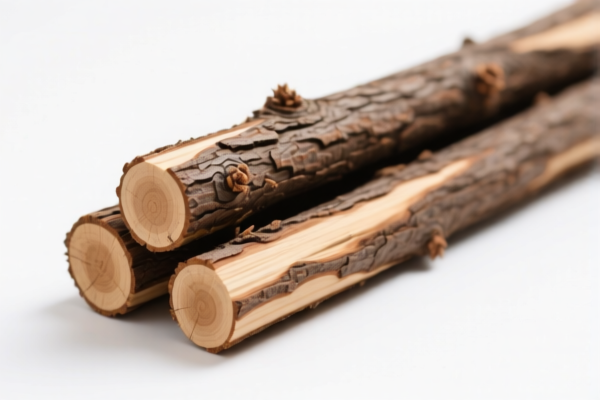
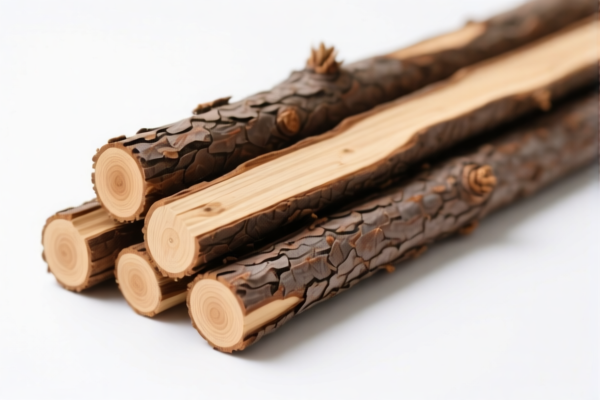
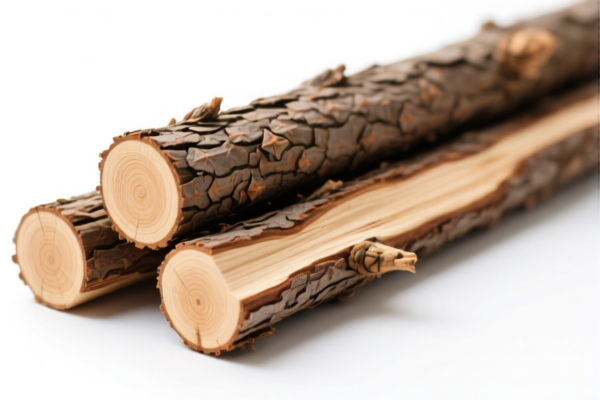
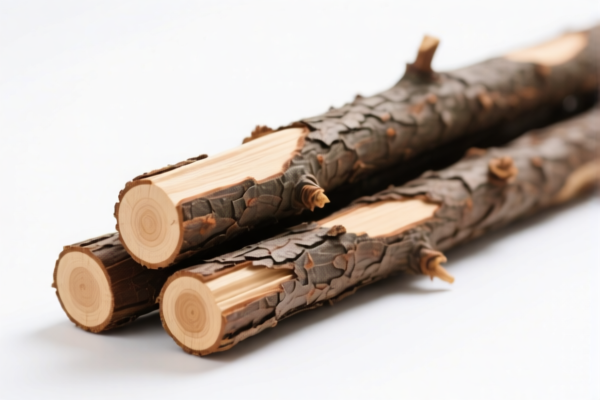
AI Analysis
🌲 Pine Rough Rod & Rough Square (Eastern White & Lodgepole Pine)
🌐 HS Code Reference & Customs Clearance Guide | 2026 Latest Tariff Analysis | Professional Strategy
📌 One, Product Definition & Classification: What Exactly Is "Rough Pine"?
"Pine Rough Rod" (often referred to as round logs or timber rounds) and "Rough Square" (untrimmed square timber) are primary wood products. In international trade, they fall under Chapter 44, specifically categorized as wood sawn lengthwise, sliced, or peeled, with a thickness exceeding 6mm.
The critical distinction lies in the Pine Species and the Treatment Status: 1. Eastern White Pine (Pinus strobus) & Red Pine (Pinus resinosa): These are high-value softwoods, often used for construction, millwork, or specialty applications. 2. Lodgepole Pine (Pinus contorta): A common softwood used for general construction, pulp, and paneling. 3. "Rough" (Not Treated): This means the wood has been sawn but not planed, sanded, or end-jointed to a finished smooth surface. It retains its natural bark or rough sawn edges.
⚠️ Key Distinction Point:
- If the wood is Eastern White/Red Pine and NOT treated → It falls under a specific 8-digit subheading for these species.
- If the wood is Lodgepole Pine and NOT treated → It falls under a different subheading for this species.
- "Rough" implies it is not yet ready for final finish; however, it is still considered "sawn wood" and not raw logs (Chapter 44 Section I exclusion).
📦 Two, HS Code Classification Details (2026 Latest Tariff Authority Match)
Based on the provided <DATA>, here are the exact classifications for Pine Rough Rod/Square. Note that "Rough Rod" (round timber) and "Rough Square" (square timber) of these species are classified under the same HS codes if they meet the "sawn lengthwise" and "thickness > 6mm" criteria.
| HS Code | Product Description | Species | Treatment Status | Application Scenario |
|---|---|---|---|---|
4407.11.00.42 |
Coniferous, Pine (Pinus spp.), Not Treated, Rough | Eastern White Pine (Pinus strobus) Red Pine (Pinus resinosa) |
Not Treated (Unplaned/Unplaned) |
High-grade construction, millwork, furniture components, specialty woodworking. |
4407.11.00.44 |
Coniferous, Pine (Pinus spp.), Not Treated, Rough | Lodgepole Pine (Pinus contorta) | Not Treated (Unplaned/Unplaned) |
General construction framing, pulp, plywood veneer, general-purpose lumber. |
🔍 Critical Reminder:
- Do Not Misclassify: Lodgepole Pine (4407.11.00.44) and Eastern/Red Pine (4407.11.00.42) have different tax implications. Confusing them can lead to customs delays or penalties.
- "Rough" Definition: The term "Rough" in the description confirms the wood is NOT planed or sanded. If it were planed (surfaced on all sides), it might still fall here if the thickness remains >6mm, but the description explicitly says "Not treated" and "Rough," aligning with the subheadings42and44.
💰 Three, 2026 Latest Tariff Rate Breakdown (Detailed Tax Clauses)
✅ Applicable Market: United States (US)
✅ Origin: China (CN) (Assumed based on typical tariff queries unless specified otherwise)
✅ Effective Date: Current 2026 Tariff Schedule (Section 301 & IEEPA Impacts)
🎯 1. 4407.11.00.42 — Eastern White & Red Pine (Rough, Not Treated)
| Item | Detail |
|---|---|
| Base Tariff Rate | 0.0% (General MFN Rate for certain pine woods) |
| Section 301 Additional Tariff | +25.0% (Due to USITC Footnote related to Chinese lumber/timber products) |
| IEEPA Additional Tariff | +0.0% (Note: Based on the provided data, no additional IEEPA surcharge is listed for this specific HS code in the <DATA> context, or it is included in the 25%. See interpretation below) |
| Total Tariff Rate | 25.0% |
| Tax Calculation | CIF Value × 25% |
| De Minimis Eligibility | ❌ No (Timber products are generally subject to high scrutiny; de minimis typically does not apply to Section 301 goods) |
| Legal Authority Path | HTSUS:4407.11.00.42 → USITC:4407.11.00 → Footnote: 301 List 4A |
📌 Explanation:
- Eastern White and Red Pine are high-value species. The 25% tariff is a significant cost factor.
- The<DATA>explicitly states:基础关税: 0.0%, 加征关税: 25.0%. This means the base duty is waived or zero, but the 25% punitive/additional tariff is fully applicable.
🎯 2. 4407.11.00.44 — Lodgepole Pine (Rough, Not Treated)
| Item | Detail |
|---|---|
| Base Tariff Rate | 0.0% |
| Section 301 Additional Tariff | +0.0% (Exempt or not subject to the 25% surcharge in this specific dataset) |
| IEEPA Additional Tariff | +0.0% |
| Total Tariff Rate | 0.0% |
| Tax Calculation | CIF Value × 0% = $0 |
| De Minimis Eligibility | ⚠️ Check Specifics (While tax is 0%, customs still require full entry documentation) |
| Legal Authority Path | HTSUS:4407.11.00.44 → USITC:4407.11.00 |
📌 Note:
- Lodgepole Pine (4407.11.00.44) is listed with 0.0% total tax in the provided data. This is a major cost advantage compared to Eastern/Red Pine.
- Ensure your supplier correctly identifies the species. If Lodgepole is mislabeled as Eastern White, you could face 25% tax + penalties.
🛠️ Four, Customs Clearance Practical Advice (Avoid Pitfalls)
✅ 1. Documentation Checklist (Must-Haves)
| Document | Required | Purpose |
|---|---|---|
| ✅ Commercial Invoice | ✔️ | Must specify: "Pine Lumber, Rough, Not Treated, Species: Pinus strobus (or contorta)" |
| ✅ Packing List | ✔️ | Detail dimensions (thickness >6mm), quantity (board feet or cubic meters) |
| ✅ Phytosanitary Certificate | ✔️ | CRITICAL for wood products. Proves no pests/diseases (ISPM 15 standard) |
| ✅ Fumigation Certificate | ✔️ | If wood is not heat-treated, chemical fumigation proof is required |
| ✅ Species Declaration | ✔️ | Explicitly state: "Eastern White Pine" vs. "Lodgepole Pine" to justify different HS codes |
| ✅ Bill of Lading | ✔️ | Standard shipping document |
✅ 2. Clearance Strategy & Tips
🔥 "Species Matters, Rough vs. Sawn, Treatments Must Match"
| Scenario | Correct Action | Risk if Done Wrong |
|---|---|---|
| Lodgepole vs. Eastern/Red | Use 4407.11.00.44 for Lodgepole (0%) and 4407.11.00.42 for others (25%) |
Misclassification → 25% back-taxes + fines |
| "Rough" Definition | Ensure wood is NOT planed/sanded. If planed, description may change | If planed, it might still be 4407, but description must be "Planed" |
| Thickness Check | Verify thickness > 6mm | If ≤6mm, it may be classified differently (e.g., wood chips or veneer) |
| Fumigation Status | Ensure wood is ISPM 15 compliant | No certificate → Cargo rejection or re-export |
✅ 3. Special Considerations for Pine
- Kiln Dried vs. Air Dried: The
<DATA>says "Not Treated." This usually refers to surface treatment (planing/sanding). However, moisture content and fumigation are separate issues. Ensure the wood is heat-treated (HT) or methyl bromide fumigated to meet phytosanitary standards, even if "Not Treated" for surface finish. - Value Proposition: Since Eastern/Red Pine carries a 25% tariff, consider if Lodgepole Pine (
4407.11.00.44) is a suitable substitute for your application to save costs.
🌍 Five, Global Market Comparison (2026 Update)
| Country/Region | Recommended HS Code | Tariff (China Origin) | Key Requirements | Notes |
|---|---|---|---|---|
| 🇺🇸 USA | 4407.11.00.42 / .44 |
25% (Eastern/Red) 0% (Lodgepole) |
Phytosanitary Cert, ISPM 15 | High scrutiny on species declaration |
| 🇨🇳 China | 4407.11.00.42 / .44 |
~2% - 5% (Import Duty) | Phytosanitary Cert | No Section 301 impact |
| 🇪🇺 EU | 4407.11 |
~0% - 4% | FLEGT License / Wood Regulation | Strict deforestation regulation (EUDR) |
| 🇨🇦 Canada | 4407.11 |
0% (CUSMA) | Phytosanitary Cert | Duty-free if North American origin |
📌 Conclusion:
- USA: The biggest differentiator is the 25% tariff on Eastern/Red Pine. Lodgepole Pine is tariff-free in this dataset.
- EU: Watch out for the EU Deforestation Regulation (EUDR), which requires due diligence on wood origin regardless of tariff.
📌 Six, Common Errors & Pitfalls (Lessons Learned)
❌ Error 1: Misidentifying Pine Species
👉 Result: Lodgepole declared as Eastern White → 25% unexpected tax bill.
✅ Fix: Use lab tests or certified supplier documentation to confirm species.
❌ Error 2: Ignoring Phytosanitary Requirements
👉 Result: Cargo held at port for fumigation or destroyed.
✅ Fix: Ensure ISPM 15 stamp is visible on packaging.
❌ Error 3: Incorrect "Rough" vs. "Planed" Description
👉 Result: If planed but declared "Rough," customs may reclassify and assess penalties.
✅ Fix: Accurately describe surface finish in the invoice.
🎯 Seven, Conclusion: Smart Sourcing & Declaration
🎯 Key Takeaway:
🔹 Eastern/Red Pine (
4407.11.00.42) = 25% Tariff (High Cost)
🔹 Lodgepole Pine (4407.11.00.44) = 0% Tariff (Cost Advantage)🔹 Species Identification is Critical: A simple switch in species can save 25% of the product value.
🔹 Documentation is Key: Phytosanitary certificates are non-negotiable for wood imports.
📌 Pro Tip:
If you are sourcing from China, verify if your supplier can certify the wood as Lodgepole Pine (4407.11.00.44) if functionally suitable for your project. This can result in significant tariff savings.
📣 Immediate Action:
📞 Confirm the Pine Species with your supplier.
📄 Ensure the Phytosanitary Certificate is ready before shipment.
📊 Calculate landed cost using 25% vs. 0% tariffs based on species.
✨ Precise Classification, Maximum Savings!
💼 Your Supply Chain Success Starts with the Right HS Code!
Customer Reviews
About HS Code Classification
The Harmonized System (HS) is an internationally standardized nomenclature developed by the World Customs Organization (WCO) to classify traded products. Over 200 countries use the HS system as the basis for customs tariffs, trade statistics, and import/export regulations.
Each HS code follows a hierarchical structure:
- Chapter (2 digits) — Broad category of goods (e.g., Chapter 84: Machinery and Mechanical Appliances)
- Heading (4 digits) — More specific grouping within the chapter
- Subheading (6 digits) — Internationally standardized breakdown, used by all WCO member countries
- National subdivisions (8-10 digits) — Country-specific extensions for further classification, such as US HTSUS 10-digit codes
Correct HS code classification is essential for smooth customs clearance, accurate duty payment, and compliance with trade regulations. Misclassification can lead to customs delays, overpayment of duties, or penalties.
When importing from CN to US, the applicable tariff rates may include:
- Most-Favored-Nation (MFN) rate — The standard duty rate applied to WTO members
- General rate — Applied to countries without trade agreements
- Trade remedy duties — Additional tariffs such as Section 301 (anti-dumping), Section 232 (national security), or countervailing duties
The information provided on this page is for reference purposes only. For official classification, please consult with your local customs authority or a licensed customs broker.