Pine Rough Wood
CN → US| HS Code | Tariff Rate | Origin | Destination | Doc |
|---|---|---|---|---|
| 4401110000 | 35.0% | CN | US | Official Doc |
| 4403990195 | 35.0% | CN | US | Official Doc |
| 4401120000 | 35.0% | CN | US | Official Doc |
| 4407110043 | 35.0% | CN | US | Official Doc |
| 4403210130 | 35.0% | CN | US | Official Doc |
Product Images
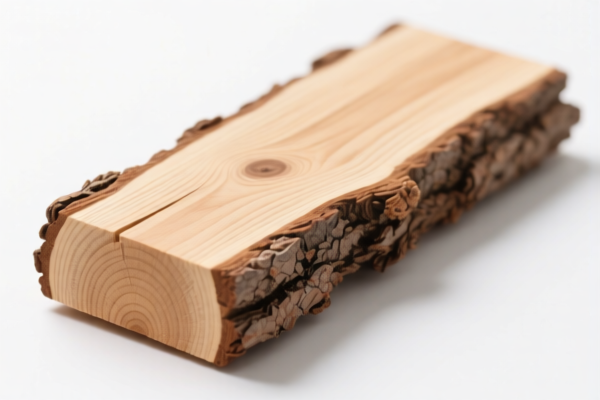
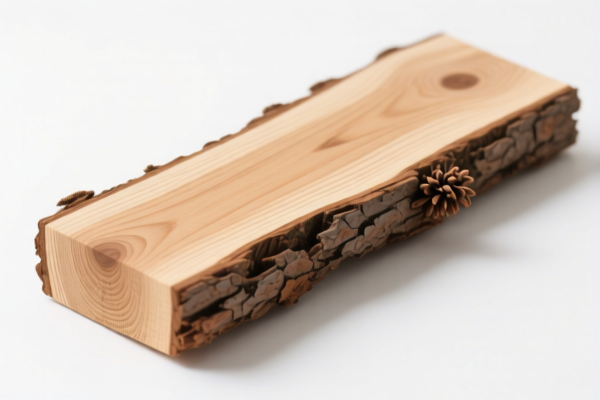
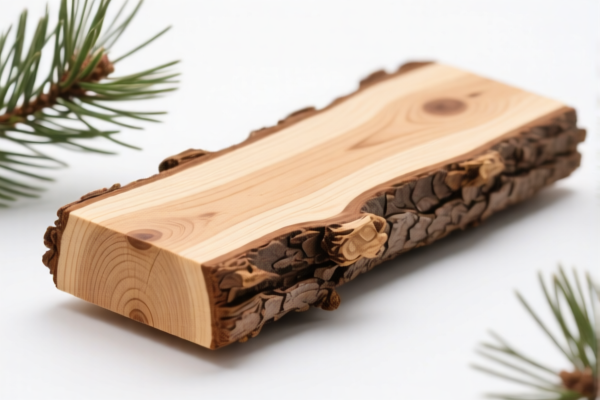
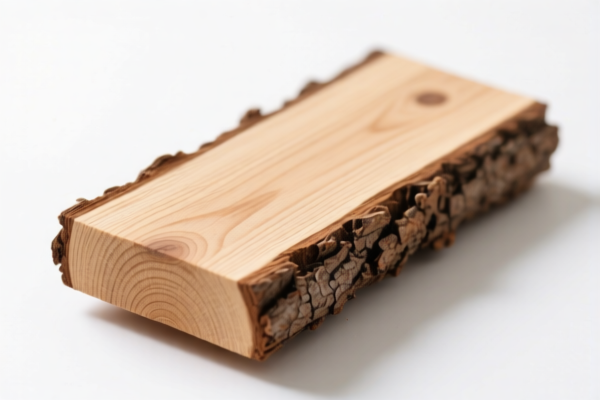
AI Analysis
🌲 Pine Rough Wood: HS Code Classification & Tax Analysis (2026)
🌐 HS Code Reference & Customs Clearance Guide | 2026 Latest Tariff Analysis | Professional Clearance Strategy
📌 I. Product Definition & Classification: Do You Really Understand "Pine Rough Wood"?
Pine Rough Wood generally refers to pine timber that has been sawn or semi-sawn but not further worked beyond planing, sanded, or finger-joined. In international trade, it is a critical raw material for construction, furniture, and paper production.
However, the HS Code classification depends heavily on the state of processing (whether it is for fuel, simple lumber, or specific types of pine) and the purpose. Based on the provided data, there are 5 potential HS Codes with a uniform total tax rate of 35.0% for goods originating from China to the US.
⚠️ Key Distinction Points:
- Fuel Wood vs. Lumber: Is it being imported as combustible material? → 4401.11 / 4401.12
- Sawn/Chipped vs. Raw Logs: Is it sawn timber or just logs? → 4403.99 / 4407.11
- Specific Pine Type: Is it a specific sub-category of pine? → 4403.21
📦 II. HS Code Classification Details (2026 Latest Tariff Authority Comparison)
| HS Code | Product Description | Application Scenario | Key Classification Logic |
|---|---|---|---|
4401.11.00.00 |
Fuel Wood, Sawn | Imported specifically for combustion/bioenergy | ✅ Classified as "Fuel Wood" based on primary form description |
4403.99.01.95 |
Rough Sawn Wood (Other) | General-purpose rough sawn pine, fallback category | ✅ Classified as "Rough Sawn" / "Log Material Attribute", general fallback |
4401.12.00.00 |
Fuel Wood, Other | Non-coniferous or other pine fuel wood | ✅ Classified as "Fuel Wood" for non-specific coniferous types |
4407.11.00.43 |
Wood Planed, Sawn, Chipped | Wood raw material, planked/sawn pine | ✅ Classified as "Wood Raw Material" fitting the material definition |
4403.21.01.30 |
Rough Wood (Pine Specific) | Pine logs/timber in rough form | ✅ Classified as "Logs and Timber" inferred as wood material |
🔍 Key Reminder:
- All 5 codes listed above have the same total tax rate of 35.0%.
- The choice depends on documentation accuracy and customs inspection results.
- If the wood is clearly for fuel, use 4401 series.
- If the wood is for construction/furniture, use 4403 or 4407 series.
💰 III. 2026 Latest Tariff Rate Breakdown (Including Surcharges & Policy Add-ons)
✅ Applicable Country: United States (US)
✅ Country of Origin: China (CN)
✅ Effective Date: From November 10, 2025 (and subsequent imports)
🎯 1. Universal Tax Structure for All Listed HS Codes
| Item | Content |
|---|---|
| Base Tariff | 0.0% (Ad Valorem) |
| USITC Surtax (Section 301) | +25.0% |
| IEEPA Surtax (Section 122) | +10.0% |
| Total Tax Rate | 35.0% |
| Tax Calculation | CIF Value × 35% |
| De Minimis Eligibility | ❌ Not Eligible (Deny De Minimis) |
| Legal Basis Path | USITC:Section301 → IEEPA:Section122 → Specific HS Code |
📌 Explanation:
- "USITC Surtax 25%": Comes from the "Additional Tariffs" under Section 301 of the U.S. Trade Act;
- "IEEPA Surtax 10%": Additional tariff on Chinese/HK products under the International Emergency Economic Powers Act;
- Total 35%: This is a high tariff level. You must factor this into your pricing strategy!
🛠️ IV. Customs Clearance Practical Advice (Battle-Tested Pitfall Guide)
✅ 1. Required Documentation Checklist (None Missing)
| Document | Mandatory | Description |
|---|---|---|
| ✅ Product Specification Sheet | ✔️ | Includes species (Pine), dimensions, moisture content, treatment status (e.g., HT/KH) |
| ✅ Phytosanitary Certificate | ✔️ | Critical for wood! Must prove no pests. Issued by origin country's customs/plant quarantine. |
| ✅ Commercial Invoice | ✔️ | Must clearly state "Rough Sawn Pine Wood" and HS Code |
| ✅ Packing List | ✔️ | Detail number of bundles, weight, dimensions. Avoid vague terms like "Wood". |
| ✅ Bill of Lading | ✔️ | Ensure description matches invoice and phytosanitary cert. |
| ✅ Treatment Certificate | ✔️ | If treated for ISPM 15 (fumigation/heat), provide proof. |
✅ 2. Declaration Tips (Key Mnemonic)
🔥 "Species Clear, Treatment Proven, HS Precise, Taxes Avoided!"
| Situation | Correct Declaration Method | Wrong Practice |
|---|---|---|
| Rough Sawn Pine | 4403.99.01.95 or 4407.11.00.43 |
Vague "Wood" → High inspection rate |
| Fuel Wood | 4401.11.00.00 |
Declare as lumber → Penalty for misclassification |
| Treated Pine | Add "HT" or "MB" treatment code | Omit treatment info → Rejection/Deportation |
| Mixed Species | Split declaration by species | Mix different woods in one line item → Confusion |
✅ 3. Special Case Handling
| Situation | Handling Advice |
|---|---|
| ISPM 15 Compliance | Wood packaging (pallets) must be marked with IPPC logo. Raw wood must have phytosanitary cert. |
| Moisture Content | High moisture may lead to mold claims. Specify moisture % on invoice. |
| Pest Risk | If from high-risk pest areas, additional inspection may occur. Prepare for delays. |
| Customs Dispute | If customs questions the HS code, provide technical drawings or product samples. |
🌍 V. Global Market Clearance Comparison (2026 Latest)
| Country/Region | Recommended HS Code | Tariff | Certification | Remarks |
|---|---|---|---|---|
| 🇺🇸 USA | 4403.99.01.95 |
35% (China Origin) | Phytosanitary + ISPM 15 | High tariff, strict inspection |
| 🇨🇳 China | 4403.99.01.95 |
5% (Import) | Phytosanitary | No additional surcharges |
| 🇪🇺 EU | 4407.11.00.43 |
0-4% | ISPM 15 + FSC/PEFC | Low tariff, strong sustainability reqs |
| 🇦🇺 Australia | 4403.21.01.30 |
5% | Biosecurity Permit | Very strict biosecurity checks |
| 🇯🇵 Japan | 4401.11.00.00 |
0-10% | Phytosanitary | Depends on pine species |
📌 Conclusion:
- USA is the most costly market due to 35% total tariff;
- Biosecurity is a global challenge – ensure perfect phytosanitary documentation;
- Sustainability certifications (FSC/PEFC) are increasingly important in EU/Australia/Japan.
📌 VI. Common Mistakes & Pitfall Guide (Lessons Learned)
❌ Mistake 1: Declaring "Pine Wood" without specifying "Rough Sawn" or "Log"
👉 Consequence: Customs may reclassify, leading to delays and fines.
❌ Mistake 2: Missing Phytosanitary Certificate
👉 Consequence: Cargo detained or returned at destination port.
❌ Mistake 3: Mixing different pine species in one shipment without clear separation
👉 Consequence: Inspection difficulty, potential pest quarantine rejection.
❌ Mistake 4: Incorrect HS Code selection (e.g., using fuel wood code for lumber)
👉 Consequence: Customs penalty for misdeclaration.
✅ Correct Practice:
"Rough Sawn Pine Lumber, Species: Pinus Sylvestris, Moisture Content: 15%, Treated (HT), ISPM 15 Compliant, HS Code: 4403.99.01.95"
🎯 VII. Conclusion: Professional Declaration, Save Time, Reduce Costs!
🎯 Remember the Mnemonic:
🔹 "Wood Needs Phytosanitary, HS Code Must Be Precise, 35% Tax is High, Documentation is King!"
🔹 "Customs Check Biosecurity, Tariff Check Origin, One Mistake Costs a Fortune!"
📌 Tips:
- If your pine wood is treated (Heat Treatment or Fumigation), ensure the Phytosanitary Certificate explicitly states this.
- For US imports, consider applying for an Advance Ruling if unsure about the exact HS Code among the 5 options.
- Keep sample photos and technical sheets ready for customs inspection.
📣 Immediate Action:
📞 Contact a professional customs broker + Provide Product Photos + Apply for HS Code Advance Ruling
🚀 Let your pine wood clear customs smoothly, efficiently, and profitably!
✨ Professional Clearance, Starting with Accurate Classification!
💼 Every cent of your cost deserves precise calculation!
Customer Reviews
About HS Code Classification
The Harmonized System (HS) is an internationally standardized nomenclature developed by the World Customs Organization (WCO) to classify traded products. Over 200 countries use the HS system as the basis for customs tariffs, trade statistics, and import/export regulations.
Each HS code follows a hierarchical structure:
- Chapter (2 digits) — Broad category of goods (e.g., Chapter 84: Machinery and Mechanical Appliances)
- Heading (4 digits) — More specific grouping within the chapter
- Subheading (6 digits) — Internationally standardized breakdown, used by all WCO member countries
- National subdivisions (8-10 digits) — Country-specific extensions for further classification, such as US HTSUS 10-digit codes
Correct HS code classification is essential for smooth customs clearance, accurate duty payment, and compliance with trade regulations. Misclassification can lead to customs delays, overpayment of duties, or penalties.
When importing from CN to US, the applicable tariff rates may include:
- Most-Favored-Nation (MFN) rate — The standard duty rate applied to WTO members
- General rate — Applied to countries without trade agreements
- Trade remedy duties — Additional tariffs such as Section 301 (anti-dumping), Section 232 (national security), or countervailing duties
The information provided on this page is for reference purposes only. For official classification, please consult with your local customs authority or a licensed customs broker.